Interior doors are often one of the last elements noticed in a finished home, yet they are among the few features encountered repeatedly every day. As people move from room to room, doors quietly frame sightlines, influence how spaces connect, and reinforce the overall mood of an interior. Subtle changes in door style—panel depth, surface texture, or color—can significantly alter how a home feels, even when the layout remains unchanged.
As 2026 approaches, interior door trends in U.S. homes are defined by five key styles. Clean Shaker doors with slimmer proportions remain a modern staple, while minimalist flat panel doors continue to gain popularity for their seamless look. Light wood tones and natural surfaces are returning to add warmth and authenticity. At the same time, doors are increasingly used as visual statements through color and contrast, with consistent door styles throughout the home becoming essential for cohesive interior design.

Trend 1: Clean Shaker Doors with Refined Proportions
Shaker-style doors have long been a cornerstone of American interior design, valued for their simplicity and versatility. As design preferences shift toward cleaner and more contemporary interiors, the Shaker door is evolving rather than disappearing. The most notable change lies in proportion.
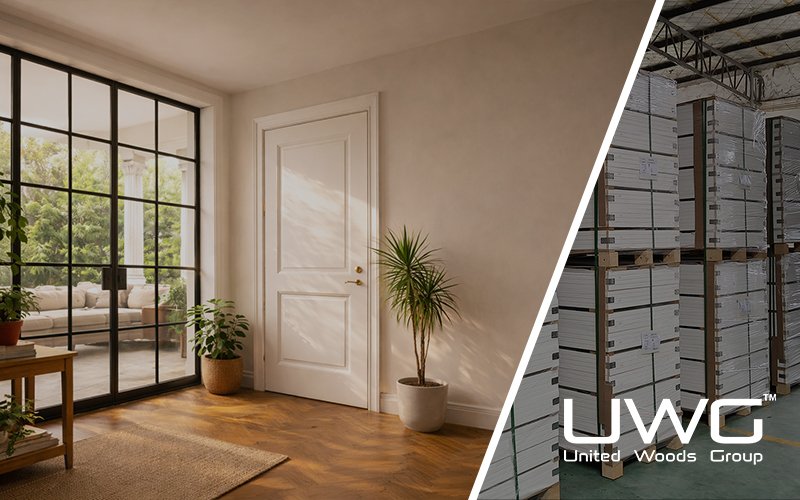
Traditional Shaker doors often featured wider rails and stiles, which gave them a more classic, sometimes heavier appearance. In recent years, these elements have become noticeably slimmer. Narrower profiles create a lighter visual footprint, allowing the door to feel more modern while retaining the familiar Shaker identity. The result is a door style that fits seamlessly into modern, transitional, and updated traditional interiors alike.
This refinement reflects a broader design movement toward restraint. Instead of decorative complexity, emphasis is placed on balance, symmetry, and precision. Clean Shaker doors now function less as ornamental features and more as architectural elements that quietly support the overall design language of a space.

Trend 2: Seamless & Minimalist Flat Panel Doors
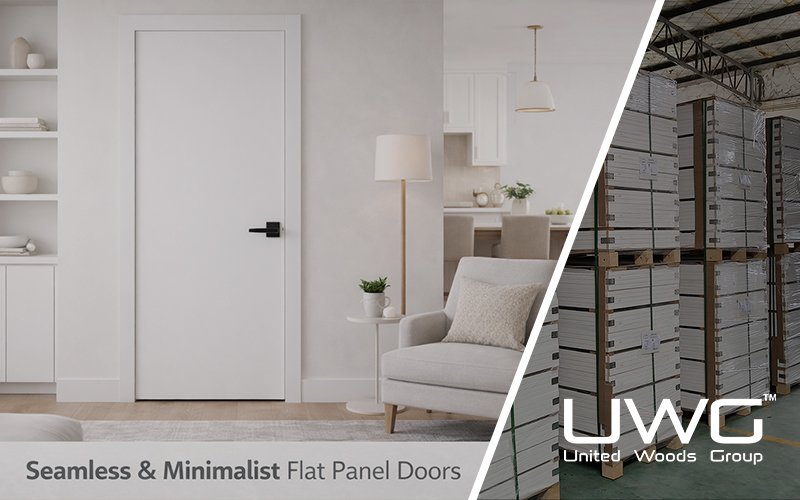
Minimalist flat panel doors are gaining significant momentum across U.S. homes, particularly in interiors influenced by modern and contemporary design principles. Characterized by smooth, unembellished surfaces, these doors prioritize simplicity and visual continuity.
Unlike panelled doors that introduce shadow lines and texture, flat panel doors reduce visual interruption. They are often used to blend into walls, creating a seamless transition between rooms. In some interiors, door frames and trim are deliberately understated or minimized to further reinforce this effect.
This trend aligns with the growing preference for open layouts and clean sightlines. As spaces become more interconnected, doors are no longer meant to stand out by default. Instead, they recede visually, allowing furniture, materials, and light to take center stage. The door becomes part of the architectural backdrop rather than a focal point.
Flat panel doors also complement other minimalist elements commonly found in modern homes, such as flush baseboards, concealed hinges, and simplified hardware. Together, these features create interiors that feel calm, intentional, and uncluttered.

Trend 3: Light Wood Tones & Natural Surfaces
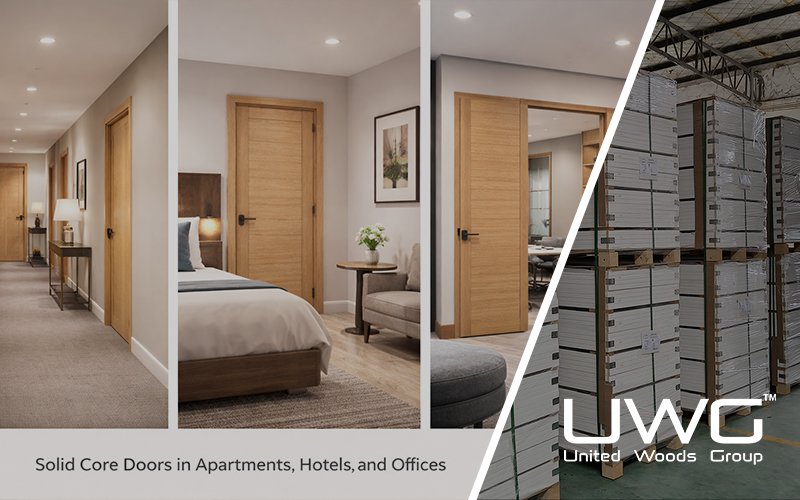
After years of dominance by painted white doors, especially in bright, neutral interiors, natural wood tones are making a clear return. Light woods in particular—featuring subtle grain patterns and warm undertones—are becoming increasingly prominent in U.S. homes.
This shift reflects a broader desire for material authenticity and tactile richness. Natural surfaces introduce warmth and softness, balancing the clean lines often found in contemporary architecture. Light wood doors can add depth without overwhelming a space, making them especially effective in interiors that favor neutral palettes and natural light.
Rather than appearing rustic or traditional, today’s wood-toned doors are often paired with modern design elements. The emphasis is on refined finishes and consistent grain patterns, allowing the material itself to become the visual interest. This approach aligns well with design influences drawn from Scandinavian, Japandi, and modern organic styles.
In many homes, light wood doors act as a bridge between minimalism and comfort—bringing nature indoors while maintaining a clean, composed aesthetic.

Trend 4: Statement Doors as Interior Design Features
While some doors are designed to blend in, others are increasingly used to stand out. Statement doors are emerging as intentional design features, chosen to introduce contrast, depth, or drama within an interior.
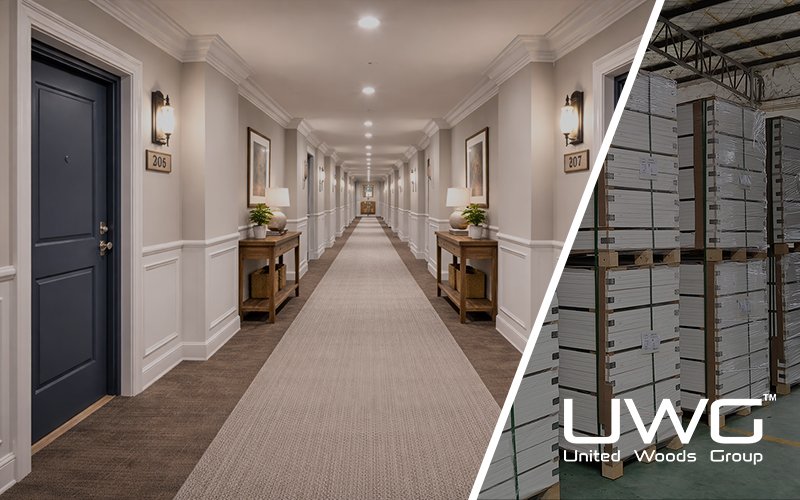
Deep colors such as charcoal, navy, olive, or even black are being applied to interior doors to create visual punctuation. In otherwise neutral spaces, a darker door can anchor a room or define transitions between areas. This approach treats the door as a design moment rather than a purely functional element.
Statement doors are often used strategically rather than uniformly. They may highlight specific rooms, emphasize architectural axes, or draw attention to key areas within a home. In these cases, the door becomes part of the interior composition, interacting deliberately with wall colors, flooring, and adjacent finishes.
This trend reflects a growing confidence in interior design, where doors are no longer limited to blending in but are allowed to contribute actively to the overall aesthetic narrative.

Trend 5: Consistency Across the Whole Home
One of the most defining interior door trends leading into 2026 is not about a specific style, but about how styles are applied. Consistency across the entire home is becoming a central design principle.
Rather than selecting different door styles for different rooms, interiors increasingly favor a unified approach. Door profiles, proportions, finishes, and detailing are repeated throughout the home to create a sense of cohesion. This consistency enhances the feeling of flow, making spaces feel intentional and well-resolved.
Even as layouts grow more open and multifunctional, consistent door design helps anchor the interior. It provides a visual rhythm that ties together diverse spaces such as bedrooms, hallways, closets, and utility areas.
This trend reflects a shift from room-by-room decision-making toward a holistic view of interior design. Doors are no longer treated as isolated components but as part of a larger, interconnected system that defines the character of the home.

How to Choose the Right Interior Door Style in 2026
Choosing the right interior door style in 2026 depends on more than appearance alone. Home layout, overall design direction, and material preference all play a role in long-term satisfaction.
Clean Shaker doors remain a safe and versatile choice for transitional and modern homes, while flat panel doors work best in contemporary interiors that prioritize clean lines and visual continuity. Light wood doors are ideal for homeowners seeking warmth and natural texture, especially in neutral or minimalist spaces. Statement doors should be used selectively to highlight key areas, while maintaining consistent door styles throughout the home helps create a cohesive and intentional interior.
Conclusion
The interior door trends shaping U.S. homes in 2026 point to a clear design direction. Simplicity is being refined rather than stripped away, materials are valued for their authenticity, and visual cohesion is prioritized over isolated statements. Whether through streamlined Shaker profiles, minimalist flat panels, natural wood surfaces, bold statement doors, or unified design language, interior doors are playing a more intentional role in shaping residential interiors.
These five styles are not fleeting trends but reflections of broader shifts in how homes are designed, experienced, and lived in—favoring clarity, warmth, and enduring visual balance.
Articles that you may be interested in:
What are the best-selling Shaker door styles?
Door Jamb Styles Guide: How to Choose Between Double Rabbeted, Single Rabbeted, Split, and Flat