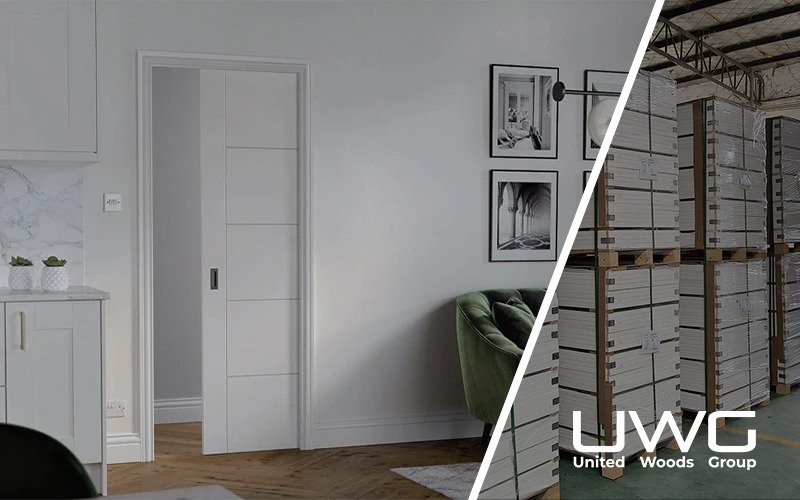
Tight construction footprints and design trends have pushed contractors to find innovative ways to save space. Hinged doors can get in the way, and barn doors don’t always fit the aesthetic. Pocket doors are the go-to fix — sleek, silent, and space-smart.

What is the Difference Between a Sliding Door and a Pocket Door?
While both types slide open, a pocket door disappears inside the wall, while a traditional sliding door moves along a track mounted outside the wall.
Key differences:
- Visibility: Sliding doors remain visible; pocket doors are hidden.
- Wall Modifications: Pocket doors require structural space within the wall cavity.
- Tracks: Pocket doors run on top-hung tracks; sliding doors can be bottom or top-tracked.
- Aesthetic: Pocket doors offer a cleaner, more integrated look.
For remodels, sliding doors may be easier to retrofit. For new builds, pocket doors offer a high-end finish that adds functional value.
What Is a Pocket Door Used For in Construction?
Contractors often choose pocket doors for:
- Small bathrooms and powder rooms
- Master closet access
- Home offices or studies
- Pantry and utility spaces
- Hotel rooms and hospitality suites
- Dividing two rooms with limited wall space
They’re often preferred in ADA-compliant designs, as they remove the need to swing or push heavy doors.
What Is a Pocket Door Frame Made Of?
Pocket door frames are typically constructed from:
- Galvanized steel (for added strength and durability)
- Engineered wood or laminated LVL studs
- Track and roller systems (aluminum or steel)
Pocket Door vs Barn Door: Which Is Better for Contractors?
Both are space-saving solutions, but here’s how they compare:
| Feature | Pocket Door | Barn Door |
|---|---|---|
| Space Use | Inside wall | Outside wall |
| Aesthetic | Seamless, hidden | Rustic, exposed |
| Privacy/Sound | Better seal | Gaps on edges |
| Locking | Harder to lock | Limited but possible |
| Installation | More complex | Easier retrofit |
Verdict: For high-end builds, especially in bathrooms or private rooms, pocket doors offer a more professional, polished result.
What’s Included in a Pocket Door Kit?
Most pocket door kits for contractors include:
- Metal or wood frame
- Header and split studs
- Sliding track (top-mounted)
- Rollers and brackets
- Door guides
- Fasteners and installation instructions
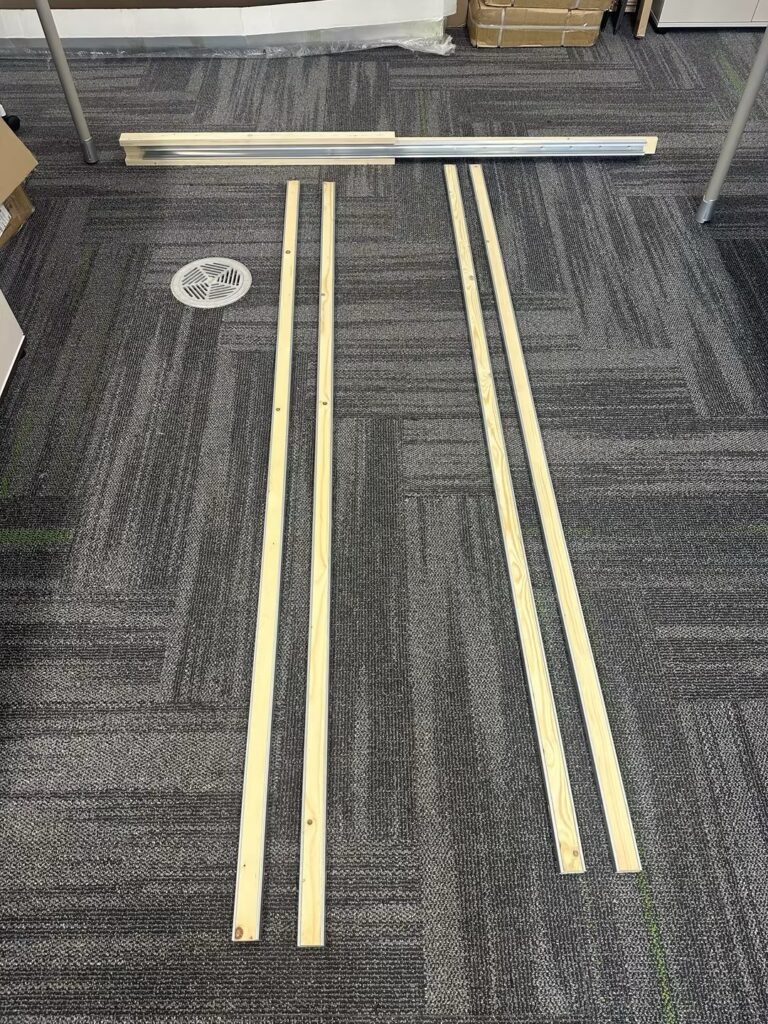
Pro Tip: Always confirm maximum door weight capacity and wall thickness requirements before purchasing a kit.
You can source pre-assembled kits or custom solutions based on the opening size and door weight.
How to Install a Pocket Door Step-by-Step
Tools & Materials Needed:
- Stud finder
- Level
- Drill & saw
- Framing square
- Pocket door kit
- Door slab (usually 1⅜” or 1¾” thick)
Steps:
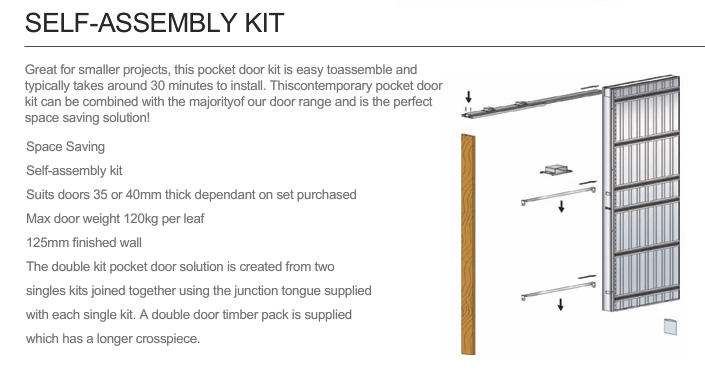
- Open the Wall Cavity Remove drywall and confirm no plumbing or wiring interferes.
- Install the Split Stud Frame Mount the header and install metal or wooden split studs to form the “pocket.”
- Attach the Track Level and secure the track along the header inside the cavity.
- Mount the Door Rollers Attach the roller brackets to the top of the door slab.
- Hang the Door Guide the rollers into the track and slide the door into the pocket.
- Install Floor Guide Keeps the door aligned during operation.
- Finish with Trim or Casing Cover up the framing for a seamless look.
Contractor Tip:** Use soft-close pocket door kits for smoother operation and less wear-and-tear over time.
Common Issues and Maintenance Tips for Pocket Doors
- Door Sticking? Check alignment or warped framing. Avoid low-end kits.
- Roller Noise? Lubricate annually or upgrade to ball-bearing rollers.
- Wall Cracks? Could be from poor drywall attachment around pocket frame.
- Access Problems? Install removable trim panels for easier future maintenance.
Are Pocket Doors Worth It for Modern Building Projects?
Yes — when designed and installed correctly, pocket doors:
- Improve space efficiency
- Appeal to design-savvy clients
- Support accessibility and modern flow
They do require planning and precision, which is why experienced contractors can charge a premium for these installations. Wholesalers should consider offering bulk kits, hardware upgrades, or even pre-framed units to attract professional clients.
In Summary
Pocket doors offer both form and function when installed correctly. For contractors and wholesalers, understanding the nuances can lead to better installs and satisfied clients.