
Some interior doors don’t have knobs, handles, or visible latches—so how do they stay closed? If you’ve ever opened a closet or French door and felt a slight “pop” of resistance, chances are you’ve encountered a ball catch. But how does this simple piece of hardware keep a door reliably shut?
A ball catch is a compact mechanical fastener that uses spring-loaded tension to hold a door in the closed position. It typically features a metal ball housed in a spring mechanism mounted at the top of the door, which clicks into a recessed strike plate in the frame—creating friction-based retention without a latch or rotating handle.
Once you understand how it works, you’ll be able to adjust the tension, troubleshoot issues, and confidently choose the right model for any interior door that needs discreet but effective closure.
How Does a Ball Catch Mechanism Work?
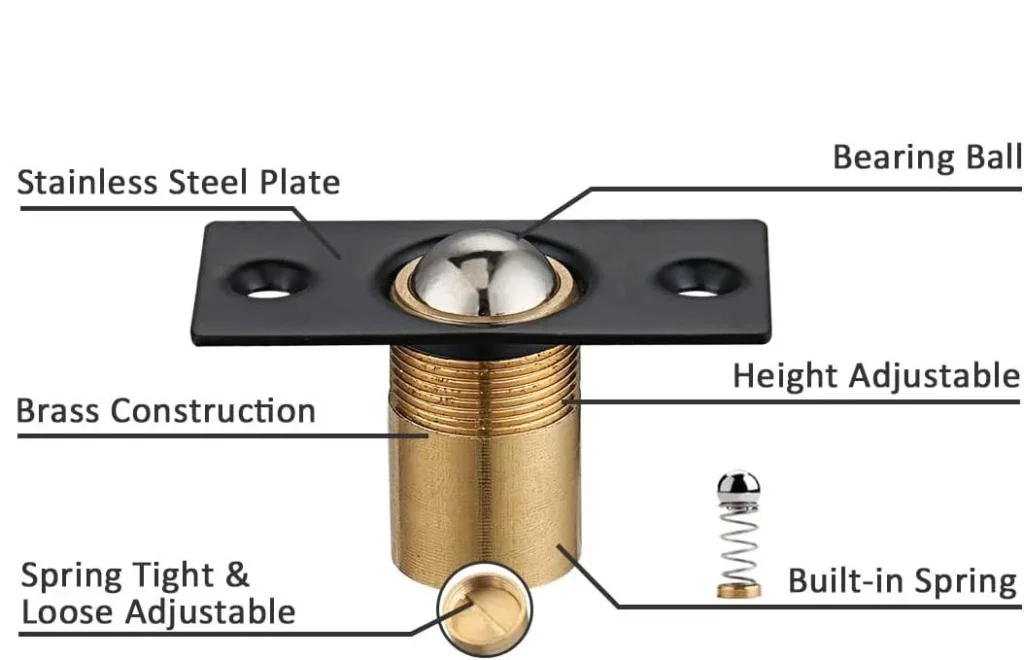
A ball catch is a passive latching device designed to hold a door in the closed position without using a traditional knob or latch bolt. It consists of two primary components:
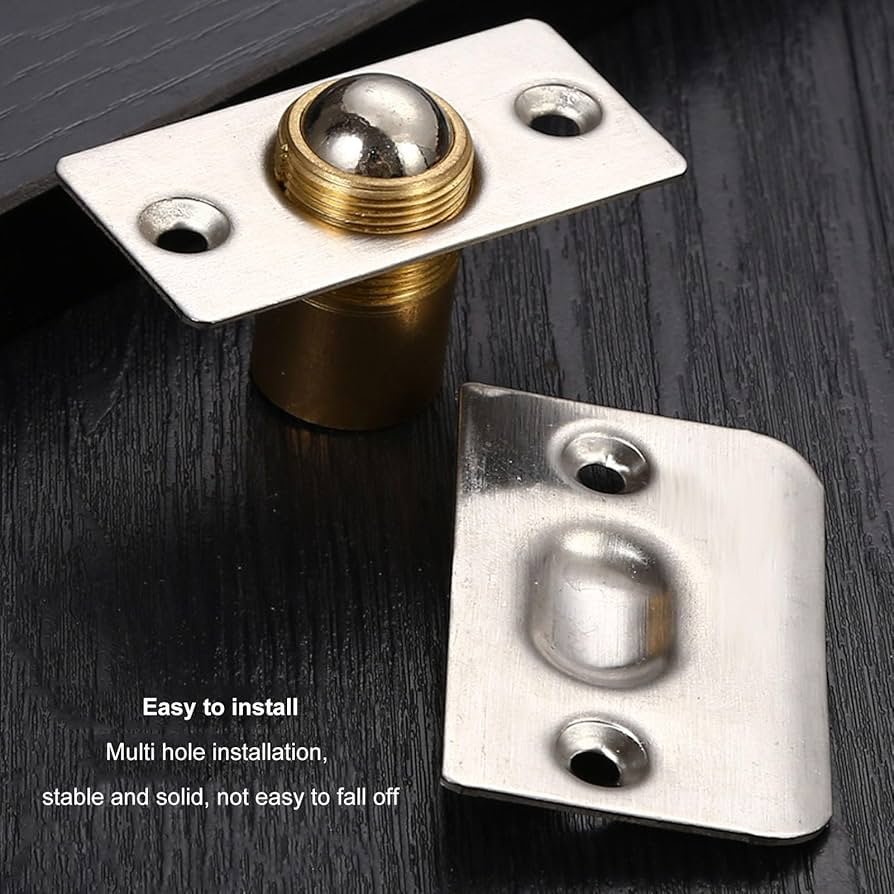
- A spring-loaded ball bearing housed within a cylindrical barrel, typically mortised into the top edge of the door
- A strike plate with a concave dimple or recess, mounted on the corresponding section of the door frame
As the door closes, the ball bearing compresses against the strike plate and snaps into the recess, creating tension that holds the door shut. When the door is pulled open, the spring compresses again, releasing the catch with minimal resistance.
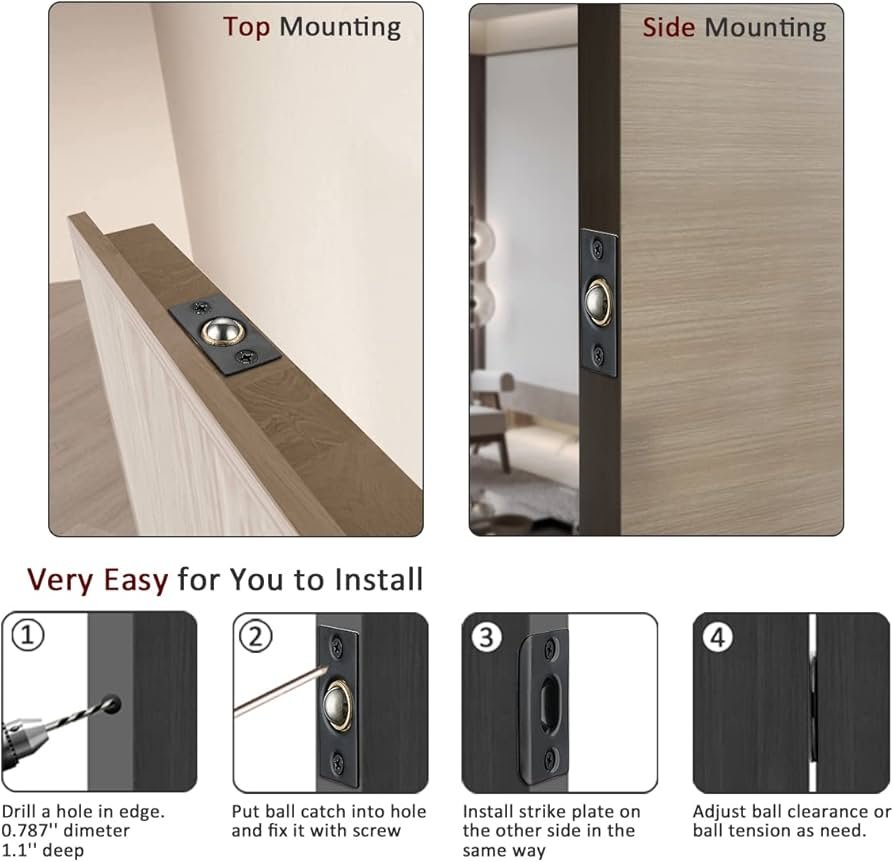
This friction-based mechanism doesn’t rely on handles or rotating components—only spring tension and precise alignment ensure a secure hold. Ball catches are typically installed at the top rail of the door to remain discreet, minimize wear, and reduce interference with standard door hardware.
⚙️ Precision during installation is critical. If the ball catch is misaligned, it can result in inconsistent closure or damage to the frame over time.
Where Are Ball Catches Commonly Used?
Ball catches are most often used on non-latching interior doors where a standard latch set isn’t needed. Common applications include:
- Closet doors, especially bi-fold or single-panel types, where silent and secure closure is preferred
- French doors or double doors, where one leaf remains stationary and requires a catch to stay closed
- Dummy doors with fixed knobs, where only appearance—not function—is needed from the handle
- Built-in cabinetry or utility panels with flush finishes and no locking hardware
What makes ball catches ideal in these scenarios is their ability to maintain door alignment and closure without visible hardware or user-operated mechanisms. They’re favored in minimalist or traditional interiors where clean lines and hidden functionality are prioritized.
🛠 Ball catches are not recommended for high-traffic or exterior doors, as they are not rated for security or weather resistance.
How to Adjust a Door Ball Catch
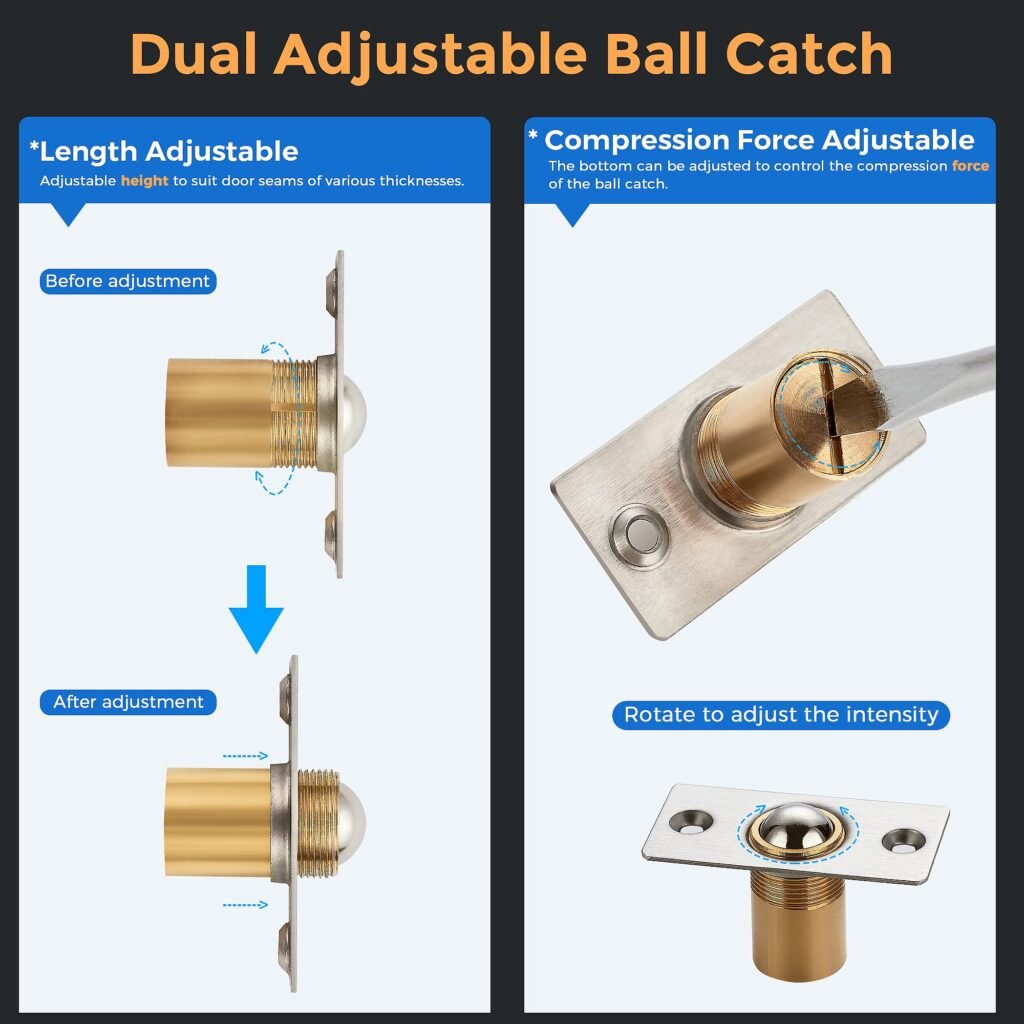
Ball catches are adjustable, and minor tweaks can make a big difference in usability. If your door is too hard to open or won’t stay closed, try this:
- Locate the catch – Usually on the top edge of the door
- Use a flathead screwdriver to turn the ball housing:
- Clockwise to lower the ball (less tension)
- Counter-clockwise to raise the ball (more tension)
- Test the door to ensure smooth engagement and proper holding force
Make small turns and test frequently. Over-tightening may make the door hard to open, while under-tightening can cause it to pop open too easily.
What If the Ball Catch Pops Out or Won’t Stay Closed?
Failure to latch securely is a common issue—especially in older doors, poorly aligned installs, or environments with shifting humidity. Before replacing the hardware, try these troubleshooting steps:
- Tighten the mounting screws: Loose fasteners can reduce the spring tension and cause misalignment.
- Check strike plate alignment: If the recess doesn’t align with the ball, adjust the plate’s position slightly until it catches cleanly.
- Inspect the spring: If the ball feels stuck or weak, it may be time to replace the catch entirely.
🧼 Maintenance tip: Sometimes, dirt or debris causes sticking. Remove the catch, clean the ball mechanism with a brush or compressed air, and apply a light lubricant before reinstalling.
Ball Catch vs. Alternatives: Which Should You Choose?
Not every door requires a ball catch. Depending on the door type and usage, alternative latching mechanisms may offer better performance or convenience.
| Type | Description | Best For |
|---|---|---|
| Ball Catch | Spring-loaded ball and strike plate | Closet doors, double interior doors |
| Magnetic Catch | Uses magnetic force to hold door closed | Lightweight cabinet or utility doors |
| Roller Latch | Spring-loaded roller with cam mechanism | Heavier doors with frequent operation |
If you’re prioritizing silence and ease of release, magnetic catches are a good choice. For strength and durability, especially in full-size doors, ball catches provide a more reliable hold under daily use.
How to Choose the Right Ball Catch for Your Door
Choosing the right ball catch involves more than just selecting the correct size. Here are the key factors to evaluate:
- Door construction: Solid-core or heavy doors may require stronger spring tension for secure engagement.
- Mounting location: Most ball catches are installed at the top of the door. Accurate placement is crucial to ensure alignment with the strike plate.
- Spring adjustability: Look for models that allow fine-tuning of the ball height or tension to customize holding force.
- Finish compatibility: Select a finish that complements your hinges, levers, or other visible hardware (e.g., satin chrome, matte black).
- Depth and fit: Ensure the housing can be mortised cleanly into the top rail without compromising door integrity.
📏 Always measure door thickness before installation. A catch that’s too deep can split the top edge of thinner doors or misalign with the strike plate.
Ball Catch FAQ: Quick Answers to Common Issues
🔹 Can a ball catch be used on exterior doors? Not recommended. Ball catches are not rated for security or weather resistance, making them unsuitable for exterior applications.
🔹 How long does a ball catch last? With minimal wear surfaces and no complex mechanics, a well-installed ball catch can function reliably for decades—especially with occasional lubrication and cleaning.
🔹 Can I add a ball catch to an existing door? Yes. As long as you have basic carpentry tools and measure carefully, retrofitting is straightforward. Ensure the strike plate aligns precisely with the extended ball position when the door is closed.
Summary
A ball catch may be small, but its impact is significant—especially in doors where simplicity, clean lines, and silent operation matter. Whether you’re building new or upgrading existing doors, understanding how ball catches work, how to adjust them, and when to replace them gives you long-term reliability with minimal hardware visibility.