Introduction
In today’s construction market, builders are increasingly forced to make critical decisions long before ground is broken. With land prices fluctuating, labor availability tightening, material costs remaining volatile, and financing conditions constantly shifting, the choice of project type has become a strategic decision rather than a purely technical one. Selecting the wrong development model can expose a project to unnecessary cost pressure, scheduling risk, and operational inefficiencies.
When comparing Single-Family and Multi-Family construction, key differences appear in cost, timelines, and scale. Single-family homes have higher per-unit costs due to fewer units and customization, while multi-family spreads fixed costs and standardizes materials, lowering per-unit metrics despite higher total capital. Schedules differ: single-family is linear, multi-family uses phased, parallel work. Scale efficiency favors multi-family through repetition; single-family sees modest gains with more variability.
Development Model and Project Organization
Single-family construction is fundamentally unit-centric. Each home functions as an independent project with its own foundation, structure, building envelope, and finish scope. Although design templates may be reused within a subdivision, execution often varies due to lot conditions, local inspections, and buyer-driven selections. This results in greater flexibility but limits the ability to fully standardize workflows.
Multi-family construction follows a system-based model. Multiple residential units are delivered within a single coordinated framework, typically sharing structural systems, MEP infrastructure, and construction phasing. Decisions are front-loaded, with design and specification choices locked in early to support consistency and coordination. This approach reduces variability during execution but requires more comprehensive planning and alignment across disciplines.
These contrasting development models influence not only how projects are built, but how risk, accountability, and performance are managed throughout the construction lifecycle.

Cost Structure: Fixed Costs, Variable Costs, and Unit Economics
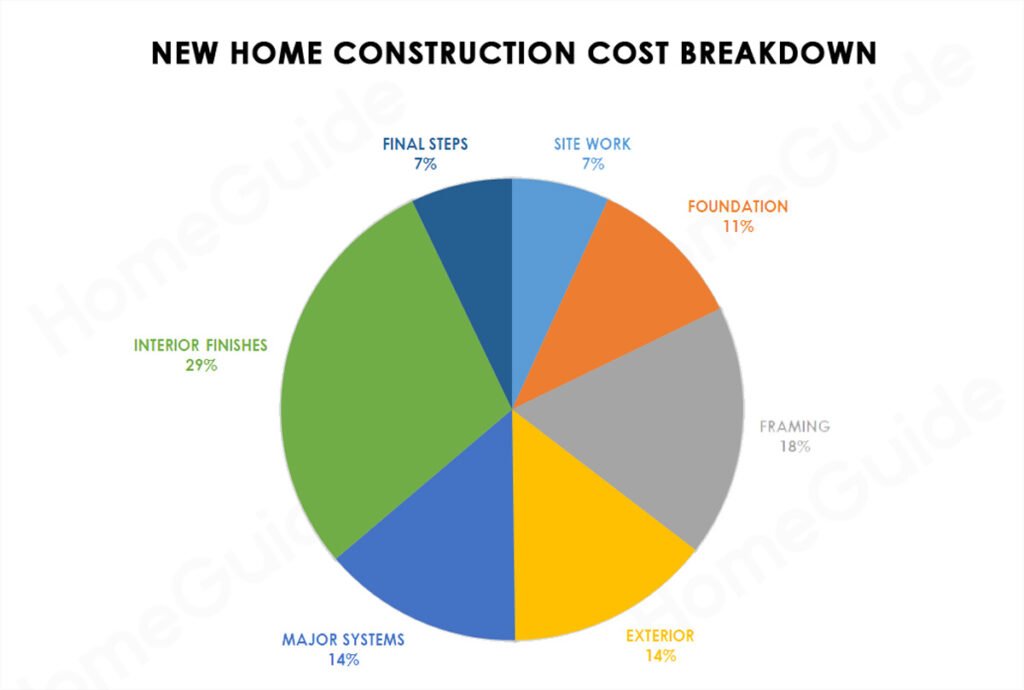
Cost behavior differs substantially between single-family and multi-family projects. In single-family construction, land acquisition, permitting, utility connections, and site development costs are largely absorbed on a per-lot basis. While this allows for clearer cost tracking by unit, it also means fewer opportunities to dilute fixed costs.
Multi-family developments spread these same fixed costs across a larger unit count. Land, design, entitlement, and infrastructure investments are shared, often resulting in lower per-unit land and soft cost figures. However, this efficiency comes at the expense of significantly higher total capital commitments and financial exposure.
Construction costs also reflect different priorities. Single-family homes typically use simpler structural systems and smaller-scale mechanical layouts, but rely more heavily on variable labor and fragmented procurement. Multi-family buildings require more complex structural and life-safety systems, vertical circulation, and shared mechanical infrastructure. While this increases total construction cost, standardization and volume purchasing often improve cost predictability and reduce unit-level variability.
Construction Timelines and Scheduling Complexity
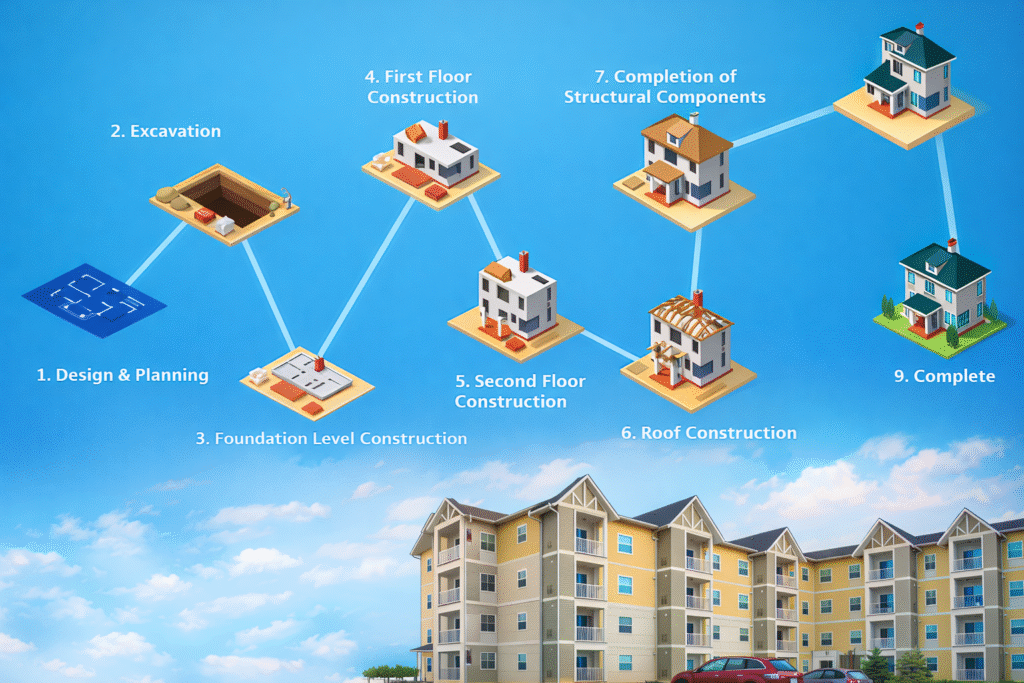
Single-family construction generally follows a linear scheduling model. Trades progress sequentially, and while multiple homes may be built concurrently, each unit advances largely independently. This reduces coordination complexity but limits opportunities to compress timelines through overlap.
Multi-family construction relies on phase-based scheduling and parallel workstreams. Structural, mechanical, and finishing activities often occur simultaneously across different areas of the building. When managed effectively, this approach can shorten overall project duration. However, it also amplifies the impact of delays along the critical path.
In single-family projects, schedule disruptions typically affect individual units. In multi-family developments, delays in inspections, structural completion, or key trade availability can cascade across dozens or hundreds of units, making schedule control both more critical and more challenging.
Scale Advantages and Repetition Effects
Scale advantages are one of the defining characteristics of multi-family construction. Repetition in unit layouts, assemblies, and material specifications allows crews to refine processes, improve productivity, and reduce error rates over time. Procurement benefits from volume pricing, and installation becomes faster as teams repeat identical scopes across multiple units.
Single-family construction benefits from repetition to a lesser extent. Standard plans and similar finishes can create efficiencies, but variations in lot conditions, buyer options, and sequencing limit the cumulative impact of learning curves. As a result, productivity gains tend to plateau more quickly.
Importantly, scale efficiency is not automatic. In multi-family projects, the benefits of repetition depend on disciplined planning, clear documentation, and consistent execution. Without strong coordination, the complexity of large-scale operations can offset the advantages of scale.
Conclusion
Single-Family and Multi-Family construction follow fundamentally different operational logics shaped by how costs are structured, timelines are managed, and scale efficiencies are achieved. Single-family projects offer flexibility and incremental delivery but typically carry higher per-unit costs and limited repeatability, while multi-family developments leverage standardization and volume to improve unit economics and productivity at the expense of greater coordination demands and upfront financial exposure. For builders, the key is not determining which model is “better,” but understanding how each aligns with project scale, market conditions, and organizational capacity, allowing development decisions to be made earlier, more deliberately, and with fewer downstream surprises.
Articles that you may be interested in:
What Are the Top Flooring Trends in 2025 for Multi-Family Housing?
How Can Builders Boost Door Installation Speed by 50% in Multi-Family Projects?
2025 Multifamily Housing Growth in North America: What Builders, Developers Need to Know