
Introduction
In door and cabinet projects, issues such as frame twisting, joint separation, uneven paint finish, or long-term dimensional movement are often attributed to installation or workmanship. In practice, many of these problems originate earlier—at the material selection stage. Pine is widely used for interior doors and cabinets, but variations in species, grade, and construction method can significantly affect performance once products are machined, finished, and installed.
Common pine wood options for door and cabinet construction include different pine species, clear and knotty grades, and solid versus engineered components such as finger-jointed pine. These materials are used across door frames, stiles, rails, panels, cabinet face frames, and structural members. Understanding how each pine option performs in terms of stability, appearance, machining, and finishing helps builders select materials that meet structural requirements while controlling cost and consistency.
Why Pine Is Commonly Used in Doors and Cabinets
Pine is one of the most widely used softwoods in door and cabinet construction due to its balance of availability, workability, and cost efficiency. Compared with many hardwoods, pine has a relatively uniform density and a softer fiber structure, making it easier to machine, shape, and assemble into door and cabinet components with consistent results.
From a construction perspective, pine provides sufficient structural strength for interior applications while remaining lightweight enough to reduce stress on hinges, fasteners, and cabinet hardware. Its compatibility with common adhesives, fasteners, and finishes further contributes to its widespread use in frames, rails, stiles, and face components.
Cost and supply stability are additional factors. Pine is available in large volumes from managed forests, allowing builders to specify consistent material across multi-unit or phased projects. However, pine is not a one-size-fits-all material. Differences in species, grading, and construction method directly influence dimensional stability, surface appearance, and long-term performance.
Common Pine Species Used in Door and Cabinet Manufacturing
Several pine species are commonly used in door and cabinet manufacturing, each with distinct characteristics. Radiata pine, widely sourced from New Zealand and South America, is known for its relatively straight grain, moderate density, and good dimensional stability. It is frequently used in engineered components such as finger-jointed stiles, rails, and frames.
Eastern white pine is lighter in weight and softer in texture, making it easy to machine and finish. Its lower density can be advantageous for interior components but may require careful design in load-bearing applications. Southern yellow pine, by contrast, has higher density and strength, which makes it suitable for structural elements but can be more challenging to machine and finish consistently.
Builders typically select pine species based on a balance of stability, appearance, machining behavior, and availability. For doors and cabinets, consistency across batches is often more critical than species alone, especially in large-scale construction projects.
Clear Pine vs. Knotty Pine
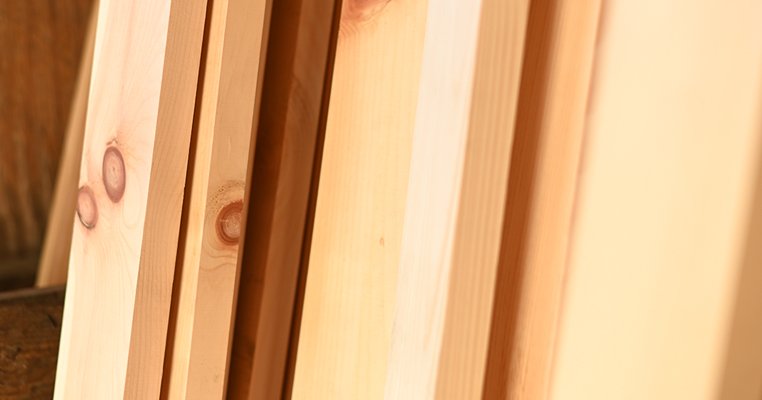
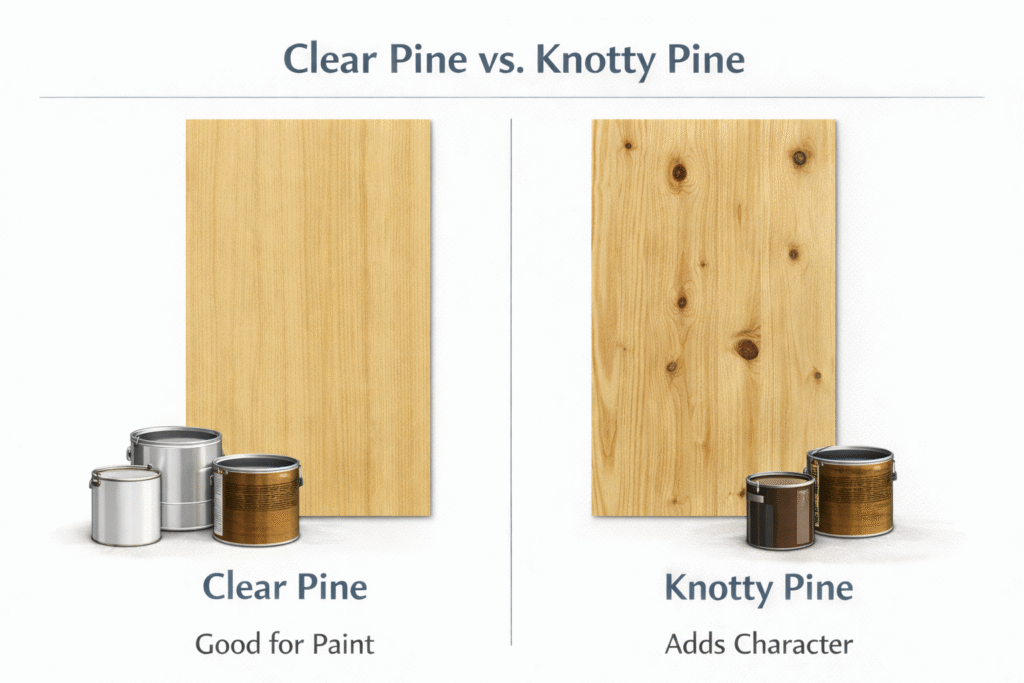
Pine is commonly classified into clear and knotty grades, which has a direct impact on both appearance and performance. Clear pine contains minimal knots and more uniform grain, making it well suited for painted doors, cabinet frames, and trim components where a smooth, consistent finish is required.
Knotty pine features visible knots and more variation in grain pattern. While often chosen for its natural appearance in decorative or rustic designs, knots can introduce challenges such as resin bleed, uneven absorption of finishes, and localized movement. In door and cabinet construction, knotty pine is typically limited to non-critical components or designs where visual character is intentional.
For builders, grade selection is often driven by finish requirements. Painted applications generally favor clear pine, while stained or natural finishes may accommodate knotty pine if proper sealing and preparation are applied.
Engineered Pine vs. Solid Pine Components
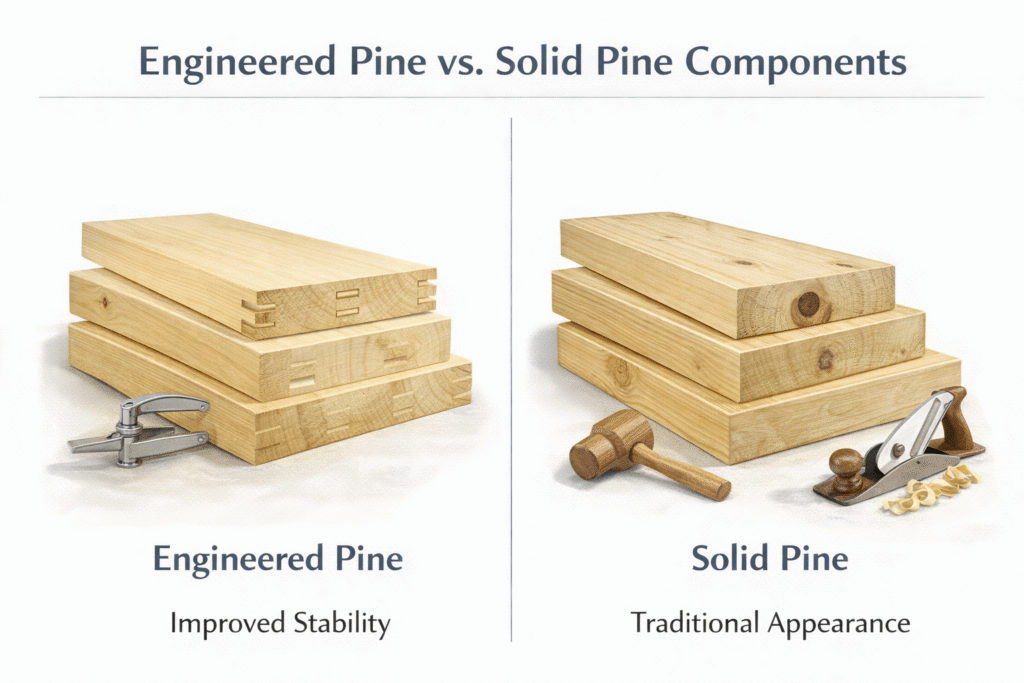
In modern door and cabinet construction, engineered pine components are widely used to improve dimensional stability and reduce the risk of warping or twisting. Finger-jointed pine is produced by joining shorter sections of wood with interlocking joints, allowing internal stresses to be distributed more evenly.
Compared with solid pine, engineered pine components typically offer better straightness, improved moisture stability, and more consistent performance across large quantities. This makes them particularly suitable for door frames, cabinet face frames, and long linear components where movement can affect alignment and fit.
Solid pine is still used in certain applications, especially where thickness, profile, or traditional construction methods are required. However, builders often prefer engineered pine in high-volume or precision-driven projects due to its predictability and reduced variability.
Pine Wood Selection for Doors
In door construction, pine is most commonly used in frames, stiles, rails, and internal structural components. Stability is a primary concern, as even minor movement can affect door alignment, reveal consistency, and long-term operation. Engineered pine is frequently paired with other core materials such as MDF or LVL to balance strength and surface quality.
Clear pine is typically specified for painted door frames and trim to achieve a smooth finish. The choice of pine also influences machining accuracy, hinge installation, and overall door squareness. Proper moisture control and grading are essential to ensure doors perform consistently after installation.
Pine Wood Selection for Cabinets
In cabinet construction, pine is often used for face frames, internal framing, and selected structural elements rather than large flat panels. Its good fastener-holding capability supports hinges, drawer slides, and hardware attachment when properly specified.
Pine components are commonly combined with plywood or MDF panels to optimize strength, flatness, and cost. For builders, selecting the right pine option helps maintain cabinet alignment, reduce joint movement, and support long-term functionality, particularly in kitchens and high-use areas.
Finishing and Performance Considerations
Pine responds well to paint and primer systems when properly prepared, but finishing performance varies by species and grade. Knots must be sealed to prevent resin bleed-through, especially in painted applications. Uneven grain density can also affect stain absorption if not addressed during surface preparation.
Environmental conditions during installation—such as humidity and temperature—play a critical role in long-term performance. Proper acclimation and moisture control help minimize post-installation movement and surface issues, particularly in door and cabinet assemblies with tight tolerances.
Conclusion
Pine remains a practical and versatile material for door and cabinet construction, but performance depends heavily on species selection, grading, and component design. By understanding the differences between common pine options and how they are used across door and cabinet components, builders can make informed material choices that balance appearance, stability, and cost while supporting consistent results across residential and multi-unit projects.
Articles that you may be interested in:
Which Is Better for Baseboards: Pine or MDF? Pros, Cons & Cost Breakdown
What Is a Shaker Style Molded Door? How It Differs from a Traditional Shaker Door
How Can Builders Ensure Quality When Sourcing Doors, Cabinets, Mouldings, and Flooring?