Water damage ruins baseboards fast. If you’re choosing between MDF and wood, especially for bathrooms or kitchens, water resistance is crucial. In this article, I’ll break down the truth about how MDF and wood react to moisture—and which one holds up better over time.
MDF baseboards are not water-resistant by default. When exposed to moisture, MDF swells, warps, and deteriorates quickly unless sealed or treated. Solid wood baseboards, especially hardwoods, resist moisture better when properly finished. However, neither is fully waterproof—PVC is better for wet areas. For most interior dry spaces, MDF is a cost-effective alternative to wood.
Let’s dive deeper into how MDF and wood perform in real-world conditions—especially when moisture is involved.
Is MDF Baseboard Waterproof?
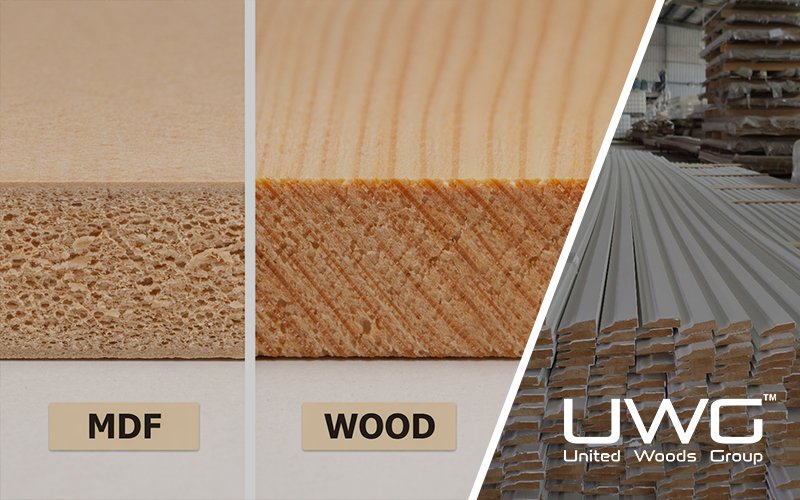
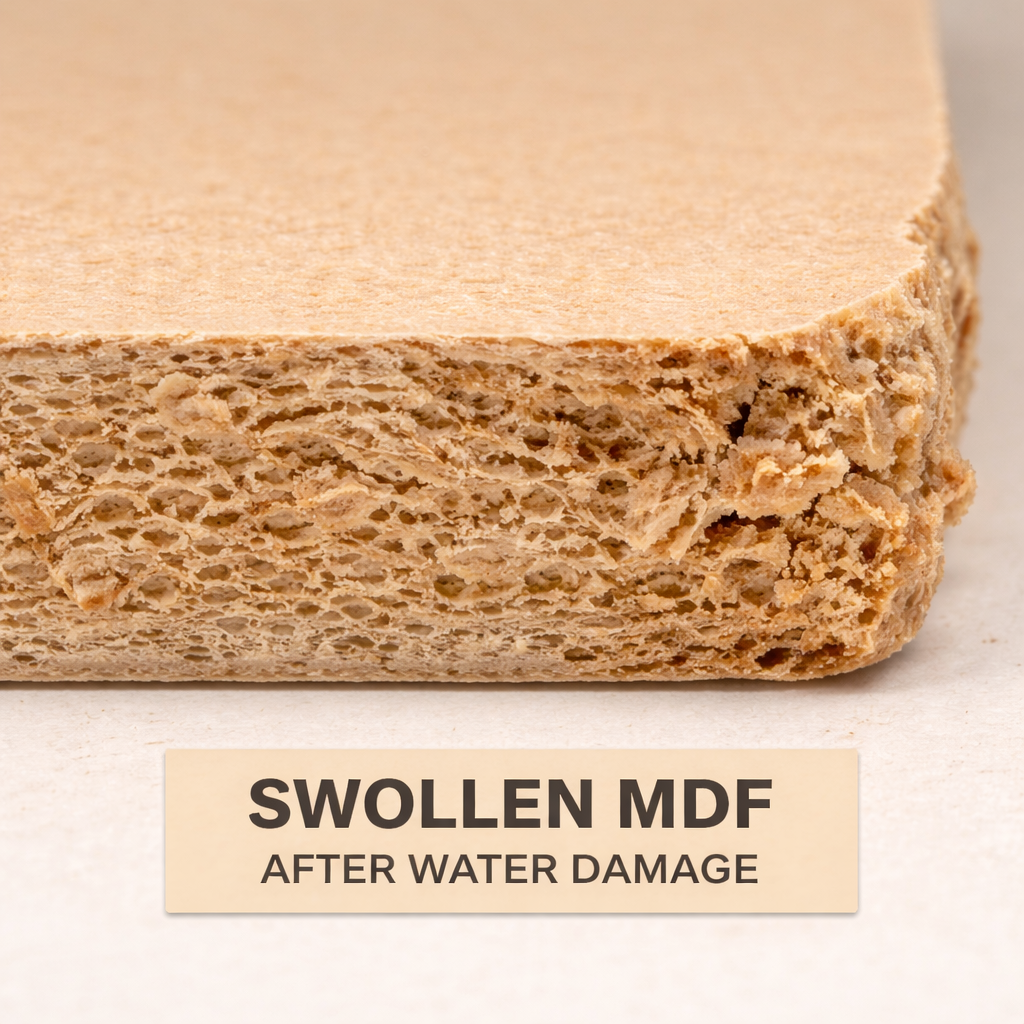
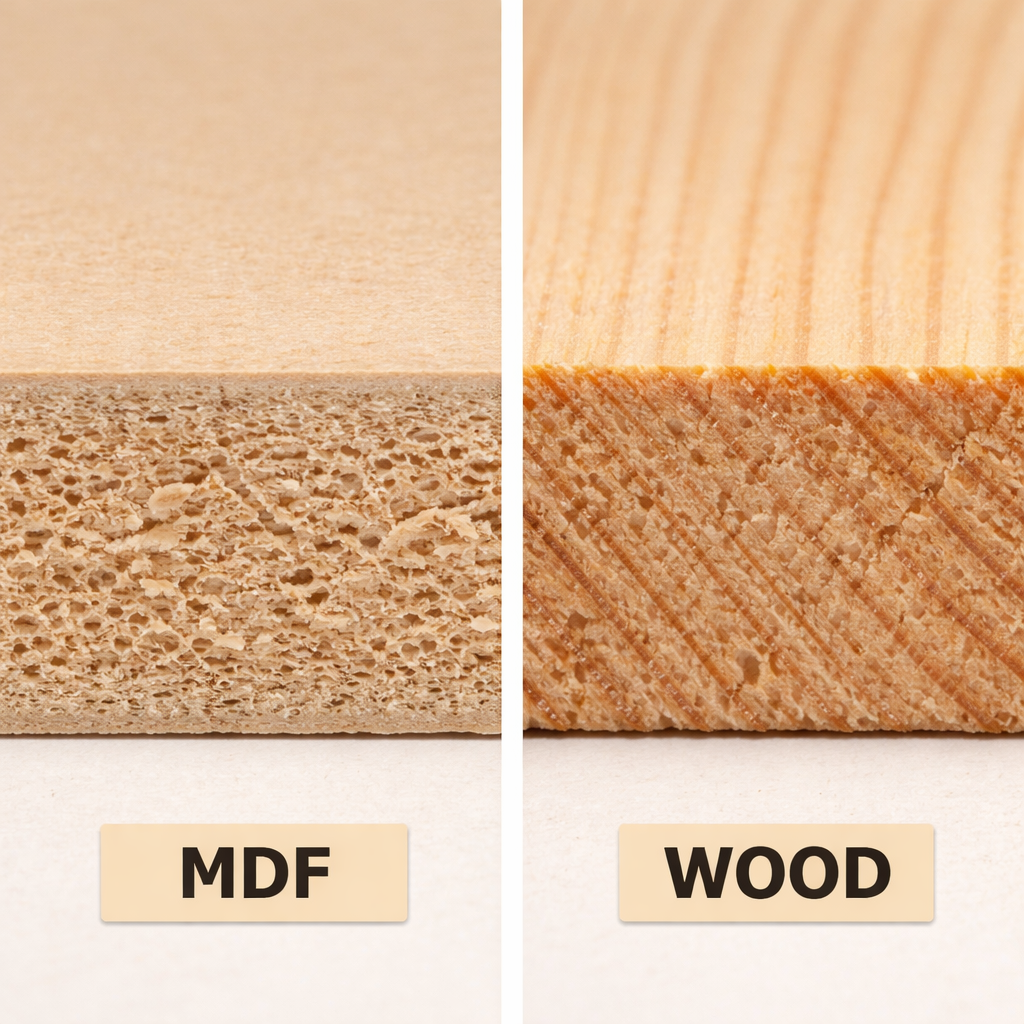
No, standard MDF (Medium-Density Fiberboard) baseboards are not waterproof. MDF is made by compressing wood fibers with resin and wax under heat. While this makes it dense and smooth, it also means it absorbs moisture quickly if unsealed.
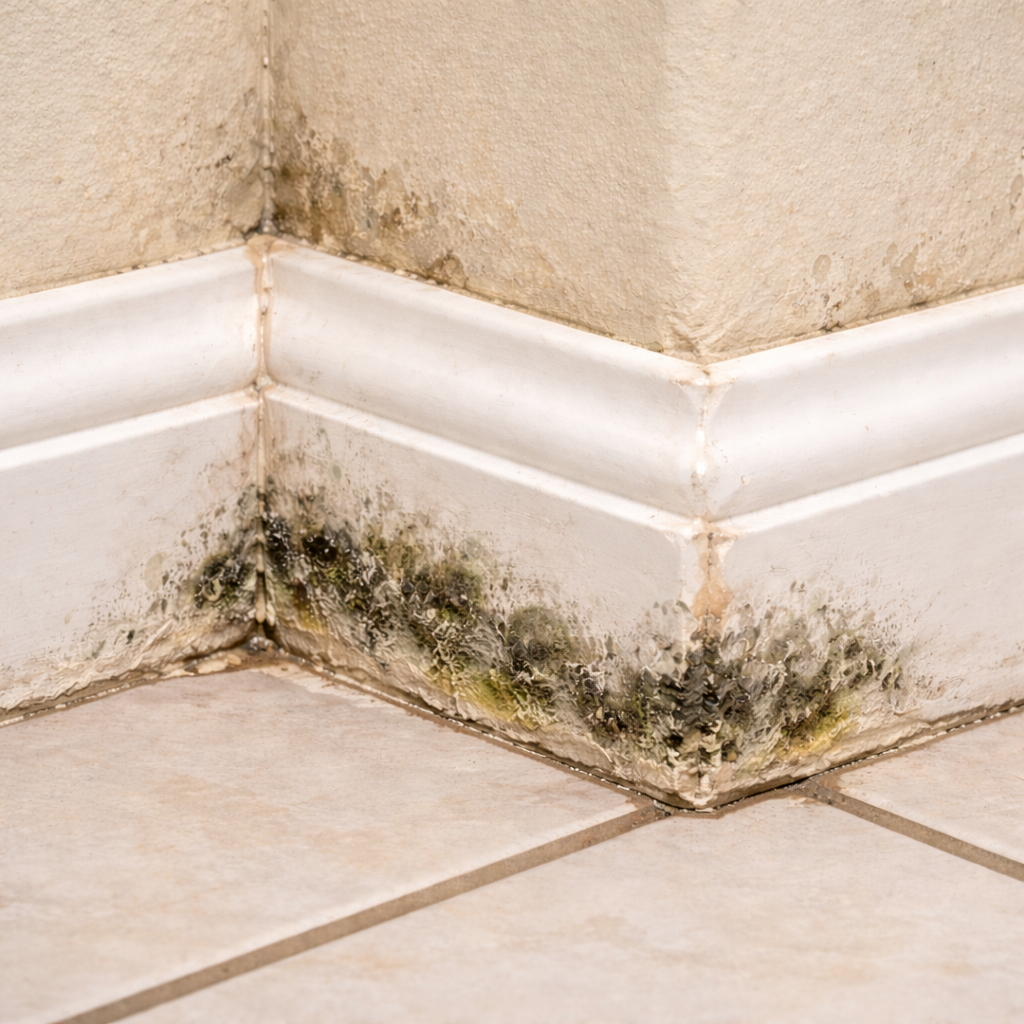
When exposed to water, MDF swells, softens, and eventually breaks down. You might see bubbling paint, separation at the seams, or even chunks flaking off. Some manufacturers offer moisture-resistant MDF (often colored green), but even that has limitations.
To improve water resistance:
- Prime and seal all sides of MDF baseboards before installation.
- Use a quality paint finish.
- Avoid installing in direct-contact wet areas like showers or laundry floor seams.
Conclusion: MDF is not waterproof. It must be sealed thoroughly and is still a risk in wet zones.
Is MDF or Wood Baseboard Better for Bathrooms?
Bathrooms are humid environments, and that’s where wood baseboards take the lead. While both materials can be used in bathrooms with proper sealing, solid wood handles moisture better over time.
Here’s why:
- Wood is naturally more resistant to humidity and small splashes.
- It doesn’t absorb moisture as rapidly as MDF.
- If damaged, wood is easier to sand, repaint, or repair.
However, if you’re dealing with regular water exposure, such as from kids’ bath time, cleaning tools, or floor puddles, PVC baseboards may be the better choice. They’re fully waterproof and built for wet environments.
Pro Tip: In high-humidity bathrooms, consider skipping MDF entirely. Choose wood or PVC for long-term peace of mind.
What Are the Disadvantages of MDF Baseboards?
MDF is loved for its affordability and clean finish—but it has notable downsides:
- Water-sensitive: Even minor exposure can cause swelling.
- Less durable: It dents and chips more easily than wood.
- Shorter lifespan: Especially in high-traffic or humid areas.
- Harder to repair: Damaged MDF often needs full replacement.
That said, MDF remains popular for budget-conscious, dry-area installations. Builders often use it in bedrooms, hallways, and living rooms where moisture is minimal.
Is MDF Better Than Wood for Moisture?
Short answer: No.
Wood, especially when treated or painted, performs better than MDF in moist environments. Here’s why:
- Wood fibers in MDF are not sealed individually, making it vulnerable to water entry.
- Solid wood is naturally denser and resists short-term moisture better.
- MDF absorbs water like a sponge—leading to warping, swelling, and crumbling.
Still, some moisture-resistant MDF types offer improved performance—but they’re still no match for well-finished wood or PVC in wet zones.
MDF vs. Wood Baseboard Cost: Is It Worth It?
Let’s talk numbers:
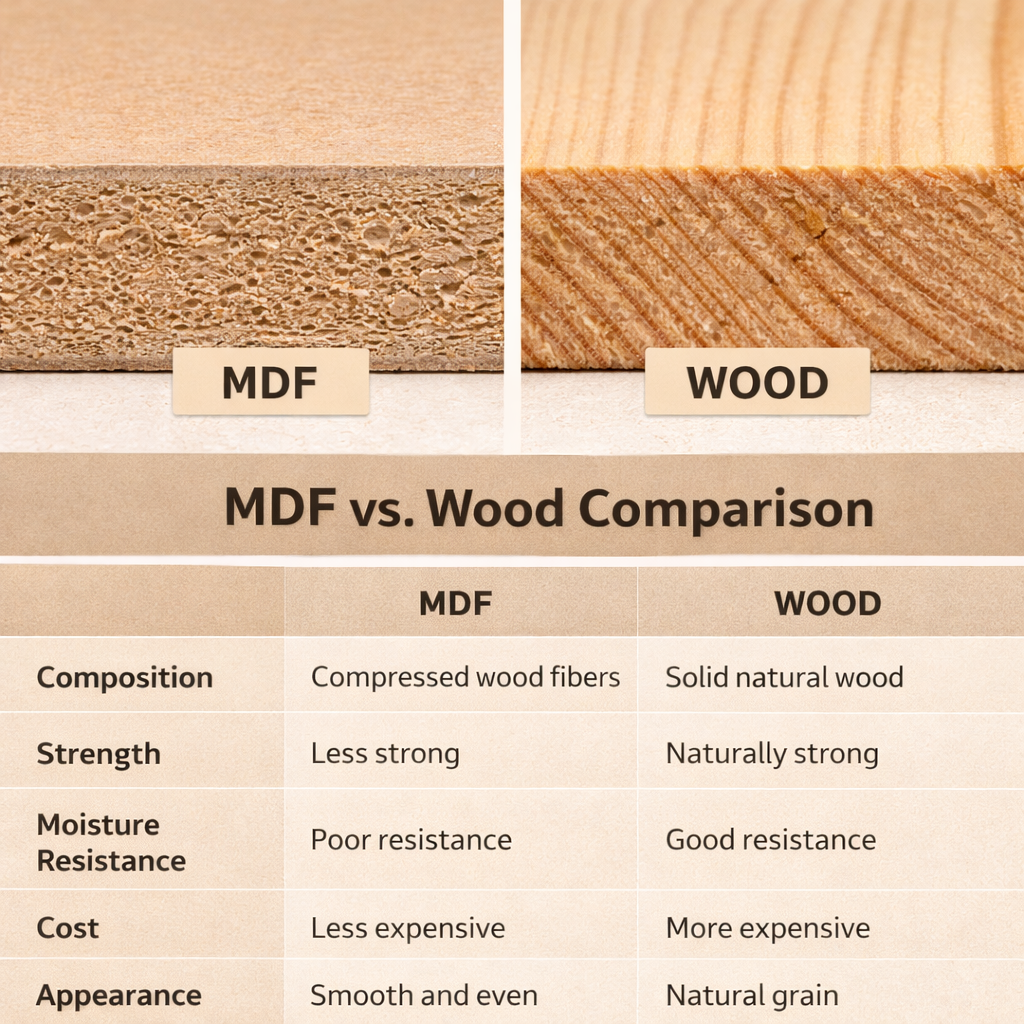
- MDF baseboards typically cost 30% to 50% less than wood.
- For large builds or wholesale projects, that’s a significant budget saver.
- Installation is faster with MDF due to its lightweight and smooth surface.
But factor in long-term durability:
- Replacing swollen MDF in a humid area means double labor and material costs later.
- Wood, while pricier upfront, may outlast MDF by years—especially if properly maintained.
Use MDF where moisture is low and aesthetics are key. For bathrooms or kitchens, wood or PVC is worth the extra cost.
Summary
Choosing between MDF and wood baseboards comes down to cost, aesthetics, and water exposure. For dry areas, MDF works well. In humid or wet rooms, wood—or better yet, PVC—is the smart call. Know your environment, and you’ll pick the material that lasts.
Articles that you may be interested in:
Modern Baseboard Designs for 2026 Interiors
Which Is Better for Baseboards: Pine or MDF? Pros, Cons & Cost Breakdown
What Should You Look for When Buying Baseboards and Crown Mouldings?