In 2026, noise-reducing flooring is no longer a luxury, it’s a critical requirement for multifamily projects. As urban density increases and residential buildings grow taller, impact noise from footsteps, furniture movement, and everyday activity has become one of the leading causes of tenant complaints. For builders, developers, and renovators, poor acoustic performance can quickly translate into higher maintenance costs, reputation risk, and reduced property value.
The most effective noise-reducing flooring solutions for multifamily buildings in 2026 combine durable surface materials with high-performance acoustic systems. Options such as luxury vinyl tile (LVT) with integrated sound-absorbing pads, engineered wood paired with acoustic underlayment, and specialized materials like rubber or cork can significantly reduce both impact and airborne noise while meeting modern building codes. Among these, LVT with attached acoustic backing stands out as a cost-effective, durable, and specification-friendly choice for large-scale developments.
This guide explores practical, project-ready flooring solutions for multifamily housing, examining acoustic performance, installation considerations, cost efficiency, and long-term return on investment to help project teams make informed flooring decisions in 2026 and beyond.
Why Noise-Reducing Flooring Is Critical in Multifamily Buildings
Noise is one of the leading causes of tenant dissatisfaction and formal complaints in multifamily buildings. Footsteps, furniture movement, and sound transmission between floors can quickly undermine daily comfort and privacy.
High-quality noise-reducing flooring helps limit impact and airborne noise, creating quieter living environments without structural changes. For developers and property managers, improved acoustic performance supports higher tenant retention, strengthens rental appeal, and reduces the risk of costly callbacks, repairs, or post-installation upgrades.
In actual multifamily projects, we often see noise-related complaints begin within the first 60–90 days after residents move in—especially in buildings using hard surface flooring without proper acoustic underlayment.
Acoustic Performance Standards: STC and IIC
When specifying flooring for multifamily projects, two acoustic performance metrics are especially important:
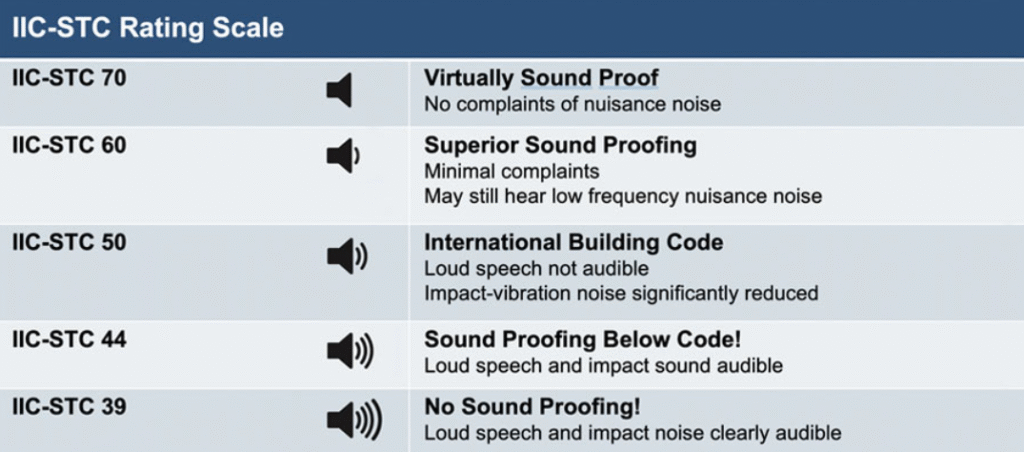
- STC (Sound Transmission Class): Measures how effectively a floor-ceiling assembly reduces airborne noise, such as voices, televisions, or music traveling between units. Higher STC values indicate better sound isolation and improved speech privacy.
- IIC (Impact Insulation Class): Measures how well a flooring system minimizes impact noise, including footsteps, dropped objects, or furniture movement. Since most tenant complaints stem from impact noise, IIC performance is often the primary concern in multifamily flooring design.
For most multifamily developments, building codes and developer specifications typically require flooring assemblies to achieve STC ≥ 50 and IIC ≥ 50. In higher-end or noise-sensitive projects, IIC ratings of 60 or above are increasingly specified to meet HOA guidelines, local regulations, and elevated resident expectations.
Common Noise-Reducing Flooring Solutions (with Price Comparison)
For multifamily projects in 2026, noise-reducing flooring is selected based on acoustic performance, cost, and application area.
- LVT + Sound Underlayment A cost-effective and widely used solution delivering solid impact noise reduction. Suitable for living rooms and bedrooms, offering reliable STC/IIC performance with easy installation.
- Engineered Wood + Rubber Underlayment A premium option that combines natural wood aesthetics with higher impact noise control. Commonly used in upscale units or full-home applications.
- Cork Flooring Naturally sound-absorbing and comfortable underfoot. Best suited for bedrooms and children’s rooms where quieter environments are preferred.
- Floating Floor Systems Designed for higher acoustic demands, especially in top-floor or noise-sensitive areas. Offers strong isolation but at a higher overall cost.
Most multifamily developments favor LVT-based systems for their balance of performance, durability, and price.
Here are the most common noise-reducing flooring options for multifamily buildings in 2026:
| Flooring Type | STC / IIC Rating | Best Used In | Estimated Cost (per sq. ft.) |
|---|---|---|---|
| LVT + Sound Underlayment | STC 52 / IIC 58 | Living rooms, bedrooms | $3.50–$5.50 |
| Engineered Wood + Rubber | STC 54 / IIC 60 | Premium units, full homes | $5.00–$7.00 |
| Cork Flooring | STC 50 / IIC 56 | Bedrooms, kids’ rooms | $4.00–$6.00 |
| Floating Floor Systems | STC 55 / IIC 62 | Top-floor, noisy areas | $6.00–$8.00 |
Prices are estimated market ranges and may vary by brand, location, and installation method.
ROI: Initial Investment vs Long-Term Savings
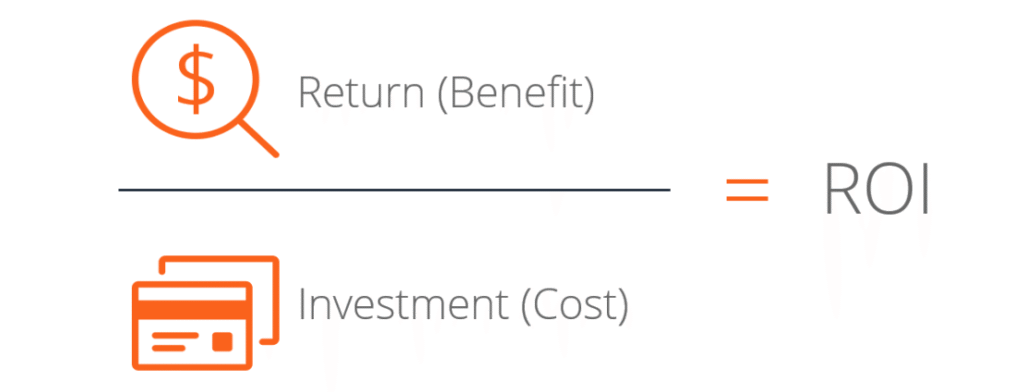
In multifamily projects, noise-reducing flooring is not just a design upgrade—it’s a financial decision. While acoustic flooring systems may require a higher upfront investment, the long-term savings often outweigh the initial cost.
On average, upgrading to a noise-reducing flooring system (such as LVT/SPC with acoustic underlayment or engineered wood with rubber backing) adds approximately $3–$5 per square foot compared to standard hard flooring. For a typical 50-unit multifamily building, assuming an average of 900 sq. ft. per unit, this represents an additional upfront investment of roughly $135,000–$225,000.
In many projects, this number initially raises concern during budget reviews. However, it is often reconsidered once developers compare it against the cost of post-installation retrofits or tenant turnover driven by repeated noise complaints.
However, studies and property management data show that effective noise-reduction measures can lead to a 30–50% reduction in noise-related tenant complaints. Fewer complaints translate directly into lower operational costs, including:
- Reduced maintenance call-outs and inspections
- Fewer post-installation retrofits or flooring replacements
- Lower management and administrative time handling disputes
- Improved tenant retention, reducing vacancy and turnover costs
For a 50-unit building, even a conservative reduction in complaints and rework can result in annual savings of $15,000–$30,000 in maintenance, management, and turnover-related expenses. Over a typical 7–10 year ownership or operation cycle, this can offset—or exceed—the initial acoustic flooring investment.Installation & Maintenance Tips
Even the best flooring won’t perform if installed poorly. Key best practices:
- Edge Sealing: Use acoustic sealant at walls and seams to prevent sound bridging
- Underlayment Coverage: Follow manufacturer guidelines—never leave gaps
- Ongoing Checks: Inspect for subfloor settling or underlayment wear every 6–12 months
Hiring trained installers ensures your floor meets both performance standards and local building codes.
Common Mistakes to Avoid
Most of these issues are not caused by product failure, but by decisions made during specification review, cost-cutting, or installation coordination. Even with the right materials, acoustic performance can fail if common mistakes are overlooked:
- Focusing on Flooring Only, Not the System: Ignoring underlayment quality or installation methods often results in poor noise control.
- Skipping Acoustic Underlayment: Hard flooring installed directly over concrete significantly increases impact noise.
- Assuming Product Ratings Apply to All Installations: STC and IIC ratings depend on the full floor assembly, not just the surface material.
- Poor Installation Practices: Rigid wall connections, missing expansion gaps, or improper adhesives reduce acoustic effectiveness.
- Choosing the Lowest-Cost Option: Initial savings can lead to higher long-term costs due to complaints, rework, or tenant turnover.
Avoiding these mistakes protects both acoustic performance and long-term project ROI.
Frequently Asked Questions about Noise-Reducing Flooring
Q: What is the difference between STC and IIC ratings for flooring?
A: STC (Sound Transmission Class) measures airborne sound blocking (like voices or TV noise). IIC (Impact Insulation Class) measures impact sound blocking (like footsteps or dropped objects). For flooring, IIC is the most critical metric, as “heavy footsteps” are the #1 noise complaint in multi-story buildings.
Q: Does Luxury Vinyl Tile (LVT) need an underlayment to reduce noise?
A: Yes. Standard glue-down LVT has poor acoustic properties. To meet multi-family codes (usually IIC 50+), you must either install a separate acoustic cork/rubber underlayment or, more commonly in 2026, specify SPC flooring with a pre-attached acoustic pad (IXPE).
Q: What is the recommended IIC rating for luxury apartments?
A: While the International Building Code (IBC) requires a minimum of 50 IIC, this is often considered “paper thin” by tenants. For “Luxury” or “Class A” multi-family assets, developers should aim for an IIC of 60 to 65, which renders most footsteps inaudible.
Q: Is carpet still the best option for soundproofing?
A: Acoustically, yes—carpet naturally dampens sound better than any hard surface. However, due to hygiene and maintenance trends, most developers are switching to Rigid Core Vinyl (SPC) with high-performance underlayments to get the “wood look” without the noise issues of laminate.
Summary
In 2026, noise control has become a core performance requirement for multifamily projects, not an optional upgrade. Flooring plays a critical role in reducing impact noise, meeting acoustic standards, and improving overall living comfort.
By selecting the right flooring systems, such as LVT/SPC with acoustic underlayment, engineered wood with rubber backing, or properly designed floating floors, developers can achieve reliable STC and IIC performance while controlling costs. When combined with proper installation, noise-reducing flooring helps reduce tenant complaints, minimize rework, and deliver strong long-term ROI.
Ultimately, investing in acoustic flooring solutions supports higher resident satisfaction, smoother property operations, and greater long-term asset value, making it a smart, future-ready decision for multifamily developments.
Articles that you may be interested in:
Light vs Dark Flooring: How Color Affects Interior Design
Flooring Patterns: Herringbone, Chevron, Wide Planks, and More