Introduction
For years, white kitchen cabinets have been the default choice across residential projects, favored for their neutrality and broad market acceptance. In many developments, white was selected not because it was exciting, but because it felt safe—easy to specify, easy to coordinate, and unlikely to face resistance from future buyers or end users. That mindset, however, is gradually shifting as kitchens are expected to deliver more character without sacrificing longevity.
Looking toward 2026, kitchen cabinet color trends are moving clearly beyond pure white in four key directions: warm neutrals that replace stark whites as the new foundation, nature-inspired greens and earthy tones that introduce subtle color without overwhelming the space, deep muted colors that add contrast and visual depth, and wood tones that function as a core color strategy rather than a secondary material choice. Together, these trends reflect a more mature, layered approach to color selection in modern kitchens.
Trend 1: Warm Neutrals as the New Foundation
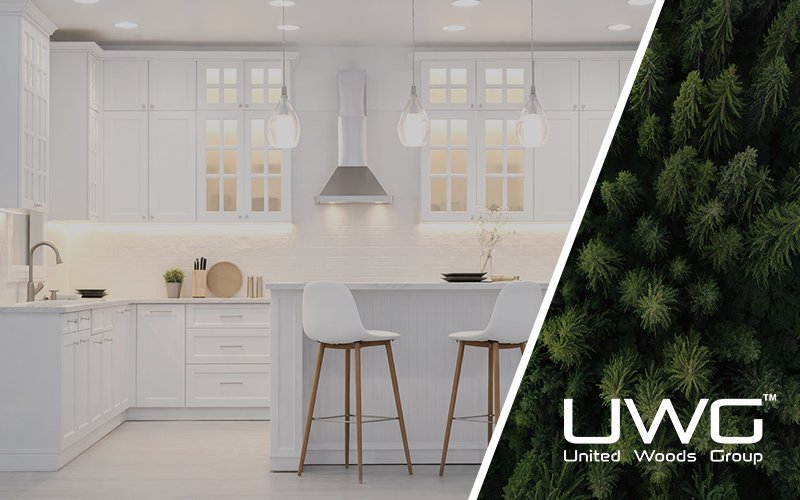
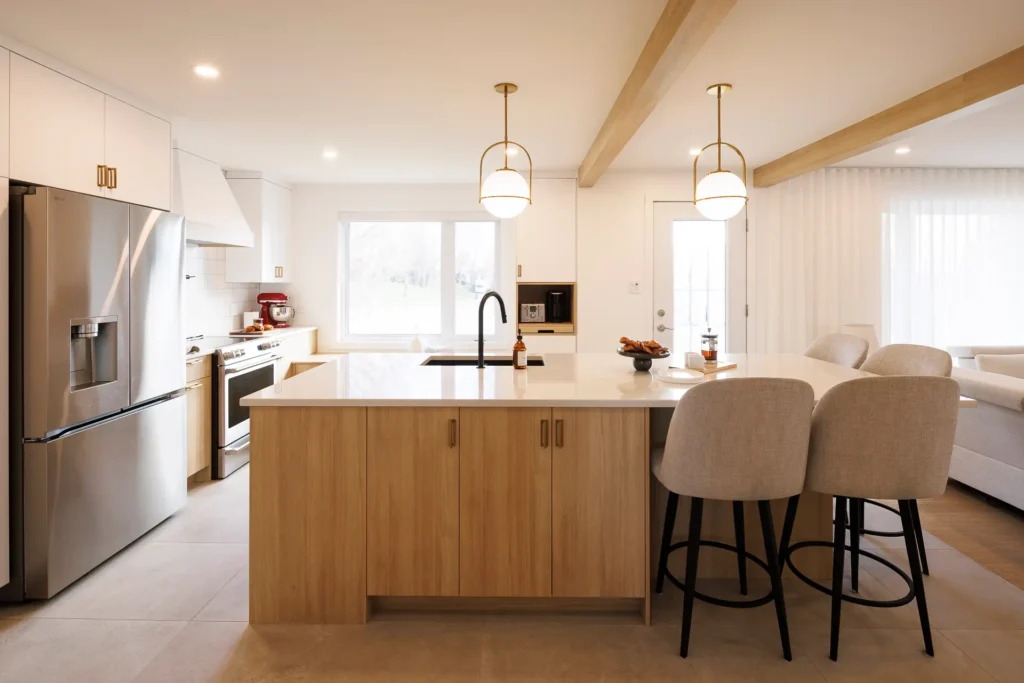
As kitchens move beyond stark white, warm neutrals are emerging as the new baseline color choice. Shades such as off-white, cream, greige, and soft beige are increasingly specified in place of pure white, offering a more forgiving and visually comfortable alternative.
Unlike cooler whites, warm neutrals perform more consistently under different lighting conditions. They reduce contrast issues between cabinetry, countertops, and flooring, particularly in open-plan layouts where kitchens connect directly with living areas. This makes them easier to integrate across a wide range of architectural styles.
From a broader market perspective, warm neutrals retain much of white’s versatility while adding depth and warmth. They feel familiar without appearing dated, which explains their growing adoption across both new construction and renovation projects.
Trend 2: Nature-Inspired Greens and Earth Tones
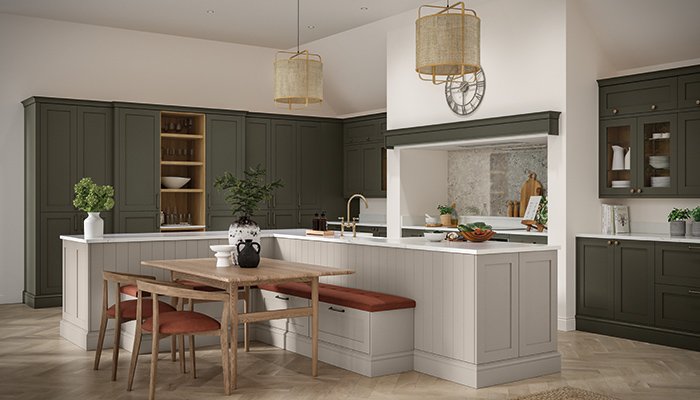
Nature-inspired colors continue to gain traction as kitchens adopt softer, more grounded palettes. Muted greens and earth tones—such as sage, olive, clay, and sand—are becoming increasingly common in cabinetry selections.
These hues provide a subtle way to introduce personality without overpowering the space. Compared to brighter colors, they pair naturally with wood textures, stone surfaces, and matte metal finishes, reinforcing a calm and cohesive aesthetic.
Their adaptability is another key factor. Whether applied across full cabinetry runs or used selectively on lower cabinets or island units, these tones offer visual interest while remaining compatible with neutral design frameworks.
Trend 3: Deep, Muted Colors for Contrast and Depth
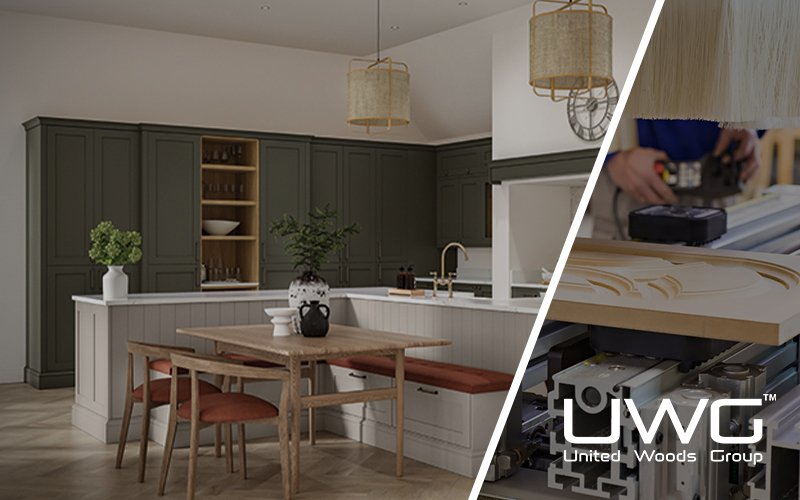
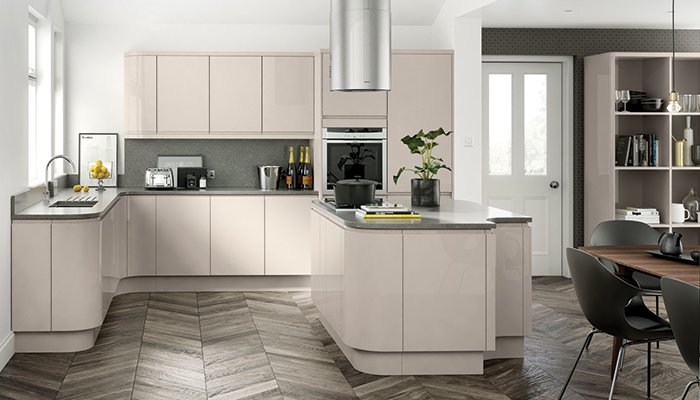
Deep cabinet colors are evolving from niche design statements into practical tools for adding structure and contrast. In 2026, tones such as deep navy, charcoal, and forest green are increasingly used to define zones and anchor kitchen layouts.
Rather than dominating entire spaces, these colors are typically applied with intention—on islands, base cabinets, or focal areas—creating depth without making kitchens feel heavy. When balanced with lighter finishes, they enhance architectural clarity.
Matte and low-sheen surfaces play a significant role in this shift, softening darker tones and improving their long-term visual performance. As a result, deep colors are becoming more approachable across a wider range of residential projects.
Trend 4: Wood Tones as a Core Color Strategy
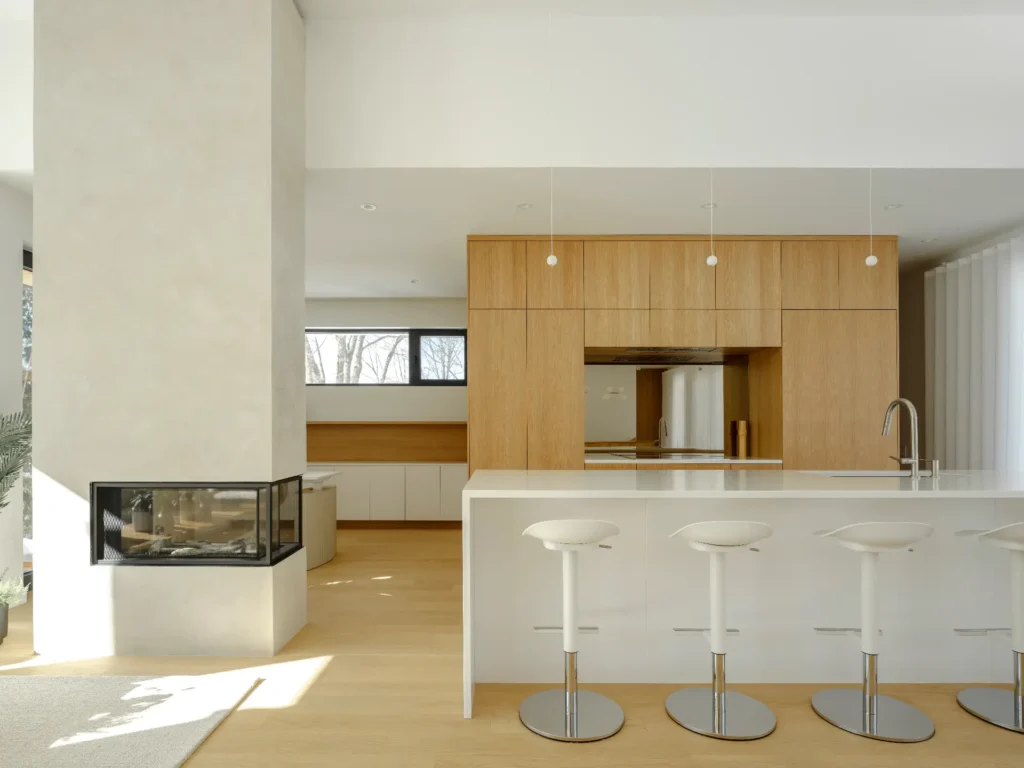
Wood tones are no longer treated as secondary accents but as central elements of kitchen color planning. Light to medium wood finishes are increasingly valued for their warmth, texture, and long-term aesthetic stability.
Lighter woods with subtle grain patterns align well with modern and transitional kitchens, while medium tones add richness without introducing heaviness. In many designs, wood cabinetry is combined with painted finishes to create layered, balanced compositions.
This approach positions wood not just as a material choice, but as an integral part of the overall color strategy—one that softens interiors and supports long-term design relevance.
Frequently Asked Questions about 2026 Cabinet Trends
Q: Is the all-white kitchen officially out of style in 2026?
A: The “sterile” hospital-white kitchen is fading. However, white is evolving, not disappearing. The trend is shifting toward “Warm Whites”—creamy off-whites, taupes, and mushroom tones that offer a cozy, lived-in feel rather than a stark industrial look.
Q: Will choosing green or blue cabinets hurt my home’s resale value?
A: Not if you choose the right shade. Deep Navy (like Hale Navy) and Earthy Greens (like Sage or Olive) are now considered “New Neutrals” in the design world. They pair beautifully with wood and stone, maintaining broad appeal for future buyers compared to bright, niche colors.
Q: What wood finishes are trending for cabinets?
A: The orange-toned honey oak of the 90s is gone. The 2026 trend is all about Natural White Oak and Walnut with matte, low-sheen finishes. These woods add texture and warmth without feeling heavy or dated.
Q: How do I pull off dark cabinets in a small kitchen?
A: Use the Two-Tone Strategy. Install dark colors (forest green, charcoal, navy) on the lower cabinets or the island, and keep the upper cabinets light (warm white or open shelving). This grounds the space while keeping the room feeling open and airy.
Conclusion
Overall, kitchen cabinet color trends for 2026 reflect a shift away from rigid, single-color solutions toward more balanced and enduring palettes. Warm neutrals, nature-inspired tones, deep muted colors, and wood finishes are expanding design flexibility while maintaining broad market acceptance. Rather than chasing short-term fashion, these trends point to a more thoughtful approach to color—one that prioritizes longevity, compatibility, and the evolving role of the kitchen as a long-term living space.
Articles that you may be interested in:
Where Can I Find Factory-Made Kitchen Cabinets? Here’s Why Builders Choose UWG
What Kitchen Cabinet Colors Are Timeless?
Are Kitchen Cabinet Doors Standard Size? Everything You Need to Know