I’ve seen it on plenty of jobsites: solid lumber that looked fine on delivery but twisted, bowed, or crowned before installation. That leads to wasted time, extra material, and callbacks nobody wants. On larger builds, even a small percentage of bad studs can slow crews down and throw off schedules. Finger-jointed wood exists to solve these problems. By focusing on straightness, stability, and consistency, it gives builders a more predictable material to work with—especially when speed and accuracy matter.
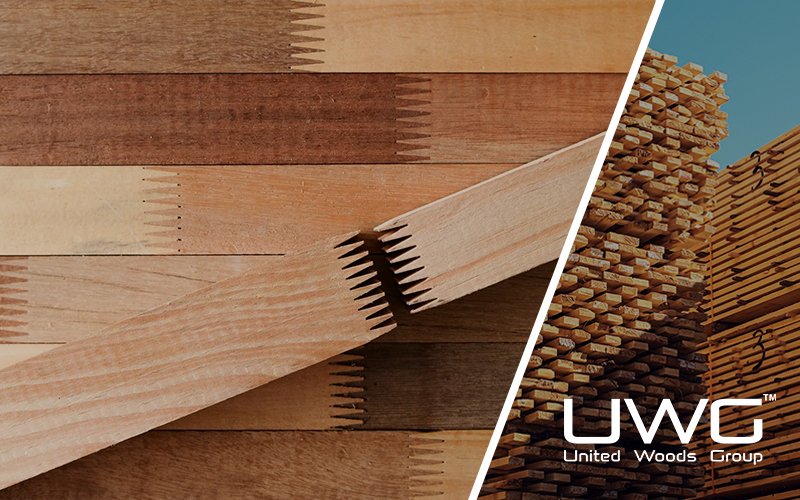
Finger-jointed wood is lumber made by joining shorter, kiln-dried wood pieces end to end using interlocking “finger” cuts and high-strength structural adhesive. This manufacturing process creates long, straight, and dimensionally stable boards with consistent strength and reduced defects. In the US and Canada, finger-jointed wood is commonly used for framing studs, plates, trim, and other applications where straightness, stability, and material efficiency matter more than single-piece lumber.
Now that we understand what finger-jointed wood is and how it’s made, the real question for builders is how it actually performs on site—and whether it makes practical sense to use.
Why Finger-Jointed Wood Matters on the Jobsite
On paper, many lumber products look similar. On the jobsite, the differences are obvious. Crooked studs slow framing, cause layout issues, and create downstream problems with drywall, cabinetry, and trim.
Finger-jointed lumber is popular with builders because it reduces variability. When you pull a stud from the pile, you’re more likely to get something usable without fighting it into place. Over the course of a full house or multi-unit build, that consistency saves real labor hours.
It also helps builders control waste. Fewer rejected boards mean fewer returns, fewer pile-offs, and less cleanup at the end of the job.
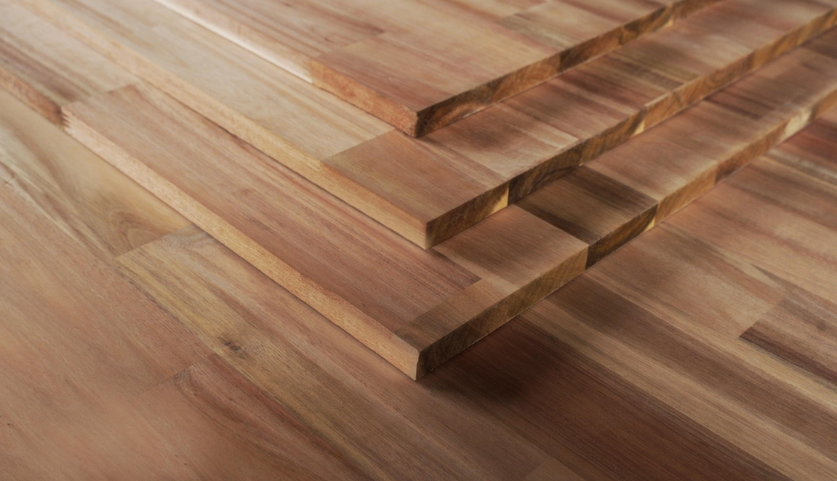
What are the advantages of finger-jointed wood?
The most noticeable advantage is straightness. Because finger-jointed wood is assembled from shorter, kiln-dried pieces, internal stresses are reduced before the board ever reaches the site.
Other important advantages for builders include:
- Improved dimensional stability, even after installation
- More uniform quality across an entire bundle
- Reduced material waste compared to solid lumber
- Predictable performance, especially for framing walls
From a practical standpoint, crews spend less time sorting lumber and more time installing it. That alone can justify its use on many projects.
What is finger-jointed wood used for?
Finger-jointed lumber is used in both structural and non-structural applications, depending on how it is manufactured, graded, and certified.
Structural uses (when code-approved):
- Wall studs in residential framing
- Top and bottom plates
- Vertical load-bearing members
- Components used in engineered wood systems
Non-structural uses:
- Interior trim and moulding
- Door and window jambs
- Baseboards, casing, and paint-grade finish work
Builders should always verify the grade stamp and documentation, especially when inspectors are involved.

What are the disadvantages of finger-jointed wood?
Despite its benefits, finger-jointed wood has limitations that builders need to respect.
Common concerns include:
- Glue lines can be sensitive to moisture if improperly protected
- Not all products are exterior-rated
- Misuse can lead to joint failure over time
- Some clients or inspectors may question the appearance
Most failures aren’t caused by poor manufacturing, but by using the material in environments it wasn’t designed for. Understanding those limits is critical.
Why do manufacturers use finger-jointed wood for trim and moulding?
Trim work demands straight, clean, and consistent boards. Solid lumber often moves after installation, leading to gaps, cracking paint, or visible joints.
Finger-jointed wood is ideal for trim because:
- Defects like knots are removed early
- Boards remain straight over time
- Paint finishes look smoother and more uniform
- Long lengths are easier to produce consistently
That’s why finger-jointed wood has become the standard for paint-grade interior trim across North America.
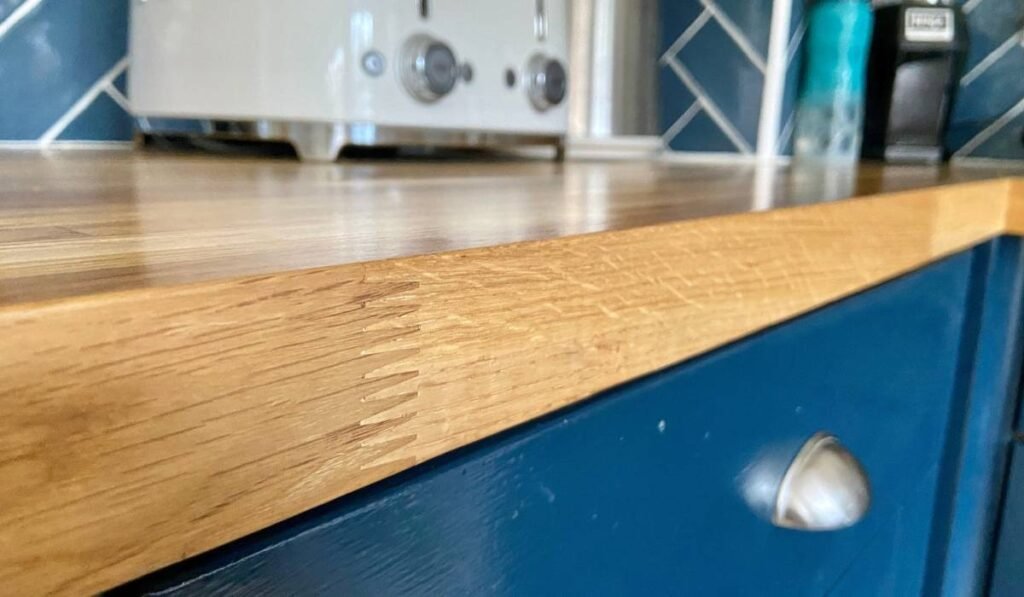
How finger-jointed wood is manufactured
The manufacturing process is designed to eliminate the weaknesses found in solid lumber.
Steps typically include:
- Kiln-drying lumber to consistent moisture levels
- Cutting out defects such as knots and splits
- Milling precise interlocking finger profiles
- Applying high-strength adhesive
- Pressing and curing under controlled conditions
The resulting wood finger joint distributes stress across multiple bonding surfaces, improving overall performance.
Strength vs solid lumber: what actually matters
A common misconception is that finger-jointed wood is weaker than solid lumber. In reality, properly manufactured finger joints can match or exceed the strength of solid lumber under straight-line loading.
What matters most to builders is:
- Load direction
- Product certification
- Proper installation
Finger jointed wood strength depends on engineering and grading, not assumptions based on appearance.
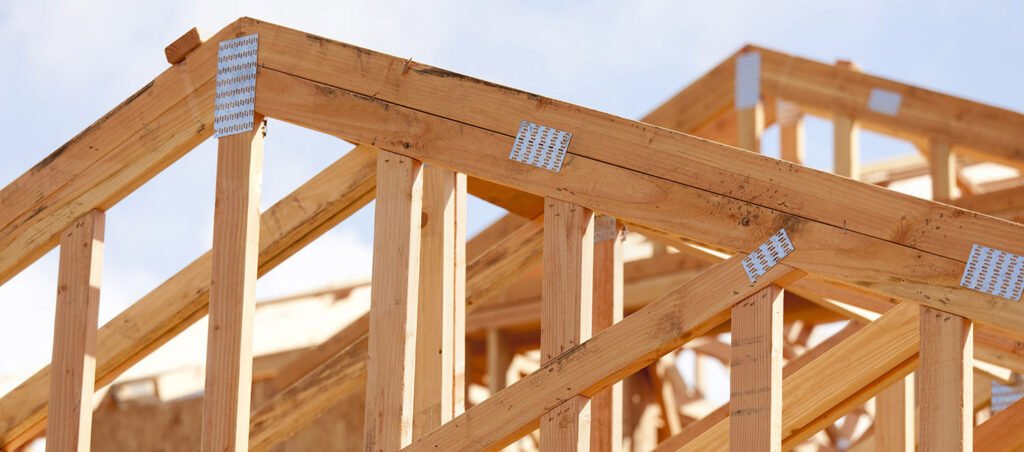
Stability and straightness in framing
Stability is where finger-jointed lumber really proves its value.
Compared to standard solid lumber, it is:
- Less likely to twist or crown
- More consistent across large orders
- Easier to keep aligned during wall assembly
This stability helps downstream trades as well, reducing drywall issues and finish adjustments.
Moisture, adhesives, and climate considerations (US/Canada)
Climate conditions in the US and Canada vary widely, and moisture control is critical.
Best practices include:
- Storing materials off the ground
- Protecting lumber from rain and snow
- Allowing interior products to acclimate
- Avoiding exterior exposure unless rated
Most joint failures trace back to moisture exposure, not adhesive quality.
Where finger-jointed wood should NOT be used
Avoid using finger-jointed wood in:
- Ground-contact applications
- Unrated exterior structural locations
- Decking or fencing without treatment
- High-impact structural members not approved by code
Respecting these limits prevents long-term issues and liability.
Professional Advice for Builders
Based on real-world use, my advice is straightforward:
- Use finger-jointed lumber where straightness saves labor
- Always verify stamps and documentation
- Educate crews so joints aren’t mistaken for defects
- Inspect glue lines and ends on delivery
- Choose materials based on environment, not price alone
When used correctly, finger-jointed wood is a tool that improves efficiency—not a compromise.
Frequently Asked Questions about Finger-Jointed Wood
Q: Is Finger-Jointed wood strong enough to meet US and Canadian building standards?
A: Yes. In many applications, it actually outperforms standard lumber. Because knots and structural defects are removed during the manufacturing process, a finger-jointed board is often straighter and more dimensionally stable than a low-grade solid board. For non-structural uses like interior trim, door jambs, and fascia, it is the preferred choice because it resists the twisting and warping common in North American climate shifts.
Q: Can I stain Finger-Jointed wood?
A: No. We strongly recommend painting finger-jointed wood. Because the board is made of many smaller pieces glued together, each piece has a slightly different grain pattern and density. If you apply a stain, the joints will be highly visible, creating a “patchy” look. For staining, always choose Solid Wood or stain-grade Veneer.
Q: Why should I source Finger-Jointed mouldings factory-direct instead of buying locally?
A: Buying factory-direct eliminates the massive middleman markups found at big-box retailers. Sourcing directly from UWG ensures you receive the dedicated service and high-quality, straight-line precision of premium pro-dealers, but at pricing that is often half the cost of standard retail stores. This allows builders to significantly increase their profit margins on finish carpentry.
Q: Is Finger-Jointed wood eco-friendly?
A: Yes. It is considered a high-yield, sustainable product. It utilizes shorter cuts of high-quality lumber that would otherwise be discarded or chipped. By joining these pieces together, manufacturers maximize the yield of every harvested tree, reducing overall waste and supporting sustainable forestry practices.
Summary
Finger-jointed wood provides builders with better straightness, stability, and material efficiency than traditional solid lumber. When properly rated and installed, it performs reliably in both structural and non-structural applications. The key is understanding its strengths, respecting its limits, and using it intentionally to build faster, cleaner, and more consistently.
Articles that you may be interested in:
5 Questions to Ask Before Ordering Mouldings in Bulk
The Ultimate Guide to Interior Moulding: Types, Costs, and Installation Best Practices
Tubular Chipboard vs Particle Chipboard: Which Lasts Longer and Performs Better?
{ “@context”: “https://schema.org”, “@graph”: [ { /* 1. Organization Entity */ “@type”: “Organization”, “@id”: “https://unitedwoods.group/#organization”, “name”: “UWG | United Woods Group”, “url”: “https://unitedwoods.group/”, “logo”: { “@type”: “ImageObject”, “inLanguage”: “en-US”, “@id”: “https://unitedwoods.group/#logo”, “url”: “https://unitedwoods.group/wp-content/uploads/logo-square.png”, “contentUrl”: “https://unitedwoods.group/wp-content/uploads/logo-square.png”, “width”: 600, “height”: 600, “caption”: “United Woods Group Logo” }, “image”: { “@id”: “https://unitedwoods.group/#logo” } }, { /* 2. WebSite Entity */ “@type”: “WebSite”, “@id”: “https://unitedwoods.group/#website”, “url”: “https://unitedwoods.group/”, “name”: “United Woods Group”, “description”: “Factory-Direct Building Materials”, “publisher”: { “@id”: “https://unitedwoods.group/#organization” }, “inLanguage”: “en-US” }, { /* 3. WebPage Entity */ “@type”: “WebPage”, “@id”: “https://unitedwoods.group/finger-jointed-wood-explained-strength-stability-and-use-cases/#webpage”, “url”: “https://unitedwoods.group/finger-jointed-wood-explained-strength-stability-and-use-cases/”, “name”: “Finger-Jointed Wood Explained: Strength, Stability & Use Cases”, “isPartOf”: { “@id”: “https://unitedwoods.group/#website” }, “about”: { “@id”: “https://unitedwoods.group/#organization” }, “primaryImageOfPage”: { “@id”: “https://unitedwoods.group/finger-jointed-wood-explained-strength-stability-and-use-cases/#primaryimage” }, “datePublished”: “2026-02-10T10:00:00-06:00”, “dateModified”: “2026-02-25T10:00:00-06:00”, “inLanguage”: “en-US” }, { /* 4. Article Entity */ “@type”: “Article”, “@id”: “https://unitedwoods.group/finger-jointed-wood-explained-strength-stability-and-use-cases/#article”, “isPartOf”: { “@id”: “https://unitedwoods.group/finger-jointed-wood-explained-strength-stability-and-use-cases/#webpage” }, “author”: { “@type”: “Organization”, “@id”: “https://unitedwoods.group/#organization”, “name”: “UWG Technical Team” }, “publisher”: { “@id”: “https://unitedwoods.group/#organization” }, “headline”: “Finger-Jointed Wood Explained: Strength, Stability & Use Cases”, “description”: “What is Finger-Jointed wood? Learn about its strength, stability advantages for North American trim, and why it is the superior choice for paint-grade applications.”, “mainEntityOfPage”: { “@id”: “https://unitedwoods.group/finger-jointed-wood-explained-strength-stability-and-use-cases/#webpage” }, /* Note: Replace ‘finger-jointed-wood-strength-guide.jpg’ with your ACTUAL English filename */ “image”: { “@type”: “ImageObject”, “@id”: “https://unitedwoods.group/finger-jointed-wood-explained-strength-stability-and-use-cases/#primaryimage”, “url”: “https://unitedwoods.group/wp-content/uploads/2026/02/finger-jointed-wood-strength-guide.jpg”, “width”: 1200, “height”: 675 }, “keywords”: [“finger jointed wood strength”, “finger joint vs solid wood”, “can you stain finger joint pine”, “finger joint moulding builder grade”, “sustainable lumber products”] }, { /* 5. FAQPage Entity */ “@type”: “FAQPage”, “@id”: “https://unitedwoods.group/finger-jointed-wood-explained-strength-stability-and-use-cases/#faq”, “isPartOf”: { “@id”: “https://unitedwoods.group/finger-jointed-wood-explained-strength-stability-and-use-cases/#webpage” }, “mainEntity”: [ { “@type”: “Question”, “name”: “Is Finger-Jointed wood strong enough to meet US and Canadian building standards?”, “acceptedAnswer”: { “@type”: “Answer”, “text”: “Yes. In many applications, it actually outperforms standard lumber. Because knots and structural defects are removed during the manufacturing process, a finger-jointed board is often straighter and more dimensionally stable than a low-grade solid board. For non-structural uses like interior trim, door jambs, and fascia, it is the preferred choice because it resists the twisting and warping common in North American climate shifts.” } }, { “@type”: “Question”, “name”: “Can I stain Finger-Jointed wood?”, “acceptedAnswer”: { “@type”: “Answer”, “text”: “No. We strongly recommend painting finger-jointed wood. Because the board is made of many smaller pieces glued together, each piece has a slightly different grain pattern and density. If you apply a stain, the joints will be highly visible, creating a ‘patchy’ look. For staining, always choose Solid Wood or stain-grade Veneer.” } }, { “@type”: “Question”, “name”: “Why should I source Finger-Jointed mouldings factory-direct instead of buying locally?”, “acceptedAnswer”: { “@type”: “Answer”, “text”: “Buying factory-direct eliminates the massive middleman markups found at big-box retailers. Sourcing directly from UWG ensures you receive the dedicated service and high-quality, straight-line precision of premium pro-dealers, but at pricing that is often half the cost of standard retail stores. This allows builders to significantly increase their profit margins on finish carpentry.” } }, { “@type”: “Question”, “name”: “Is Finger-Jointed wood eco-friendly?”, “acceptedAnswer”: { “@type”: “Answer”, “text”: “Yes. It is considered a high-yield, sustainable product. It utilizes shorter cuts of high-quality lumber that would otherwise be discarded or chipped. By joining these pieces together, manufacturers maximize the yield of every harvested tree, reducing overall waste and supporting sustainable forestry practices.” } } ] } ] }