Introduction
In large-scale residential, multi-family, hospitality, and commercial developments, door selection plays a critical role in controlling construction costs, acoustic performance, durability, and long-term operational quality. For developers and procurement teams, choosing the right door type is not simply an aesthetic decision—it affects tenant satisfaction, maintenance frequency, and overall project value.
Among the most widely specified interior door solutions is the solid core door. Known for its balance of performance and cost efficiency, the solid core door has become a standard choice in modern construction projects. This article explains what a solid core door is, how it is constructed, and why it is often preferred by developers and contractors when evaluating cost, weight, and performance at scale.
A solid core door is an engineered door featuring a dense composite core made from particleboard, MDF, or similar materials, finished with veneer or molded surfaces. For B2B construction and procurement, solid core doors provide a practical balance between cost, weight, acoustic performance, and durability. They outperform hollow core doors in sound insulation and strength while offering greater stability, consistency, and affordability than solid wood doors, making them ideal for residential and commercial developments.
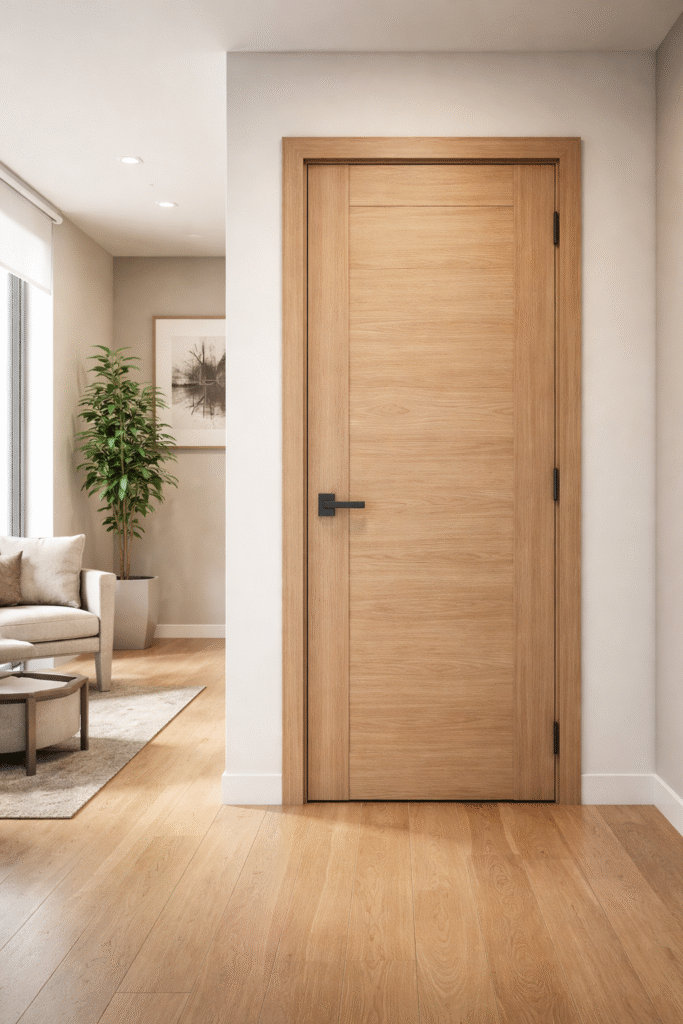
What Is a Solid Core Door?
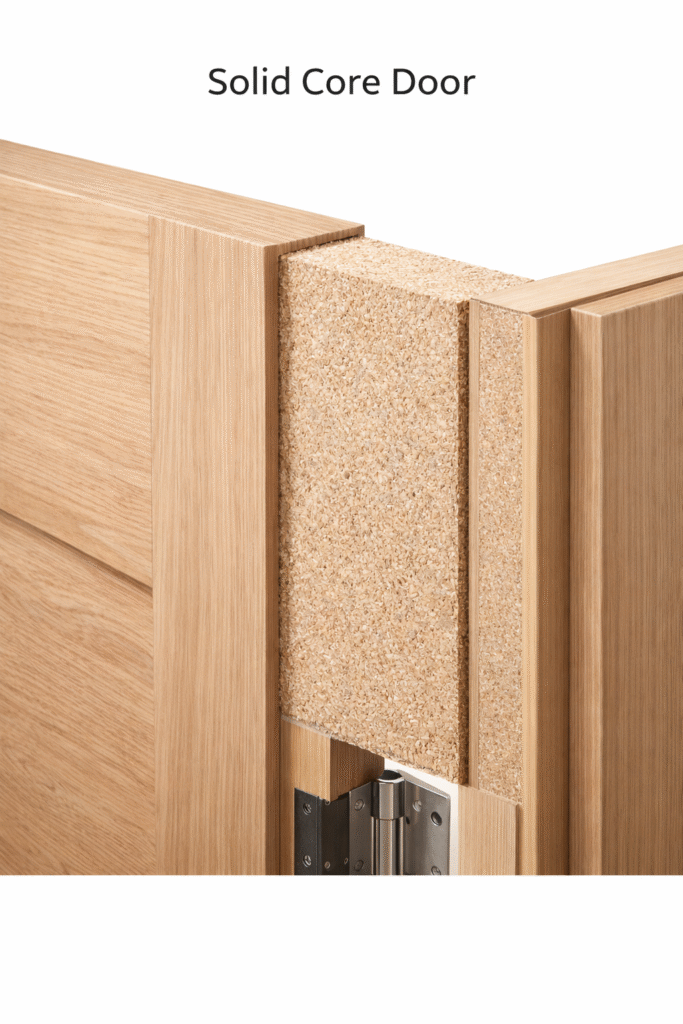
A solid core door is defined by its fully filled internal structure, which uses dense engineered materials instead of hollow or honeycomb cores. This construction gives the door substantial weight, improved sound insulation, and greater resistance to impact and daily wear.
Importantly for developers, solid core doors are manufactured products, not natural solid wood slabs. This engineered approach allows manufacturers to deliver:
- Consistent dimensions
- Predictable performance
- Scalable production for large projects
These characteristics make solid core doors especially suitable for projects that require hundreds or thousands of identical units.
Common Core Materials Used
- Particleboard
- Medium-Density Fiberboard (MDF)
- Engineered composite wood
The outer surfaces are typically finished with:
- Natural wood veneer
- Molded HDF skins
- Paint-grade or laminate surfaces
This flexibility allows solid core doors to meet both design and performance requirements without significantly increasing cost.
Solid Core Doors vs. Other Door Types in B2B Projects
Solid Core vs. Hollow Core Doors
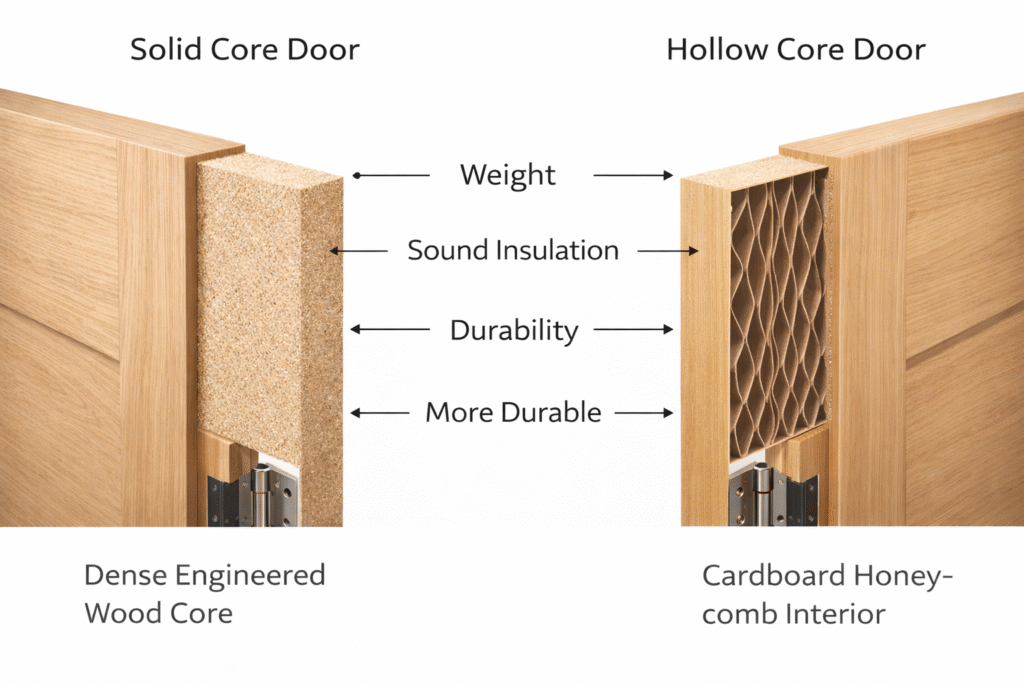
Hollow core doors are often selected for low-budget projects, but they present several limitations in professional developments.
Key differences include:
- Acoustic performance: Solid core doors provide significantly better sound insulation
- Durability: Hollow core doors are more prone to damage and surface deformation
- Perceived quality: Solid core doors feel more substantial, improving end-user experience
While hollow core doors offer lower upfront cost, developers often find that solid core doors reduce complaints related to noise and damage, especially in multi-family housing.
Solid Core vs. Solid Wood Doors
Solid wood doors deliver premium aesthetics but introduce challenges in large-scale projects:
- Higher material and labor costs
- Increased risk of warping due to humidity
- Greater weight and installation complexity
Solid core doors offer a more stable and cost-controlled alternative, with engineered cores that perform consistently across different environments.
Cost Analysis from a Procurement Perspective
From a B2B procurement standpoint, solid core doors fall into a mid-range cost category that aligns with most residential and commercial construction budgets.
Typical Cost Ranges
- Standard interior solid core doors: $120–$350 per unit
- Acoustic-rated or fire-rated doors: $350–$500+
Although the initial cost is higher than hollow core doors, solid core doors often deliver better lifecycle value, reducing replacement rates and post-handover maintenance expenses.
Weight and Its Impact on Installation and Performance
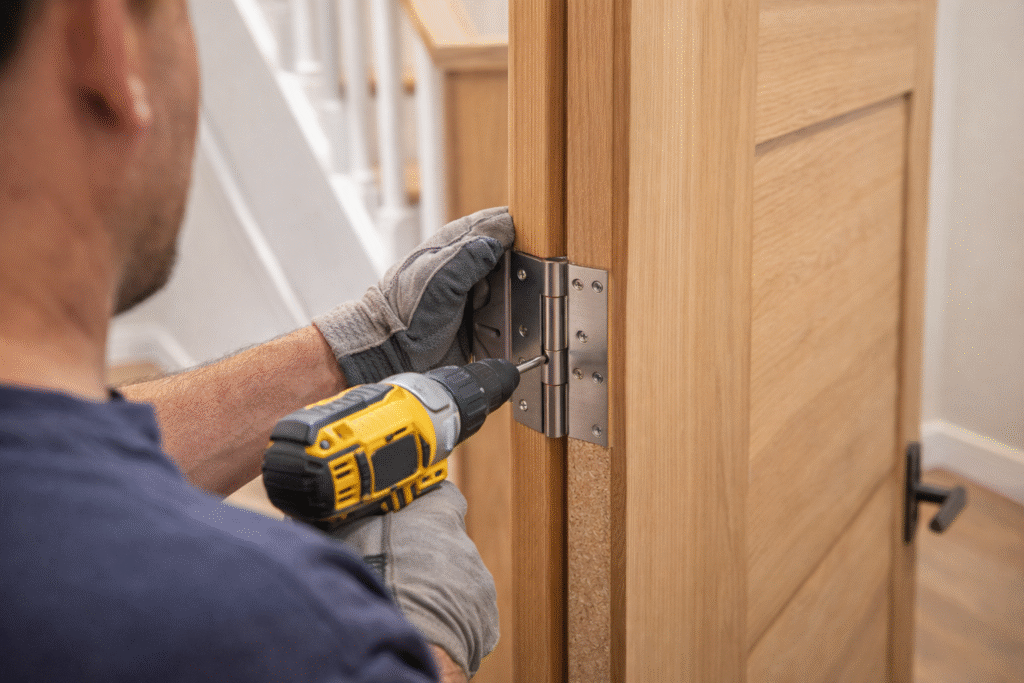
The increased weight of solid core doors directly contributes to their performance benefits.
Average Weight Comparison
- Solid core interior door: 70–100 lbs (32–45 kg)
- Hollow core door: 25–35 lbs (11–16 kg)
For contractors and installers, this means:
- Stronger hinges and hardware specifications
- Slightly higher labor input
- Improved durability and acoustic performance
Most developers consider this weight increase acceptable given the long-term benefits.
Performance Benefits in Real-World Projects
Acoustic Performance
Noise control is a critical concern in:
- Apartments and condominiums
- Hotels and hospitality projects
- Office and mixed-use developments
Solid core doors significantly reduce sound transmission between rooms, commonly achieving STC ratings between 25 and 35, depending on door thickness and installation quality.
Durability and Long-Term Use
Solid core doors perform well in high-traffic environments, resisting:
- Impact damage
- Surface dents
- Frequent opening and closing
This durability is particularly important in rental properties and hospitality spaces where doors experience daily heavy use.
Dimensional Stability
Because solid core doors use engineered materials, they offer superior stability compared to natural wood. They are:
- Less affected by humidity changes
- Less prone to warping or cracking
- Easier to align with frames and hardware over time
This stability reduces service calls and warranty claims after project completion.
Where Solid Core Doors Are Commonly Specified
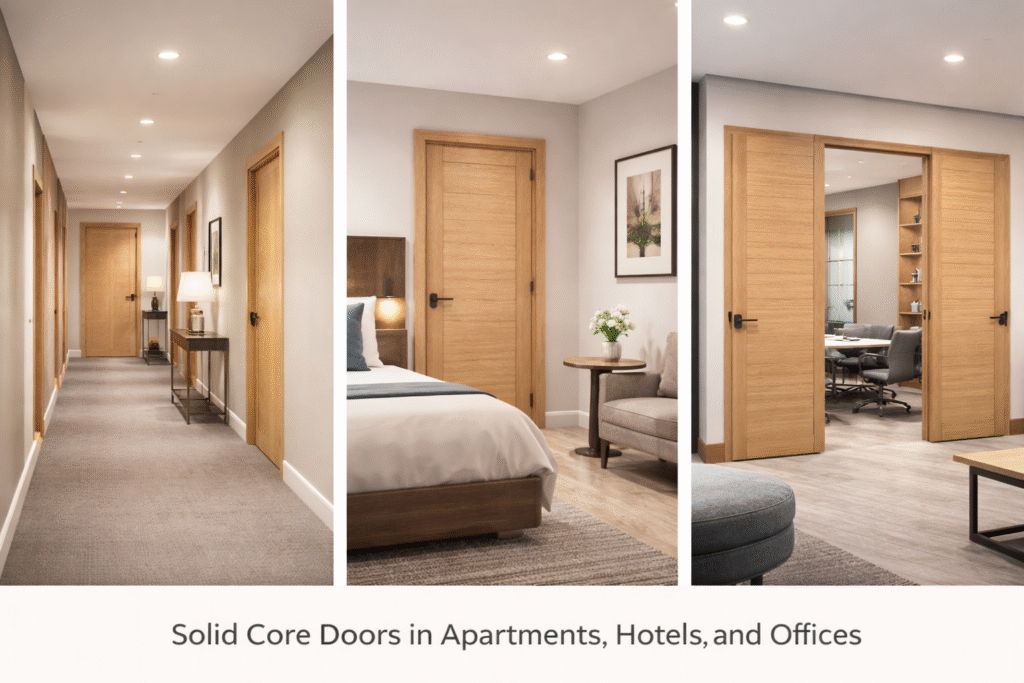
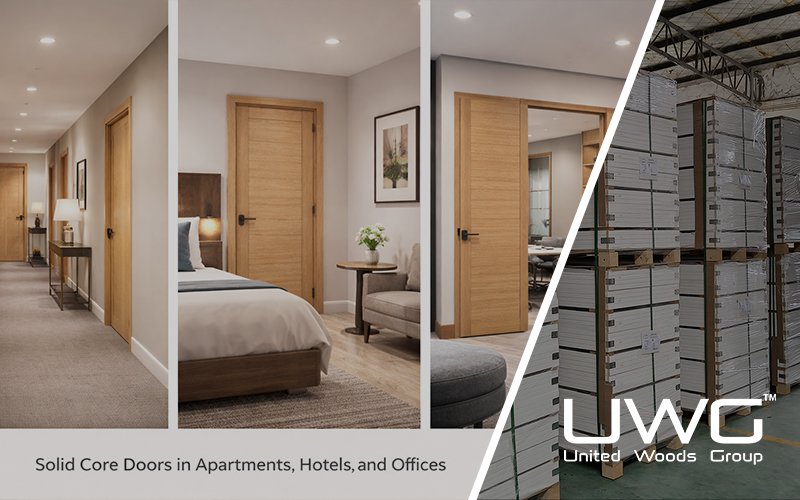
Solid core doors are widely used in:
- Multi-family residential developments
- Hotels and serviced apartments
- Office buildings
- Educational and healthcare facilities
They are especially suitable for projects requiring a balance of performance, cost control, and consistent quality across large volumes.
Conclusion
From a developer and procurement perspective, a solid core door represents an engineered solution that balances acoustic performance, durability, and cost efficiency. While heavier and more expensive than hollow core doors, solid core doors provide better long-term value and reduced maintenance risks.
For large-scale residential and commercial projects, solid core doors remain one of the most practical and widely adopted door solutions, offering reliable performance and predictable results across diverse building types.
Articles that you may be interested in:
Flush Door vs Panel Door: Key Differences, Cost & Best Uses