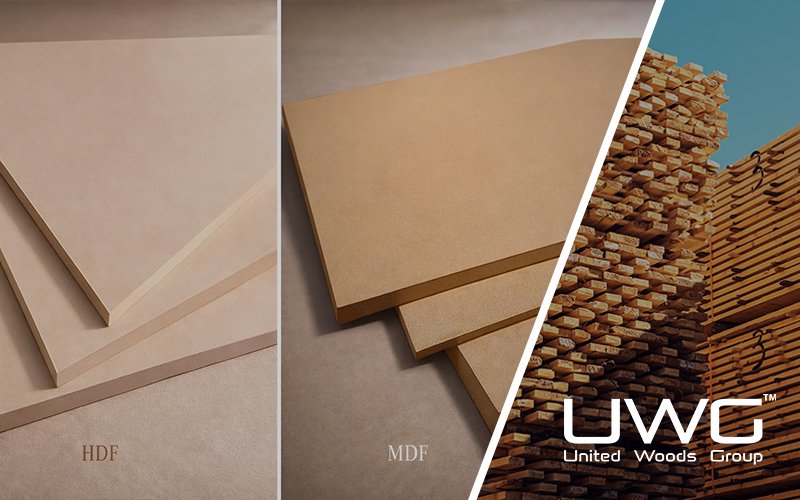
Selecting the appropriate engineered panel is no longer a minor specification detail—it is a decision that influences durability, maintenance cycles, and client satisfaction across an entire project lifecycle. Builders in the United States and Canada must constantly balance cost efficiency with structural reliability in increasingly competitive markets. As density increases, performance metrics typically improve—but does higher density automatically justify the upgrade?
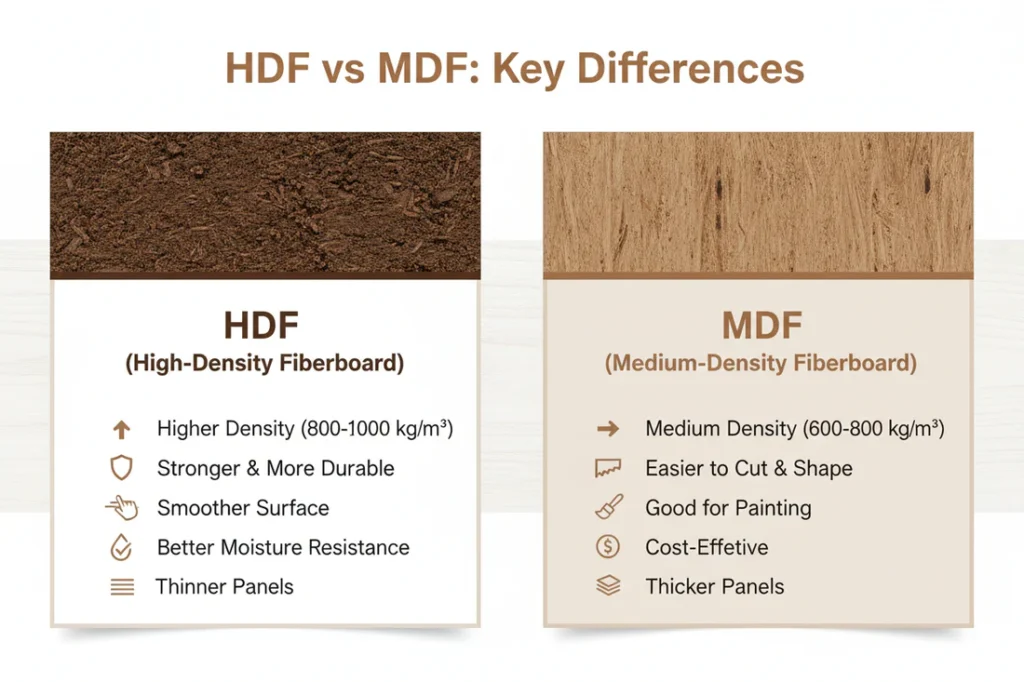
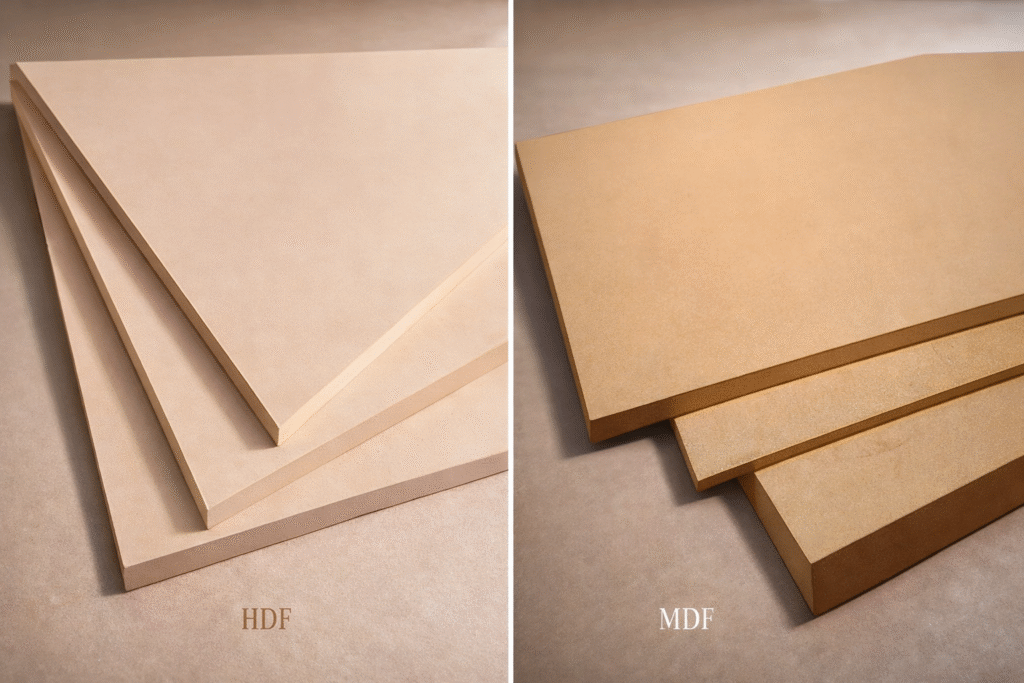
MDF (Medium Density Fiberboard) and HDF (High Density Fiberboard) differ primarily in density, mechanical strength, durability, and cost structure. HDF generally ranges between 800–1,100 kg/m³, providing greater internal bond strength and impact resistance compared to MDF’s 600–800 kg/m³ range. However, higher density is not universally superior. In high-traffic, load-sensitive, or moisture-variable environments, HDF often delivers stronger lifecycle performance. In decorative or budget-driven applications, MDF remains technically sound and economically efficient.
Understanding the MDF and HDF Board Difference
When comparing MDF and HDF, the distinction goes far beyond simple density numbers. Both materials are engineered wood composites manufactured by breaking down hardwood or softwood residuals into wood fibers, combining them with synthetic resin binders, and consolidating them under controlled heat and high pressure.
The critical differentiator lies in fiber compression intensity and internal bonding structure.
- MDF density: typically 600–800 kg/m³
- HDF density: typically 800–1,100 kg/m³
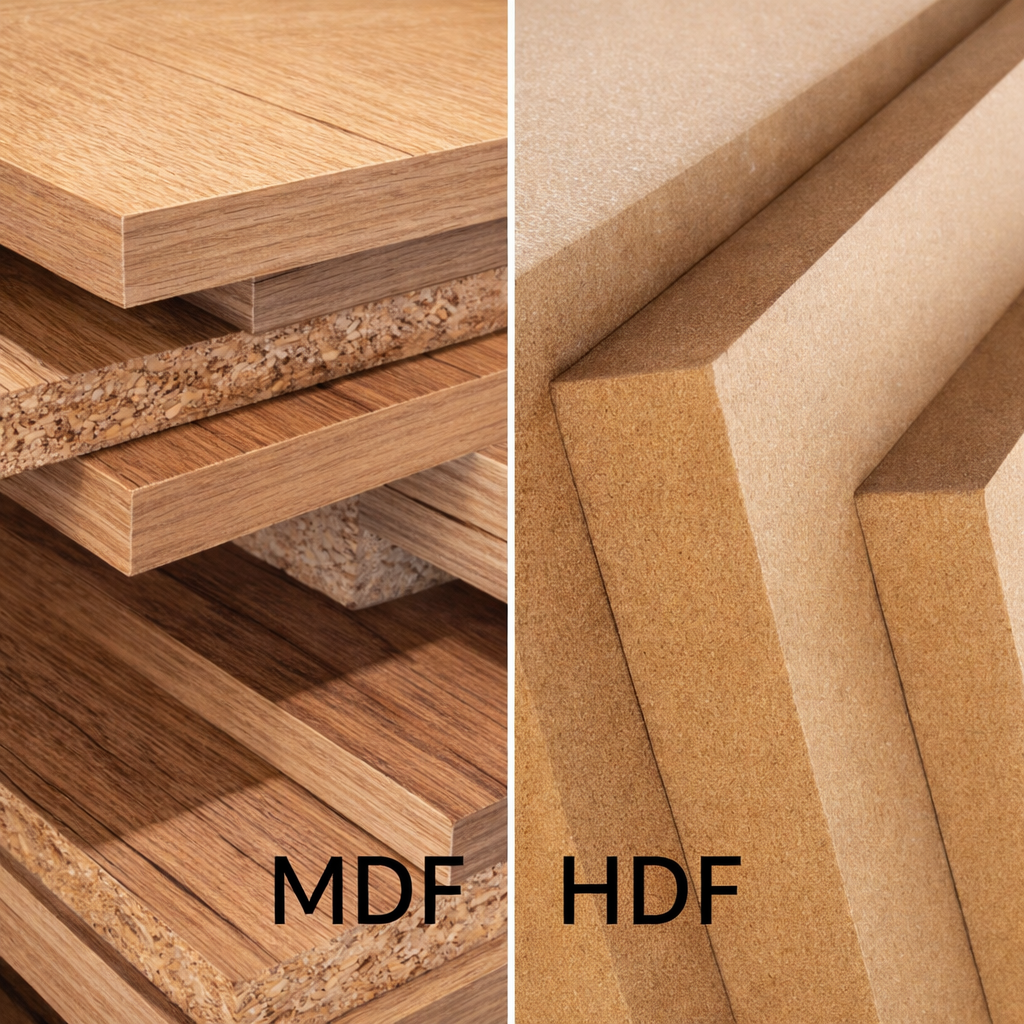
This increased compaction in HDF results in a tighter fiber matrix, reduced internal voids, and significantly higher internal bond strength. In practical terms, this translates into enhanced modulus of rupture (MOR), improved modulus of elasticity (MOE), and greater resistance to surface indentation.
From an engineering perspective, higher density improves:
- Fiber-to-fiber contact efficiency
- Resin distribution uniformity
- Core stability under compressive stress
- Edge integrity during machining and fastening
For builders operating in the U.S. and Canadian markets—where dimensional stability, precision finishing, and durability expectations are high—these structural differences directly impact product performance and long-term service life.
MDF remains highly workable and cost-efficient, particularly for paint-grade interior applications requiring smooth surfaces and intricate routing. However, HDF’s denser fiber matrix offers measurable gains in mechanical performance, especially in applications exposed to repetitive impact, load concentration, or heavy-duty usage.
In short, the MDF and HDF board difference is not merely about weight—it is about structural compactness and performance under stress.
Strength and Structural Performance on the Jobsite
Density is not a cosmetic attribute; it is a performance multiplier.
As density increases, the board’s mechanical behavior changes in several critical ways:
- Higher bending strength (MOR)
- Greater stiffness under load (MOE)
- Improved resistance to edge crushing
- Superior impact durability
- Reduced surface deformation over time
On active construction sites across North America, materials are exposed to handling stress, stacking pressure, transportation vibration, and installation impact. Under these real-world conditions, HDF demonstrates noticeably higher resistance to denting and edge breakdown compared to standard MDF.
Consider multi-family residential developments or commercial interior fit-outs:
- Interior doors are subject to repetitive closing force and incidental impact.
- Wall panels in retail environments face continuous abrasion.
- Cabinet doors in rental properties endure frequent hardware stress cycles.
In these environments, fiber compaction plays a decisive role. HDF’s denser internal structure distributes localized stress more effectively, reducing micro-fractures within the board core. Over time, this improves dimensional stability and reduces premature wear.
However, increased density also introduces trade-offs.
Because HDF contains more compressed fiber mass per cubic meter, it carries additional weight. This may result in:
- Increased labor handling requirements
- Slightly higher transportation costs
- More demanding fastening precision
When comparing HDF vs MDF vs plywood, plywood continues to dominate structural framing due to its cross-laminated grain strength. Yet for flat-panel interior systems requiring surface uniformity, HDF provides a superior balance between structural integrity and finish quality.
For builders prioritizing long-term durability in high-traffic or impact-prone environments, higher density often justifies its premium. In lower-load decorative applications, MDF may remain economically sufficient.
Ultimately, jobsite performance—not just density numbers—should guide specification decisions.
Real Application Scenarios for Builders
Material selection becomes meaningful only when tied to real-world application demands. Theoretical density values matter less than lifecycle performance in actual use conditions.
1. Cabinetry
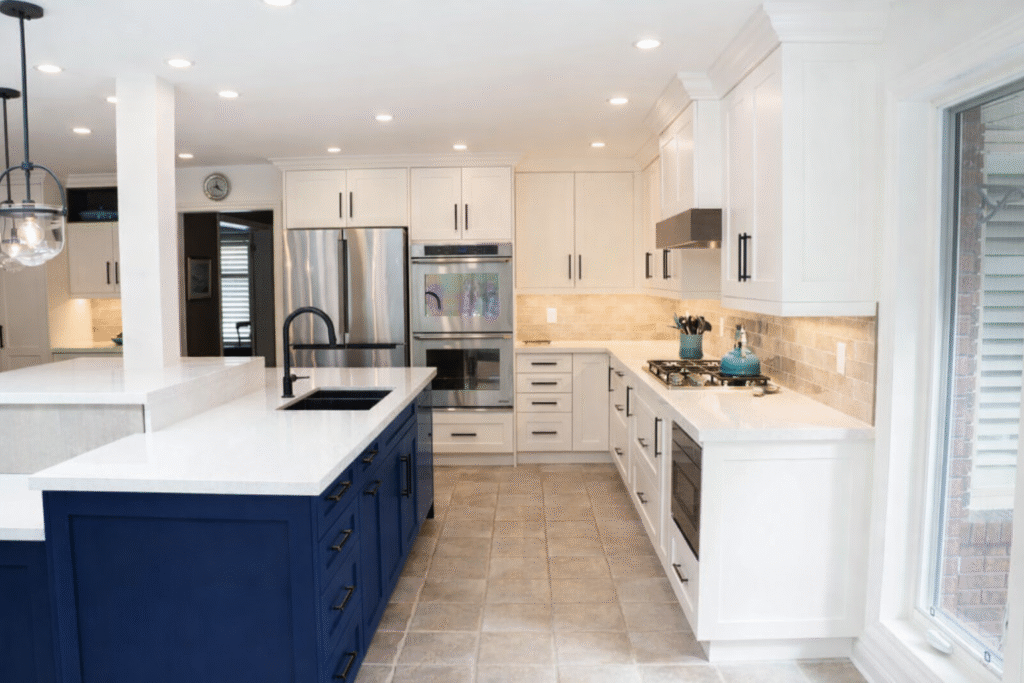
In residential cabinetry, MDF remains widely used for painted doors and panels due to its smooth surface consistency and cost efficiency.
MDF advantages in cabinetry include:
- Uniform surface for high-quality paint finishing
- Economical sheet pricing
- Ease of profiling for decorative door styles
However, when evaluating performance beyond initial installation—particularly in rental properties, commercial kitchens, or high-use residential units—the performance gap becomes more visible.
HDF offers:
- Higher screw withdrawal resistance in hinge zones
- Improved edge durability during repeated door cycling
- Greater long-term dimensional stability
Over time, cabinet doors are subjected to repeated opening forces, hinge stress concentration, and occasional impact. HDF’s higher internal bond strength helps reduce micro-fracturing around hardware attachment points, supporting longer service life.
For builders targeting premium markets in cities such as Toronto, Vancouver, Chicago, or New York, material durability contributes directly to perceived build quality. In these segments, HDF often supports a stronger value proposition.
2. Interior Doors
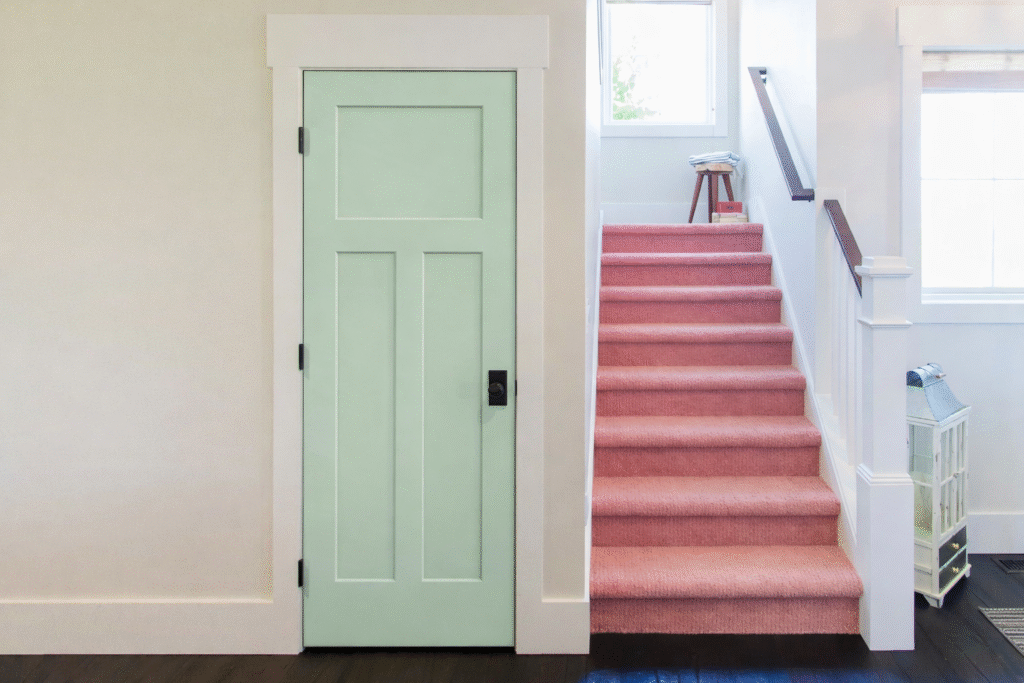
In the North American market, many molded interior doors utilize HDF skins rather than MDF.
This specification is not arbitrary—it is performance-driven.
Interior doors must withstand:
- Repetitive closing impact
- Accidental contact damage
- Surface abrasion
- Long-term environmental fluctuation
HDF’s higher surface hardness and density provide:
- Greater dent resistance
- Sharper retention of molded panel detail
- Enhanced resistance to localized impact stress
In multi-family housing, hotels, and institutional projects, door durability directly affects maintenance cycles and replacement frequency. The incremental material upgrade to HDF often results in measurable lifecycle cost reduction.
Within this application category, higher density is typically a functional advantage rather than a marketing claim.
When Higher Density Is NOT Always Better
To maintain credibility in material specification discussions, one principle must remain clear: higher density does not automatically equate to better project outcomes.
Material selection should be performance-driven—not density-driven.
While HDF offers enhanced mechanical strength and durability, there are practical scenarios where MDF remains the more rational specification choice.
MDF may be preferable when:
- Project budgets are tightly controlled and cost sensitivity is high
- Applications are decorative rather than load-bearing
- Weight reduction improves installation efficiency
- Complex routing or intricate profiling is required
- High-volume production efficiency is prioritized
In these cases, specifying HDF may represent over-engineering—adding material cost without delivering proportional performance benefit.
From a profitability standpoint, unnecessary upgrades can compress margins, particularly in competitive bid environments where material costs directly affect pricing strategy.
Experienced builders understand that optimal specification is about alignment:
- Aligning material performance with load expectations
- Aligning cost with project lifecycle
- Aligning durability with client requirements
Higher density becomes valuable only when the application demands it. Otherwise, MDF remains a technically sound and economically efficient solution.
Strategic Perspective for Builders
The North American construction market continues to evolve. Clients are more informed, expectations are higher, and competitive differentiation is increasingly tied to material quality and long-term performance.
Today’s residential and commercial buyers expect:
- Extended service life
- Premium visual consistency
- Reduced maintenance frequency
- Greater environmental responsibility
Within this context, material selection becomes part of brand positioning.
HDF aligns particularly well with:
- High-traffic interior environments
- Premium cabinetry systems
- Durable molded door assemblies
- Engineered flooring cores requiring dimensional stability
Its higher density supports a performance narrative—one that emphasizes durability, stability, and lifecycle value.
MDF, however, continues to play an essential role in:
- Paint-grade trim systems
- Decorative wall treatments
- Budget-sensitive developments
- Large-scale production builds
Strategically, the most successful builders do not view MDF and HDF as competing materials—but as tools deployed according to market tier.
In entry-level builds, MDF protects margins. In mid-range projects, selective HDF integration enhances perceived quality. In premium segments, HDF can serve as a performance differentiator during client consultations and competitive bidding.
In increasingly competitive markets across the U.S. and Canada, specification strategy is no longer purely technical—it is commercial. Material decisions influence not only durability, but also brand reputation, maintenance cycles, and long-term client satisfaction.
The builders who understand this balance are the ones who turn material knowledge into market advantage.
Conclusion
Higher density, by itself, is not the objective—performance alignment is.
In demanding North American construction environments, HDF frequently offers measurable advantages in durability, dimensional stability, and long-term resilience. These characteristics can translate into fewer callbacks, extended service life, and stronger client confidence.
At the same time, MDF continues to serve as a reliable and cost-efficient material for applications where structural demands are moderate and aesthetic finish is the primary objective.
For builders, the true competitive advantage lies not in choosing the densest material available, but in specifying materials strategically—matching performance to application, cost to lifecycle value, and product choice to market positioning.
When material decisions are made with this level of precision, density becomes more than a number—it becomes a business strategy.
Articles that you may be interested in:
Which Is Better for Baseboards: Pine or MDF? Pros, Cons & Cost Breakdown
What’s the Best Material for RTA Cabinets: MDF, Particle Board, or Plywood?