Introduction
Imagine a builder preparing to launch a 300-unit residential development, or a regional wholesaler planning to replenish inventory with two to three full containers of interior doors for the upcoming quarter. In both cases, the order volume quickly reaches hundreds or even thousands of units. At that scale, minor price differences become significant budget variables. A $10 cost variance per door can translate into tens of thousands of dollars. More importantly, inconsistent quality or delayed delivery can disrupt construction schedules, delay closings, and strain relationships with downstream customers. Bulk purchasing is no longer a transactional decision—it is a supply chain strategy.
Successfully purchasing interior doors in bulk requires more than negotiating the lowest unit price. Builders and wholesalers must evaluate total cost structure, quality consistency, and delivery reliability together. This guide outlines a practical framework to help procurement teams reduce risk, protect margins, and build long-term supply stability when sourcing large volumes of interior doors.
Understanding Cost Structure in Bulk Orders
The most common mistake in bulk purchasing is focusing solely on unit price. While slab cost is important, it represents only one component of the total installed cost.
First, consider core type. Hollow-core doors typically offer the lowest upfront pricing and are widely used in cost-sensitive projects such as multifamily housing. Solid-core or engineered-core doors increase material cost but provide improved sound insulation and perceived quality—often necessary in mid-range or higher-end developments. The selected core must align with the project’s market positioning.
Second, evaluate prehung versus knock-down (KD) configurations. Prehung doors carry higher factory pricing but reduce on-site labor and installation variability. KD systems may reduce shipping volume and factory assembly cost but shift labor responsibility to the job site. In labor-expensive markets, prehung systems often deliver better overall value despite higher upfront pricing.
Third, analyze freight efficiency. Container loading density directly affects landed cost. Door thickness, packaging method, and configuration (slab-only vs prehung) all influence how many units fit in a container. For import-driven projects, optimizing container utilization can significantly reduce cost per door.
Finally, compare FOB versus DDP purchasing models. FOB pricing may appear lower initially, but DDP (Delivered Duty Paid) can provide better cost predictability by consolidating freight, customs clearance, duties, and inland transportation into one fixed structure. For large projects with tight schedules, predictability often outweighs nominal savings.
Quality Control: What to Evaluate Before Placing Large Orders
Quality inconsistency becomes exponentially more costly as order size increases. A minor defect in a small order may be manageable; in a 2,000-door shipment, it becomes a major operational issue.
Start with construction method. Molded doors offer strong dimensional consistency due to automated pressing processes. Shaker or rail-and-stile doors provide deeper visual detail but require tighter control of joint stability and machining precision. Understanding how each type performs under transportation and installation stress is critical.
Next, assess surface finish standards. Primer quality affects both appearance and repainting efficiency. UV primer systems often provide smoother surfaces and better sanding performance compared to basic spray primer. For projects where doors will be field-painted, surface consistency directly impacts labor time and final finish quality.
Dimensional tolerance and moisture control are equally important. Warping, swelling, or inconsistent sizing can slow installation and increase rework. Confirm that the supplier maintains proper moisture content control and density consistency, particularly for MDF-based products.
Finally, bridge the gap between sample approval and mass production. A single approved sample does not guarantee production consistency. For large first-time orders, consider pilot batches or staged shipments to validate quality before committing to full-volume procurement.
Lead Time and Production Planning
Bulk orders require disciplined scheduling. Standard production cycles for interior doors typically range from 40 to 45 days, depending on configuration and finishing requirements. However, capacity allocation can shift quickly during peak construction seasons.
Procurement teams should confirm factory production capacity and scheduling reliability before placing large orders. Suppliers operating multiple facilities or diversified production bases can often offer greater stability and flexibility.
Seasonal demand spikes—especially in North America during spring and summer construction cycles—can extend lead times. Planning procurement at least one cycle ahead reduces exposure to production bottlenecks.
Logistics and Delivery Risk Management
Delivery performance is not limited to manufacturing. Packaging and transportation significantly influence project outcomes.
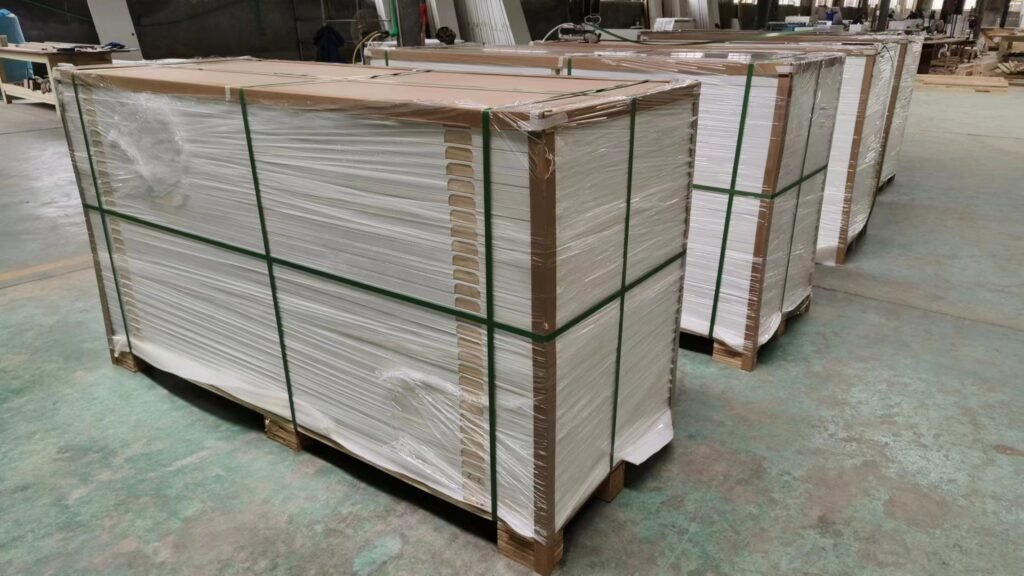
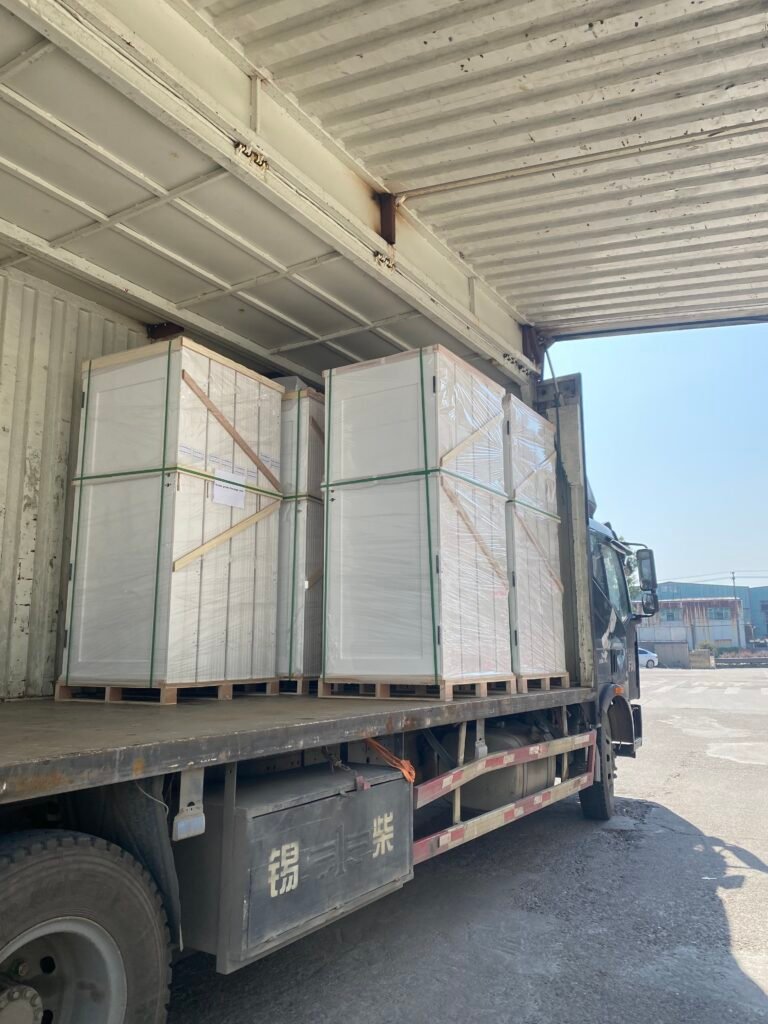
Evaluate packaging methods carefully. Proper corner protection, palletization, and moisture-resistant wrapping reduce transit damage. For prehung doors, frame protection is particularly critical. For KD systems, slab and frame components must be secured to prevent shifting during shipment.
Consider damage replacement policies before placing the order. Bulk shipments inevitably carry some risk of transit damage. Clear agreements regarding claim procedures and replacement timelines protect both cost structure and schedule stability.
Additionally, ensure proper customs documentation and tariff classification. Misclassification can result in delays or unexpected duty exposure. For international shipments, working with experienced suppliers familiar with export documentation reduces compliance risk.
Supplier Evaluation Checklist
Selecting the right supplier is often more important than negotiating the lowest price.
Assess export experience, particularly in markets similar to your own. Suppliers accustomed to large-scale North American projects typically understand packaging standards, dimensional tolerances, and compliance requirements.
Review communication clarity and quotation transparency. Detailed specifications, clear lead times, and documented terms reduce misunderstandings during execution.
Finally, evaluate after-sales support. A reliable bulk supplier should offer structured replacement policies and responsive communication in the event of quality or logistics issues.
Frequently Asked Questions About Bulk Door Purchasing
Q: What factors impact the total cost of bulk interior doors besides the unit price?
A: Beyond the basic slab cost, the total installed cost is influenced by the core type (hollow vs. solid), configuration (prehung vs. knock-down), freight efficiency (container loading density), and the purchasing model (FOB vs. DDP).
Q: Are prehung doors or knock-down (KD) doors better for large projects?
A: While KD doors save on shipping volume and factory assembly costs, prehung doors significantly reduce on-site labor and installation variability. In labor-expensive markets like the US and Canada, prehung systems usually deliver better overall value despite higher upfront pricing.
Q: Why is DDP (Delivered Duty Paid) recommended for bulk door purchases?
A: DDP provides better cost predictability by consolidating ocean freight, customs clearance, import duties, and inland transportation into one fixed structure. For large projects with tight schedules, this predictability protects builder margins and outweighs the nominal savings of FOB pricing.
Q: How can builders ensure quality control on massive interior door orders?
A: Buyers must evaluate the construction method, surface finish standards (like UV primer vs. basic spray), and dimensional tolerances. It is also critical to secure an approved “control sample” to establish a definitive quality benchmark for mass production.
Final Purchasing Strategy
Bulk interior door procurement is a strategic balance between cost control and operational stability. The most successful builders and wholesalers avoid purely price-driven decisions. Instead, they evaluate how factory pricing, freight structure, installation labor, quality consistency, and delivery reliability interact within the broader project budget.
Establishing long-term supplier partnerships, conducting initial test orders, and prioritizing predictability over short-term savings often lead to stronger financial performance over time.
In bulk purchasing, stability is as valuable as savings. When cost structure, quality control, and delivery planning align, interior doors become a predictable component of the construction system rather than a recurring source of risk.
Articles that you may be interested in:
Fire-Rated and Soundproof Door Selection Guide for Apartments
Building Material Deep Dive: A Complete Guide to Melamine Doors