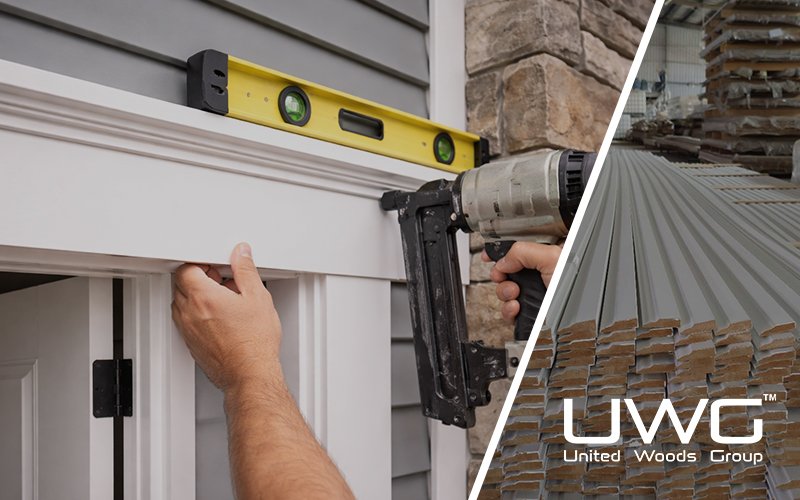
Trim is more than a decorative finishing detail—it directly affects long-term maintenance costs, installation efficiency, and overall appearance over time. Whether installed on exterior fascia, window casings, or interior mouldings, trim materials are exposed to moisture, temperature changes, and everyday wear. Choosing the wrong material can lead to higher repair costs, increased labor, and premature replacement.
When comparing PVC trim and wood trim, each has clear strengths. PVC trim offers superior resistance to moisture, rot, and insects, making it a low-maintenance solution that performs especially well in exterior and high-humidity environments. Wood trim, by contrast, is typically more affordable upfront and easier to cut and shape, while providing the classic appearance and craftsmanship many builders prefer for interior applications.
Although PVC trim generally costs more initially, its durability and reduced maintenance often deliver stronger long-term value in demanding conditions. Wood trim remains a reliable and attractive choice where traditional aesthetics and detailed finishing are priorities. The best option ultimately depends on your project’s environment, budget, and performance expectations.
What Is PVC Trim?
PVC trim is a synthetic trim material made from cellular polyvinyl chloride (PVC). Unlike traditional wood, it is engineered to resist moisture, rot, and insect damage, making it especially suitable for exterior applications and high-humidity environments. The material has a dense yet lightweight structure that allows it to be cut, shaped, and installed using many of the same tools used for wood.
Because PVC trim does not absorb water, it will not swell, crack, or decay when exposed to rain or humidity. This makes it a popular choice for fascia boards, window and door casings, soffits, and other areas exposed to weather. Many PVC trim products also come pre-primed or with smooth, paint-ready surfaces for easy finishing.
Overall, PVC trim is valued for its durability, low maintenance requirements, and long service life, particularly in applications where moisture resistance is a primary concern.
What Is Wood Trim?
Wood trim refers to mouldings and finishing boards made from natural timber or engineered wood products. Common species include pine, poplar, oak, and other hardwoods, while some trim products are manufactured using finger-jointed or composite wood for improved stability and cost efficiency.
Wood trim is widely used for interior baseboards, door and window casings, crown moulding, and decorative profiles. It is valued for its natural appearance, structural rigidity, and ease of cutting, shaping, and fastening. Builders often prefer wood because it works well with standard carpentry tools and allows for detailed craftsmanship.
However, because wood is a natural material, it can absorb moisture and expand or contract with temperature and humidity changes. To maintain durability—especially in exterior applications—wood trim typically requires proper sealing, painting, or staining to protect against rot, warping, and insect damage.
Overall, wood trim remains a popular choice for projects that prioritize traditional aesthetics and detailed interior finishing.
PVC Trim vs Wood Trim: Key Differences
1. Cost Comparison
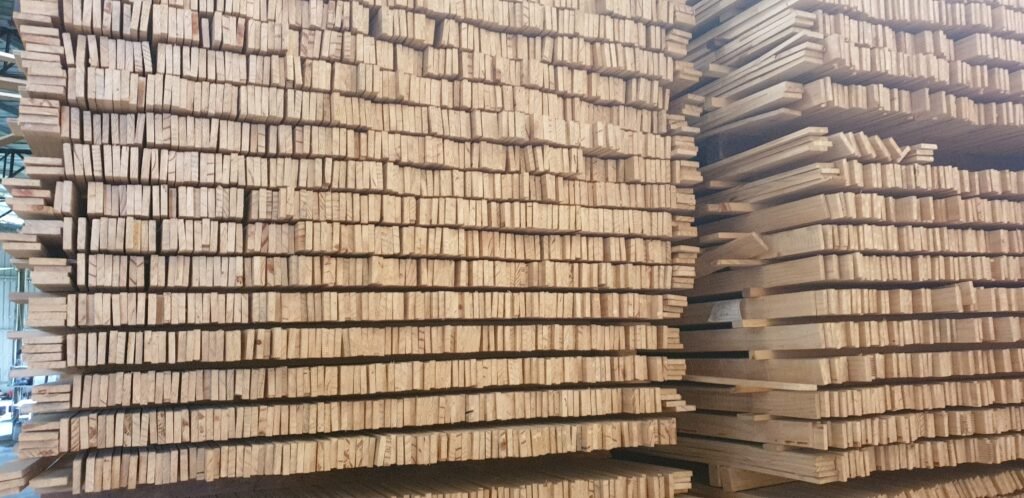
Wood trim is generally less expensive upfront, especially for interior applications. It is widely available, easy to source, and typically requires no special fasteners or adhesives during installation. However, long-term costs can increase due to periodic sealing, painting, or repairs caused by moisture or rot.
PVC trim usually carries a higher initial material cost. However, it requires minimal maintenance and does not need frequent repainting or replacement due to decay. In exterior or high-moisture environments, PVC trim often provides better long-term value despite the higher upfront investment.
2. Durability Comparison
PVC trim is highly resistant to moisture, termites, and rot. It does not split, decay, or absorb water, making it a reliable choice for exterior trim, bathrooms, and other high-humidity environments. However, in areas with extreme and prolonged direct sunlight, PVC may expand or warp if not properly installed with allowance for movement.
Wood trim is more vulnerable to rot, decay, and insect damage when not properly sealed and maintained. Exposure to moisture over time can lead to cracking or deterioration. That said, wood is generally more rigid and offers stronger impact resistance compared to PVC, which can be beneficial in high-contact interior areas.
3. Installation Differences
Wood trim is easy to cut, nail, and shape using standard carpentry tools. It is familiar to most contractors and allows for detailed custom work.
PVC trim can also be cut and installed using similar tools, but it requires attention to expansion and contraction in changing temperatures. Proper fastening methods and adhesives are important to ensure long-term stability, especially in exterior installations.
Best Applications: When to Choose Each
Choosing between PVC trim and wood trim largely depends on the environment and project priorities.
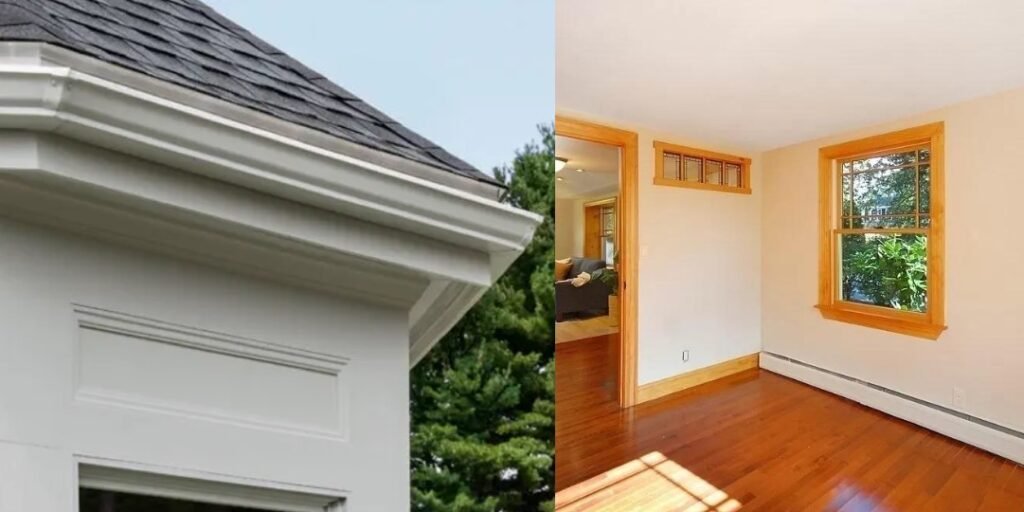
PVC trim is best suited for exterior applications and high-moisture areas such as fascia boards, window and door exteriors, bathrooms, and kitchens. Its resistance to rot, insects, and water makes it a practical choice for climates with heavy rain, humidity, or coastal exposure. PVC is also ideal for projects where low maintenance and long-term durability are key considerations.
Wood trim is often preferred for interior spaces where traditional aesthetics and detailed craftsmanship are important. It performs well in dry, climate-controlled environments such as living rooms, bedrooms, and formal interior spaces. Wood is also a strong option for projects that require custom shaping or decorative profiles.
In short, PVC trim excels in demanding environments, while wood trim remains a reliable choice for classic interior finishes and design-focused applications.
Summary
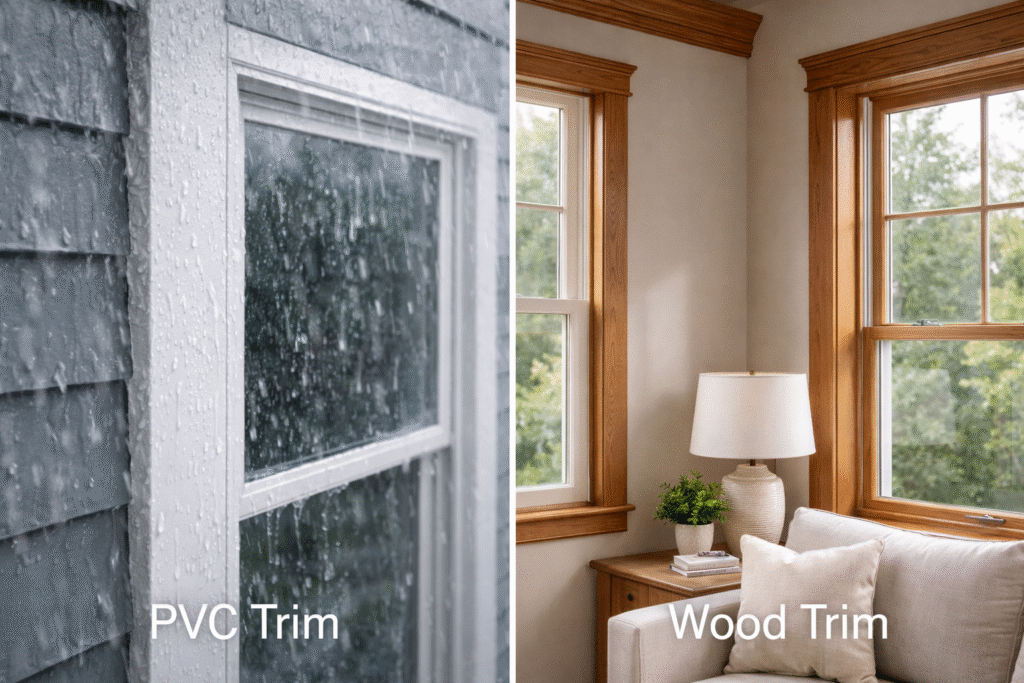
PVC trim and wood trim each offer distinct advantages depending on the project environment and performance priorities. PVC trim provides strong resistance to moisture, insects, and rot, making it a dependable option for exterior and high-humidity applications. Wood trim, while requiring proper sealing and maintenance, delivers traditional aesthetics, structural rigidity, and ease of customization for interior spaces.
The right choice ultimately depends on factors such as climate conditions, maintenance expectations, installation requirements, and budget. By understanding the cost, durability, and installation differences between PVC and wood trim, builders and homeowners can make informed decisions that balance long-term performance with design goals.