Choosing the wrong cabinet type can increase labor time, raise material costs, delay project schedules, and even lead to long-term structural complaints. As builders, we don’t just choose kitchen cabinet styles based on appearance—we evaluate structural strength, installation efficiency, durability, and return on investment. Understanding the real differences between Shaker, Slab, and Frame cabinets allows us to align construction methods with project goals and client expectations.
Shaker cabinets use a five-piece door construction with a recessed center panel, providing structural balance and classic visual depth. Slab cabinets feature a flat, single-panel door that emphasizes minimalism and manufacturing efficiency. Frame cabinets refer to face-frame construction, where a solid wood frame is attached to the cabinet box front, increasing rigidity and hinge stability compared to frameless systems. Their differences lie in joinery method, material behavior, installation process, durability performance, and overall project cost impact.
To fully understand which system performs best in specific building conditions, we need to break down their structure, materials, cost efficiency, and long-term reliability.
Structural Differences
When evaluating types of kitchen cabinet construction, structural design determines long-term performance.
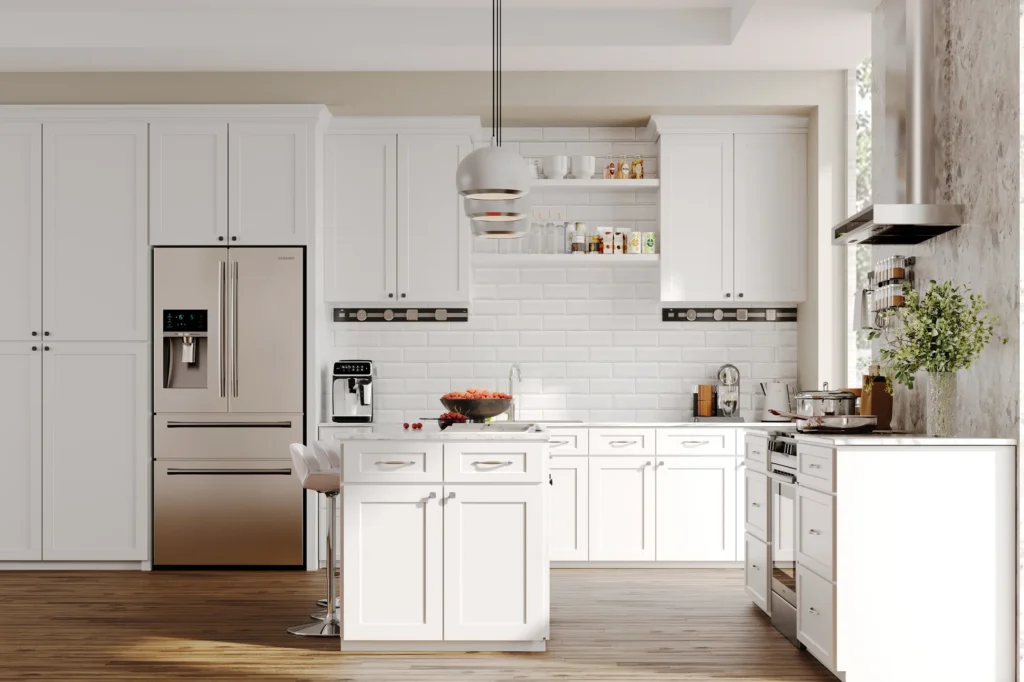
Shaker Cabinets
Shaker doors are built using five components:
- Two vertical stiles
- Two horizontal rails
- One recessed center panel
This frame-and-panel system allows natural wood movement. The center panel “floats” slightly inside the frame, reducing stress caused by humidity expansion and contraction.
From a builder’s standpoint:
- Joint integrity increases door lifespan
- Warping risk is reduced compared to large flat wood panels
- Screw holding capacity remains consistent along frame edges
Because of this structural logic, Shaker cabinets perform well in both framed and frameless cabinet boxes.
However, the additional joinery increases production complexity and finishing labor.
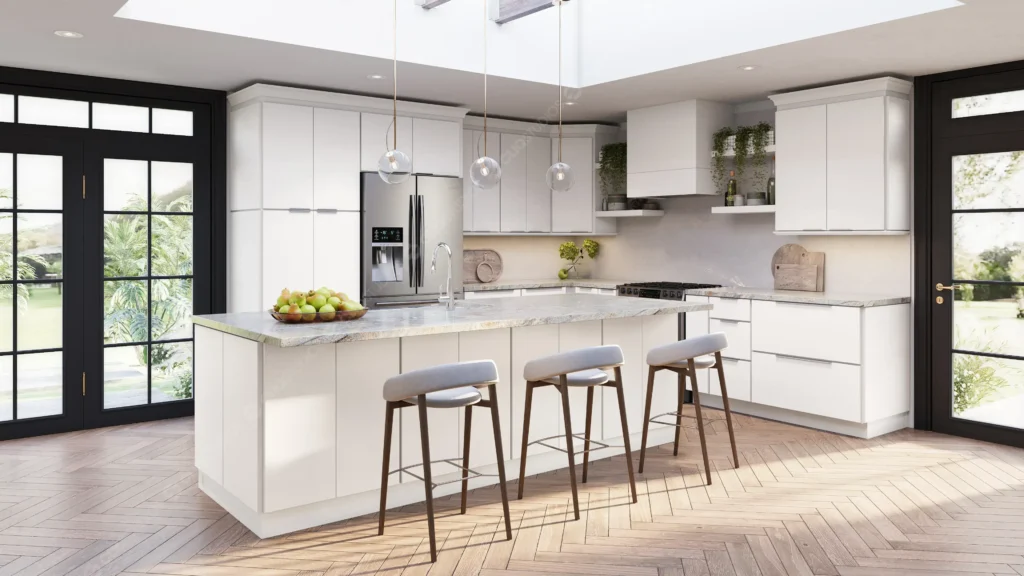
Slab Cabinets
Slab doors are constructed from a single flat panel without framing elements.
Common internal structures include:
- MDF core
- Particle board core
- Plywood panel
- Honeycomb lightweight core (in high-end modern systems)
The simplicity of slab construction reduces machining time and manufacturing cost. However, structural stability depends heavily on material thickness and density.
Builders should consider:
- Large slab doors (over 30 inches) may require thicker material
- Edge banding quality affects long-term durability
- Moisture resistance depends on core selection
Slab systems require precision alignment because any installation irregularity becomes visually obvious due to flat surfaces.
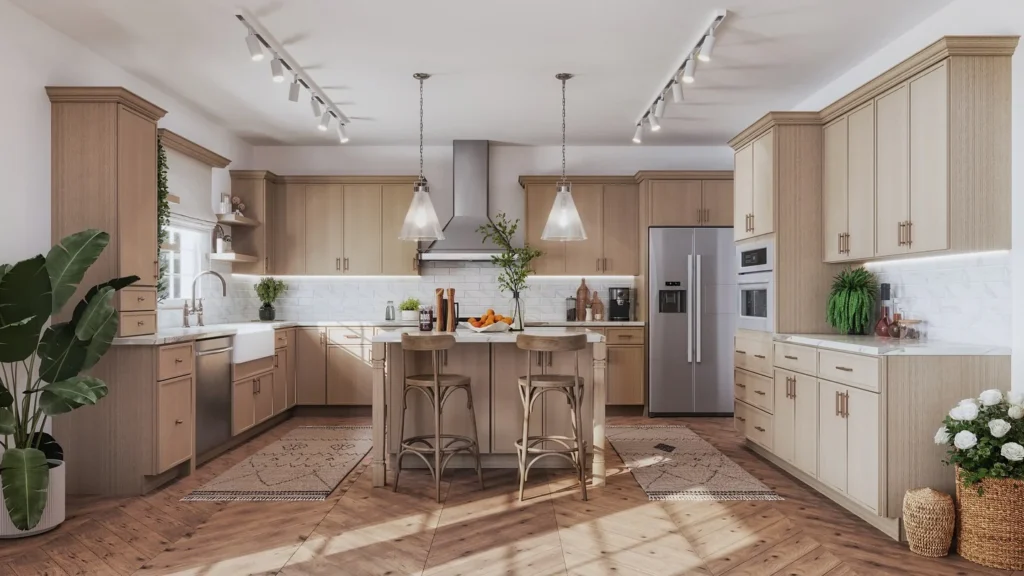
Frame Cabinets
Frame cabinets differ at the box level, not just the door level.
A face frame—usually hardwood—is attached to the cabinet front opening. This provides:
- Reinforced front structure
- Improved box squareness
- Stronger hinge anchoring points
- Additional load-bearing capacity
Compared to frameless construction, framed cabinets tolerate minor wall unevenness better during installation.
For remodeling projects in older buildings, framed systems often reduce adjustment time and alignment correction work.
Material and Manufacturing Differences
Material selection directly impacts cost, stability, and perceived value.
Shaker Material Considerations
Shaker doors are often constructed using:
- Solid maple, oak, birch, or poplar
- MDF center panel with solid wood frame
- Plywood cabinet boxes
Because multiple components must be assembled and sanded, labor hours increase. Finishing also requires attention to joint transitions.
However, Shaker cabinets allow easier repainting or refinishing in future renovations, increasing lifecycle value.
Slab Material Considerations
Slab cabinets are commonly made with:
- MDF core + laminate surface
- High-gloss acrylic
- Wood veneer plywood
- Thermofoil wrapping
Slab systems are compatible with automated production lines, reducing per-unit cost in large housing developments.
However, builders must consider:
- MDF swelling risk in moisture-prone environments
- Edge banding durability
- Surface scratch visibility (especially on gloss finishes)
Material consistency becomes more critical than joinery quality.
Frame Cabinet Material Logic
Frame cabinets require:
- Solid hardwood for face frame
- Screwed or doweled joints
- Reinforced corner blocks in higher-grade builds
This increases raw material cost but improves load-bearing strength, especially for larger kitchen cabinet types and sizes.
For high-end custom homes, framed construction often signals craftsmanship quality to buyers.
Cost and Installation Efficiency
From a construction management perspective, time equals money.
| Feature | Shaker | Slab | Frame Cabinets |
|---|---|---|---|
| Manufacturing Cost | Medium | Low–Medium | Medium–High |
| Installation Speed | Moderate | Fast | Moderate |
| Alignment Tolerance | Medium | Low | High |
| Structural Stability | High | Medium | Very High |
| Best for Volume Builds | Moderate | Excellent | Limited |
Design Application and Market Demand
Each cabinet type fits different architectural positioning.
Shaker: Balanced Versatility
Shaker remains one of the most requested kitchen cabinet styles because it fits:
- Transitional interiors
- Farmhouse aesthetics
- Modern-classic blends
It works well across various types of kitchen cabinets materials and supports multiple finishing methods.
For resale-focused projects, Shaker often delivers the safest ROI.
Slab: Modern and Minimal
Slab cabinets dominate:
- Contemporary homes
- Urban apartments
- Luxury minimalist designs
They pair effectively with:
- Handleless systems
- Push-to-open hardware
- Integrated appliances
In projects combining two different types of cabinets in kitchen layouts, slab upper cabinets can visually lighten the space.
However, slab surfaces show alignment flaws more clearly than Shaker.
Frame Cabinets: Structural and Traditional
Framed cabinets are deeply rooted in North American construction traditions.
They provide:
- Strong hinge mounting
- Better performance under heavy door loads
- Compatibility with inset door designs
In markets that prioritize craftsmanship perception, framed construction increases buyer confidence.
Durability and Long-Term Performance
Long-term durability reduces maintenance calls and warranty claims.
Shaker Durability
- Floating center panel reduces stress
- Frame joints distribute structural load
- Easier repair if damaged
Proper sealing prevents moisture penetration at joints.
Slab Durability
- Dependent on core quality
- Edge banding is the weak point
- Large panels more vulnerable to warping
High-density MDF improves performance but increases weight.
Frame Cabinet Durability
- Face frame strengthens cabinet opening
- Better resistance to racking
- Improved hinge lifespan
For heavy solid wood doors, framed systems provide superior long-term performance.
Professional Advice
After comparing structure, cost, and performance, selection should depend on project type.
Choose Shaker When:
- You need broad buyer appeal
- You want structural reliability with design flexibility
- The project targets mid-to-high resale value
Choose Slab When:
- Budget control is critical
- The build emphasizes modern minimalism
- Fast installation is required
Choose Frame Cabinets When:
- Structural strength is prioritized
- Doors are heavy or oversized
- The client expects traditional craftsmanship
Matching types of kitchen cabinet construction with the overall architectural intent ensures fewer callbacks and stronger long-term satisfaction.
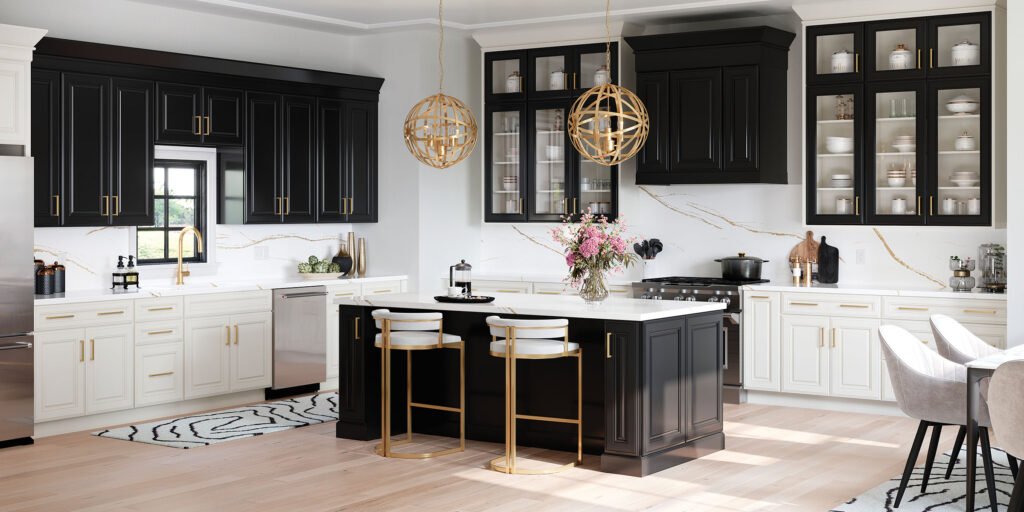
Summary
Shaker, Slab, and Frame cabinets differ in structural design, manufacturing method, material behavior, installation complexity, and long-term durability. Shaker balances strength and versatility. Slab maximizes efficiency and modern appeal. Frame construction enhances structural rigidity. For builders, selecting the right system means aligning construction logic with project scale, market expectations, and performance requirements.