Estimating cabinet quantities is a routine but critical task for builders and contractors during residential project planning. In many projects, only architectural floor plans are available before detailed cabinet drawings are developed. Builders therefore need a reliable method to translate floor plan measurements into accurate cabinet quantities. Understanding how to perform cabinet takeoffs directly from floor plans can significantly improve planning efficiency and reduce procurement risks—but how can builders estimate cabinet quantities accurately at this early stage?
1. Understanding Cabinet Types in U.S. Residential Construction
Before estimating cabinet quantities from floor plans, builders must understand the standard cabinet categories used in American residential construction. Most kitchens in the United States follow dimensional conventions established by organizations such as the National Kitchen & Bath Association (NKBA) and the Kitchen Cabinet Manufacturers Association (KCMA). These standards help ensure compatibility between cabinetry, appliances, countertops, and ergonomic workspaces.
In typical residential kitchens, cabinetry is divided into three primary categories: base cabinets, wall cabinets, and tall cabinets. Each category serves a specific functional role within the kitchen layout and follows standardized dimensional guidelines.
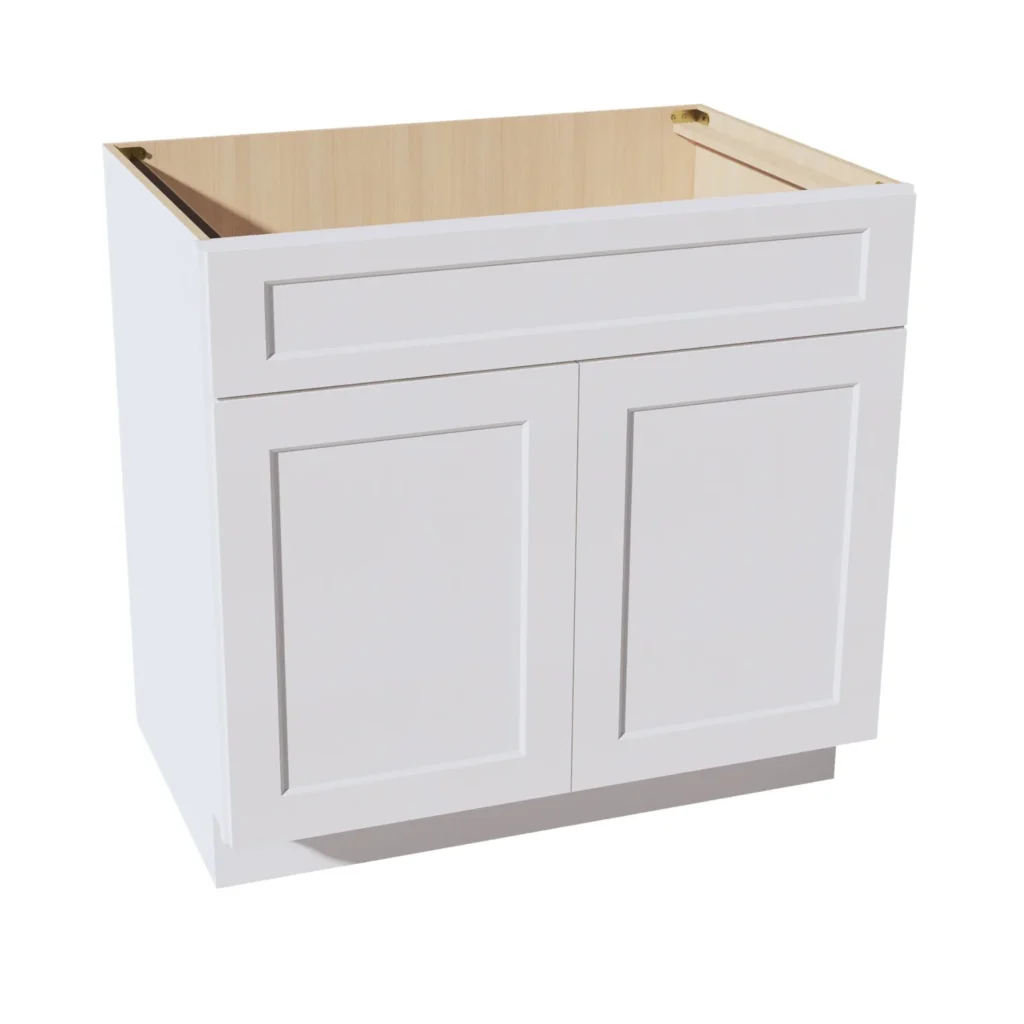
Base Cabinets
Base cabinets form the structural foundation of the kitchen workspace. They are installed directly on the floor and support the countertop surface while housing drawers, shelves, and integrated storage systems.
According to design guidelines published by the National Kitchen & Bath Association (NKBA), the recommended finished kitchen counter height in residential construction is approximately 36 inches. To achieve this height, base cabinets are typically manufactured at 34.5 inches tall, allowing space for a standard countertop thickness of approximately 1.5 inches.
Typical base cabinet dimensions include:
- Height: 34.5 inches (before countertop installation)
- Depth: 24 inches
- Width range: 9 to 48 inches
The 24-inch cabinet depth is designed to accommodate common countertop depths while maintaining adequate workspace and circulation clearance. This dimension also aligns with standard kitchen appliance depths, ensuring appliances such as dishwashers and ranges sit flush with surrounding cabinetry.
Base cabinets typically include specialized units such as:
- sink base cabinets
- drawer base cabinets
- corner cabinets (lazy Susan or blind corner units)
- pull-out storage cabinets
Because base cabinets define the primary kitchen workflow areas—such as food preparation, cleaning, and cooking—they represent the majority of cabinet volume in most residential kitchens.
Sources:
- National Kitchen & Bath Association (NKBA) Kitchen Planning Guidelines
- Kitchen Cabinet Manufacturers Association (KCMA)
Wall Cabinets
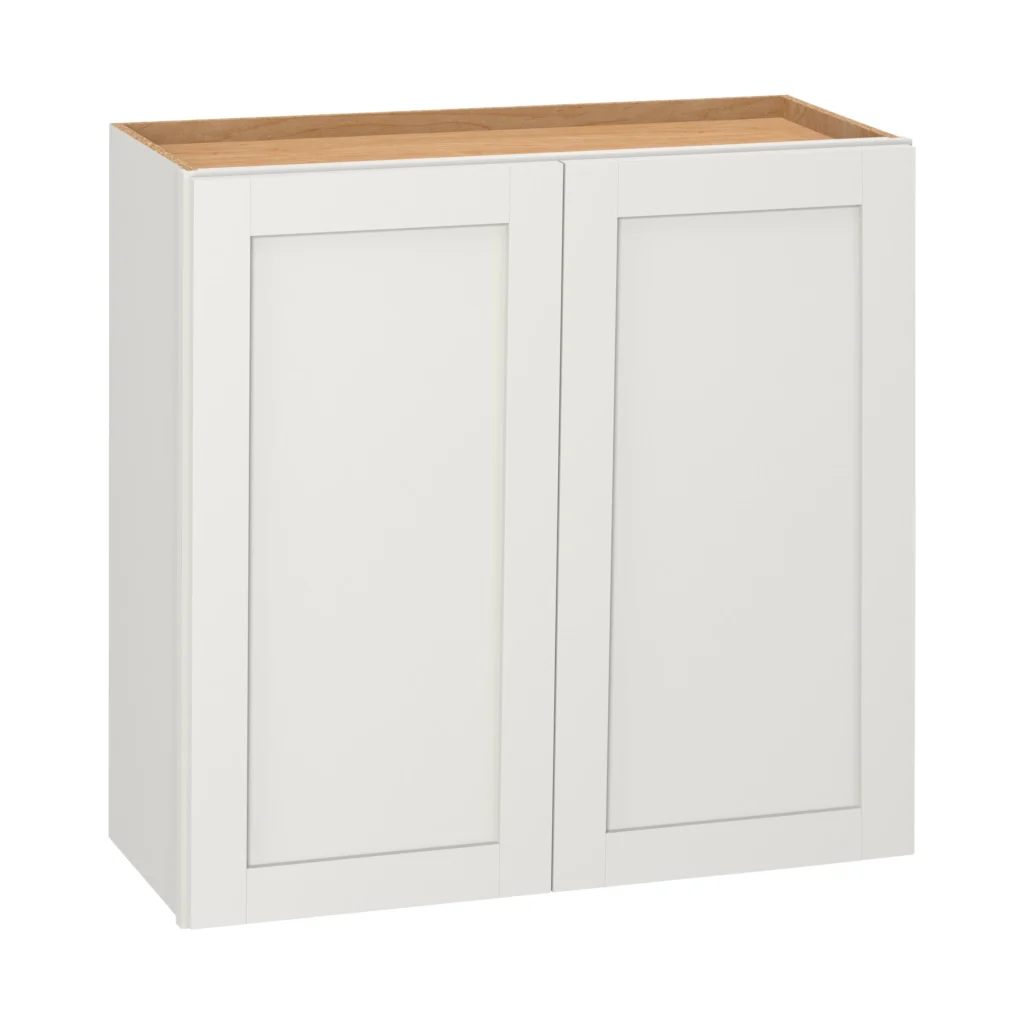
Wall cabinets provide elevated storage above countertops and maximize vertical space without occupying additional floor area. These cabinets are typically installed above base cabinets while maintaining a clearance that allows comfortable countertop use.
The NKBA recommends a typical distance of 18 inches between the countertop surface and the bottom of wall cabinets. This clearance provides adequate space for small appliances and ensures sufficient working space for food preparation.
Standard wall cabinet specifications generally include:
- Depth: 12 inches
- Height options: 30, 36, or 42 inches
- Width range: 9 to 36 inches
The shallower depth of wall cabinets prevents obstruction of the workspace below while still providing effective storage for dishes, glasses, and pantry items.
Wall cabinet heights are often selected based on ceiling height. For example:
- 30″ cabinets are common in kitchens with lower ceilings
- 36″ cabinets are typical in standard 8-foot ceilings
- 42″ cabinets are frequently used in modern kitchens to extend cabinetry closer to the ceiling
In Shaker-style kitchen designs, wall cabinets are typically aligned vertically with the base cabinets below to maintain visual symmetry and consistent cabinet module spacing.
Sources:
- NKBA Kitchen Planning Guidelines
- Architectural Graphic Standards
Tall Cabinets
Tall cabinets—sometimes referred to as utility cabinets or pantry cabinets—provide full-height vertical storage within the kitchen layout. These cabinets are commonly used to house pantry shelving, integrated ovens, or specialized storage systems.
Typical tall cabinet specifications include:
- Height: 84, 90, or 96 inches
- Depth: 24 inches
- Width range: 18 to 36 inches
The height of tall cabinets is typically selected based on ceiling height and kitchen layout constraints. For example, 84-inch cabinets are commonly used in kitchens with soffits, while 96-inch cabinets are frequently installed in modern kitchens with 8-foot ceilings to create a near full-height storage wall.
Tall cabinets are often placed near refrigerator zones, pantry areas, or appliance towers to centralize vertical storage and maintain efficient kitchen workflow.
In many modern kitchen layouts, tall cabinets also serve as appliance integration units, housing built-in ovens, microwave drawers, or refrigerator panels.
Sources:
- NKBA Kitchen Planning Guidelines
- Kitchen Cabinet Manufacturers Association (KCMA)

Understanding these cabinet categories and their dimensional standards is essential when interpreting architectural floor plans. Builders rely on these standardized cabinet modules to convert linear kitchen wall measurements into accurate cabinet quantity estimates during the cabinet takeoff process.
2. Standard Dimensions of U.S. Kitchen Cabinet Modules
Most residential kitchens in the United States rely on standardized cabinet modules, which simplify layout planning, estimation, and manufacturing. These modular dimensions allow builders to translate kitchen wall measurements into cabinet quantities during the cabinet takeoff process.
The table below summarizes the typical dimensional standards used in U.S. residential cabinetry.
| Cabinet Type | Cabinet Height | Cabinet Depth | Typical Width Modules | Installation Notes |
|---|---|---|---|---|
| Base Cabinet | 34.5 in | 24 in | 9–48 in (usually in 3″ increments) | Installed on floor with a 4.5″ toe kick; combined with countertop to reach ~36″ finished height |
| Wall Cabinet | 30, 36, or 42 in | 12 in | 9–36 in | Typically installed 18″ above countertop for workspace clearance |
| Tall Cabinet | 84, 90, or 96 in | 24 in | 18–36 in | Used for pantry or appliance towers; height often matches ceiling conditions |
Most cabinet manufacturers in the United States produce cabinets using standardized width increments. The most frequently used cabinet widths include:9″, 12″, 15″, 18″, 21″, 24″, 27″, 30″, 33″, 36″, 42″, 48″
Because cabinet modules follow predictable sizing increments, builders can divide a cabinet run along a kitchen wall into combinations of these modules when estimating cabinet quantities from architectural floor plans.
3. Step-by-Step Method to Estimate Cabinets from Floor Plans
Builders can estimate cabinet quantities from architectural floor plans using a structured workflow. The process focuses on identifying cabinet zones, measuring available wall space, and converting those measurements into standardized cabinet modules.
Step 1: Identify Cabinet Runs
Review the kitchen floor plan and identify all areas where cabinetry will be installed. Cabinet runs typically occur along:
- perimeter kitchen walls
- kitchen islands
- pantry or storage walls
At this stage, builders should also identify the locations of fixed appliances such as refrigerators, ranges, dishwashers, and microwaves. These elements interrupt cabinet runs and must be excluded from cabinet length calculations.
Step 2: Measure Cabinet Linear Length
After cabinet zones are identified, measure the total linear wall length available for cabinets within each run. Appliance spaces, openings, and clearance zones should be deducted to determine the net cabinet installation length.
This measurement establishes the total cabinet space that will later be divided into standardized cabinet modules.
Step 3: Convert Linear Length into Cabinet Modules
Once the usable cabinet run length is determined, divide the available space into combinations of standard cabinet widths. Because most cabinet manufacturers produce cabinets in modular width increments, builders can allocate cabinet units that fit the available space while maintaining functional kitchen layout requirements.
Step 4: Verify Layout Constraints
Before finalizing cabinet quantities, verify that the proposed cabinet modules align with key layout constraints. These include appliance clearances, corner cabinet requirements, filler panels, and workflow spacing within the kitchen layout.
Confirming these constraints ensures that the estimated cabinet quantities remain compatible with the final kitchen design.
4. Case Study: Cabinet Takeoff from Floor Plans for an Atlanta Townhouse Project
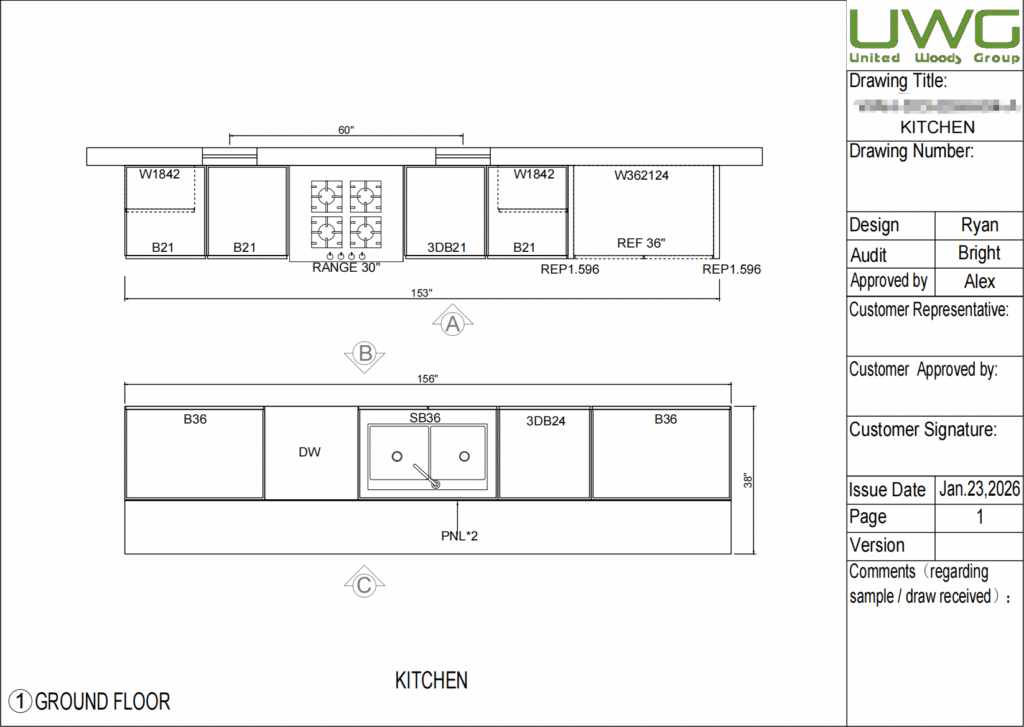
In a recent townhouse development project in Atlanta, Georgia, a builder provided our team with architectural kitchen floor plans and requested a cabinet proposal based on standard U.S. Shaker-style cabinetry.
Using the floor plan drawings, our design team quickly performed a cabinet takeoff by identifying cabinet runs, appliance locations, and available installation space. Based on these measurements, we converted the kitchen layout into a complete cabinet module plan that followed standard U.S. cabinet dimensions.
The final deliverable included detailed cabinet layout drawings, cabinet dimensions, accessory configurations, and reserved spaces for major appliances such as the refrigerator, range, and dishwasher.
This type of project demonstrates how experienced design teams can translate architectural floor plans into accurate cabinet layouts, helping builders streamline procurement, reduce estimation errors, and accelerate project planning.
5. Common Mistakes When Estimating Cabinets from Floor Plans
Even experienced builders can make errors during cabinet takeoffs. The most common issues typically involve overlooking layout constraints or installation requirements.
Common mistakes include:
- Ignoring appliance clearances – Appliance spaces must be excluded from cabinet runs.
- Forgetting filler panels – Small fillers are often required between cabinets and walls.
- Miscalculating corner cabinets – Corner layouts require specialized modules such as lazy Susan or blind corner units.
- Overlooking tall cabinet zones – Pantry or appliance towers are sometimes missed during early estimation.
Recognizing these factors helps improve cabinet estimation accuracy and prevents installation conflicts during construction.
6. Digital Tools for Cabinet Takeoff
Many builders now use digital tools to assist with cabinet estimation and layout planning.
Common tools include:
- construction estimating software
- BIM modeling platforms
- kitchen layout design software
These tools can automatically measure cabinet runs and generate preliminary cabinet quantity reports. However, understanding the manual estimation process remains essential for verifying layouts and ensuring accurate cabinet planning.
Frequently Asked Questions About Cabinet Estimation
Q: How do builders categorize cabinets when estimating quantities from floor plans?
A: In standard residential construction, builders typically divide kitchen cabinetry into three primary categories: base cabinets (installed on the floor to support countertops), wall cabinets (elevated storage mounted above countertops), and tall cabinets (floor-to-ceiling units like pantries or oven housings).
Q: What are the standard dimensions for a base cabinet in the U.S.?
A: According to NKBA guidelines, a standard base cabinet is 34.5 inches tall and 24 inches deep. When combined with a standard 1.5-inch countertop, this achieves the optimal finished kitchen workspace height of 36 inches. Widths typically range from 9 to 48 inches in 3-inch increments.
Q: How much clearance should there be between base and wall cabinets?
A: The National Kitchen & Bath Association (NKBA) recommends a standard clearance of 18 inches between the countertop surface and the bottom of the wall cabinets. This provides adequate vertical space for small appliances and comfortable food preparation.
Q: Why is it important to understand standard cabinet modules before estimating quantities?
A: By understanding that standard U.S. cabinets are sized in predictable 3-inch increments, contractors can more easily divide available wall space on a floor plan into accurate cabinet units. This early-stage estimation helps improve procurement planning, avoid ordering errors, and reduce construction delays.
Summary
Estimating cabinet quantities from floor plans is a fundamental skill for builders involved in residential construction. By identifying cabinet runs, measuring available wall space, and converting linear dimensions into standard cabinet modules, contractors can produce reliable cabinet takeoffs even before detailed cabinet drawings are finalized.
When combined with proper consideration of appliances, fillers, and corner layouts, this structured approach helps reduce ordering errors, improve project coordination, and support efficient kitchen installation planning.