Drawer slide choice directly affects cabinet durability, user experience, and installation efficiency. In high-volume builds or precision millwork, selecting the wrong type can lead to misalignments, callbacks, or dissatisfied clients. So—how do you choose between bottom-mount and side-mount drawer slides?
Bottom-mount drawer slides install beneath the drawer for a concealed look and smoother motion, ideal for medium-duty applications. Side-mount slides attach externally, offering higher load capacity, faster installation, and broader compatibility. Choose bottom-mount for aesthetics; side-mount for strength and scalability.
Let’s explore their technical differences, performance factors, and optimal use cases to help you specify the right slide for every project.
What’s the Core Difference Between Bottom-Mount and Side-Mount Slides?
The primary engineering distinction between bottom-mount and side-mount drawer slides lies in their attachment geometry and load transfer path.
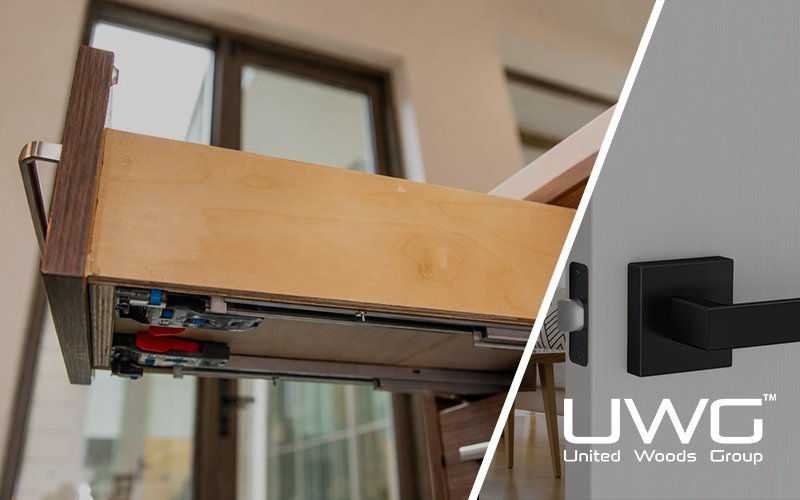
- Bottom-mount slides—commonly referred to in industry specifications as undermount slides—are installed beneath the drawer box. This configuration conceals the slide hardware entirely, offering a clean visual profile and maximizing the interior side panel surface. Bottom-mount slides typically engage via integrated locking devices affixed to notched drawer sides, often requiring precise tolerances and groove routing. These slides guide the drawer movement from underneath, using a tandem or synchronized runner system.
- Side-mount slides, by contrast, are fastened directly to the drawer’s left and right exterior walls and the cabinet’s vertical carcass. This type of mounting is exposed when the drawer is open but provides more direct lateral support and greater torsional resistance under asymmetrical loads, such as when only one side of the drawer is pulled.
From a design perspective, bottom-mount systems prioritize aesthetics and silent operation, while side-mount systems prioritize load-bearing performance, cost-efficiency, and ease of integration into mass-production cabinetry. Side-mount slides are generally compatible with standard rectangular drawer boxes, whereas bottom-mount configurations require factory-calibrated drawer construction and jig-based alignment during installation.
Pros and Cons: Which One Performs Better?
The choice between bottom-mount and side-mount drawer slides should be based on application-specific performance criteria such as dynamic load ratings, installation tolerance, frequency of access, and cabinet configuration. Below is a detailed performance matrix to support decision-making:
| Performance Factor | Bottom-Mount (Undermount) | Side-Mount |
|---|---|---|
| Mounting Configuration | Under the drawer, concealed within cabinet structure | On exterior drawer sides, visible upon opening |
| Drawer Compatibility | Requires custom drawer box with notching, rear cutout, and groove alignment | Compatible with standard rectangular drawer boxes |
| Load Capacity | Moderate (typically 75–100 lbs dynamic load) | High (often up to 150 lbs or more depending on model) |
| Drawer Stability | High vertical stability; moderate lateral resistance | Superior lateral support, less prone to side sag under unbalanced load |
| Installation Requirements | Precision jig required; low tolerance for misalignment | Tool-friendly; forgiving in field adjustments |
| Adjustment Features | 3-way adjustability: height, tilt, setback (via locking devices) | Limited or manual shim adjustment |
| Slide Travel | Typically full-extension with optional over-travel | Full-extension and over-travel widely available |
| Soft-Close Mechanism | Integrated; smoother, quieter; uses internal dampers | Add-on or integrated; generally less smooth than undermount systems |
| Aesthetic Finish | Premium look with hidden hardware | Utility-focused; visible steel rails |
| Cost Profile | Higher unit cost; higher install labor cost | Economical unit cost; faster install time for volume production |
| Maintenance & Retrofit | Component replacement requires drawer removal | Easy access for repair or slide upgrade |
Which Drawer Slide is Better for Cabinets?
The optimal drawer slide choice is highly dependent on cabinet typology, drawer width, projected load distribution, and client expectations—especially in North American residential and commercial fit-outs.
Here’s a breakdown of the most common cabinet applications and which slide mechanism best supports functional and aesthetic outcomes:
- Kitchen Cabinets (Residential or Custom Built-ins) Bottom-mount slides are preferred in premium kitchens where visual clarity, soft-close performance, and smooth glide are selling points. Their concealed profile aligns with modern and transitional design language. However, for mass-produced stock cabinetry or rental units, side-mounts are typically favored due to lower install complexity and unit price.
- Bathroom Vanities Bottom-mount slides are advantageous in humid environments, as their protected position under the drawer minimizes direct exposure to moisture. This reduces the chance of corrosion and prolongs operational life, especially in high-traffic master bath applications.
- Closets and Wardrobe Systems Side-mount slides provide superior support for wide-format drawers commonly used to store garments, bags, or accessories. Their lateral bearing profile enhances stability under offset loads—especially important for long drawer spans exceeding 24 inches.
- Garage, Shop, or Utility Cabinets In workbench environments or utility storage systems, side-mount ball-bearing slides are the go-to choice for heavy-duty performance. They offer high load capacity (often 100–150 lbs per pair), quick replacement access, and can be reinforced for tool or part storage.
- Commercial Casework / Institutional Installations Bottom-mount slides are occasionally specified in office or reception millwork for aesthetic discretion. Yet in high-wear environments like schools, hospitals, or retail, side-mounts dominate due to their durability, serviceability, and tolerance to rough use.

How Do Costs Compare Between the Two?
Total cost of ownership (TCO) for drawer slides must factor in not only the material unit cost, but also the installation labor time, tooling requirements, and field adjustability—particularly relevant for builders managing multi-site deployment.
🔹 Unit Cost Comparison (Average Market Range – 2026):
- Bottom-Mount Slides: $5–$15 per pair
- Side-Mount Slides: $9–$30 per pair
🔹 Labor & Installation Factors:
- Bottom-mounts typically require:
- Drawer box notching and rear groove machining
- Locking device alignment ±0.5mm tolerance
- Template-based or jig-aided installation
- Field calibration for tilt and setback (especially for inset drawers)
- Side-mounts typically offer:
- Fast screw-mounting without drawer modification
- Faster replacements during punch-list corrections
- Low skill threshold for install crews
🔹 Hidden Costs:
- Field Rework Risk: Bottom-mounts installed without precision can bind or misalign, leading to drawer racking or return visits.
- Freight & Inventory: Bottom-mount hardware typically has higher packaging volume and shipping weight. Side-mounts are more compact and easier to batch.

Installation Insights for Bottom-Mount and Side-Mount Slides
Effective installation is critical to long-term performance and warranty compliance. Below is a comparison of practical installation considerations for both drawer slide types, highlighting required skill levels, tooling, and field tolerances.
🔹 Bottom-Mount (Undermount) Slides:
- Require precise vertical and horizontal alignment on both drawer and cabinet members.
- Drawer boxes must be notched at the rear and typically routed with a bottom groove to engage locking clips.
- Installation requires a dedicated jig or slide positioning template to meet tolerance thresholds, especially for inset or frameless cabinets.
- Best installed before face frames are applied, particularly in production-line environments.
- Often requires 3-way adjustment calibration after initial install to fine-tune drawer reveal and glide smoothness.
Installer skill level: Intermediate to advanced Time per drawer (estimated): 10–15 minutes
🔹 Side-Mount Slides:
- Mount directly to standard drawer sides and interior cabinet walls using basic tools.
- Tolerate minor inconsistencies in drawer sizing and alignment.
- Allow for quick field adjustment, shim insertion, or replacement with minimal rework.
- Ideal for high-volume installations, remodels, and retrofit cabinetry.
Installer skill level: Entry to intermediate Time per drawer (estimated): 5–8 minutes

Choosing the Right Slide: Use Case Scenarios
Slide selection should align with the performance demands, installation environment, and end-user expectations of the project. Below are common North American project types with recommended slide pairings based on industry usage patterns.
✅ Side-Mount Slides Are Best Suited For:
- Multi-family housing, budget apartments, or spec builds ➤ Prioritizes fast installs, low unit cost, and ease of field service
- Utility, garage, or workshop cabinetry ➤ High load capacity and structural reinforcement ideal for heavy items
- Government, institutional, or hospitality casework ➤ Durable and cost-effective; less sensitive to minor handling damage
- Drawer retrofits and site corrections ➤ Quick to install or swap without changing drawer box design
✅ Bottom-Mount Slides Are Ideal For:
- Luxury residential cabinetry and high-end kitchens ➤ Offers concealed runners and premium soft-close motion
- Custom vanities or spa-grade bathroom builds ➤ Resistant to corrosion and preferred for quiet performance
- Retail or showroom millwork ➤ Clean drawer presentation with no visible slide hardware
- Projects with a minimalist or frameless design aesthetic ➤ Enables full-width drawer faces with minimal hardware reveal
Summary
Both bottom-mount and side-mount drawer slides serve critical roles in modern cabinetry. When properly specified, each contributes to functionality, user experience, and install efficiency. Builders must weigh the trade-offs between cost, performance, and appearance, while wholesalers should align inventory with evolving market segments.
The right slide isn’t just a component—it’s a strategic choice.
Articles that you may be interested in:
How to Select Drawer Slides: Soft-Close, Load Capacity & Durability Guide
Soft-Close Hinges and Pull-Out Systems: Enhancing Cabinet Functionality