Introduction
A door schedule is being finalized for a project, and melamine doors appear on the list almost by default. They are widely available, visually consistent, and often grouped under the category of “standard interior doors.” Yet when questions come up—about durability, moisture resistance, edge performance, or finish quality—the answers are often unclear. For a material that is used across a wide range of interior applications, melamine doors are frequently specified without a clear understanding of what they actually are and how they behave in real use.
This guide provides a complete, material-level overview of melamine doors. It explains what melamine doors are, how they are made, their key performance characteristics, common finish options, typical applications, and the main factors to consider when specifying them. The goal is to establish a clear, practical understanding of melamine doors as a building material—what they are suited for, and where their limitations lie.
What Are Melamine Doors?
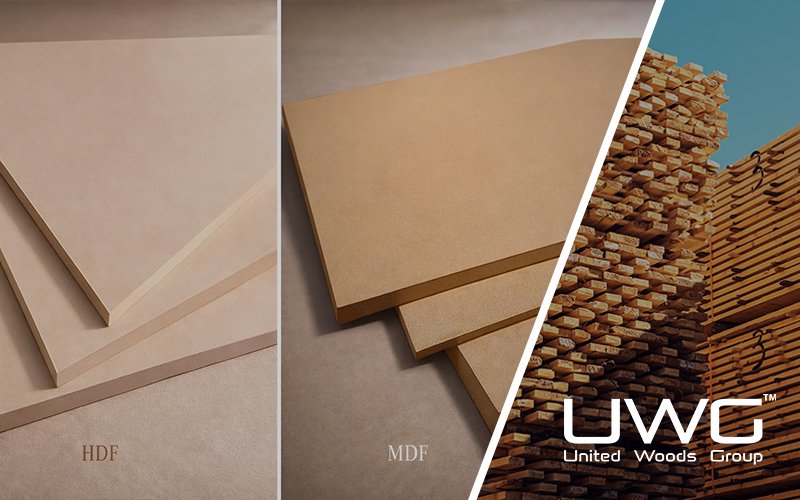
Melamine doors are panel doors finished with melamine-impregnated decorative paper bonded to an engineered wood core. The term “melamine” refers to the surface material, not the core itself. In most applications, the core is particleboard or MDF, selected based on cost, weight, machining requirements, and stability.
The melamine surface is created by saturating decorative paper with melamine-formaldehyde resin. This paper is then fused to the substrate under high heat and pressure. Once cured, the surface becomes hard, non-porous, and color-stable. The final appearance—whether solid color, woodgrain, or textured—comes from the printed paper, not from paint or veneer.
It is important to distinguish melamine doors from laminate or veneer doors. Laminate doors typically use thicker plastic laminate sheets bonded with adhesive, while veneer doors rely on real wood veneer and finishing coats. Melamine doors occupy a different category: thinner surface layers, higher uniformity, and a manufacturing process optimized for consistency rather than customization.
Manufacturing Process and Construction
The performance of a melamine door is closely tied to how it is manufactured. While the basic process is standardized, quality varies significantly depending on execution.
Production begins with the preparation of the substrate. Particleboard cores are commonly used for cost efficiency and dimensional stability, while MDF cores provide smoother edges and better machining characteristics. The substrate must be flat, dry, and properly conditioned before pressing.
Melamine-impregnated paper is then placed on one or both sides of the board and pressed using hot press equipment. Temperature, pressure, and press time are critical variables. Insufficient curing can lead to weak surface bonding, while excessive heat can cause brittleness or discoloration.
After pressing, panels are cut to size and edge-banded. Edge banding is a critical step in melamine door construction. Common edge materials include PVC, ABS, or matching melamine strips. The quality of the adhesive, edge thickness, and alignment all influence moisture resistance and long-term durability. Poor edge treatment is one of the most common failure points in melamine doors.
Performance Characteristics
Melamine doors are designed for controlled interior environments and perform well when used within those limits.
The melamine surface is resistant to abrasion, staining, and most household chemicals. It does not require painting or sealing and maintains color consistency over time because the decorative layer is factory-produced rather than field-applied. This makes melamine doors particularly suitable for projects where visual uniformity is important.
Moisture resistance is moderate and largely dependent on edge protection and core material. While the melamine surface itself is non-porous, exposed edges or damaged banding can allow moisture to penetrate the substrate. For this reason, melamine doors are not intended for high-humidity or wet locations.
Impact resistance is acceptable for normal use but limited compared to solid wood or high-pressure laminate surfaces. Sharp impacts can chip the surface or damage edges, especially on thinner panels.
Design and Finish Options
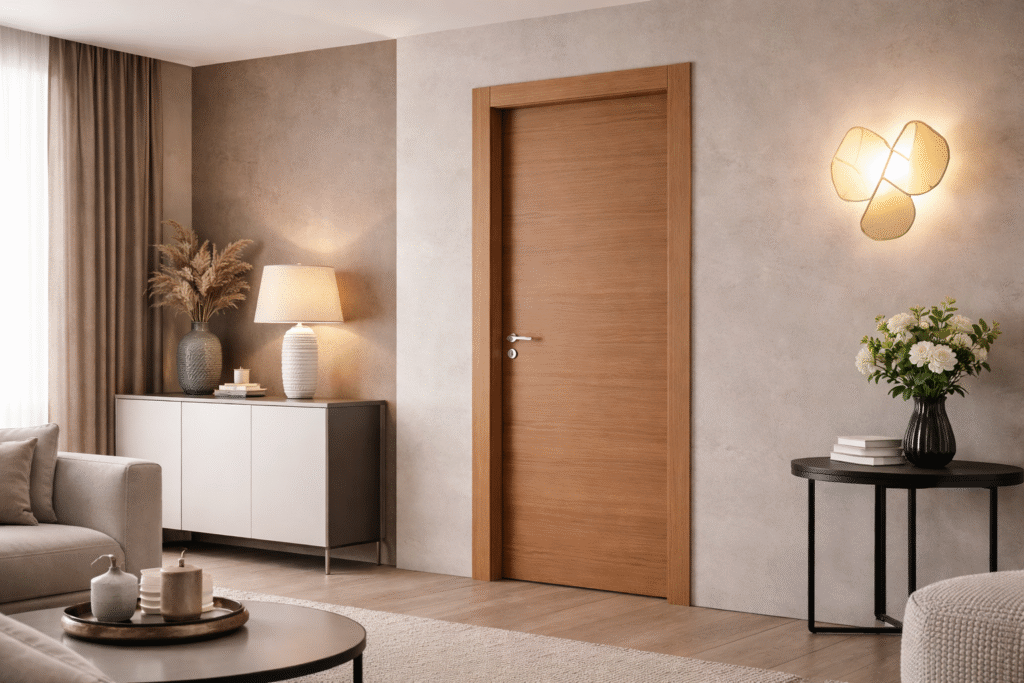
One of the main advantages of melamine doors is finish consistency. Because the surface is produced from printed decorative paper, color and pattern variation is minimal across large production runs.
Common finish options include solid colors, woodgrain patterns, and abstract or textile-inspired designs. Woodgrain melamine does not replicate the depth of real veneer but offers a uniform, repeatable appearance that is often preferred in large-scale projects.
Surface textures range from smooth to lightly embossed. Some finishes use synchronized textures that align grain patterns with surface relief, improving visual realism. However, texture depth remains shallow compared to natural materials.
Edge banding is an integral part of the visual outcome. Poor color or texture matching between the face and the edge is immediately noticeable and undermines the appearance of the door, regardless of surface quality.
Typical Applications and Use Cases
Melamine doors are commonly used in interior applications where durability, ease of maintenance, and cost control are priorities.
They are widely specified for residential interior doors, closets, and storage rooms, as well as cabinet doors and built-in systems. In multi-family and commercial projects, melamine doors are often selected for their consistency across large quantities and their resistance to everyday wear.
Melamine doors are well suited for dry, climate-controlled environments with moderate use. They are less appropriate for areas exposed to frequent moisture, direct sunlight, or heavy impact. Using melamine outside of its intended conditions typically leads to premature wear or failure.
Common Misconceptions About Melamine Doors
A common misconception is that melamine doors are inherently low quality. In reality, performance issues are more often linked to poor substrates, inadequate pressing, or inferior edge banding rather than the melamine surface itself.
Another misunderstanding is that all melamine doors perform the same. Variations in paper quality, resin content, press parameters, and edge treatment can result in significant differences in durability and appearance, even when doors appear similar at first glance.
Melamine doors are also sometimes expected to perform like painted or veneer doors in environments they are not designed for. Understanding the material’s limits is essential to using it successfully.
Key Factors to Consider When Specifying Melamine Doors
Specifying melamine doors requires attention to the full system rather than the surface alone. Core material selection, surface grade, edge banding type, and intended environment should all be considered together.
Clear specification of edge thickness, matching requirements, and acceptable tolerances reduces the risk of visual or performance issues. Verifying samples for both surface and edge quality is often more informative than reviewing color swatches alone.
Melamine doors perform best when expectations align with their material properties and manufacturing realities.
Frequently Asked Questions About Melamine Doors
Q: What are melamine doors?
A: Melamine doors are interior panel doors finished with a decorative paper that has been impregnated with melamine-formaldehyde resin. This surface is permanently bonded to an engineered wood core (such as particleboard or MDF) under high heat and pressure, creating a hard, color-stable finish.
Q: Are melamine doors waterproof or suitable for bathrooms?
A: Melamine doors offer moderate moisture resistance. While the melamine surface itself is non-porous and resists water, the edges are vulnerable. If the edge banding is compromised, moisture can penetrate the core. Therefore, they are designed for controlled interior environments and are not recommended for high-humidity or wet locations.
Q: How do melamine doors differ from laminate or veneer doors?
A: Melamine doors use a thinner, resin-infused paper layer that is fused directly to the substrate, optimizing them for mass production, cost efficiency, and high uniformity. Laminate doors use thicker, pre-manufactured plastic laminate sheets glued to the core, while veneer doors use a thin layer of real wood that requires separate finishing coats.
Q: Why do builders choose melamine doors for commercial and multi-family projects?
A: Builders choose melamine because it offers exceptional visual consistency across large orders. The factory-produced surface does not require on-site painting or sealing, and it is highly resistant to abrasion, staining, and fading. This makes them a highly efficient, low-maintenance option for volume projects.
Conclusion
Melamine doors are a practical, widely used interior door solution when evaluated and specified correctly. They offer surface durability, visual consistency, and efficient production, but their performance is closely tied to substrate quality, manufacturing control, and edge protection. Understanding melamine doors as a layered system—surface, core, and edge—provides a clear framework for determining where they are appropriate and where alternative materials should be considered.
Articles that you may be interested in:
A Builder’s Guide to Choosing Melamine Interior Doors
Home Design Tips: Matching Veneered Doors with Your Interior Style