
On a typical construction project, interior doors often arrive on site long before final finishes are complete. They are installed, adjusted, and protected while multiple trades continue working around them. At this stage, the condition of a Shaker door’s surface—whether primed or fully painted—can quietly influence how smoothly the remaining work proceeds, how much rework is required, and how predictable the final outcome will be.
Choosing between primed and painted Shaker doors is not simply an aesthetic decision. Primed doors offer a prepared surface intended for on-site finishing, allowing flexibility in color and sequencing but requiring additional labor and coordination. Painted doors arrive with a completed finish, reducing on-site work and offering greater consistency, while limiting post-installation adjustments. Understanding how these two surface treatments differ in material condition, installation workflow, cost structure, and long-term maintenance is essential to selecting the right option for a construction project.
Understanding Shaker Door Finishes
What Does “Primed” Mean?
A primed Shaker door is delivered with a factory-applied primer coat that prepares the surface for final painting. The primer is designed to seal the substrate, create a uniform base, and improve paint adhesion during subsequent finishing stages.
In its delivered state, a primed door is not considered a finished product. The surface is typically smooth and even, but still intended to receive one or more finish coats after installation. Minor surface imperfections, fastener holes, or joint lines may still be visible and are expected to be addressed during on-site preparation.
Primed doors are often chosen when final color decisions are deferred, when site conditions require flexibility, or when finishing is integrated into a broader on-site painting scope.
What Does “Painted” Mean?
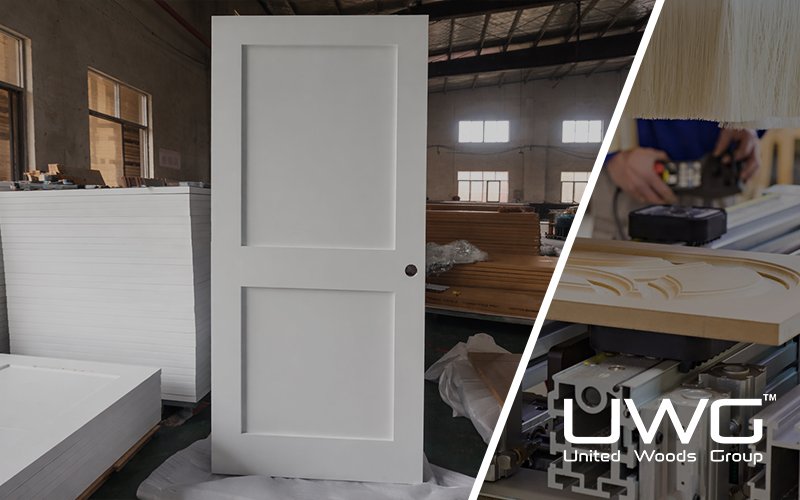
A painted Shaker door is delivered with a completed finish, typically applied in a controlled factory environment. This includes the primer layer as well as one or more topcoats, resulting in a uniform, ready-to-install surface.
Painted doors arrive with a consistent color, sheen, and texture, requiring no additional finishing after installation under normal conditions. Because the finish is completed prior to delivery, these doors are generally considered “install-ready” from a surface treatment standpoint.
The defining characteristic of painted doors is predictability. The finish quality is established before the door reaches the job site, reducing variability related to labor, environment, or sequencing.

Material & Surface Condition Comparison
From a material standpoint, the most significant difference between primed and painted Shaker doors lies in their surface readiness at the time of installation.
Primed doors present a uniform but unfinished surface. While the primer helps mask substrate variation, it does not fully conceal joint lines, edges, or minor surface inconsistencies. These details are typically addressed during sanding, caulking, and final painting on site. As a result, the final appearance depends heavily on workmanship and site conditions.
Painted doors, by contrast, arrive with a finished surface that reflects the final intended appearance. Panel profiles, edges, and joints are already sealed and coated, resulting in a more uniform and controlled look. Because finishing occurs off-site, surface consistency tends to be more predictable across multiple units.
This difference in surface condition has direct implications for visual consistency, quality control, and acceptance standards at project closeout.
| Feature | Primed Door | Painted Door |
|---|---|---|
| Surface Condition | Uniform but unfinished | Fully finished, color-consistent |
| Flexibility | High – can be finished on-site | Low – color and sheen fixed |
| Consistency | Depends on on-site finishing | Controlled in factory, highly consistent |
Installation & On-Site Workflow Impact
Surface finish plays a meaningful role in how doors are handled, installed, and protected on site.
Primed doors typically require additional steps after installation. These may include surface preparation, masking, painting, drying time, and potential touch-ups. This extends the door-related workflow and increases coordination with other finishing trades. Doors may need to remain protected for longer periods, increasing the risk of damage or rework.
Painted doors streamline the installation sequence. Once installed and adjusted, they are largely complete from a finishing perspective. This can reduce on-site labor, simplify scheduling, and shorten the time between installation and project completion. However, greater care is required during handling and installation to avoid damaging the finished surface.
In fast-paced or tightly scheduled projects, these workflow differences can have a noticeable impact on efficiency and predictability.

Cost Structure: Beyond the Door Price
While primed doors typically carry a lower initial purchase price, they introduce additional downstream costs. On-site painting requires labor, materials, equipment, and time. Variability in workmanship and rework due to site conditions can further affect total cost.
Painted doors generally have a higher upfront cost, but reduce or eliminate the need for on-site finishing. Labor requirements are lower, scheduling is simplified, and finish-related uncertainty is reduced. When evaluated as part of the total project cost rather than as a standalone line item, painted doors can offer a different cost profile than their initial price suggests.
Understanding the distinction between unit cost and total installed cost is critical when comparing these two finish options.
Durability, Touch-Ups & Long-Term Maintenance
Long-term performance is another key consideration when comparing primed and painted finishes.
Primed doors rely on the quality of on-site finishing for their durability. If properly painted and maintained, they can perform well over time. Touch-ups and repaints are generally straightforward, as the surface is already intended for field-applied coatings.
Painted doors offer consistent initial durability, but touch-ups can be more sensitive. Matching color, sheen, and texture may require greater care, especially if repairs are needed after installation. Over the long term, refinishing is still possible, but typically requires more preparation.
Each option presents different trade-offs between initial durability, ease of repair, and long-term appearance control.
Primed vs Painted Shaker Doors: Material, Installation, Cost, and Maintenance Comparison
| Feature / Aspect | Primed Shaker Door | Painted Shaker Door |
|---|---|---|
| Material Condition | Factory-applied primer; uniform but unfinished surface; requires final painting on-site | Fully finished at factory; smooth, color-consistent, ready to install |
| Installation / On-Site Convenience | Needs protection during finishing; additional on-site painting and labor required | Install-ready; minimal on-site work; must handle carefully to avoid surface damage |
| Suitable Project Types | Projects requiring on-site color customization or coordination with other materials | Projects prioritizing speed, consistency, and reduced on-site labor |
| Cost Considerations | Lower upfront cost; additional on-site labor and materials increase total project cost | Higher initial cost; reduced on-site labor may offset total cost in large projects |
| Maintenance & Longevity | Allows easy touch-ups and refinishing; durability depends on quality of on-site finish | Durable, consistent finish; touch-ups require careful color and sheen matching |
Common Mistakes and How to Avoid Them
One common mistake is comparing primed and painted doors solely on purchase price, without accounting for labor and finishing costs. Another is underestimating the impact of site conditions—such as dust, temperature, or humidity—on on-site painting quality.
Projects may also encounter issues when the chosen finish does not align with the construction schedule. Selecting primed doors for projects with limited finishing windows, or painted doors for environments with high risk of damage, can lead to avoidable complications.
These issues are best avoided by evaluating door finishes as part of the overall construction process rather than as isolated components.
Making the Right Choice: A Practical Decision Framework
Primed Shaker doors are generally better suited to projects where flexibility in color selection is important, where on-site finishing is already planned, or where schedules allow for extended finishing work.
Painted Shaker doors tend to align better with projects that prioritize speed, consistency, and reduced on-site labor. They are often favored where finish quality must be predictable and installation efficiency is critical.
The most effective choice balances surface condition, workflow impact, cost structure, and long-term performance—viewing door finishes as a strategic construction decision rather than a purely aesthetic one.

Conclusion
Primed and painted Shaker doors each serve distinct roles in construction projects. Neither option is inherently superior; their value depends on how well they align with project requirements, site conditions, and long-term goals.
By understanding the practical differences between these two surface treatments, it becomes easier to anticipate their impact on installation efficiency, cost control, and finished appearance. In this context, the choice of door finish is not a minor detail, but a meaningful contributor to overall project performance.
Articles that you may be interested in:
What Is a Shaker Style Molded Door? How It Differs from a Traditional Shaker Door
Shaker Door Panel Thickness Guide: Standard Sizes and Custom Options