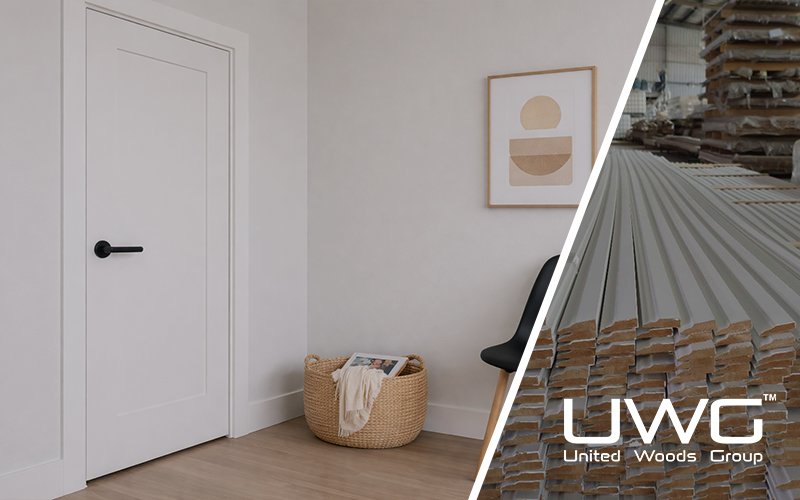
Minimalist design has long been synonymous with restraint—clean planes, quiet surfaces, and a disciplined absence of excess. But to many designers and developers, minimalism often raises a critical challenge: how do you achieve spatial interest and architectural depth without breaking the aesthetic silence?
Decorative mouldings resolve this paradox by introducing measured articulation—through linear trims, soft shadow reveals, and refined profiles that reinforce geometry without overwhelming it. Whether using low-profile crown moulding, flat-panel casings, or MDF and pine baseboards, minimalist trims can strengthen visual order while adding subtle sophistication. The right detailing transforms simplicity into structure.
Let’s take a closer look at the moulding strategies, materials, and profile applications that allow builders and specifiers to elevate minimalist spaces—without sacrificing clarity, efficiency, or current market appeal.
What Kind of Trim Looks Good in a Minimalist Home?
In minimalist architecture, form follows function—but precision detailing elevates function into visual coherence. We recommend flat stock MDF trim and square-edge primed pine due to their uniform surface, ease of machining, and compatibility with flush and frameless applications.
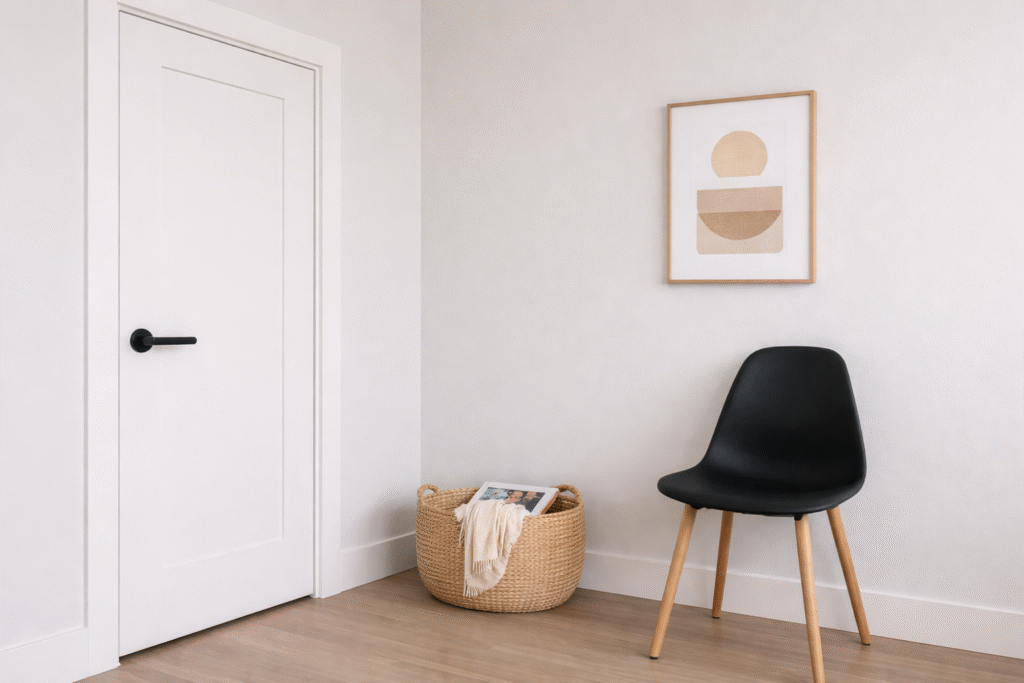
For baseboards, flush or stepped profiles ranging between 3½″ and 5″ in height strike a balance between subtlety and definition. In contemporary residential builds, these profiles are typically installed with tight reveals or shadow gaps to avoid traditional casing bulk.
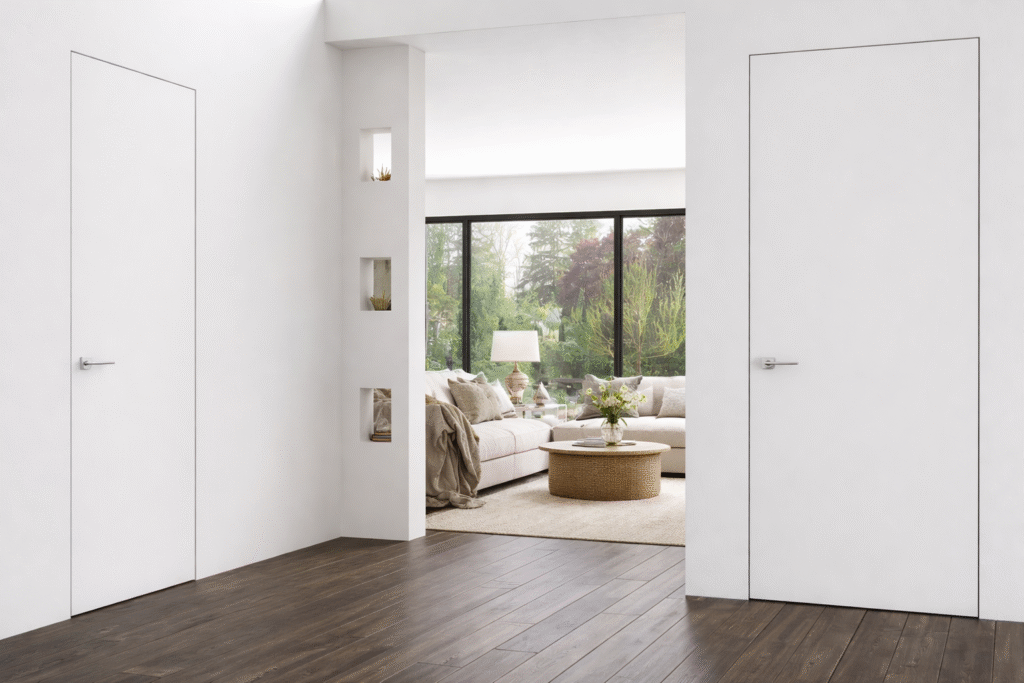
In the North American market, particularly in urban infill projects and custom spec homes, there’s a growing shift toward frameless door casings, utilizing techniques such as drywall returns and negative detailing. These methods remove visual clutter while maintaining dimensional accuracy.
Ultimately, successful minimalist trim execution depends on:
- Consistent reveal alignment across walls and openings
- Paint-match techniques to unify wall and trim surfaces
- Using pre-primed MDF or knot-free pine for dimensional stability during seasonal shifts
How Do You Modernize Decorative Molding?
Modernizing decorative mouldings isn’t about removal—it’s about refining proportion, profile, and integration. Today’s designers and contractors are embracing monolithic detailing: trims that merge seamlessly with wall surfaces to support spatial clarity rather than compete with it.
We advise selecting narrow-profile MDF or fine-grain pine stock, often between ½″ and 1″ in thickness, with eased or square edges. These mouldings should be painted in the same tonal range as the surrounding wall or ceiling, using matte or eggshell finishes to reduce visual interruption.
A growing number of design professionals now favor horizontal architectural bands—such as chair rails, panel moulds, or datum lines—to add compositional structure without ornamentation. These work especially well in open-plan interiors, delineating wall planes while preserving minimalism.
📊 According to a 2025 Houzz Pro survey1, over 60% of North American architects and designers ranked “painted flush trimwork” and “monochromatic moulding profiles” as top trends for modern interiors—especially in the multi-unit housing and executive condo sectors.
Where cost efficiency meets design intent, MDF is often the default. But for projects demanding greater durability or exposed grain aesthetics, clear pine with consistent density and low knot frequency is preferred.
Can You Use Crown Moulding in a Modern Minimalist Space?
Absolutely—and when designed with intention, crown moulding can reinforce rather than disrupt minimalist aesthetics.
In modern builds, we recommend low-profile crown moulding with a projection of 1¼″ to 2″. The profile should feature a clean, linear geometry—such as a single cove or stepped design. For optimal results, we suggest paint-grade MDF for its crisp edge retention, smooth priming surface, and dimensional stability during seasonal shifts. Where natural grain is desired, clear pine offers excellent machining and surface quality after painting.
In cities like Toronto and Seattle, high-end developers increasingly adopt flush-set crown trims that recess into ceiling planes. These mouldings are scribed flush to drywall or plaster, eliminating shadow lines and visual bulk—ideal for creating seamless ceiling-to-wall transitions in minimalist apartments and townhomes.
🛠️ From a technical standpoint, MDF’s resistance to warping ensures tighter joins and more precise corner miters, which are critical when working with low-profile trim where imperfections are highly visible.
What’s the Best Way to Use Moulding to Create Contrast in Minimalist Interiors?
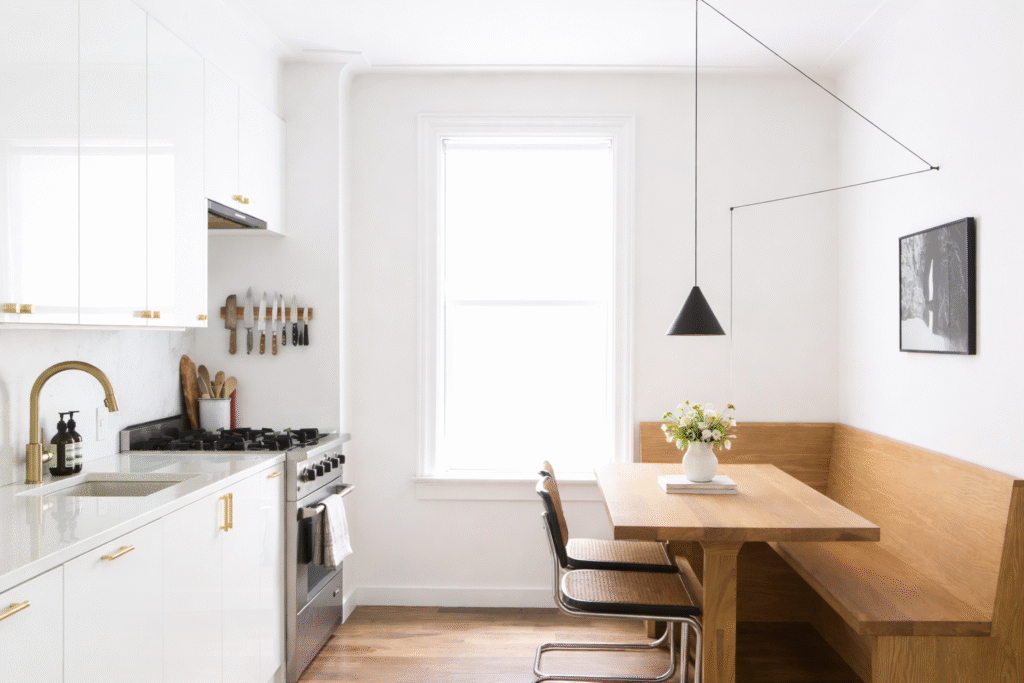
Minimalist interiors thrive on visual clarity—but that doesn’t mean avoiding contrast. Instead, it’s about intentional material interplay and balanced texture.
One proven method is installing matte-finish baseboards in pure white or soft neutrals against deeply saturated wall colors such as graphite, navy, or olive. Alternatively, textural contrast can be achieved by pairing satin-finished mouldings with eggshell or flat wall finishes—both readily achieved with MDF due to its superior paint absorption and smooth surface.
Architects are also exploring negative detailing, particularly in hospitality and multi-family developments. This involves integrating shadow gap mouldings—where MDF or pine trims are recessed ⅛″ to ¼″ behind surface planes to create visual depth without adding physical mass. This technique is compatible with drywall returns and LED channel lighting for subtle illumination effects.
📍 This “quiet luxury” approach has become especially popular in high-end California residences, where buyers prioritize tactile elegance over decorative excess.
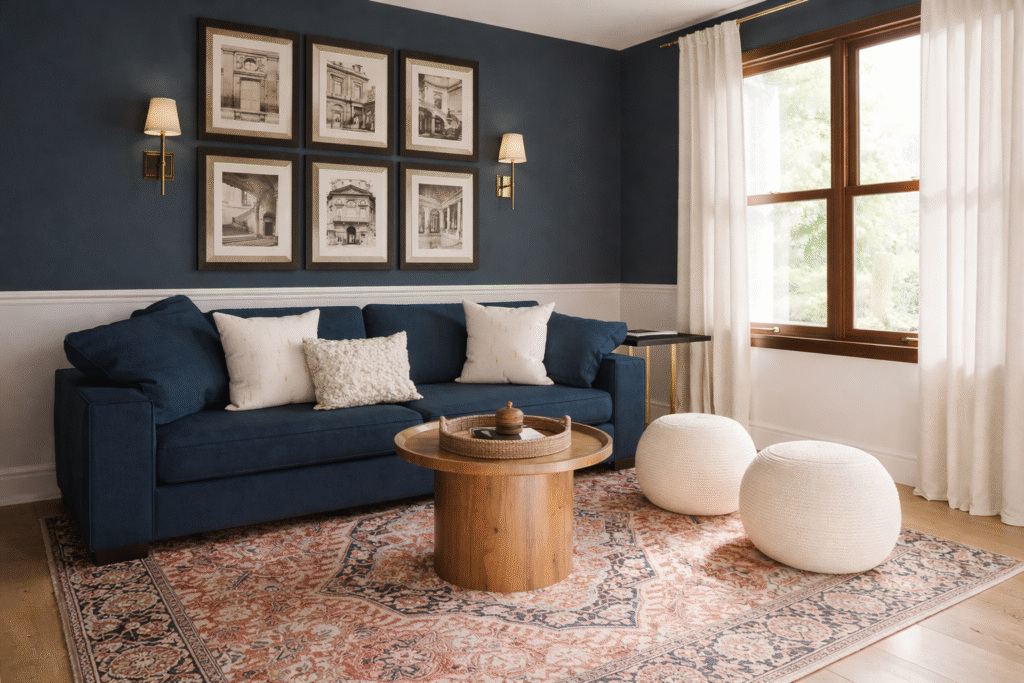
Minimalist Modern Baseboard Styles That Builders Prefer
As of 2025, three baseboard profiles have consistently led demand in minimalist residential and commercial projects:
- Square Edge (MDF/Pine) – Clean-lined and architecturally neutral, this is the go-to for most design professionals due to its versatility and ease of scribing.
- Beveled Edge – A refined slant adds visual lift without compromising the space’s geometric clarity.
- Flush Baseboard with Reveal – Favored in modern builds, especially those using drywall returns and zero-profile transitions.
Why is MDF the most widely specified material? It’s dimensionally stable, uniform in density, and readily available pre-primed, enabling efficient installation on tight construction schedules. It’s also well-suited for paint-grade applications, delivering crisp reveals and consistent color absorption.
On the other hand, clear pine—while marginally more expensive—offers superior fastener retention, machinability, and is often chosen for high-traffic zones or custom-detailing applications.
📊 According to the 2025 NAHB Builder Practices Survey1, over 74% of modern homebuilders report using MDF baseboards in at least 60% of their projects, particularly in the spec-home and mid-range design-build segments.
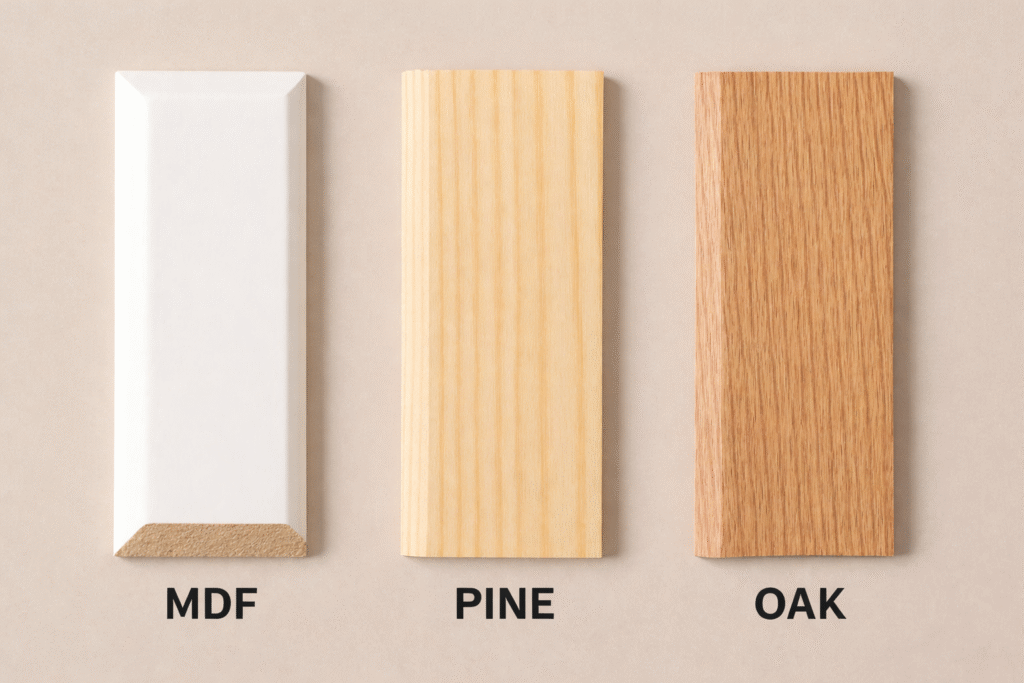
Wall Moulding Design for Bedrooms and Dining Rooms
Minimalist bedrooms often benefit from restrained symmetry—and picture-frame moulding provides exactly that. Applied at eye level or bed-height, typically in one or two large, centered panels per wall, it introduces rhythm and vertical proportion without visual clutter.
In dining rooms, MDF wainscoting at a height between 30″–42″ adds perceived formality and tactile interest. Designers frequently pair this with narrow chair rails or horizontal datum lines to anchor the space without over-articulating it.
Pine is particularly effective here due to its sharp profile retention, making it ideal for defining crisp transitions between moulding and wall plane—especially when using semi-gloss or satin finishes.
💡 For high-efficiency installations across tract or multi-family developments, pre-primed MDF panel kits offer consistency, minimal surface prep, and seamless paint blending. This makes them ideal for volume-driven projects where labor efficiency and finish uniformity are priorities.
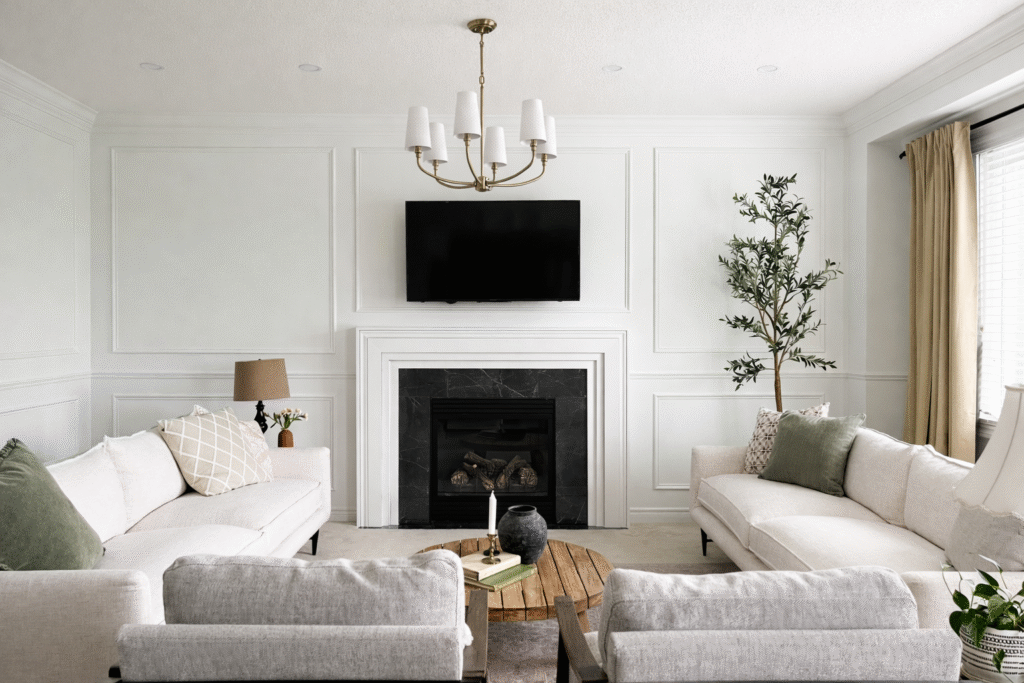
Moulding Design for House Fronts: Bringing Minimalism to Exteriors
Exterior mouldings in minimalist architecture prioritize linear proportion, moisture tolerance, and long-term durability—never ornamentation. Here are effective strategies used by contractors across North America:
- Flat fascia or cornice bands above doors and garage headers for visual framing
- Exterior-grade pine trims under soffits, eaves, and rake edges—ideally installed with back-primed surfaces and sealed end grains
- Shiplap cladding with MDF or pine trim caps, used with cap flashing to ensure water runoff
When working in wet climate zones—especially in the Pacific Northwest—it’s essential to use pressure-treated or kiln-dried pine rated for exterior use, sealed with high-quality paint or stain. Some builders opt for factory-finished profiles to reduce jobsite weathering.
🏡 Builders in cities like Vancouver and Portland are increasingly specifying FSC-certified pine to meet local sustainability mandates and green building certifications.
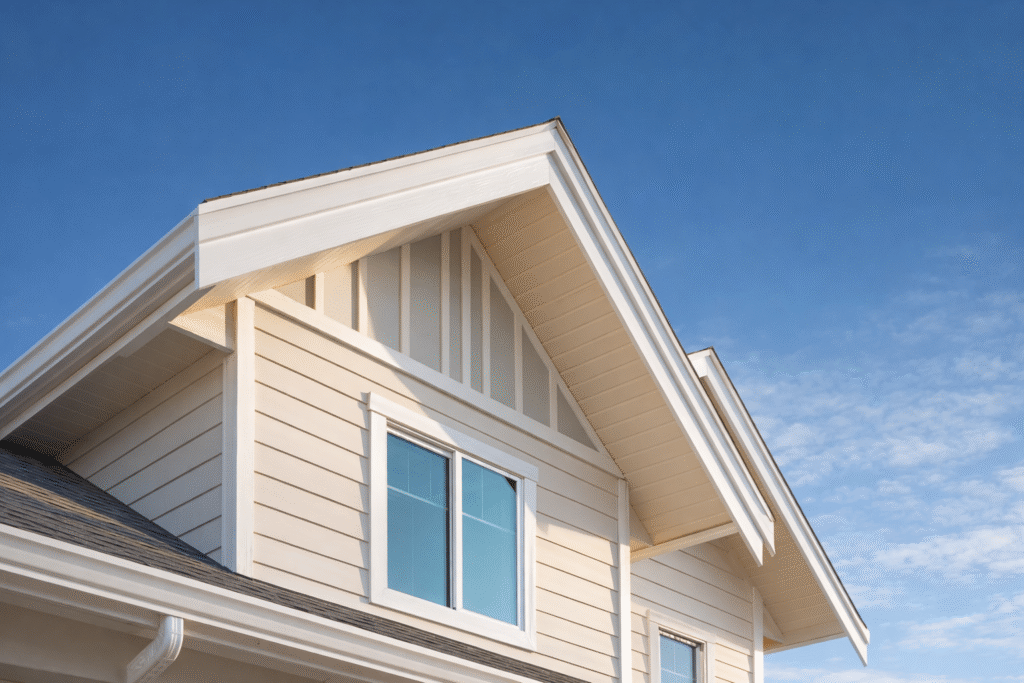
Why MDF and Pine Are Ideal for Minimalist Moulding Projects
Choosing the appropriate trim material affects not only aesthetics, but also long-term maintenance, labor cost, and environmental performance. Below is a comparison between MDF and Pine in minimalist trim applications:
| Property | MDF | Pine |
|---|---|---|
| Paintability | Excellent | Good |
| Dimensional Stability | Very stable | Can warp slightly if untreated |
| Durability (Interior) | High | Very high |
| Machinability | Very easy | Excellent |
| Cost | Low | Moderate |
| Environmental Options | FSC-certified, low-VOC available | FSC-certified, renewable resource |
| Installation Speed | Fast (pre-primed, uniform density) | Moderate (requires sanding/prep) |
📊 According to IBISWorld’s 2025 Market Report1, MDF accounts for over 68% of moulding products used in volume-driven builds across North America, largely due to its cost efficiency and consistency. However, pine is gaining traction in custom, high-end applications where material grain and durability are prioritized.
🔧 For developers working on spec homes or rental-grade projects, MDF is a proven solution for clean-lined, high-speed installations. Meanwhile, pine remains the preferred material for architect-driven minimalist builds, where tactile quality and longevity matter.
Conclusion
Minimalism isn’t about emptiness—it’s about precision, intent, and restrained material expression. With the right moulding profiles and materials like MDF or pine, builders can deliver interiors and exteriors that feel modern, refined, and purpose-built. So—what kind of transformation will your next minimalist project achieve?