For builders and wholesalers specifying molded interior doors, finish selection directly impacts both performance and perception. While the core construction may be consistent, surface treatment defines a door’s readiness for jobsite demands, code compliance, and buyer expectations. With so many finishing options—primed, painted, laminated, or veneered—how do you choose the right one for your project and channel strategy?
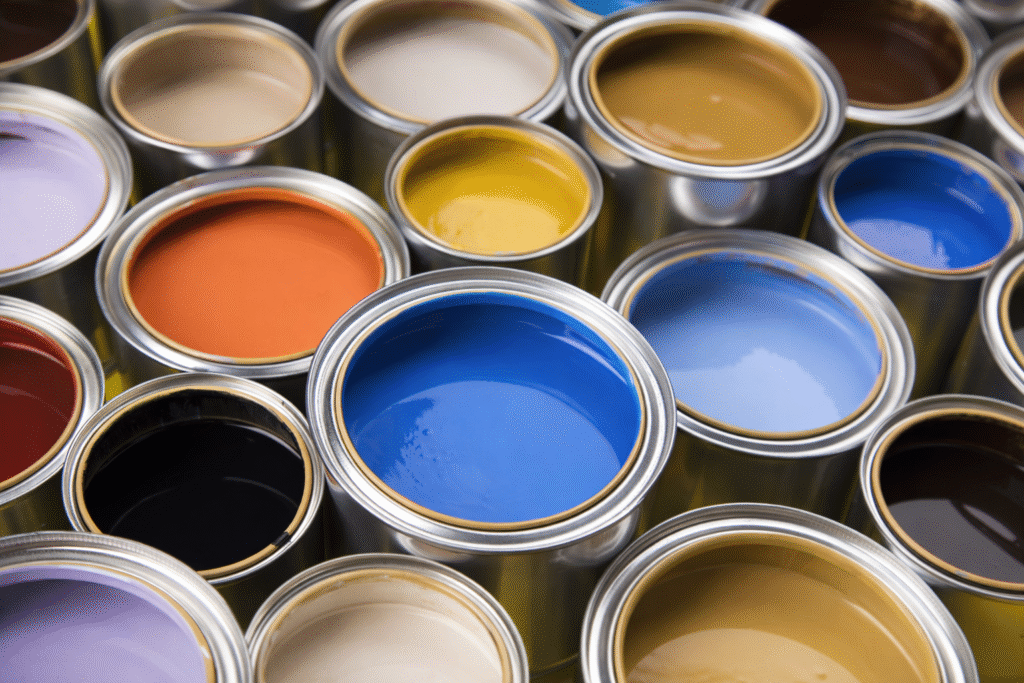
Primed, paint-ready, laminate, and wood veneer finishes are the four most common surface treatments for molded doors. Primed doors ship with a basecoat for jobsite painting. Laminate finishes offer high durability with no additional prep. Wood veneers provide a premium look with real grain, while factory-painted doors reduce onsite labor. The right choice depends on durability needs, design intent, and project scale.
Let’s break down each finish type, its advantages, and where it makes the most sense for builders and volume buyers.
What Are the Differences Between Primed, Painted, Laminate, and Veneer?
Molded door finishing is not just a visual decision—it affects workflow, performance, and total cost of ownership. Below is a professional comparison of the four most commonly specified finishing options used in the North American interior door market:
| Finish Type | Description | Best Use Case | Finish Characteristics |
|---|---|---|---|
| Primed | Factory-applied acrylic or alkyd basecoat; requires jobsite topcoating | Jobsite painting in new construction or tract builds | Requires proper surface prep; flexible in color |
| Painted | Factory-applied topcoat (sprayed lacquer or polyurethane) with baked curing | Multi-family, modular builds, time-sensitive installs | Consistent sheen, minimal install time |
| Laminate | Heat-bonded polymer film over door skin (CPL or HPL) | High-traffic, hospitality, institutional builds | Impact/scratch resistant, non-repairable |
| Wood Veneer | Sliced hardwood applied over MDF/hardboard core | Premium residential, custom commercial | Authentic grain look, requires sealing |
How Do You Properly Finish a Primed Molded Door?
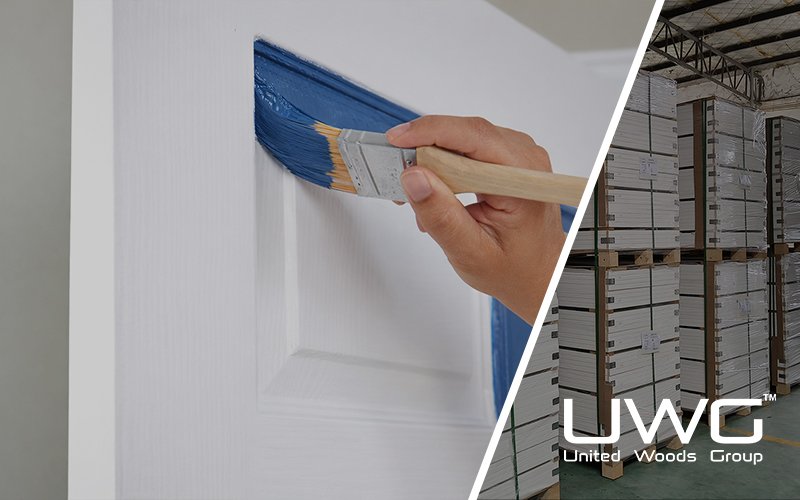
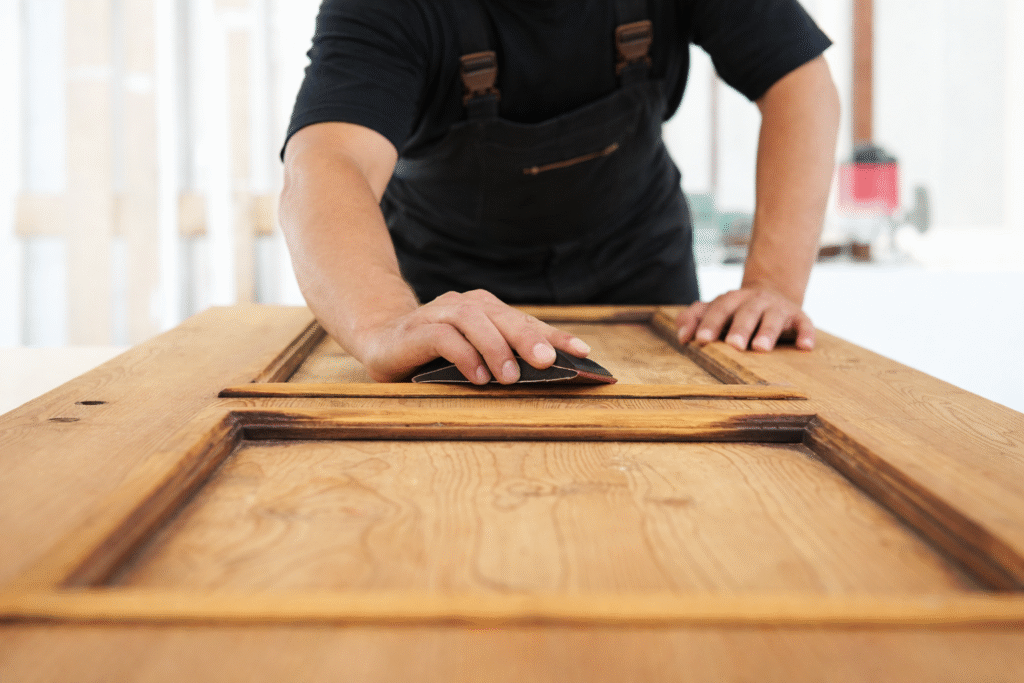
A factory-primed molded door is a base-layered substrate—not a finished product. Builders must follow exact prep and paint protocols to achieve a professional-grade result and avoid warranty callbacks.
🔧 Recommended Jobsite Finishing Steps:
- Inspect and Prep
- Sand entire surface with 220–320 grit abrasive to remove raised grain, transport scuffs, or spray dust
- Clean with tack cloth or compressed air (avoid damp rags that raise fibers)
- Prime (if needed)
- If primer is water-based, verify its compatibility with topcoat
- Re-prime any field-altered edges or hardware cutouts with alkyd bonding primer
- Application
- Use airless or HVLP spray for best results
- Avoid foam rollers which create orange peel texture on molded surfaces
- Apply 2 thin coats of high-performance latex, alkyd, or urethane-modified acrylics
- Ensure temperature (50–85°F) and humidity control per manufacturer’s instructions
- Drying
- Allow minimum 24 hours dry time before hanging
- Use painter’s pyramids to avoid marring edges during curing
What’s the Best Coating for Wood Veneer Doors?
Wood veneer doors require specialized finishing systems designed to protect delicate natural grain while delivering visual richness. For commercial or premium residential builds, the following finish types are commonly specified:
| Coating Type | Application Notes |
|---|---|
| Clear Lacquer | Fast-drying, factory-applied; ideal for controlled spray booths (low VOC options available) |
| Oil-based Polyurethane | Deepens wood tone, excellent scratch and chemical resistance; suited for high-end residential |
| Conversion Varnish | Solvent-based, catalyzed finish with superior durability; common in institutional millwork |
| Shellac / Tung Oil | Natural finish with low build and soft sheen; used in heritage or craft-driven projects |
Can Laminate Doors Be Refinished or Repainted?
Technically yes—but only with proper substrate preparation and bonding primers.
Laminate is a non-absorbent thermoplastic surface (usually melamine or CPL), which resists paint adhesion unless chemically etched or abraded.
✔️ Recommended Refinish Protocol for Laminate Doors:
- Degrease with isopropyl alcohol or ammonia-based cleaner
- Lightly abrade using fine-grit (320–400) sanding sponge to open the surface
- Apply bonding primer (e.g., shellac-based or urethane-acrylic bonding agents)
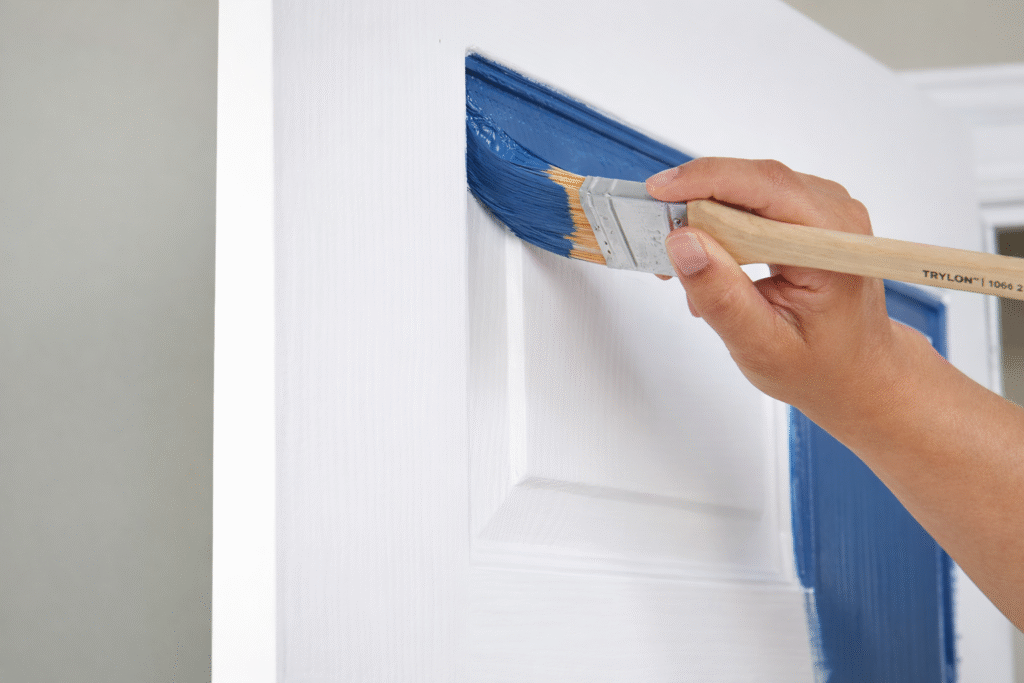
- Use cabinet-grade enamel or alkyd-reinforced latex for topcoat
- Spray application strongly preferred; avoid foam rollers or high-build coats
Which Finish Option Offers the Best Durability for High-Traffic Areas?
When evaluating finishing systems for schools, hospitals, multi-tenant corridors, or commercial interiors, laminate remains the gold standard for durability.
🛠️ Performance Comparison Matrix:
| Finish Type | Abrasion Resistance | Moisture Resistance | Touch-Up Feasibility | Best Use Case |
|---|---|---|---|---|
| Laminate | Excellent | Excellent | Low | Healthcare, education, retail |
| Painted | Moderate | Low | High | Hotels, multifamily, custom homes |
| Wood Veneer | Low to Moderate | Low | Moderate | Premium residential, office suites |
Which Finishes Are Best Suited for Volume Projects or Multi-Family Builds?
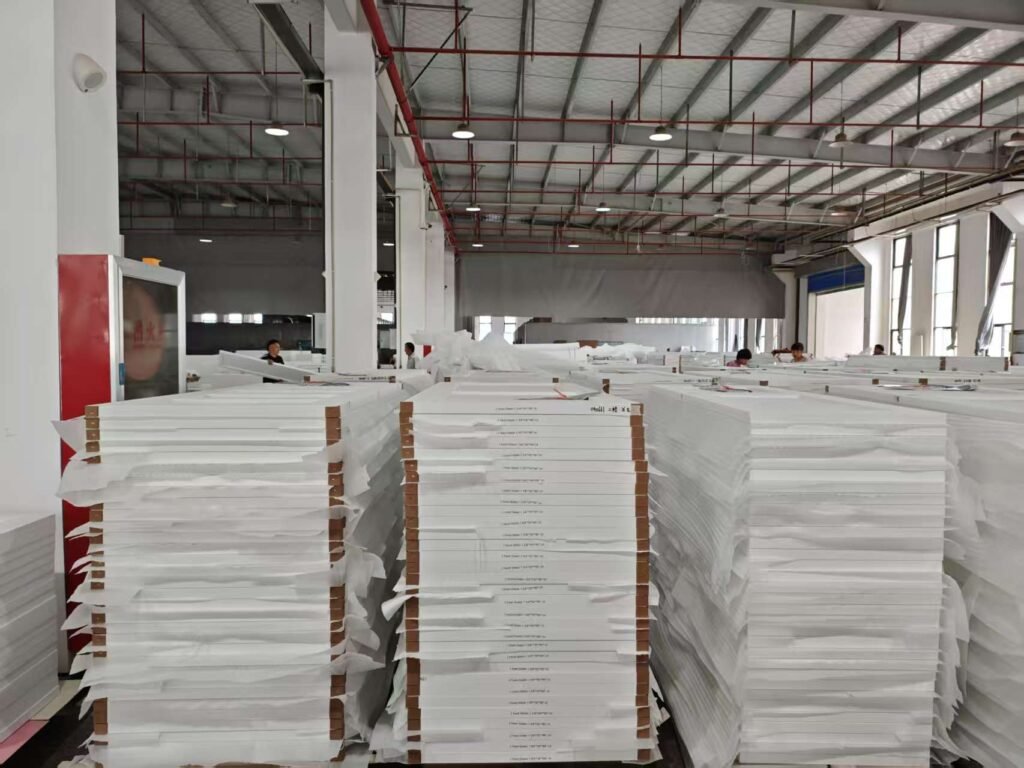
In large-scale construction—such as multi-unit residential, senior living, or modular housing—finish type directly affects schedule integrity, warranty performance, and trade coordination.
Factory-painted or laminated finishes consistently outperform field-applied options in these high-volume scenarios.
🔧 Key Benefits for Production-Scale Builds:
- Zero site painting — eliminates VOC exposure and drying delays on-site
- Consistent gloss and color — ensures visual uniformity across hundreds of units
- Faster install cycle — doors are ready to hang straight from the pallet
- Lower rework risk — especially critical for off-site or panelized construction
- Streamlined punch list closeout — no touch-up sanding, taping, or masking required
What Are the Main Cost Drivers Between Finish Types?
Finish type isn’t just a design choice—it’s a cost sequencing tool that impacts every phase from shipping to inspection.
| Metric | Primed | Painted (Factory) | Laminate | Wood Veneer |
|---|---|---|---|---|
| Unit Cost | Low | Moderate | High | Highest |
| Labor Onsite | High | Low | Low | Moderate |
| Rework Risk | Moderate | Low | Very Low | Moderate–High |
| Aesthetic Value | Basic | Uniform | Durable / Clean | Premium / Natural |
🔍 Interpretation for Procurement Teams:
- Primed = budget builds with flexible color schedules, but highest dependency on skilled site crews
- Painted = best balance of unit cost vs installation speed
- Laminate = ideal for healthcare, education, or rentals requiring wipe-clean durability
- Veneer = niche spec for luxury or hospitality applications, with longer install cycles and higher quality control overhead
Summary
Finish selection for molded doors isn’t just about visual appeal—it’s a cost and logistics strategy.
For builders, the right choice reduces install complexity, punch-out delays, and site coordination across multiple trades. For wholesalers, aligning finish type with project scope improves delivery planning, warranty performance, and inventory turnover.