Introduction
In interior door installations, hinges are often treated as a minor hardware detail. In practice, hinge selection has a direct impact on installation speed, door alignment, long-term stability, and overall project efficiency—especially in large residential or multi-family developments where small inefficiencies multiply quickly.
Flush hinges, also called interleaf or non-mortise hinges, feature an interlocking leaf design allowing doors to be installed without cutting mortises. Available in light- and medium-duty types, usually steel or stainless steel with various finishes, they suit lightweight interior doors like MDF, molded, or hollow-core. Common in multi-family or high-volume projects, proper installation requires matching load to door weight, correct hinge spacing, and precise alignment.
What Are Flush Hinges?
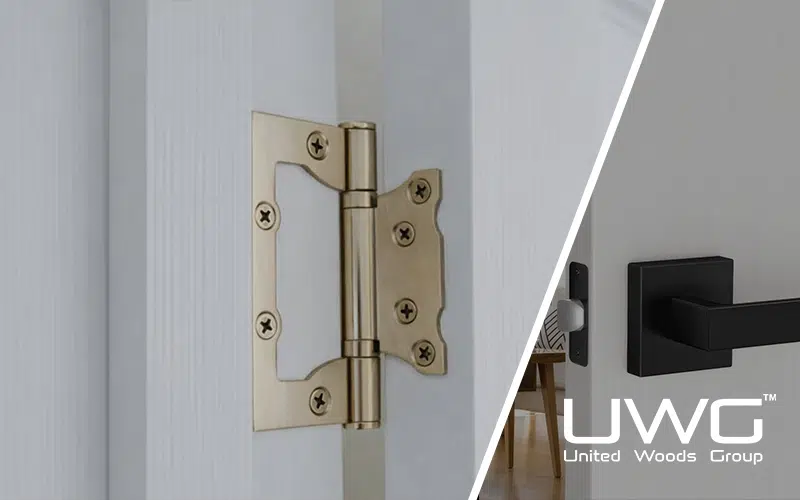
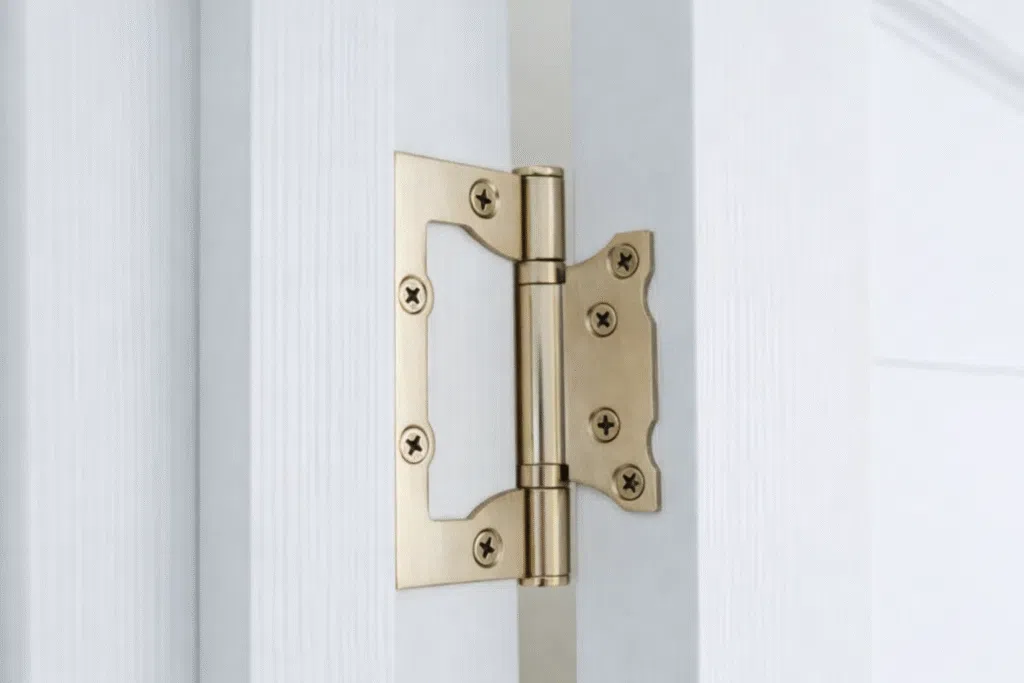
Flush hinges, also known as interleaf or non-mortise hinges, are designed so that one hinge leaf nests into the other when the door is closed. This interlocking structure allows the hinge to sit flush between the door and frame without requiring mortising.
Unlike traditional butt hinges that rely on recessed hinge pockets, flush hinges are surface-mounted. This simplifies both factory preparation and on-site installation by eliminating routing or chiseling. However, because there is no mortise to help distribute load, flush hinges are typically intended for lighter doors and require careful selection based on door size and weight.
Why Flush Hinges Are Used
The primary reason flush hinges are specified is installation efficiency. Without mortising, installers can reduce labor time significantly, which is critical in projects involving dozens or hundreds of doors.
Flush hinges also support standardization. Doors and frames can be produced with minimal hinge preparation, reducing variability and potential installation errors. This makes them especially suitable for multi-family housing, apartment renovations, and other high-volume residential projects.
From a cost perspective, flush hinges are generally more economical than heavier-duty mortised hinges, making them a practical choice where structural demands are moderate and budgets must be controlled.
Main Types of Flush Hinges
Flush hinges can be categorized based on several practical criteria:
By Load Capacity
- Light-duty flush hinges Intended for hollow-core or lightweight MDF doors, commonly used for closets, bedrooms, and interior partitions.
- Medium-duty flush hinges Designed for heavier solid-core or thicker molded doors, offering improved stability while retaining ease of installation.
By Material
- Steel flush hinges The most common option, providing adequate strength and cost efficiency for standard interior doors.
- Stainless steel flush hinges Preferred where higher corrosion resistance or extended service life is required.
By Finish
- Typical finishes include zinc-plated, satin nickel, brushed chrome, and polished finishes, allowing coordination with other door hardware.
Materials and Finishes for Flush Hinges
Material selection directly affects hinge durability and performance. Steel hinges are suitable for most dry, interior environments and offer a strong balance between cost and strength. Stainless steel hinges, while more expensive, provide superior resistance to moisture and wear and are commonly used in bathrooms, laundry rooms, or coastal regions.
Finishes are often selected for aesthetic consistency with locks and handles, but higher-quality finishes can also reduce surface wear over time. For large projects, limiting the number of finish options helps simplify procurement and inventory management.
Typical Applications of Flush Hinges
Flush hinges are commonly used in:
- Lightweight interior residential doors
- MDF and molded doors
- Hollow-core or composite doors
- Multi-family housing projects
- Renovation projects with tight timelines
They are generally not recommended for:
- Heavy solid wood doors
- Exterior doors
- Doors subject to frequent or high-impact use
Understanding these limitations is essential to avoid sagging, misalignment, or premature hinge failure.
Installation Tips Specific to Flush Hinges
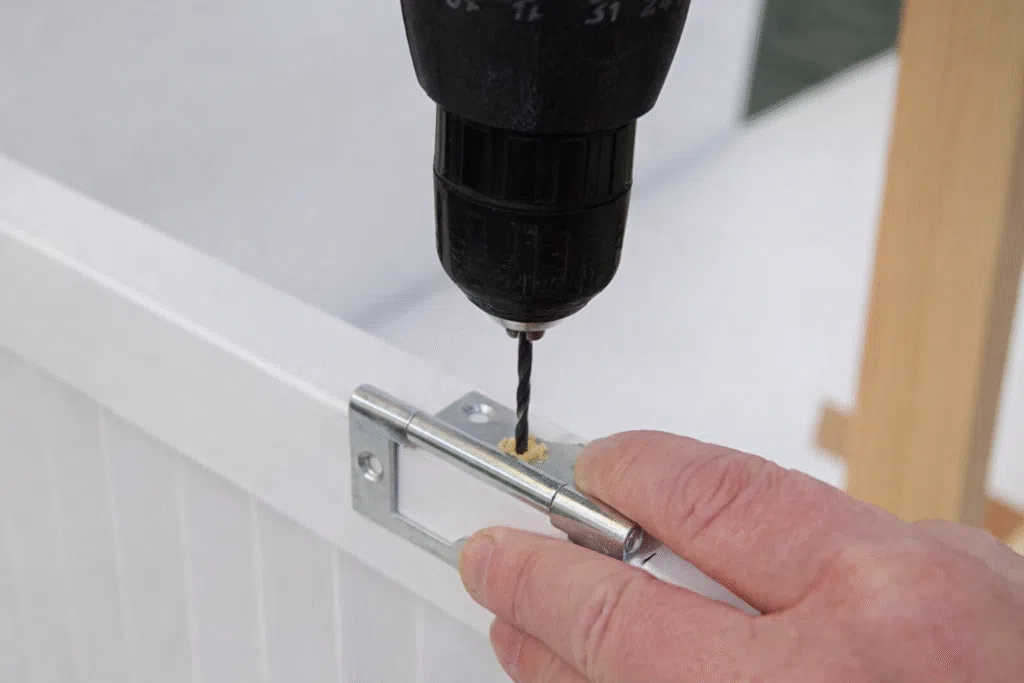
Because flush hinges offer limited adjustability, correct installation is critical.
Key considerations include:
- Hinge quantity: Taller or wider doors may require three hinges to distribute weight evenly.
- Hinge placement: Proper spacing at the top and bottom of the door reduces stress on the hinge leaves.
- Door alignment: Accurate vertical alignment is essential, as flush hinges do not allow depth correction.
- Fastener selection: Screws must be appropriate for the door core material to ensure long-term holding strength.
Common installation errors include underestimating door weight, incorrect hinge spacing, and using low-quality fasteners—all of which can lead to sagging or deformation over time.
Conclusion
Flush hinges provide a practical solution for lightweight interior door applications where speed, consistency, and cost control are priorities. When selected within their load limits and installed correctly, they perform reliably in residential and multi-family projects. For builders, distributors, and wholesalers managing high-volume door installations, understanding the types, applications, and installation requirements of flush hinges is essential for achieving efficient and durable results.
Articles that you may be interested in:
Bi-Fold Door Hinges: How to Choose and Install for Smooth Folding
Soft-Close Hinges and Pull-Out Systems: Enhancing Cabinet Functionality
The Complete Guide to Door Hardware Selection: Hinges, Handles, and Locks