In multi-family construction, the number of doors and trims is often overlooked, yet it plays a crucial role in influencing procurement schedules, labor planning, and overall project cost management. For a typical townhouse project, accurate door and trim quantities are essential to streamline the process and ensure budget adherence. Specifically, for a project with 120 townhouse units, how many doors and linear feet of trim are actually required?
For a typical townhouse project with 120 units, this translates to a total of 1,200 interior doors and 240 exterior doors for the entire project. Additionally, trim requirements are critical in ensuring the final aesthetic and functionality. Each unit typically needs 350 to 500 linear feet of trim, which includes baseboards, door casings, window trims, and other decorative profiles. As the project scale grows, so does the need for precise quantity estimation to ensure timely procurement and cost-effective management.
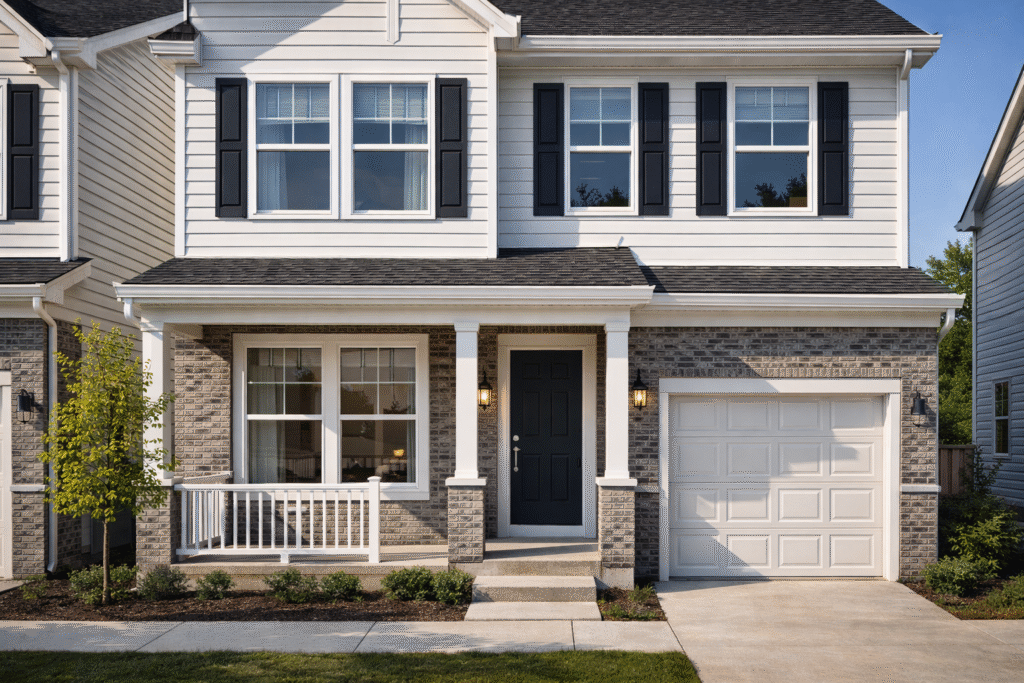
Project Background: 15-8 Townhouse Units
This section discusses the required door and trim specifications for the 120-unit townhouse development in McKinney, Texas. Each townhouse unit follows the 15-8 Plex Series, comprising typical residential layouts with 2 to 3 bedrooms and various communal areas.
Doors per Unit
Each unit in the project requires the following doors:
- 10 Interior Doors This includes standard solid-core doors for bedrooms, bathrooms, closets, and other internal spaces. It is important to note that:
- 1 of these doors is a folding door (likely for closet or utility space),
- 1 is a pocket door (used for saving space in bathrooms or other smaller rooms),
- 1 fire-rated door (for safety in certain areas, possibly utility or hallway doors).
- 2 Exterior Doors These will be made from fiberglass (glass-reinforced plastic), providing durability, security, and energy efficiency for the main entrance and possibly a rear exit.
Unit Breakdown
For the typical townhouse unit, we need a total of:
- 12 doors per unit (10 interior + 2 exterior)
For the entire 120-unit project, the total door count is calculated as follows:
- Interior Doors: 120 units × 10 interior doors = 1,200 interior doors
- Exterior Doors: 120 units × 2 exterior doors = 240 exterior doors
Trim Requirements: Linear Foot Calculation
Trim work is a critical element in the overall finish of the townhouse units. Trim includes the following:
- Baseboards
- Door Casings
- Window Casings
- Crown Molding (where applicable)
- Chair Rail (if specified in the design)
For each unit, the trim requirement is estimated to be 700 linear feet. This accounts for:
- Baseboards and Door Casings: Approximately 300 to 400 linear feet per unit, including baseboards, door casings, and window casings.
- Crown Molding and Chair Rails: An additional 100 to 150 linear feet may be needed if these elements are included in the design.
Total Trim for the Entire Project
For a project of 120 units:
- Total Trim Requirement: 120 units × 700 linear feet = 84,000 linear feet of trim
Cost and Timeline Impact
The total number of doors and trim required will have a significant impact on both the budget and timeline of the project. Efficient procurement and scheduling will help avoid delays and material shortages, preventing cost overruns.
The project should account for:
- Material wastage: Typically, a 5-10% waste factor should be included in the estimates for both doors and trim due to possible damage during transport or installation.
- Lead times for specialized doors (such as fire-rated or fiberglass exterior doors), which could impact overall project timelines.
Scaling for Larger Projects
For larger developments, the demand for doors and trim scales linearly. For example:
50-Unit Project:
- Interior doors: 50 units × 10 interior doors = 500 interior doors
- Exterior doors: 50 units × 2 exterior doors = 100 exterior doors
- Trim: 50 units × 350–500 linear feet = 17,500 to 25,000 linear feet of trim
100-Unit Project:
- Interior doors: 100 units × 10 interior doors = 1,000 interior doors
- Exterior doors: 100 units × 2 exterior doors = 200 exterior doors
- Trim: 100 units × 350–500 linear feet = 35,000 to 50,000 linear feet of trim
200-Unit Project:
- Interior doors: 200 units × 10 interior doors = 2,000 interior doors
- Exterior doors: 200 units × 2 exterior doors = 400 exterior doors
- Trim: 200 units × 350–500 linear feet = 70,000 to 100,000 linear feet of trim
Cost Management and Schedule Impact
The quantities of doors and trims directly affect several critical aspects of the project, including:
Material Procurement Schedules
- Accurate quantity calculation ensures timely material delivery and prevents shortages or delays.
- Proper planning helps align the procurement schedule with project timelines, avoiding bottlenecks caused by missing or delayed materials.
Labor Installation Timeline
- Efficient allocation of labor resources depends on knowing the exact quantity of doors and trim. Overestimating or underestimating material quantities can lead to an inefficient use of labor.
- Proper estimates help schedule door installations and trim work in a way that minimizes downtime and labor costs.
Storage and Handling On-Site
- Overestimating or underestimating the quantities can lead to issues with material storage. Over-ordering may result in overcrowded storage areas, while under-ordering can delay installations.
- It’s crucial to factor in proper space for storage and handling to avoid any onsite issues.
Common Errors in Quantity Estimation
Even experienced contractors can make common mistakes when estimating quantities. The most frequent errors include:
Overlooking Common Area Doors
- Public areas, hallways, utility rooms, and mechanical spaces may require additional doors that are not always accounted for in the initial estimates.
- Contractors should ensure that all doors, including those in common areas, are included in the calculations.
Failure to Account for Waste Factor
- Typically, a 5-10% waste factor should be included in the estimates to account for material loss or damage during transportation, installation, or on-site handling.
- Failure to include this factor may lead to shortages that could delay the project.
Changes in Design During Construction
- Adjustments in door placement or trim styles during construction can lead to increased quantities.
- Design changes should always be communicated clearly between the design and construction teams to ensure quantities are recalculated accordingly.
Design Variations and Their Impact on Door and Trim Requirements
Different types of apartment designs affect the number of doors and trims needed. These design variations can impact both quantity and material selection.
Luxury Developments
- Luxury projects often feature higher-quality doors and trim, including more elaborate door profiles, decorative finishes, and premium materials such as hardwood and custom designs.
- Additionally, these projects may require more elaborate trim elements like crown molding, custom baseboards, and wainscoting, which can significantly increase the quantity of trim required.
Standard Developments
- Standard apartment designs usually require fewer decorative elements, resulting in a reduced quantity of trim and doors.
- These developments tend to favor more cost-effective materials, such as standard MDF trim and pre-hung doors, which can lower both cost and quantity requirements.
Conclusion
For a typical townhouse project with 120 units, the required number of doors and trims is a significant factor in budgeting and project scheduling. With accurate estimation, contractors can streamline procurement, avoid delays, and ensure the project stays within budget. For this 120-unit development, the project will require approximately 1,200 interior doors, 240 exterior doors, and 42,000 to 60,000 linear feet of trim. Properly calculating these quantities early on allows for better planning and fewer surprises during construction.
Ultimately, the number of doors and trim needed in an apartment project is more than just a logistical detail—it is a critical element of project success.