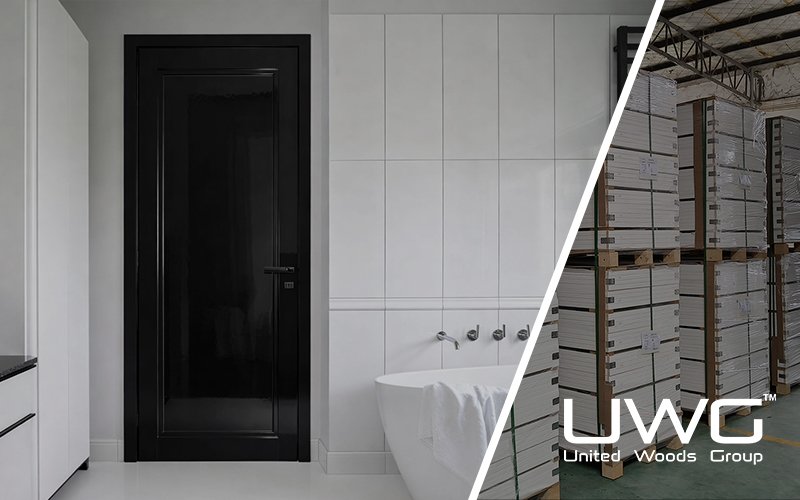
Choosing the right bathroom door material isn’t just about looks—it’s about function, moisture resistance, and long-term durability. With so many options available, how do you determine which material offers the best value and performance?
For bathroom doors, the most suitable materials are wood plastic composite (WPC), tempered glass, and treated solid wood. WPC offers excellent water resistance and durability, making it ideal for humid environments. Glass doors provide a modern aesthetic and easy cleaning, while sealed wooden doors offer a balance of elegance and strength. The right choice depends on installation environment, budget, and maintenance needs.
Let’s explore each material in detail to help you make the right decision based on performance, cost, and practical application.
Which material is good for a bathroom door?
Selecting the right material for a bathroom door involves evaluating key performance criteria such as moisture resistance, durability, installation compatibility, and maintenance demands. Below is a technical comparison of widely used materials in commercial and residential construction:
- Wood Plastic Composite (WPC): Engineered from a blend of wood fibers and thermoplastics, WPC doors are dimensionally stable, waterproof, and resistant to termite infestation. Their low water absorption rate and structural integrity make them ideal for high-humidity zones like bathrooms. Available in standard sizes and finishes, WPC is widely adopted in mass housing, hotel projects, and pre-fabricated construction.
- Tempered Glass (Clear or Frosted): Often used in modern, minimalist bathroom designs, tempered glass doors are non-porous, easy to sanitize, and chemically treated to enhance impact resistance. Frosted variants offer privacy without compromising light flow. Not suitable for all building codes unless safety glass standards are met.
- Solid Wood (Treated or Veneered): Offers premium aesthetics and tactile quality. However, untreated wood is vulnerable to swelling, rot, and microbial growth in wet areas. With proper lamination, chemical sealing, or veneer overlay, wooden doors can be applied in mid- to high-end custom interiors. They demand periodic maintenance and climate-controlled installation.
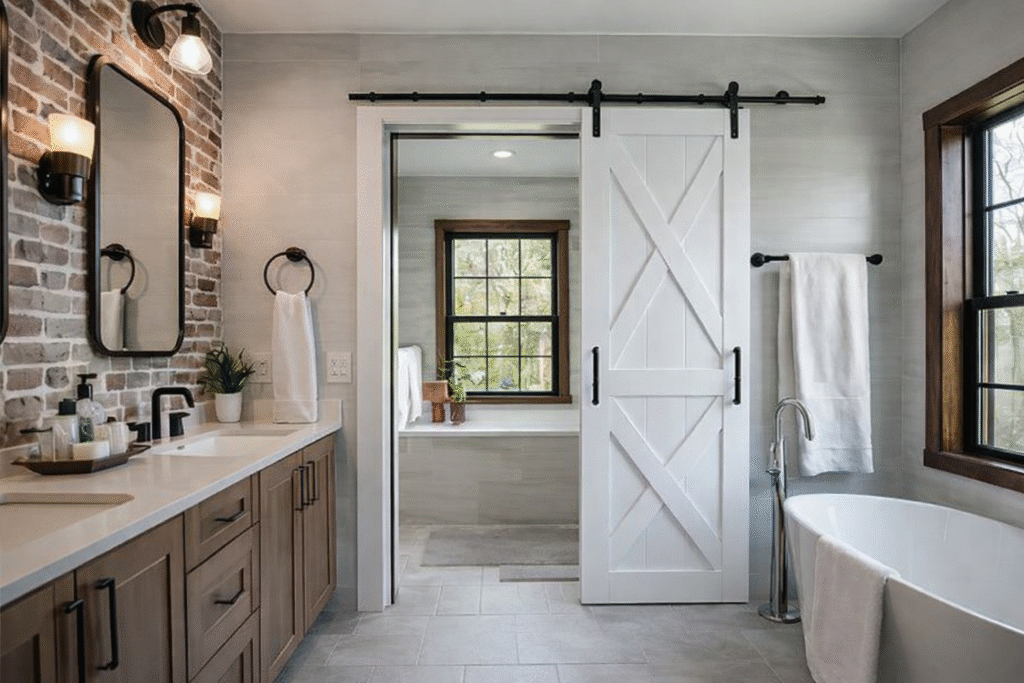
What are the disadvantages of a composite door?
While composite materials—especially WPC—are widely recommended for bathroom environments, they are not without trade-offs. Here are the primary considerations:
- Higher Capital Cost: Compared to UPVC or standard hollow-core wood doors, WPC and composite options have a higher unit price, mainly due to material density and production complexity.
- Weight and Installation Demand: WPC doors are significantly heavier, necessitating reinforced door frames, heavy-duty hinges, and often two-person installation teams. In retrofit projects, frame compatibility must be assessed.
- Thermal Expansion and Dimensional Shifts: Under extreme heat, composite doors may expand or warp slightly, leading to misalignment or difficulty in latching. Proper expansion gaps and ventilation must be planned.
- Limited Surface Modification: Unlike timber, WPC doors are not suitable for on-site trimming, carving, or paint refinishing. Most variants must be used as-is, limiting custom detailing.
- Repair and Replacement: Damage to composite surfaces (e.g., cracks, punctures) often requires full panel replacement, as partial repairs are challenging and rarely seamless. Locking systems embedded into WPC cores can also be harder to modify post-installation.
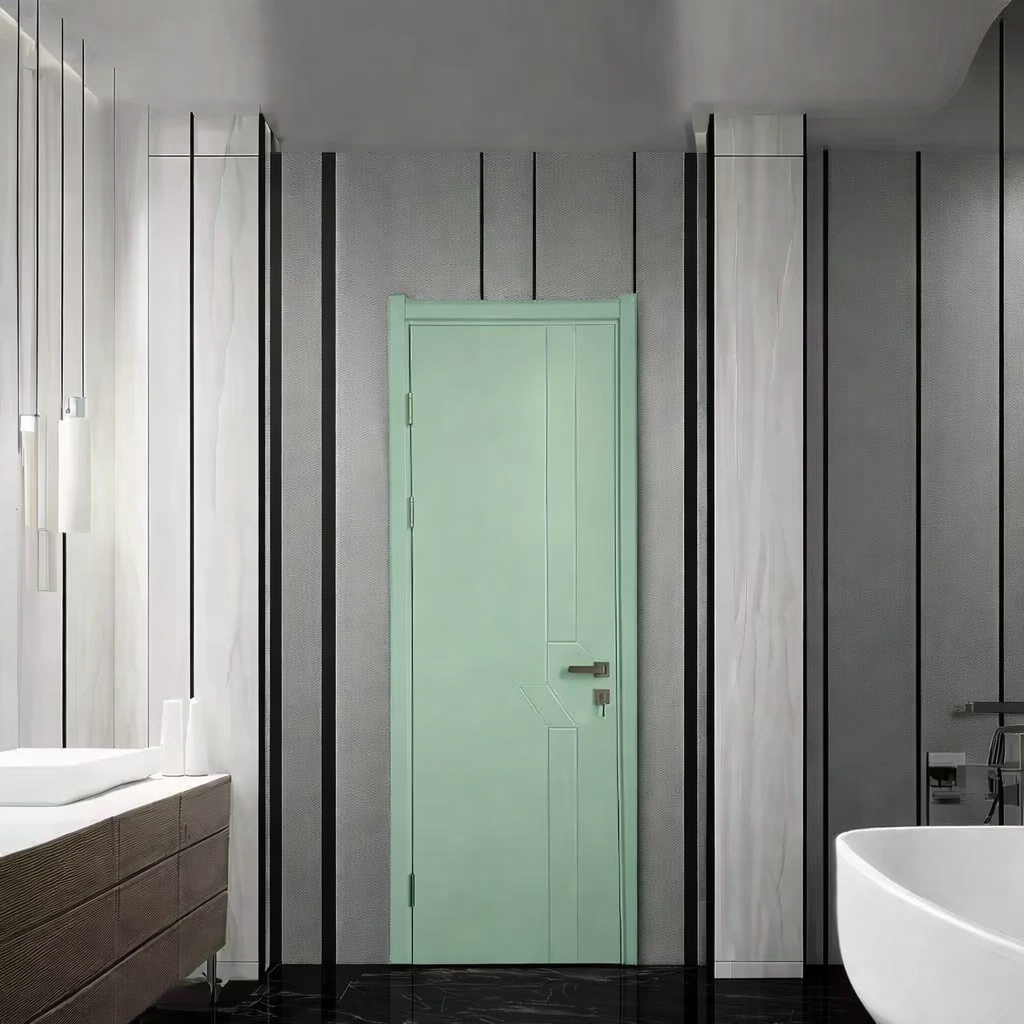
What is the best type of door for a bathroom?
Determining the optimal door type for bathroom environments requires a comprehensive assessment of performance under high humidity, installation environment, and aesthetic integration. Below are the primary evaluation criteria:
- Humidity Resistance: Both WPC and UPVC doors exhibit superior dimensional stability and moisture resistance compared to untreated or lightly finished wood. They remain unaffected by long-term exposure to steam or condensation, making them the default choice in tropical climates or high-use restrooms.
- Aesthetic Appeal: Solid wood remains unmatched for its organic texture, high-end visual quality, and compatibility with luxury interiors. Tempered glass offers a minimalist, open feel, ideal for contemporary bathrooms and spa-like environments.
- Maintenance Requirements: Glass and composite doors require minimal upkeep—resistant to stains, rust, and surface degradation. Wood, by contrast, needs periodic sealing and care to avoid warping and fungal issues.
- Privacy Solutions: For settings where visual privacy is essential, options like frosted glass panels, laminated wood veneers, or composite panels with opaque finishes are ideal.
- Installation Environment: In high-rise developments or lightweight prefab structures, UPVC doors reduce load stress on the frame and simplify logistics. In contrast, solid wood or WPC suits ground-level villas, hotels, and permanent commercial installations.
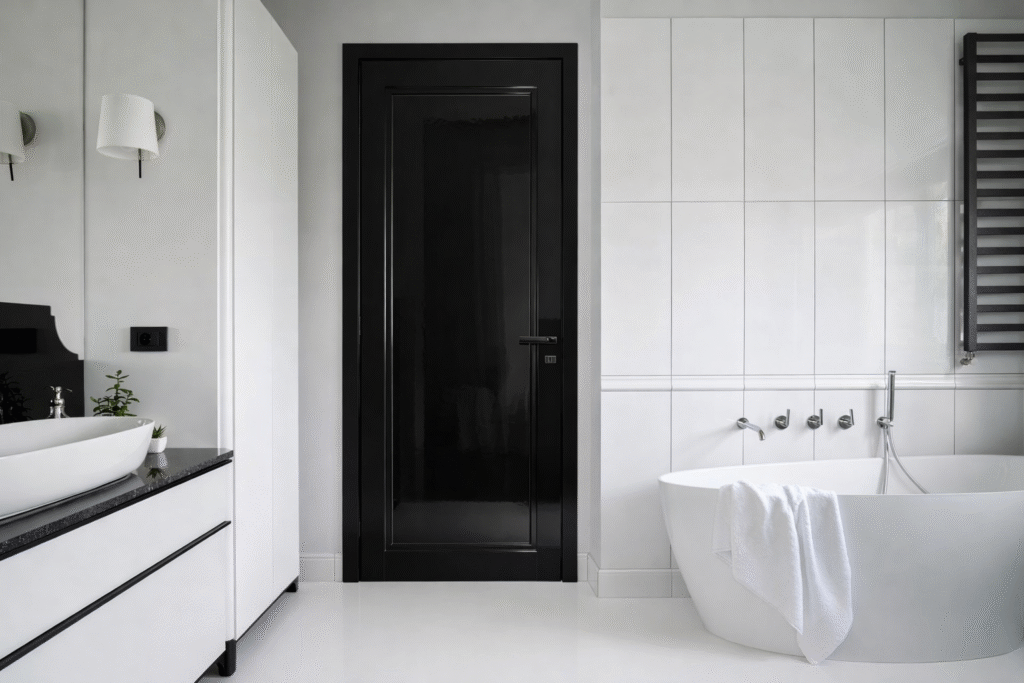
Are wooden doors better than composite doors?
Choosing between solid wood and composite materials (such as WPC) involves a trade-off between aesthetics, durability, maintenance, and scalability for project deployment. Here’s a breakdown:
- Aesthetics & Customization: Wooden doors are favored in bespoke architecture for their tactile quality, grain patterns, and flexibility in surface treatments (paint, stain, carving). Their natural appearance complements heritage, classic, and rustic styles.
- Durability & Environmental Performance: Composite doors outperform wood in moisture-laden environments, being resistant to rot, termites, and biological degradation. They are particularly suited to bathroom zones, coastal regions, or areas with HVAC-induced humidity fluctuations.
- Bulk Sourcing, Consistency & Maintenance: For large-scale procurement, WPC and other composites offer uniform sizing, finish consistency, and reduced defects. Wooden doors, due to natural variations and higher maintenance needs, often demand on-site adjustment and post-installation treatments, which can increase labor costs.
💡 Conclusion: While solid wood holds aesthetic superiority, composite doors are the pragmatic choice in commercial, multi-unit, or developer-grade projects where performance, lifecycle cost, and scalability take precedence.
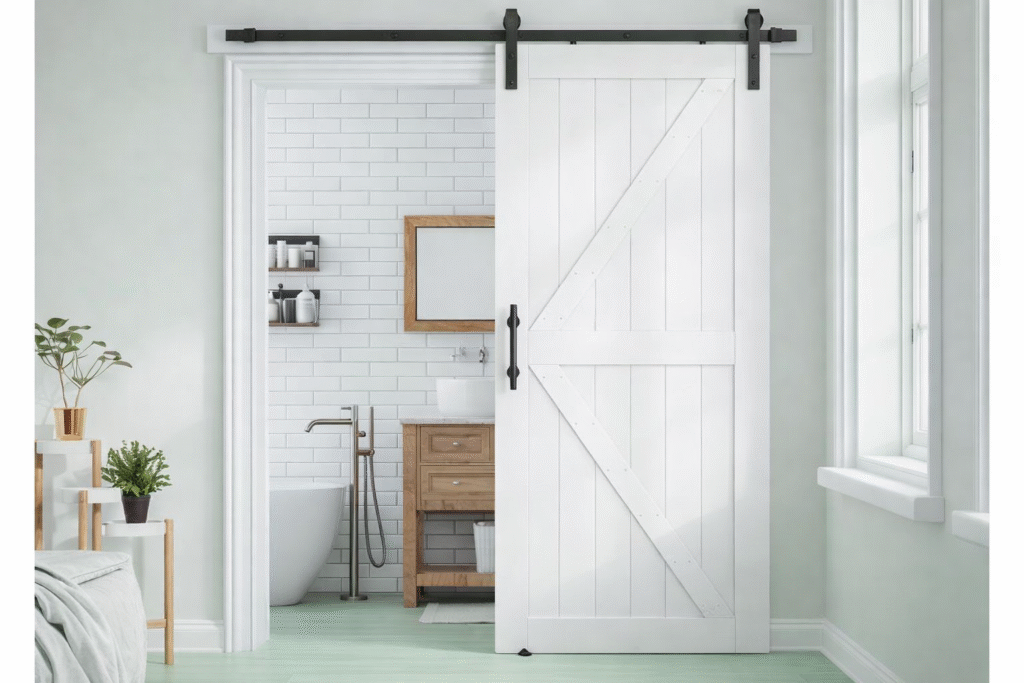
How do bathroom glass doors perform in high humidity?
Tempered glass is a non-porous, hydrothermally stable material that performs exceptionally well in environments with high humidity and frequent condensation. For bathroom use, it offers several technical advantages:
- Zero Swelling or Moisture Absorption: Unlike wood or laminates, tempered glass does not absorb water, eliminating the risk of warping, delamination, or microbial growth.
- Hygienic and Easy to Maintain: The non-porous surface resists staining, odors, and mildew—making it ideal for health-sensitive spaces such as hospital restrooms, wellness centers, and luxury hotel suites.
- Privacy-Enhanced Variants: Frosted, acid-etched, or laminated privacy glass options allow light diffusion while maintaining visual privacy—ideal for shared bathrooms and upscale residential projects.
- Design Flexibility: Frameless or semi-framed glass door systems contribute to a clean-lined, contemporary aesthetic, popular in modernist interiors and compact bathrooms.
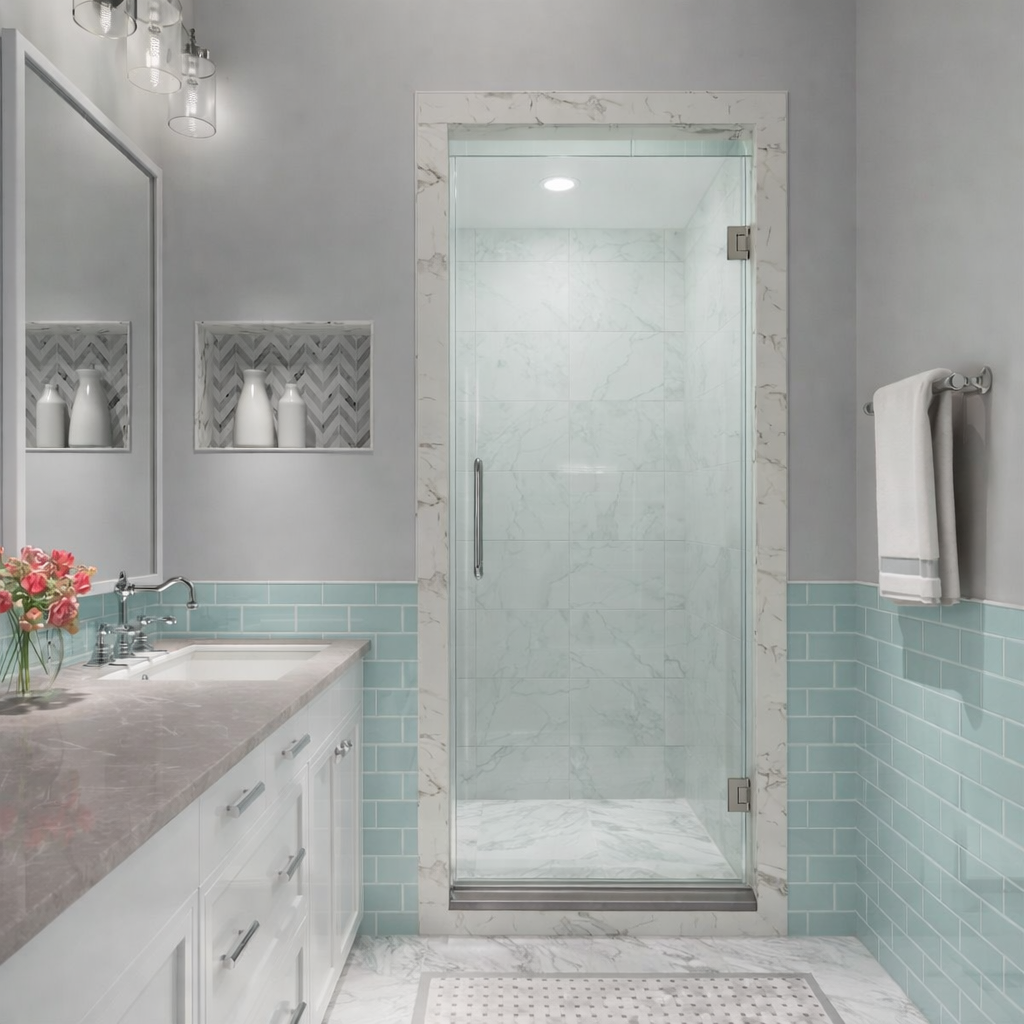
Are WPC doors the best waterproof bathroom door option?
Yes — for high-humidity environments, WPC (Wood Plastic Composite) doors remain the most reliable and scalable solution.
WPC doors are engineered wood-polymer hybrids, combining organic fiber with thermoplastic resin to achieve excellent mechanical and environmental performance:
- True Moisture Resistance: Designed for wet-core areas, WPC panels resist water infiltration entirely—there’s no swelling, rot, or surface blistering, even after prolonged exposure.
- Termite & Mold Immunity: Their synthetic composition makes them immune to biological attack, ideal for tropical zones or buildings with poor ventilation.
- Minimal Lifecycle Maintenance: These doors come pre-finished and require no painting, sealing, or re-coating, reducing both post-installation effort and long-term upkeep costs.
- Standardization for Bulk Procurement: Most WPC doors are manufactured in ISO-standard sizes, easing warehouse management, on-site installation, and supply chain logistics for volume-driven projects.
- Structural Options: Available in both solid-core (high impact resistance) and hollow-core (lightweight, budget-friendly) formats—enabling customized deployment based on project type.
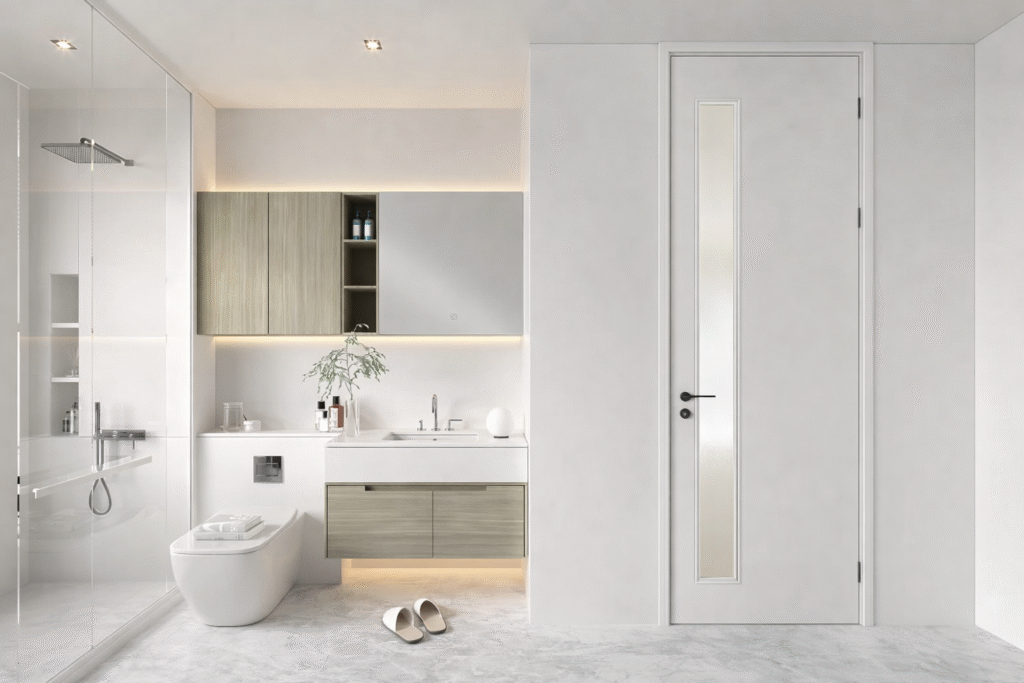
What is the standard size of a bathroom door in meter?
The standard bathroom door size may differ slightly based on national codes and building practices, but the following dimensions are widely accepted across most residential and commercial projects:
- Width: 0.70 to 0.80 meters (700–800 mm) — standard internal door width suitable for most residential bathroom layouts.
- Height: 2.00 to 2.10 meters (2000–2100 mm) — accommodates standard ceiling heights and ventilation requirements.
- Thickness: Typically 30–35 mm, suitable for most locksets, hinges, and frame systems used in bathroom doors.
Frequently Asked Questions about 2026 Door Trends
Q: Are barn doors still in style for 2026?
A: The rustic “farmhouse” barn door trend is fading rapidly. For 2026, architects and designers are favoring pocket doors or hidden sliding systems that offer the same space-saving benefits but with a cleaner, more minimalist aesthetic that blends into the wall.
Q: What is the most popular interior door color for new builds?
A: While white remains standard, the trend is shifting toward warm neutrals (like mushroom, taupe, and cashmere) and natural wood stains (white oak and walnut). High-contrast “stark black” hardware is being replaced by softer brushed gold or bronze accents.
Q: What is a “Micro-Shaker” door?
A: A Micro-Shaker door is a modern update to the classic shaker style. Instead of a wide border, it features a very thin, sleek stile and rail profile (often 1-2 inches wide). This subtle change creates a sophisticated, contemporary look that is highly requested in luxury developments.
Q: Are fluted or textured doors worth the extra cost?
A: For “statement” areas like home offices, primary bedrooms, or pantry entries, yes. Fluted (grooved) wood doors add physical texture and depth that flat paint cannot achieve. They serve as a piece of architectural art, increasing the perceived value of the room.
Conclusion
Selecting the optimal bathroom door material is a strategic decision that impacts not just aesthetics, but also installation efficiency, lifecycle performance, and project ROI. Whether you’re specifying for multi-unit residential developments, commercial facilities, or modular builds, aligning material properties with application requirements is critical.
WPC, tempered glass, solid wood each serve distinct roles—what matters is selecting the right solution for the right context. Material consistency, moisture resistance, and logistics compatibility all contribute to project success.
Looking to streamline your next procurement cycle? Feel free to connect with your supplier or technical team to validate material specs, request samples, or define sizing for bulk orders.
Articles that you may be interested in:
What Types of Doors Are Advisable for Bathrooms?
What We Learned from Supplying Doors for 50+ Construction Projects
Home Value Boost: Doors, Cabinets & Trim Design Tips for Maximum Impact