Barn doors continue to gain traction across North American residential and light-commercial construction—for their space efficiency, visual appeal, and flexibility across design schemes. Yet one of the most overlooked components is the track system, where poor selection can result in misaligned doors, premature hardware failure, or installation delays. For builders managing framing timelines or wholesalers fielding contractor requests, choosing the right system is critical. So—how do you select the best barn door track for your application?
Optimal barn door track selection depends on four core factors: door width, panel quantity, wall clearance, and usage frequency. Standard single tracks are ideal for individual panels with clear retracting space, while double or triple bypass tracks accommodate multi-panel installations in constrained openings. Soft-close hardware enhances safety and lifecycle value—particularly in multi-family or commercial builds. Load capacity ratings and substrate conditions must also align with door mass to ensure lasting performance and compliant mounting.
Let’s examine the most widely used barn door track systems and the functional, structural, and installation variables that determine best-fit performance across projects.
What Is the Best Track System for a Standard Barn Door?
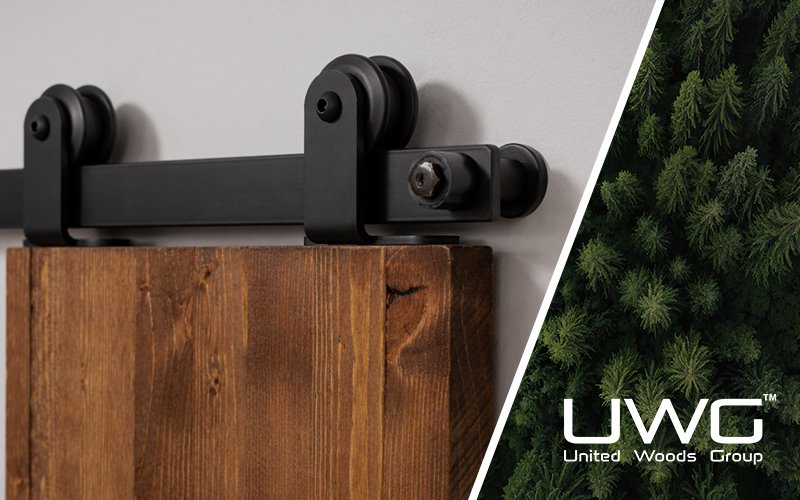
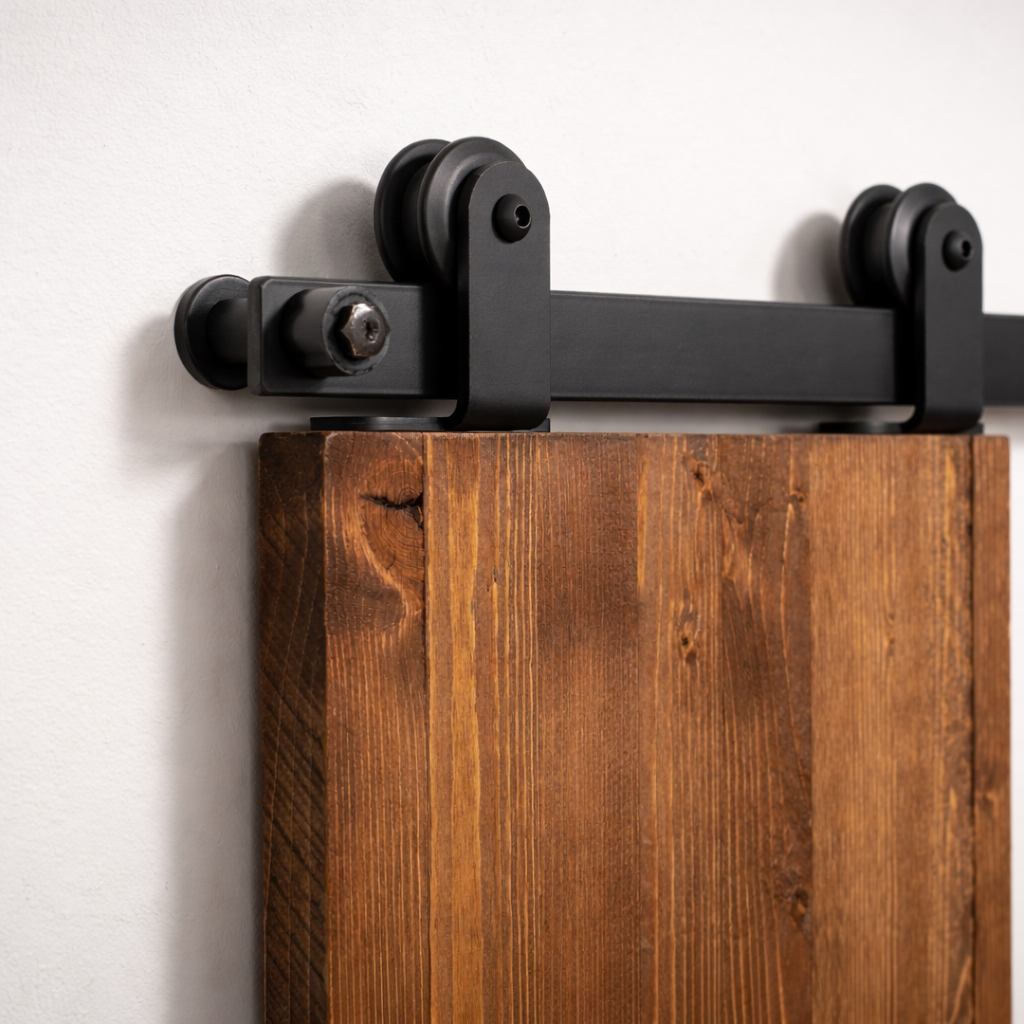
For standard single-panel installations, the single track top-mount sliding system remains the benchmark across both residential and light-commercial construction. It features a continuous overhead rail, wall-mounted brackets, and a pair of nylon or steel roller assemblies that glide across the track with minimal friction.
This system excels in environments where:
- The wall has enough width for full door retraction
- Load-bearing capacity is predictable (e.g., stud framing or concrete substrate)
- The opening is below 48″ wide, requiring only a single leaf
Why builders prefer this system:
- Minimal hardware: only one rail, two rollers, and two stops
- Faster install: aligns easily to plumb and level reference
- Lower procurement cost: standard lengths (6’–8′) are readily stocked by wholesalers
It’s also compatible with most pre-hung barn door kits, which simplifies field labor for large projects.
🔍 Technical Note: For solid-core doors exceeding 100 lbs, choose rollers with sealed bearings and an 11-gauge steel track to prevent deflection over time.
When Should You Use a Bypass Track System?
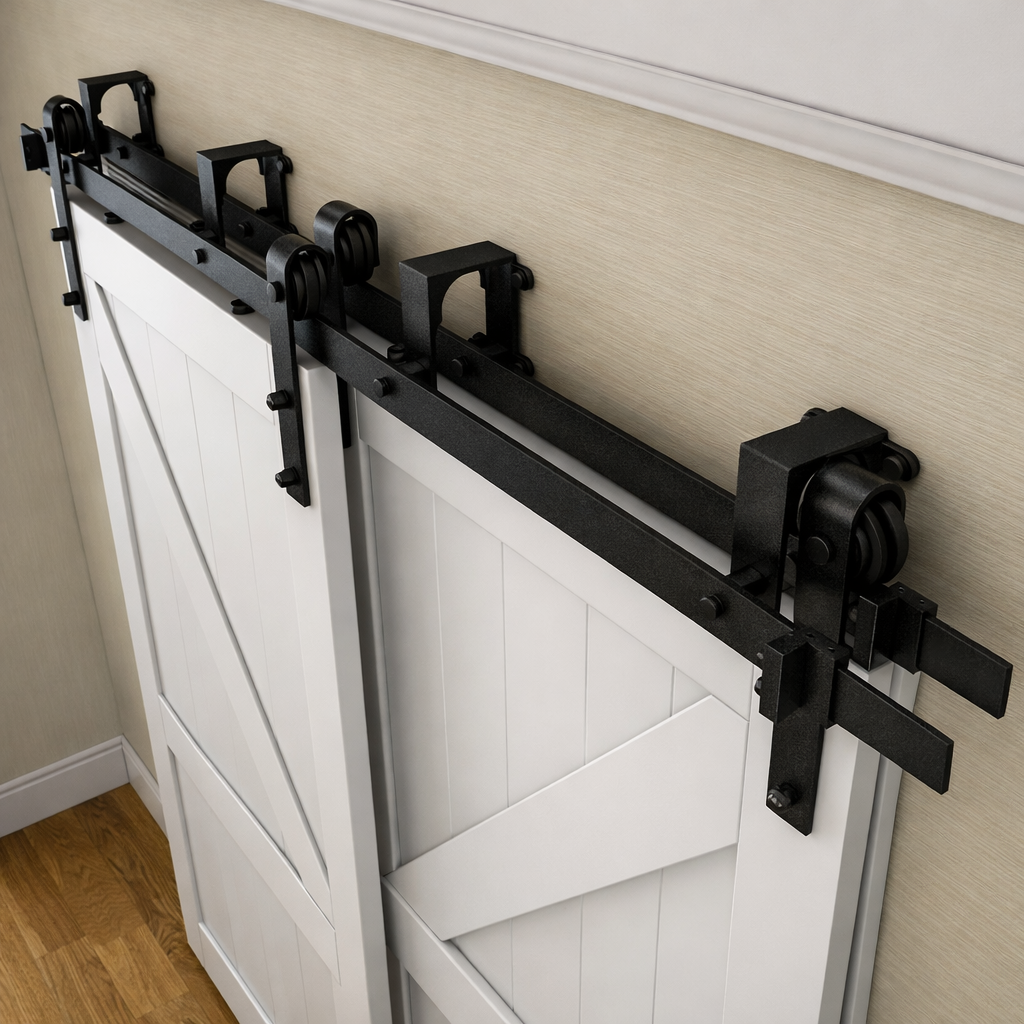
Bypass track systems are designed for multi-panel sliding configurations, where two or more doors must operate in sequence without requiring additional wall space. These systems use parallel-mounted tracks with staggered roller brackets, allowing each panel to slide independently along its assigned rail.
Common configurations:
- Double bypass: Two doors, two tracks, one slides in front of the other
- Triple bypass: Three doors, three rails, staggered alignment for wide-span access
📦 Use Cases:
- Tight hallway closets in multi-family housing
- Office partitions in open-plan commercial spaces
- Laundry rooms or mechanical closets where swing doors are impractical
Key construction considerations:
- Ensure a minimum ¾” offset between each rail to prevent contact
- Use a continuous backer board or steel channel for structural anchoring
- Stagger soft-close activators if used on all panels to prevent interference
📊 2025 field survey from the Builders Hardware Manufacturers Association (BHMA) showed that over 40% of sliding-door installs in apartments now specify bypass systems, primarily to reduce door swing clearance and avoid HVAC/electrical conflicts within interior walls.
🛠️ Pro Tip: Always verify both horizontal and vertical panel alignment during rough-in. Use laser leveling before fastening your primary track—alignment errors will compound when working with multiple doors.
How Do You Measure for the Correct Barn Door Track Length?
Accurate track sizing is critical not only for functionality, but also for accommodating door travel, stopping clearance, and accessory integration.
Standard Sizing Formula: 📐 Track Length = (Door Width × 2) + 6″ This applies to single-panel systems where the full door retracts along a clear wall. For example, a 42″ door would require an 8′ track.
Measurement nuances by system type:
- Bypass tracks: Measure each door panel width independently, and include offset spacing between rails (typically ¾″–1″ per layer)
- Soft-close systems: Require an extra 2″–4″ of travel distance per end
- Floor guides or bottom channels: May limit swing radius and impact minimum track overhang requirements
🛠 Installation allowance: Always round up to the nearest half-foot. Allow 10–15% overage beyond door width for end stop travel and lateral door flex.
💡 Builders should also account for:
- Interference with existing mouldings or baseboards
- Panel warp in solid-core doors, which can reduce glide clearance
- Rail mounting plate thickness (adds ⅛”–¼” standoff from wall)
What Should Builders Know About Load Ratings and Wall Support?
Track selection must begin with door mass, usage frequency, and wall construction type.
Typical Load Ratings:
| Track Type | Capacity per Panel |
|---|---|
| Light-duty | Up to 100 lbs |
| Standard-duty | 100–150 lbs |
| Heavy-duty steel | 200–350+ lbs |
🧱 Key installation conditions:
- Always install onto reinforced headers, not drywall or plaster
- Use lag bolts (wood studs) or expansion anchors (concrete/masonry)
- For steel studs, integrate blocking plates or use adjustable hanger kits with load-spreading flanges
💡 Special note on bypass systems: Since multiple panels travel simultaneously, load is compounded at each bracket. Use multi-point lag fixation and choose tracks with rated shear resistance in accordance with ASTM F1577.
Wall type recommendations:
| Wall Type | Support Strategy |
|---|---|
| Timber stud wall | 1×6 or 2×6 backer board across studs |
| Steel stud wall | Anchored plywood blocking + toggle bolts |
| CMU/concrete | Sleeve anchors or Hilti-type fasteners |
| SIP panels | Integrate track brackets during factory pre-cut |
📊 A 2024 report by NAHB1 found that 68% of barn door failure callbacks stemmed from inadequate backing or incorrect anchor type—making pre-framing and structural planning essential, especially in spec builds or high-use environments.
Are Soft-Close Systems Worth It in Commercial or Multi-Unit Builds?
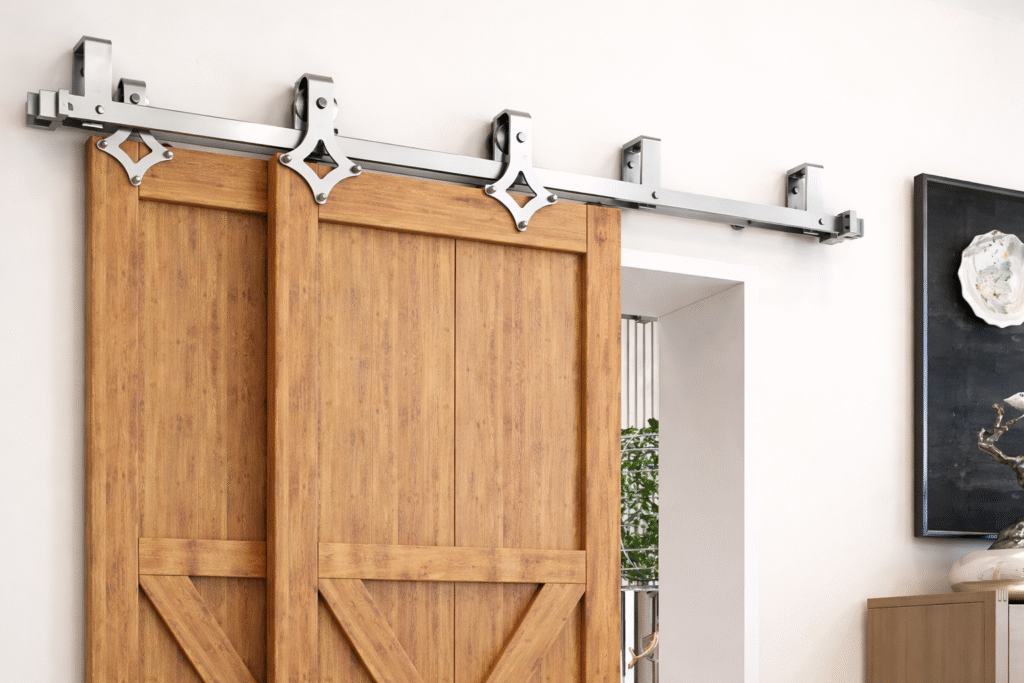
Soft-close barn door systems use integrated dampers and hydraulic pistons to control the final 4–6 inches of travel, ensuring doors close gently and quietly—without slamming. This mechanism reduces kinetic stress on hardware, minimizes noise, and adds a layer of safety for users.
Advantages in commercial/multi-family environments:
- Longer hardware lifespan — Less impact wear on rollers and stoppers
- Improved safety — Protects against finger injuries, especially in senior housing or family units
- Better end-user perception — Adds a premium feel to rental and hospitality interiors
- Reduced maintenance calls — Minimizes alignment issues caused by forceful closing
- Noise control — Particularly valuable in short-term rentals and shared wall units
💰 While soft-close kits typically add 15–20% to hardware cost, they often reduce post-occupancy service costs by up to 30%, based on field reports from builders working on Class A multifamily units in the U.S. and Canada.
In North America, soft-close tracks are frequently specified in:
- Luxury condominiums
- Short-term rental units (STR/Airbnb markets)
- Senior living communities
- Hotel and hospitality suites
🛠 Builder Tip: Most modern soft-close mechanisms are retrofit-compatible with top-mount or face-mount tracks, requiring only bracket clearance and end stop adjustment—no change to header layout or wall blocking.
Summary
Selecting the right barn door track system is about more than just choosing a rail—it’s a technical decision that balances space constraints, panel count, weight rating, usage frequency, and accessory options like soft-close.
By understanding the tradeoffs between single vs bypass tracks, load capacity needs, and installation conditions, builders can deliver more reliable results—and wholesalers can better support their pro customers.
📈 As design standards shift toward functionality and safety, track system selection has become a differentiator, not an afterthought. Which track will elevate your next build?