Flooring color isn’t just an aesthetic choice—it impacts how a space feels, how light travels, and how design elements work together. For builders, designers, and wholesalers, choosing between light and dark floors can influence everything from room scale perception to resale value and cleaning strategies. But how do you decide which is best for your interior project—light flooring or dark?
Light floors reflect more light and make interiors feel larger, cleaner, and more open—ideal for minimalist and modern spaces. Dark floors add depth, warmth, and contrast, creating a bold, grounded look suited for dramatic or luxurious interiors. The best choice depends on layout, lighting, and long-term maintenance goals.
Let’s compare light and dark flooring across five essential design and construction factors to guide your material selection.
1. Do Dark Floors Make a Room Look Smaller or Bigger?
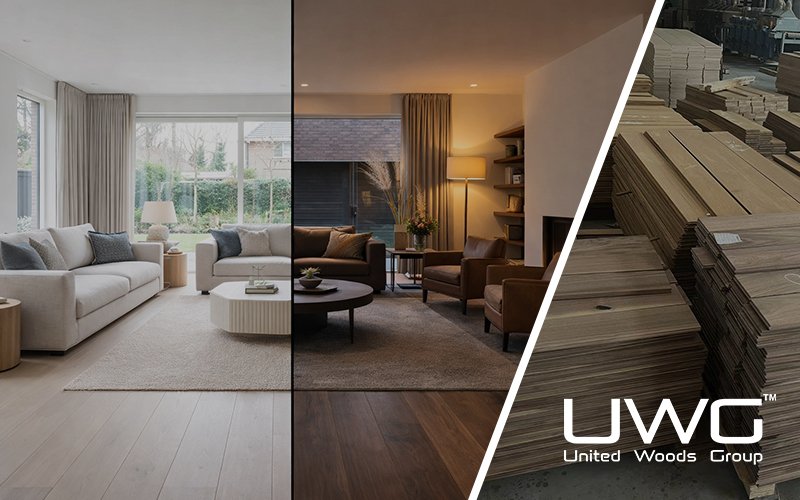
Flooring color has a direct impact on spatial perception—especially in compact units or multi-family housing. Dark flooring tends to absorb light, visually pulling the perimeter inward and creating a more intimate, enclosed effect. While this “grounding” property can add warmth and sophistication, it can also make smaller rooms feel tighter if not balanced with adequate lighting and reflective surfaces.
Conversely, light-toned flooring reflects more natural and artificial light, dispersing brightness across the room. This increases the sense of openness and volume, especially in units with limited daylight exposure or ceiling height below 9 feet. Light floors also reduce contrast between the floor and vertical surfaces, further extending perceived space.

2. Pros and Cons of Dark vs Light Hardwood Floors
✅ Light Hardwood Flooring
- Advantages:
- Enhances natural and ambient brightness.
- Minimizes visibility of dust, scratches, and everyday wear.
- Adaptable across design genres—Scandinavian, coastal, Japandi, and transitional interiors.
- Offers broader appeal in resale due to neutral and timeless tones.
- Limitations:
- Susceptible to UV fading and yellowing if not properly sealed.
- Can feel underwhelming in large spaces without complementary warm elements (e.g., walnut furniture, textured rugs).
✅ Dark Hardwood Flooring
- Advantages:
- Adds visual depth and contrast—ideal for defining open-plan spaces.
- Projects a high-end, luxurious aesthetic when paired with lighter wall finishes.
- Effective in grounding modern interiors and enhancing acoustic comfort.
- Limitations:
- Shows dust, pet hair, footprints, and scratches more prominently.
- Requires more frequent cleaning and maintenance to retain visual appeal.
- Can feel heavy in poorly lit spaces or when used wall-to-wall in compact units.
Dark flooring works best when paired with ample lighting, high ceilings, or open layouts, helping balance the weight of the surface. In contrast, light flooring requires less maintenance and provides flexibility in fast-turnover projects or rental-grade developments.

3. Light or Dark Floors for Resale Value?
In real estate development, flooring color impacts marketability and return on investment (ROI). Broadly speaking, neutral light-to-medium wood tones have the highest buyer appeal. These hues act as a visual baseline that easily accommodates different interior styles and furnishings—critical for faster closings and fewer buyer objections.
While dark flooring can elevate perceived luxury, especially in upscale units or boutique builds, it may restrict staging flexibility and polarize opinions. Some buyers associate dark floors with high maintenance or older trends, particularly in bright or coastal markets.
Regional style matters. In urban infill projects, dark tones (e.g., espresso, charcoal) may enhance drama and contrast. In contrast, suburban or coastal units favor lighter, desaturated wood tones like white oak, driftwood, or greige, which evoke airiness and versatility.
Also, consider flooring continuity across open spaces. Using a consistent tone throughout main living areas can amplify perceived square footage—a proven value driver in condo developments and spec homes.
🧱 Builder Insight: To maximize resale flexibility in mid-market or volume developments, specify wide-plank engineered oak or SPC in soft-neutral tones (e.g., honey, sand, or mist white). These SKUs appeal to a broad demographic and offer staging versatility without trend risk.

4. Light vs Dark Laminate Flooring: Does It Work the Same?
Laminate, SPC, and LVP flooring mimic hardwood visuals, but their surface construction can affect light behavior and visual perception differently. The choice between light and dark colors in synthetic flooring brings similar spatial impact—but the material’s sheen, embossing, and format play a major role in how professional the result feels.
Light-Toned Laminate & LVP:
- Enhances brightness and perceived space in small units.
- Minimizes scratch visibility and is ideal for budget-conscious multifamily projects.
- Works well with modern trim, white cabinetry, and light wall palettes.
Dark-Toned Laminate & LVP:
- Offers visual depth, contrast, and can simulate luxury hardwood looks.
- May appear flat or artificial if lacking wood grain texture or in high-gloss finishes.
- Requires thoughtful pairing with matte sheens, tall ceilings, or abundant natural light to avoid visual compression.
Surface texture matters: Matte and embossed finishes improve realism and reduce light bounce, making laminate feel closer to real wood. This is especially critical for dark tones, where glare can cheapen the appearance.
5. Designing with Contrast: Dark Floors and Light Walls
The pairing of dark flooring with light-colored walls is a foundational principle in spatial design, creating a strong horizontal base that anchors the room while drawing the eye upward. This technique enhances vertical emphasis, making ceilings appear higher—a strategic advantage in compact or mid-ceiling multifamily units.
From a visual hierarchy perspective, dark floors establish weight and stability, while light walls extend lateral sightlines, increasing room openness. This contrast also supports layered styling through furnishings, millwork, and textiles, allowing designers to showcase focal pieces with clarity.
However, high-contrast schemes demand balance. Excessive disparity between floor and wall tones can fragment a room’s visual continuity. To mitigate this, introduce mid-range tonal transitions—such as natural oak furniture, warm-toned rugs, or muted trim—to bridge the visual spectrum.

Conclusion
Floor color selection is more than aesthetic—it’s a performance decision that affects perception, comfort, and asset value. Light floors deliver brightness, spatial clarity, and operational efficiency, especially in high-turnover or compact developments. Dark floors offer drama, depth, and contrast, lending themselves to luxury environments when paired with appropriate lighting and design balance.
By aligning flooring tone with layout, ceiling height, regional preferences, and resale strategy, builders and designers can optimize both user experience and ROI. Whether specifying for multifamily housing, spec homes, or premium condos, understanding how color directs spatial psychology empowers better design and better business.
Flooring Patterns: Herringbone, Chevron, Wide Planks, and More
Articles that you may be interested in:
Flooring Patterns: Herringbone, Chevron, Wide Planks, and More
What Are the Most Costly SPC Flooring Installation Mistakes Builders Should Avoid?
Flooring Design Tips: Patterns That Make Small Rooms Appear Large