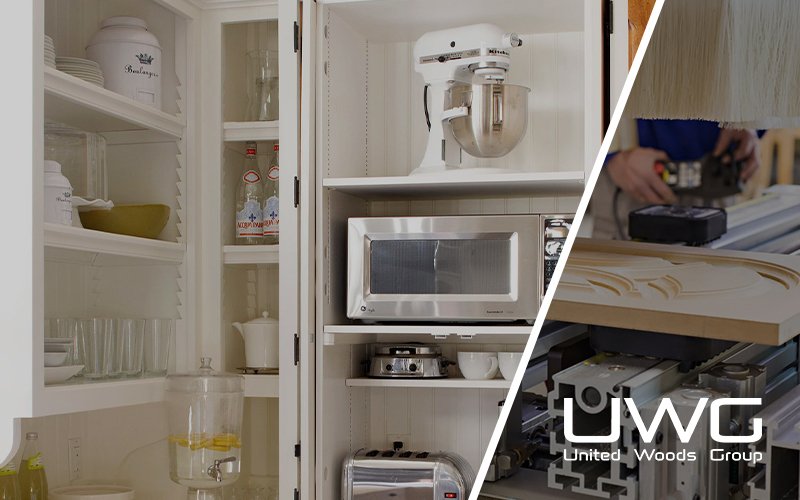
Cluttered countertops and overstuffed drawers make even the largest kitchens feel cramped. Whether you’re renovating or organizing from scratch, smart cabinet design can transform your kitchen’s efficiency. So, which cabinet designs give you the most function for your space?
The top 5 kitchen storage cabinet designs for efficient organization include pull-out drawers, vertical dividers, appliance garages, deep drawer organizers, and toe-kick drawers. Each design optimizes space by targeting overlooked zones like corners, baseboards, or cabinet interiors. These options enhance access, reduce clutter, and work well in both small and large kitchens.
Let’s break down how each of these storage solutions works — and how to choose the right one for your kitchen size, layout, and lifestyle needs.
Pull-Out Drawers: Maximize Access in Deep or Awkward Spaces
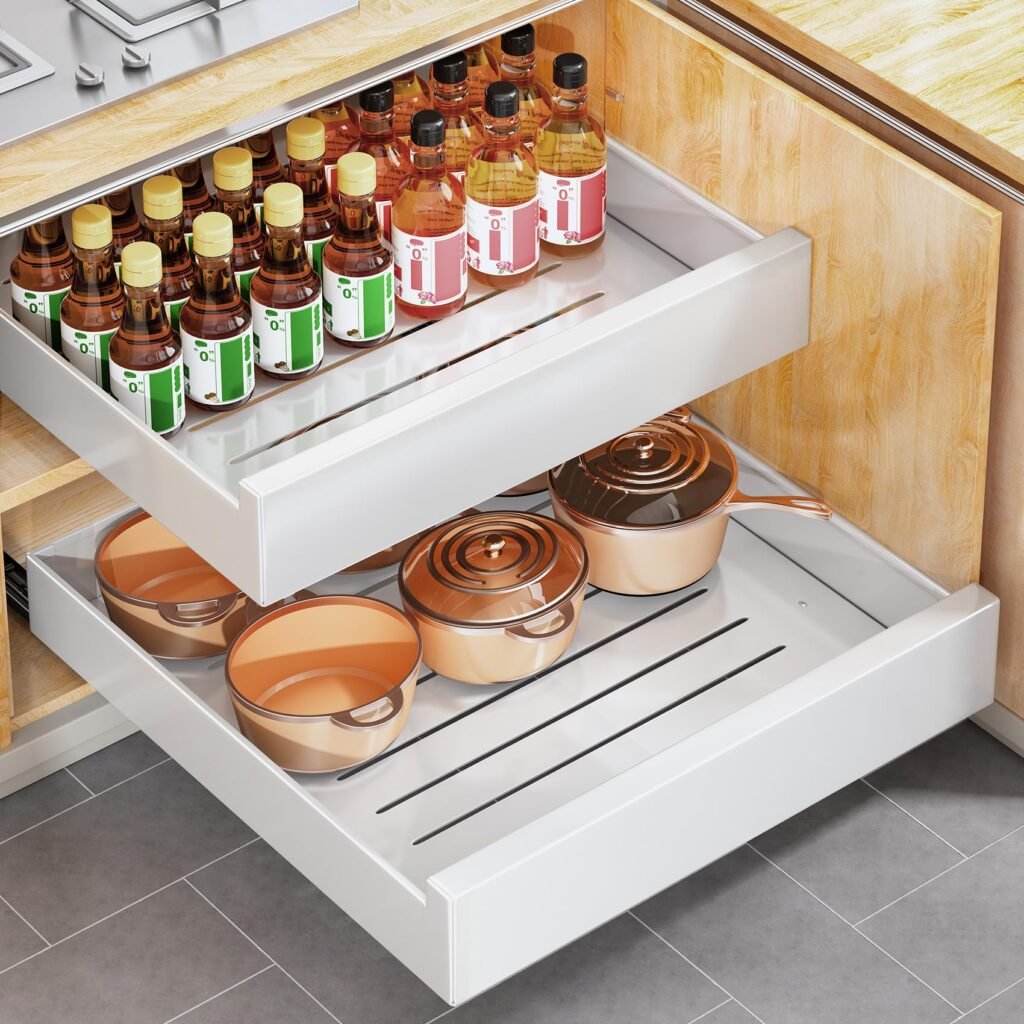
Pull-out drawers — also known as roll-out trays — are a game-changer for base cabinets. These sliding shelves bring everything within easy reach, eliminating the need to kneel down and rummage through dark cabinet depths. Especially in deep or corner base cabinets, pull-outs transform otherwise wasted space into organized, ergonomic storage.
✅ Best for:
- Deep lower cabinets that are hard to access
- Blind corner units where L-shaped cabinets meet
- Pantry cabinets for canned goods, dry storage, or snacks
🔧 Ideal Uses:
- Pots and pans
- Small kitchen appliances (blender, mixer)
- Bulk food containers or baskets
- Dish towels or cleaning supplies
🛠️ Design Insights:
- Pull-outs can be full-extension or ¾-extension — opt for full-extension glides to access the entire tray.
- Heavy-duty soft-close runners (rated for 75–100 lbs) are essential for cookware or small appliances.
- Add tiered trays or multi-level pull-outs to separate zones for utensils, dry goods, or spices.
Vertical Dividers: Upright Storage for Slim, Flat Kitchen Tools
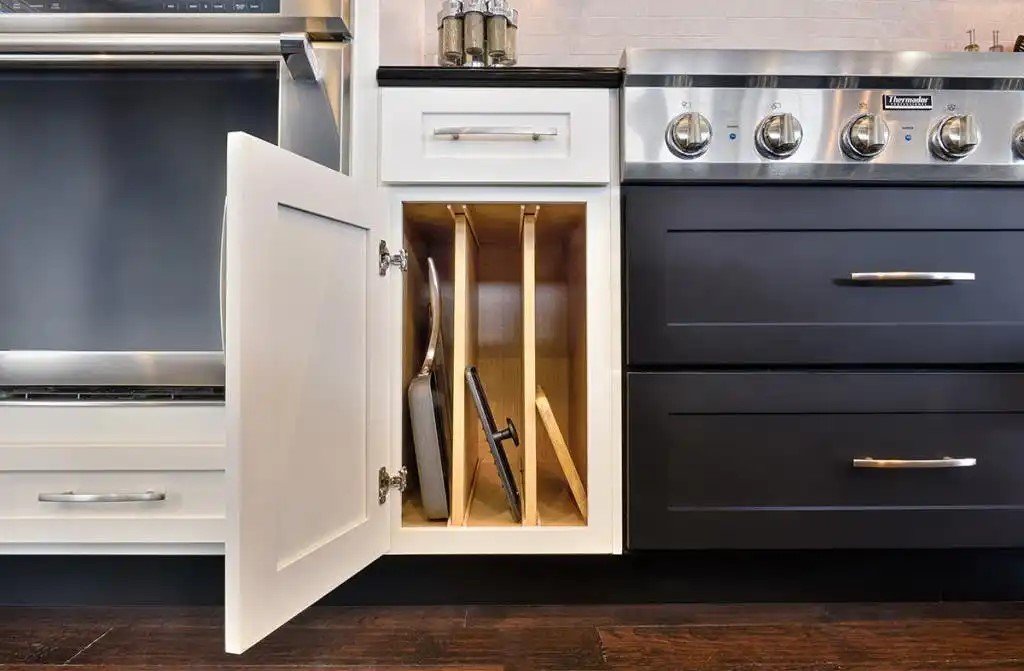
Vertical dividers are a highly efficient yet often overlooked solution, especially for kitchens with many thin, flat items like cutting boards and baking sheets. These dividers create upright storage slots, mimicking a file cabinet, so each item is accessible without a stack collapse.
✅ Best for:
- 12–18 inch-wide base cabinets near ovens or prep areas
- Upper wall cabinets above wall ovens or dishwashers
- Tall pantry cabinets with adjustable shelves
- Deep drawers that can accommodate vertical inserts
📦 Perfect for organizing:
- Baking sheets and muffin trays
- Cutting boards and serving platters
- Cooling racks, pizza stones, and roasting pans
- Reusable food containers lids
🔧 Material Options:
- Stainless steel rails for commercial or modern kitchens
- Melamine or MDF inserts for budget-friendly builds
- Wood panel dividers for custom or luxury cabinetry
Appliance Garages: Clear the Countertop Clutter — Without Losing Access
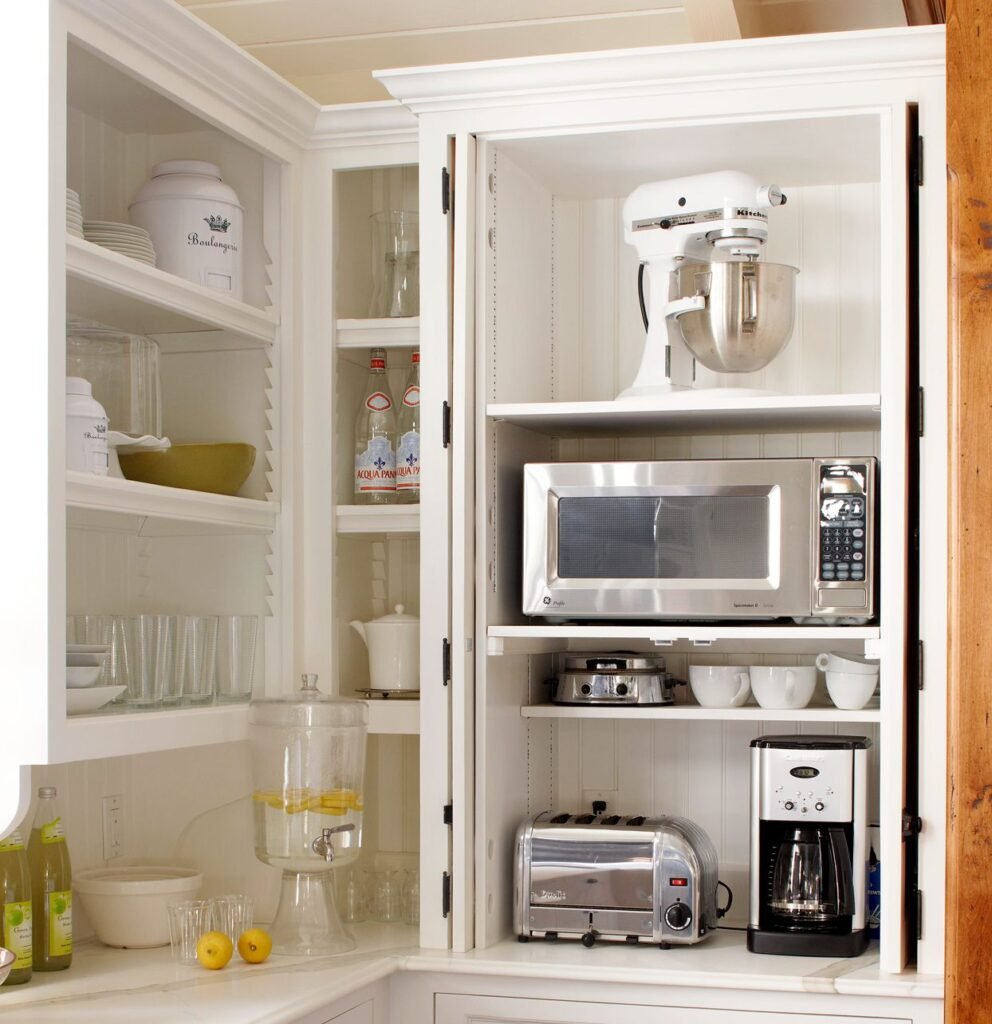
Counter space is premium real estate in any kitchen. Appliance garages solve the constant countertop clutter by providing a concealed storage zone — typically at counter height — where small appliances like coffee makers, toasters, and blenders can be stowed behind a closed cabinet while still remaining plugged in and ready to use.
✅ Best for:
- Modern and transitional kitchen styles seeking a clean, streamlined look
- Large kitchens where counter appliances are used daily but not displayed
- Tech-forward households with espresso machines, mixers, or air fryers
🔧 Functional Features:
- Lift-up, roll-up, or pocket doors that open smoothly without blocking workspace
- Built-in electrical outlets to keep appliances powered inside the cabinet
- Heat- and steam-resistant interior finishes, especially for coffee makers or kettles
- Optional task lighting for enclosed garages in darker kitchen zones
🛠️ Design & Install Tips:
- Ensure 15–18 inches of interior height to accommodate standard appliances
- Route electrical lines during rough-in to avoid exposed cords
- For upper wall garage units, use pneumatic hinges for easy vertical lift access
- Consider ventilation slits or undercut doors to prevent heat buildup
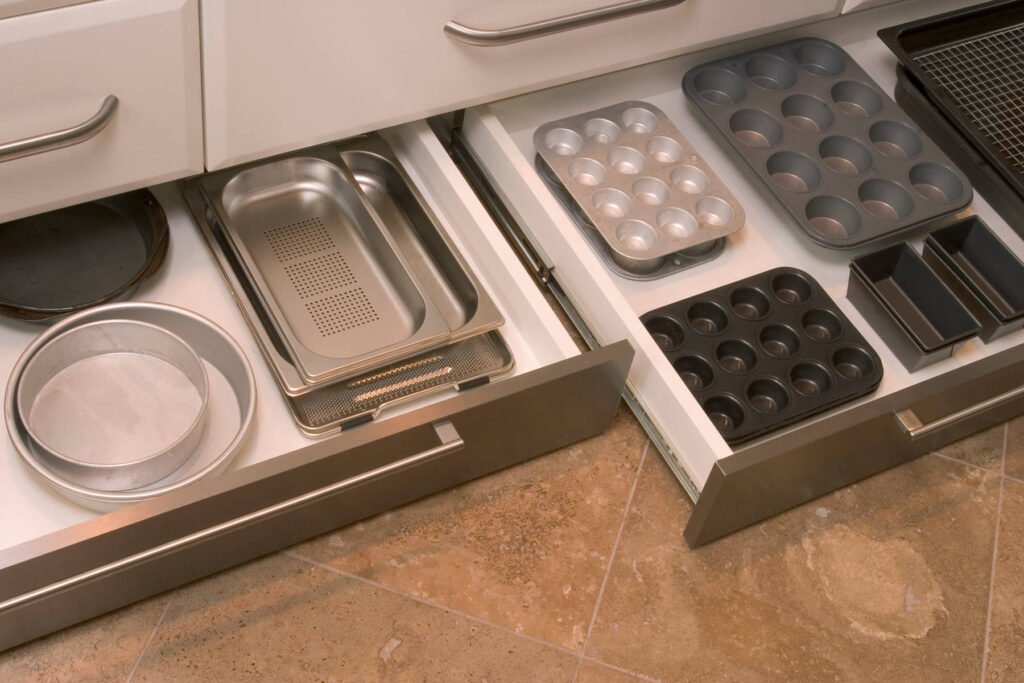
Toe-Kick Drawers: Unlock Storage from the Unused Baseboard Zone
The 4–5 inch space between your lower cabinet and the floor — the toe kick — is often ignored, but with toe-kick drawers, it transforms into functional hidden storage. Though shallow, these drawers are perfect for flat or rarely used items and are practically invisible when closed, keeping the kitchen sleek and clutter-free.
✅ Best for:
- Small kitchens that need every inch of usable storage
- Tiny homes or studio apartments with limited cabinetry
- Minimalist designs where visual simplicity is a priority
📦 Ideal Items to Store:
- Flat bakeware (e.g., cookie sheets, pizza pans)
- Placemats, trivets, or serving trays
- Reusable shopping bags
- Pet food bowls or accessories
- Seasonal or holiday cookware rarely used
🛠️ Design & Build Notes:
- Requires custom base cabinet modification to eliminate fixed toe kick panel
- Use low-profile drawer glides or push-to-open tracks for minimal footprint
- Cabinet base must support recessed installation to avoid height mismatch
- Consider using soft-close slides to protect drawer contents from vibration
Deep Drawer Organizers: Rethink Pots, Pans & Utensils — With Ergonomics in Mind
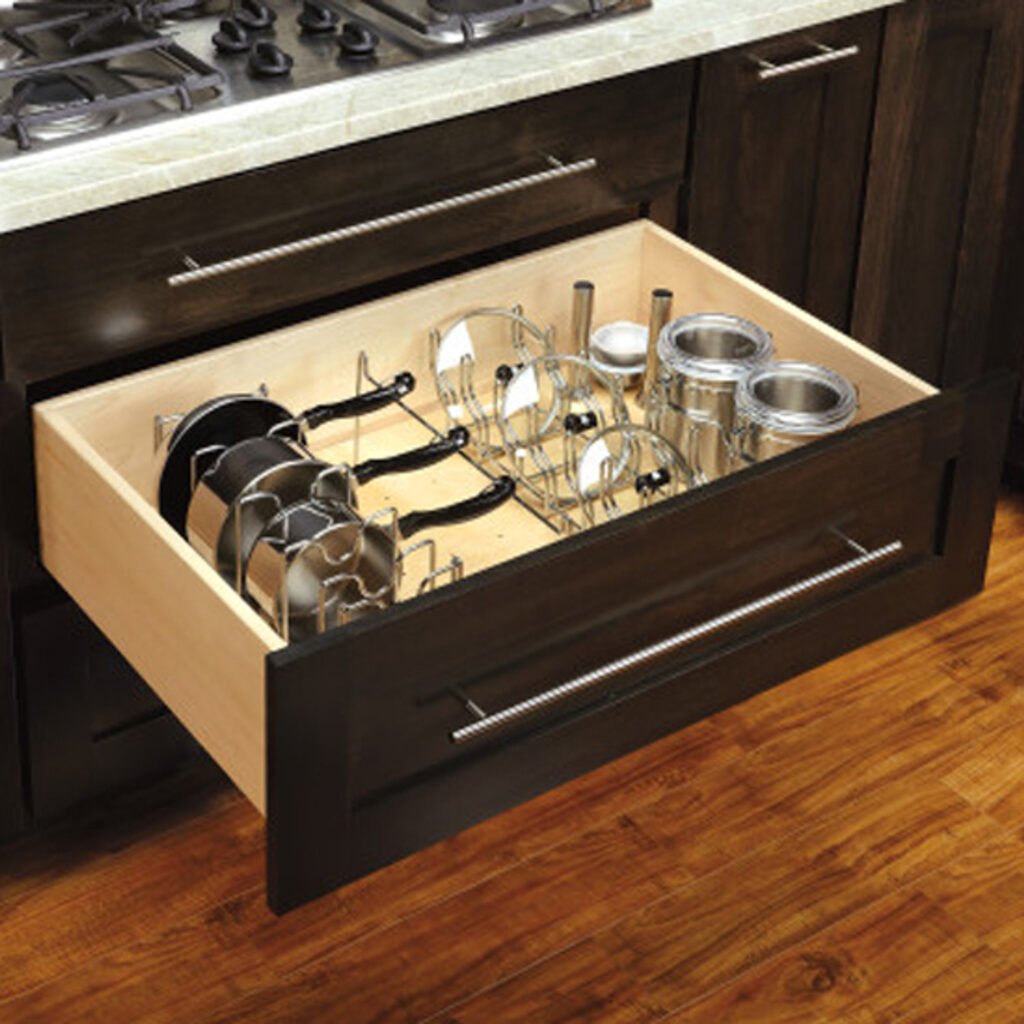
Traditional base cabinets with doors require bending, kneeling, and stacking — not ideal for daily-use items. Deep drawers solve this by offering front-accessible, full-extension storage that lets you see and reach everything without the mess.
✅ Best for:
- Open-concept kitchens that prioritize usability over upper cabinet storage
- Universal design or aging-in-place kitchens where bending is minimized
- High-traffic households needing fast access to core cookware
📐 Ideal Drawer Depths:
- 10–12 inches internal height for pots and pans
- 5–7 inches for flatware or Tupperware
- 14–24 inches drawer box depth depending on cabinet size
🧩 Design Features:
- Modular dividers for separating lids, pans, utensils
- Non-slip liners to reduce movement and noise
- Peg systems to adjust based on item size
- Soft-close slides rated for 75–100 lbs minimum for cookware zones
Which Storage Cabinets Work Best in Small Kitchens?
Designing for small spaces doesn’t mean compromising functionality. With the right cabinetry, you can double your kitchen’s efficiency — even without changing the footprint.
✅ Best Cabinet Features for Small Spaces:
- Vertical Pull-Outs (6″–12″): Maximize narrow gaps beside fridges or stoves
- Wall-Mounted Cabinets: Add vertical storage up to the ceiling
- Toe-Kick Drawers: Convert dead space into tray or baking sheet storage
- Corner Solutions: Install pull-out trays or swing shelves to use every inch
- Multi-Functional Modules: Try flip-down cutting boards or slide-out compost bins
🎨 Visual Tips:
- Use glass-front cabinets to create depth
- Stick to light-toned finishes and horizontal grain patterns to visually widen the room
- Incorporate under-cabinet lighting to remove shadows and make the space feel larger
How to Choose Cabinet Materials That Balance Style and Function
The choice of cabinet material affects durability, maintenance, aesthetics — and ultimately, user satisfaction. Here’s a comparison of the most common materials used in kitchen cabinetry.
| Material | Pros | Cons |
|---|---|---|
| Solid Wood | Timeless look, natural durability | Expensive; can warp in humid conditions |
| Plywood | High strength-to-weight ratio, moisture resistant | Slightly costlier than MDF |
| MDF (Medium-Density Fiberboard) | Smooth surface ideal for painting, budget-friendly | Not ideal in high-moisture areas |
| Melamine-faced Chipboard | Low-cost, available in many finishes | Prone to chipping; lower load capacity |
Top Mistakes to Avoid in Kitchen Cabinet Organization
Designing kitchen storage is less about cramming everything in — and more about planning how you’ll actually use the space. Avoid these common organizational mistakes that can compromise both function and flow.
❌ Mistake 1: Using Shelves Instead of Drawers for Pots
Why it fails: Stacking heavy cookware in base cabinets creates poor accessibility and increases risk of breakage or back strain. Fix: Use deep drawers with full-extension slides and dividers for better ergonomics and visibility.
❌ Mistake 2: No Zoning System
Why it fails: Random storage leads to inefficient cooking workflows and wasted movement. Fix: Group items into clear task zones — such as prep, cook, bake, and clean — and store items where they’re used most.
❌ Mistake 3: Ignoring Corner Cabinet Potential
Why it fails: Blind corners become dead zones or clutter traps. Fix: Install swing-out shelves, lazy susans, or corner drawers to reclaim usable space.
❌ Mistake 4: Overloading Upper Cabinets
Why it fails: Overhead shelves are hard to reach and dangerous when overloaded with heavy items. Fix: Reserve upper cabinets for lightweight items and shift bulky cookware to lower drawers.
❌ Mistake 5: Choosing Style Over Function
Why it fails: Overly decorative cabinetry may limit internal storage or functionality. Fix: Choose cabinetry that supports daily routines first, then layer in style with finishes and hardware.
Traditional vs. Modern Cabinet Designs: What’s More Efficient?
Choosing a cabinet style is about more than aesthetics — it’s about how the system performs under real use. Here’s how common cabinet designs compare in both looks and functionality.
| Style | Efficiency Potential | Notes |
|---|---|---|
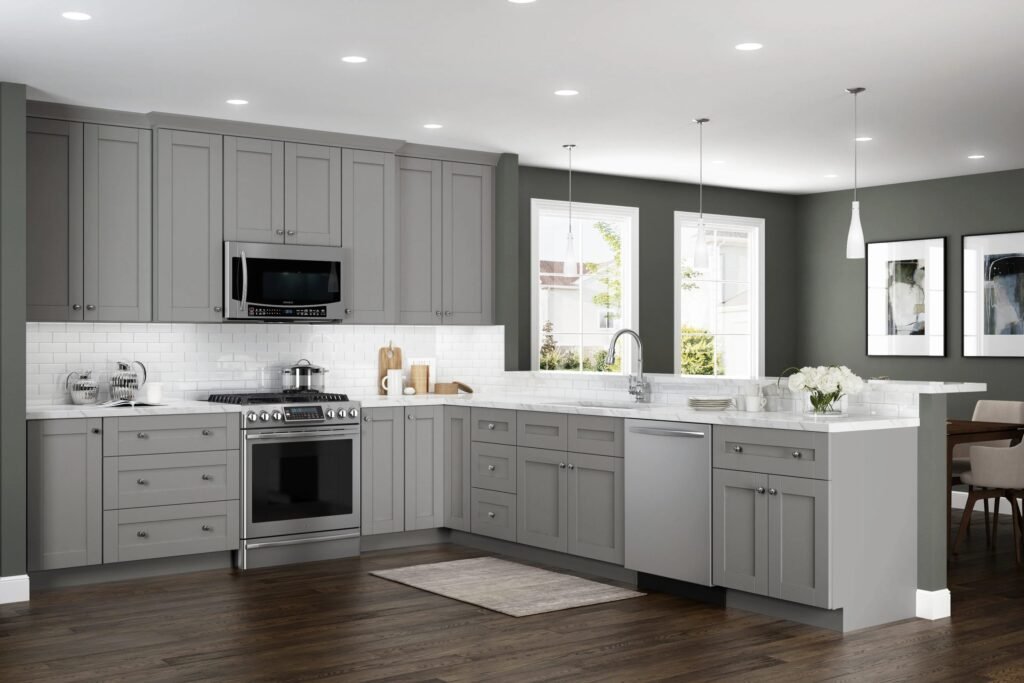
| Shaker (Traditional) | High | Clean lines, allows drawer modifications; fits many kitchen types |
| Flat Panel (Modern) | High | Sleek, minimalist, often pairs with integrated hardware and organizers |
| Inset Cabinets | Moderate | Elegant and flush, but reduced interior space; more expensive to fabricate |
| Glass-Front Cabinets | Low–Moderate | Stylish but limits concealment and reduces internal flexibility |
Conclusion
Smart kitchen storage is less about adding more, and more about optimizing better. From toe-kick drawers to appliance garages and deep drawer systems, it’s possible to design a kitchen that supports your habits — not hinders them.
Even the smallest layout can feel generous when it’s built around how you cook, clean, and live. Start with the cabinetry — because great kitchens begin behind the doors.