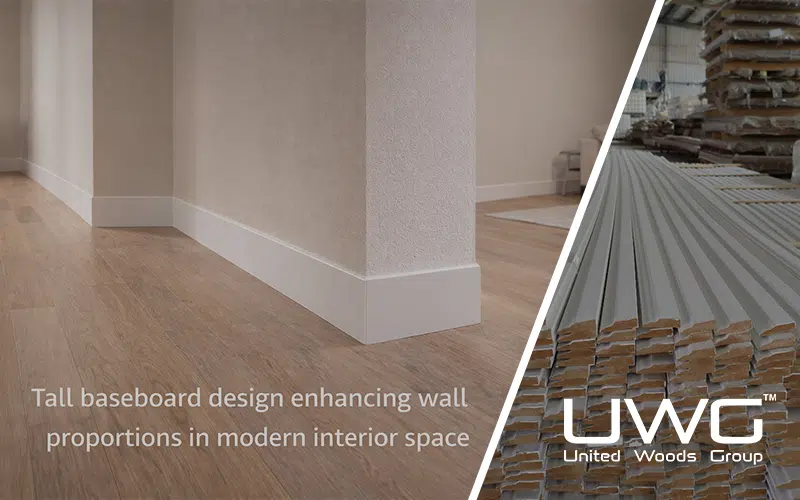
As the landscape of interior design continues to evolve, baseboards are no longer treated as a purely functional detail or a construction afterthought. In 2026 interiors, baseboards play an increasingly vital role in defining architectural style, enhancing spatial proportions, and creating seamless transitions between vertical walls and horizontal flooring. Today, designers, builders, and homeowners are paying closer attention to baseboard profiles, advanced materials, and precise installation techniques to achieve cleaner, more sophisticated spaces.
The Evolving Role of Baseboards in Modern Architecture
Traditionally, baseboards were installed primarily for utility: to protect drywall from scuffs and to conceal necessary expansion gaps at the floor level. While these functions remain essential, the 2026 design philosophy views baseboards as a framing element for the entire room. In contemporary spaces, well-executed baseboards contribute to:
- Visual Proportion and Balance: Anchoring the room’s vertical scale.
- Material Harmony: Bridging the gap between diverse surfaces like wide-plank wood and polished concrete.
- Architectural Language: Reinforcing a cohesive design narrative throughout the property.
As open-plan living and minimal detailing become the standard for luxury developments, baseboards must now complement—rather than compete with—the surrounding architectural elements.
Key Design Trends for 2026 Interiors
1. Clean Lines and Minimalist Profiles
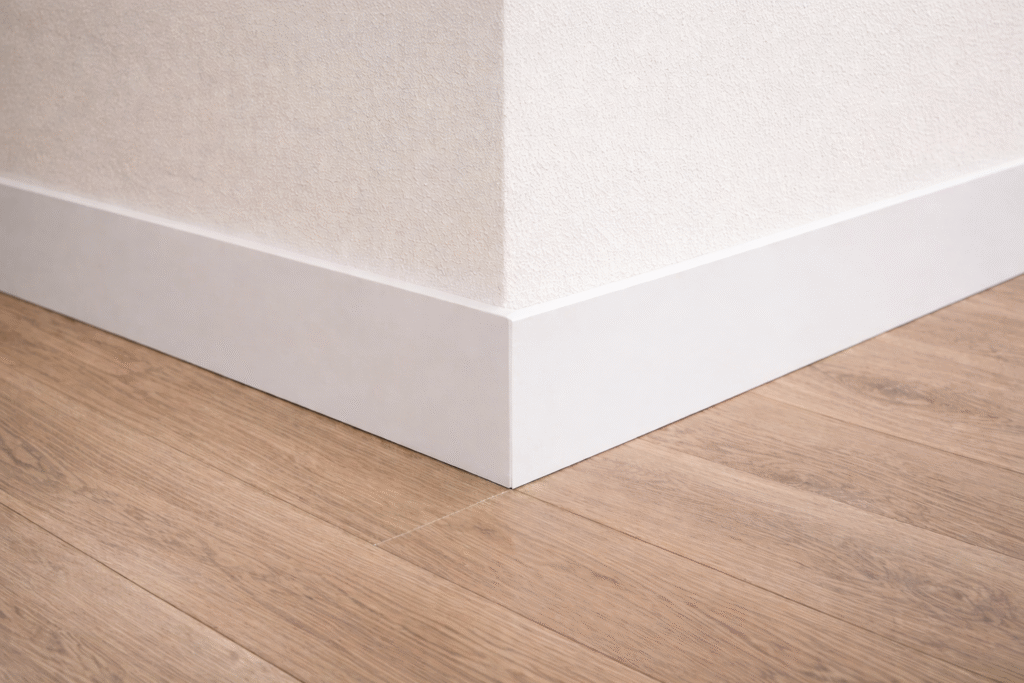
One of the strongest trends for 2026 is the shift toward absolute simplicity. Ornate, traditional profiles characterized by heavy curves are giving way to flat, square-edge designs. These minimal baseboards offer a subtle presence that allows furniture and wall art to take center stage. This aesthetic is particularly dominant in modern apartments and commercial interiors that prioritize restraint and clarity.
2. Taller Heights for High-End Proportions
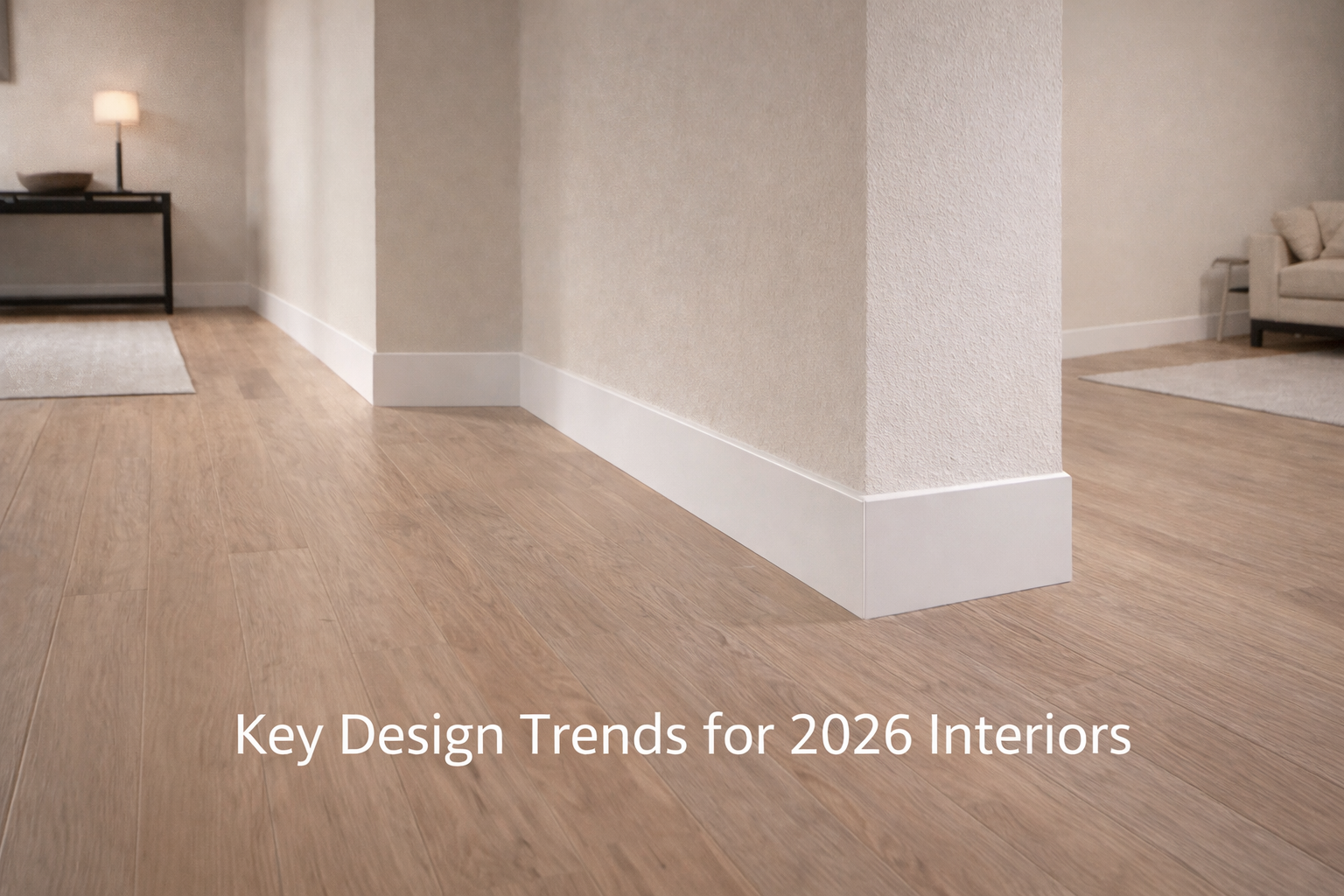
While the shapes are becoming simpler, the physical scale is growing. In 2026, baseboards ranging from 4 to 7 inches in height are increasingly common. Taller baseboards help to visually anchor the walls and create a sense of premium craftsmanship, especially in rooms with elevated ceilings where standard trim would look undersized and cheap.
3. Flush and Recessed “Invisible” Installations
Among the most sophisticated designs for 2026 are flush and recessed baseboards. Instead of projecting outward from the wall, these profiles sit level with the drywall or are slightly tucked into it. This approach creates a sleek, “invisible” transition that is highly sought after in hospitality and high-end residential projects.
Material Innovation and Finishing Techniques
The choice of material is as crucial as the design itself. To ensure a flawless look across large-scale projects, builders are moving toward materials that offer stability and a superior finish.
| Feature | MDF (Medium Density Fiberboard) | Engineered Composites |
| Surface Quality | Ultra-smooth, ideal for high-gloss or matte paint. | Consistent texture, no grain interference. |
| Stability | Resistant to warping in temperature shifts. | Excellent for high-traffic environments. |
| Eco-Friendliness | Often made from recycled wood fibers. | Durable, long-lifecycle materials. |
| Cost-Effectiveness | High ROI for large-scale multi-family projects. | Premium performance for specialized zones. |
Paint-Matched and Monochromatic Finishes
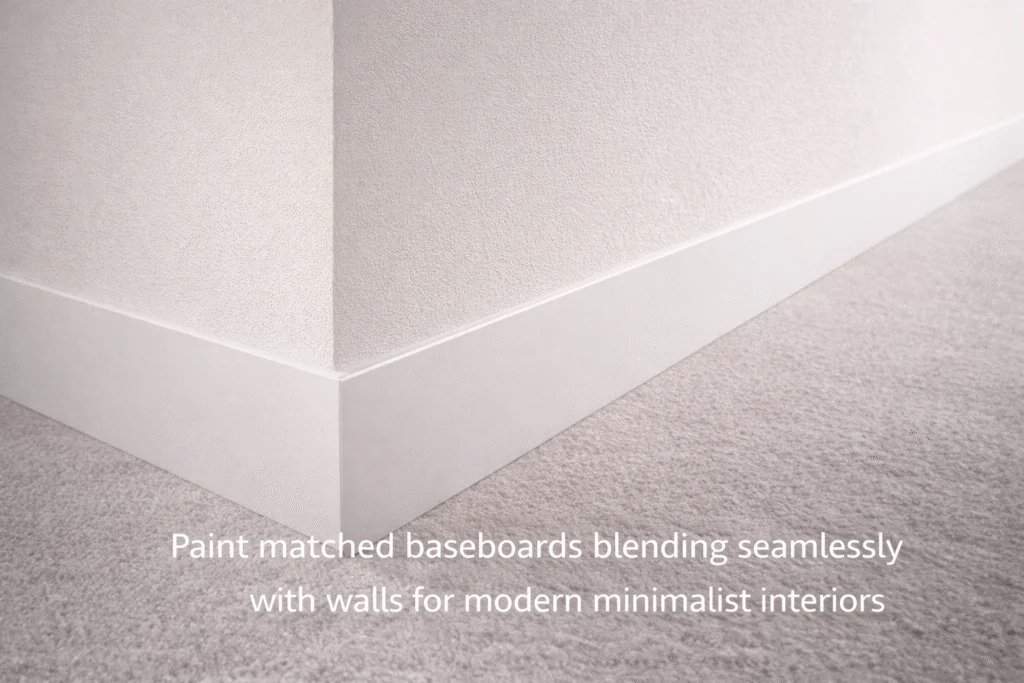
A defining finish trend is the use of paint-matched baseboards. By painting the trim the exact same color as the wall—often in an ultra-matte sheen—designers eliminate visual breaks. This “Monochromatic Look” makes rooms feel larger, calmer, and more architecturally integrated.
The Rise of Shadow Gaps and Negative Details
For ultra-modern interiors, the Shadow Gap (or negative detail) is the ultimate signature. This technique eliminates visible trim altogether, creating a small recessed gap between the wall and floor. While it requires expert planning during the framing and drywall stages, the result is a highly architectural, “floating wall” effect that defines luxury in 2026.
Frequently Asked Questions about Modern Baseboard Design
Q: How tall should my baseboards be for a modern home?
A: A good design rule of thumb is that baseboards should be roughly 7% of your ceiling height. For a standard 8-foot ceiling, use 5-inch to 5.5-inch baseboards. For 9-foot or 10-foot ceilings, you should upgrade to 6-inch or 7-inch profiles. Installing short (3-inch) baseboards in a tall room cheapens the overall aesthetic.
Q: Is “Quarter Round” molding still in style for 2026?
A: The bulky 3/4″ quarter round is considered outdated for modern interiors. If you need to cover gaps between the flooring and the wall, use a “Shoe Molding” (which is taller and thinner, usually 1/2″ x 3/4″) or a simple rectangular strip. For the cleanest modern look, skilled carpenters will scribe the baseboard to the floor to eliminate the need for shoe molding entirely.
Q: What is the most popular modern baseboard profile?
A: The “Eased Edge” Flat Stock is the dominant trend. It looks like a simple rectangular board but has the sharp top corner slightly rounded off. This softens the look just enough to prevent paint chipping and makes dusting easier than a sharp 90-degree edge.
Q: Should baseboards match the door casing style?
A: Yes, for a cohesive look. In modern design, the baseboard is typically slightly thinner than the door casing to create a nice reveal where they meet. If your door casing is flat (Craftsman style), your baseboards should also be flat/square to match.
Conclusion: Designing for the Future
Modern baseboard designs for 2026 focus on simplicity, proportion, and seamless integration. By prioritizing clean profiles, taller heights, and advanced materials like high-quality MDF, builders can ensure their interiors remain current and future-ready. As baseboards evolve from basic trim to architectural framing, selecting the right design becomes essential for any refined interior project.
Articles that you may be interested in:
Cost-Effective Interior Design for Builders: Why MDF Primed Moulding Makes Sense