Measuring internal doors might seem simple, but even a small mistake can cause costly delays or poor fitting. Builders and renovators need precision to match frames, slabs, and hardware. This step-by-step guide simplifies the process so you can get it right the first time.
To measure internal doors accurately, first measure the width at the top, middle, and bottom inside the frame—record the largest value to account for any irregularities. Next, measure the height from the floor to the top frame on both sides, using the larger number. Finally, measure the door thickness from the inner edge of the frame to the stop. These three dimensions—width, height, and thickness—ensure your replacement door fits perfectly within the frame and opens smoothly.
Let’s break this down with more detail, tips, and professional advice for builders who want a perfect fit—whether you’re replacing a single door or scaling up for a renovation.
How to Measure an Internal Door for Replacement?
Replacing an internal door? Your measurements must be spot-on, especially if the new door differs from the original. Here’s how to do it:
Step-by-Step:
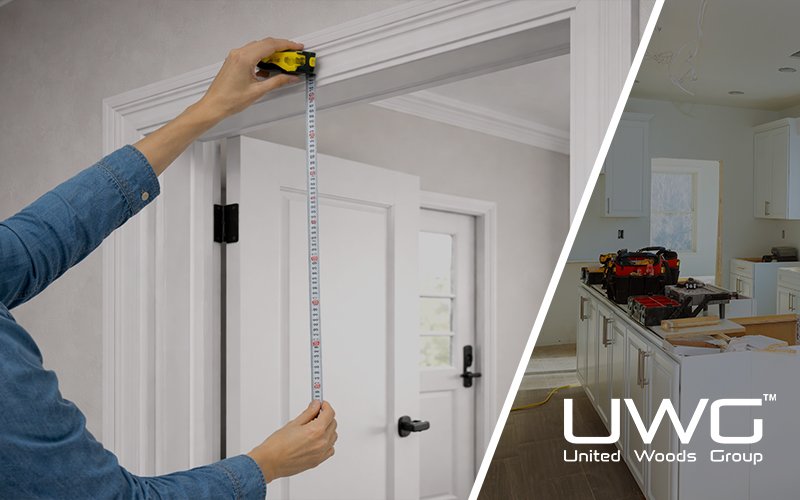
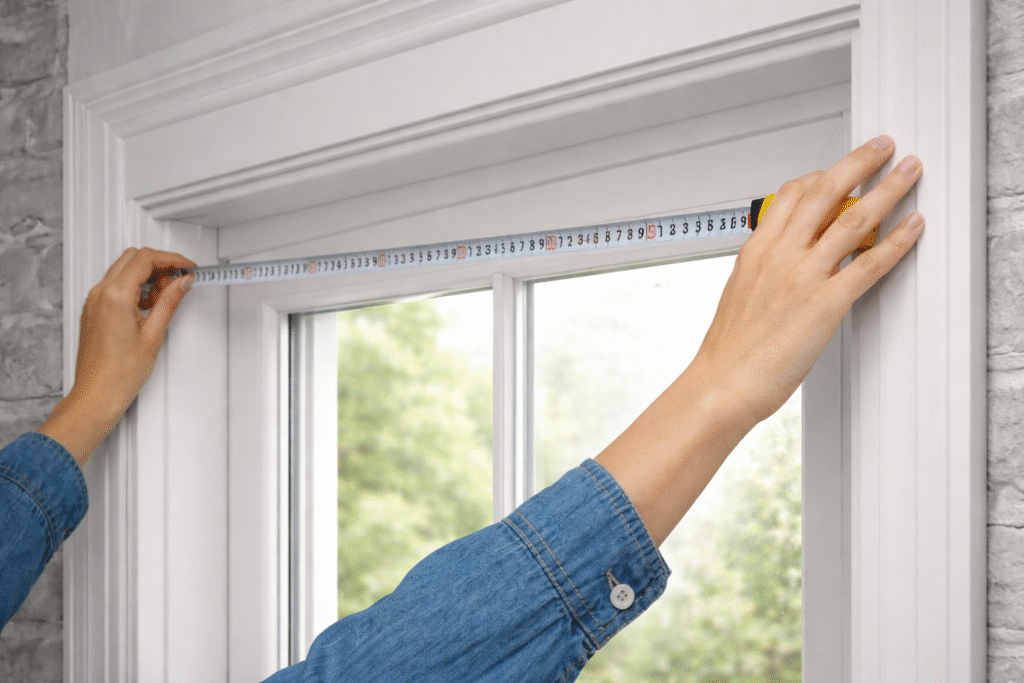
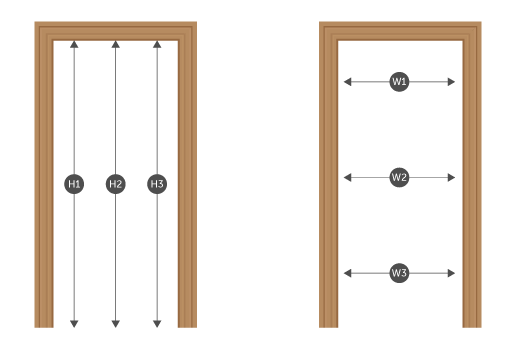
- Measure the width: Use a tape measure to record the internal width at three points—top, middle, and bottom of the frame. Walls and frames can bow or warp, so use the widest measurement.
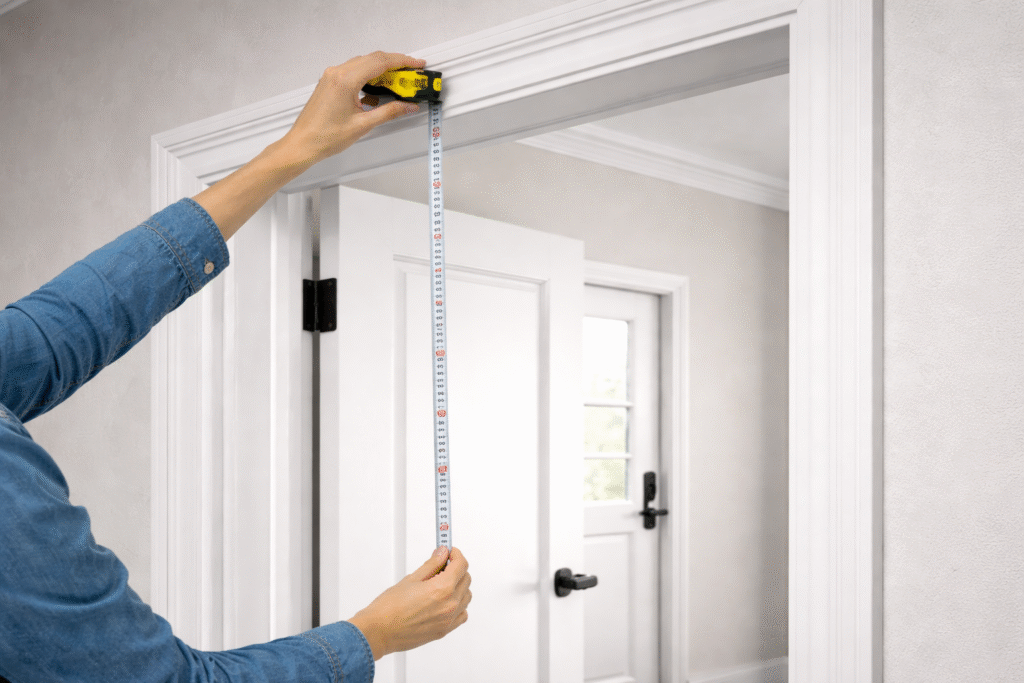
- Measure the height: Measure from the finished floor to the top inside edge of the frame at both the left and right side. Again, record the larger value.
- Check the door thickness: Open the current door and measure its edge (depth). Standard thickness is usually 35mm for internal doors, but check this—older homes may vary.
- Inspect the frame: Look for warping, tilts, or plumb issues. If the frame isn’t square, it might affect fitting and trimming.
Tip: Always use a steel tape, and write down your measurements in millimetres for accuracy.
Is a 32 Inch Door Actually 32 Inches Wide?
Not necessarily. The actual width of a “32-inch” door can vary depending on the door type and how it’s installed. The term “32-inch” usually refers to the nominal size—not the exact measurement of the door slab.
- For standard internal swing doors, the actual slab is typically around 32 inches (812.8 mm).
- Folding doors (such as bi-fold or tri-fold doors) are made up of multiple narrow panels. Each panel is narrower than the full opening to accommodate the folding mechanism. A “32-inch bi-fold door” may consist of two 15.5-inch panels with a small gap in between.
- Sliding doors often require wider panels—sometimes over 32 inches—to ensure complete coverage of the opening when closed, especially if the door slides along the wall rather than into a pocket.
Additionally, custom or made-to-measure doors may vary even more. That’s why it’s important to always check:
- The actual slab size in the product specification
- The clearance needed for your frame or track system
- Whether you’re installing into a standard frame or building a new opening
In summary: A 32-inch label doesn’t guarantee the slab itself is exactly 32 inches wide. Always verify measurements based on the door type and installation method.
How to Measure Door Without Removing Trim?
Many clients want replacements without ripping out the frame or architrave. Here’s how to estimate dimensions without removing trim:
- Width: Measure across the face of the door slab, not the trim.
- Height: Measure from the bottom of the slab to the top visible edge, ignoring any small clearance gaps.
- Thickness: Open the door slightly and measure its edge—no need to remove it.
Keep in mind: This approach gives you slab measurements only. Frame or reveal size may vary, so if precision is critical, remove the architrave temporarily.
How to Measure for Prehung or Double Internal Doors?
Prehung Doors:
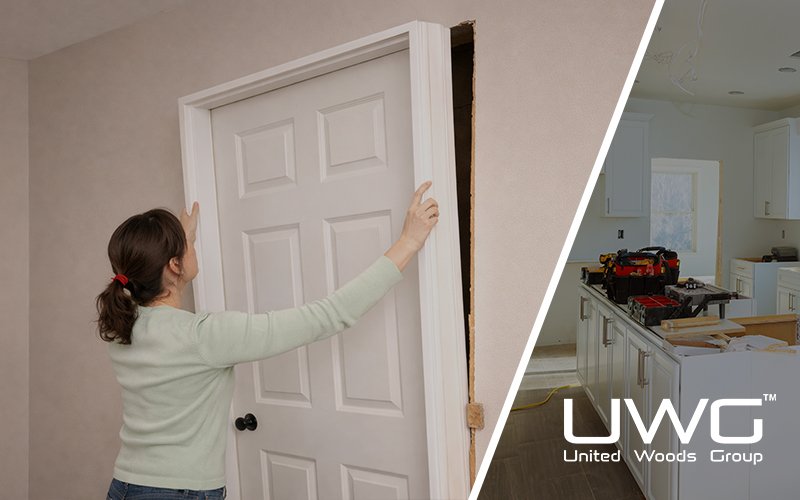
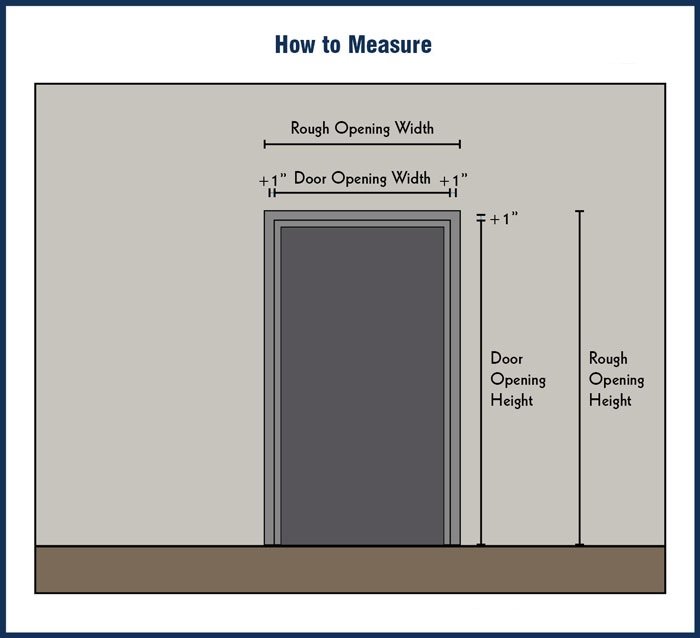
- Measure rough opening width (stud to stud) and height (subfloor to header).
- Add about 2 inches (50mm) to your door dimensions to account for the frame.
Double Doors:
- Total width = width of one slab x 2, plus gap for meeting stile if needed.
- Measure the center mullion, if there is one.
- Ensure both sides of the opening are square and level—if not, gaps between doors may occur.
Use shims and spirit levels during installation to account for imperfections.
Made to Measure Doors vs. Standard Sizes: Which Is Better?
For new builds or large renovations, standard-sized doors are easier and more cost-effective. But in older or custom homes, made to measure doors are often the only way to ensure a proper fit.
Choose Standard If:
- Frames are new and follow metric norms
- You want fast delivery and lower cost
Go Custom If:
- Frames are old or non-standard
- You’re matching historic details
- You need precision to reduce trimming
As a builder, always confirm frame squareness and wall thickness before placing any custom order.
Professional Tips for Accurate Door Measurements
- Use a laser measure for quick and accurate internal dimensions.
- Check frame squareness by measuring diagonals (corner to opposite corner).
- Account for flooring: Final floor height (after tile, carpet, etc.) can change the clearance.
- Use spirit levels to check if jambs and headers are level—this affects how your door hangs.
- Always round up slightly—better to trim than to re-order.
Summary
Internal door measurements can make or break your install. With the right method and tools, it’s quick and accurate. Have a question or want to add tips from your own experience? Drop a comment or share this guide with your crew.