Imagine a project nearing completion, with doors already installed across multiple units. During final walkthroughs, several issues start to appear: doors that no longer sit level, locks that require repeated adjustment, and handles that feel inconsistent from one room to another. None of these problems stem from the doors themselves—they are the result of hardware that was selected without fully considering door size, weight, usage, and installation conditions. For builders, these late-stage issues often lead to rushed fixes, schedule pressure, and avoidable callbacks after handover.
Door hardware should be selected as a complete system based on real project conditions, not as a last-minute accessory. Hinges must match door height, weight, and usage frequency to prevent sagging and misalignment over time. Handles should be chosen by function (passage, privacy, keyed) and kept consistent in finish and quality across all units. Locks—mechanical or magnetic—should align with space usage, durability needs, and installation accuracy to reduce rework and long-term maintenance.
Why Door Hardware Matters More Than Most Builders Expect
On many construction projects, door hardware is specified later than it should be. Hinges, handles, and locks are often viewed as standard items that can be finalized quickly once door sizes and finishes are confirmed. In practice, this approach creates unnecessary risk.
Hardware directly affects how a door performs over time. Underspecified hinges can lead to sagging doors. Incompatible locks may require on-site modifications. Inconsistent finishes across units can trigger last-minute replacements when visual uniformity becomes important to the client. These issues rarely appear immediately but often surface during inspections or shortly after handover.
For builders, door hardware should be treated as part of a complete door system rather than as individual components. When hardware is selected early and matched correctly to the door design and project requirements, installation becomes more predictable, quality control improves, and post-installation service calls are significantly reduced—especially in multi-unit or large-scale projects.
Choosing the Right Hinges: Load Capacity, Door Height, and Long-Term Performance
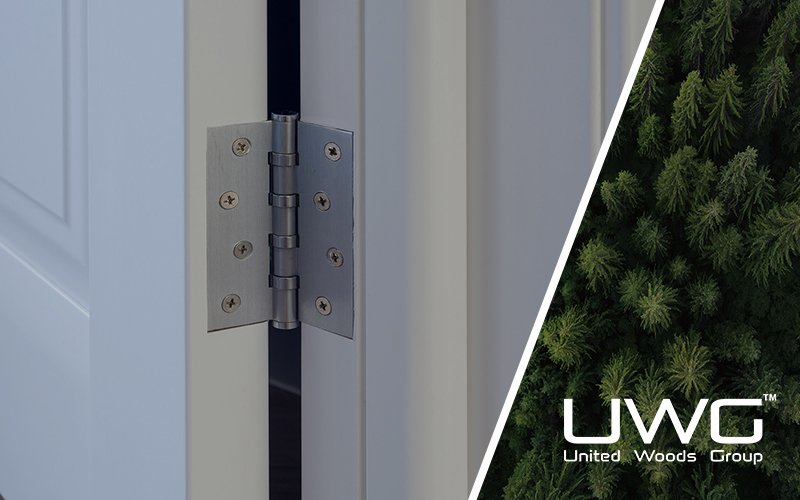
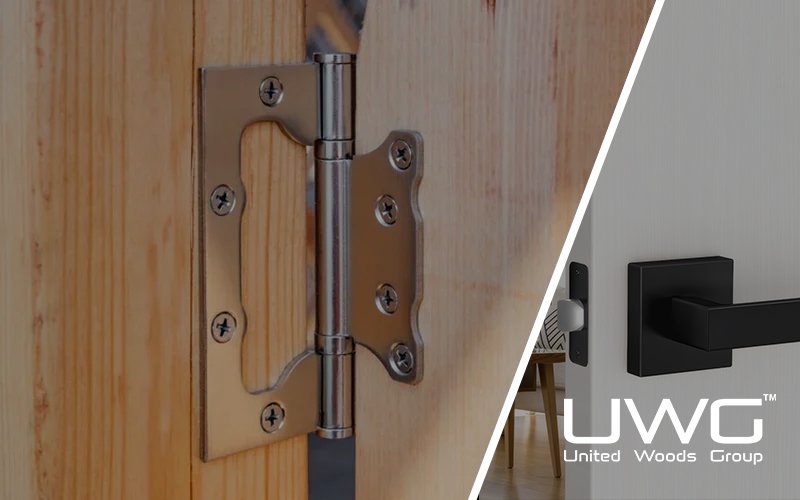
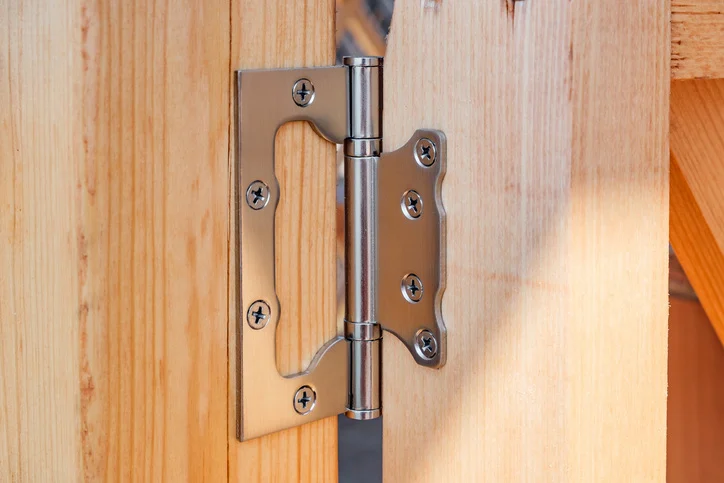
Hinges are the primary load-bearing element of any door system, yet they are frequently under-specified. The most important factors builders should consider are door weight, door height, and expected usage frequency.
Standard interior doors may function adequately with two hinges, but taller doors—particularly those exceeding 2200 mm—typically require three hinges to maintain long-term stability. Heavy doors, such as solid-core, veneered, or prehung assemblies, place additional stress on hinge mechanisms over time. Without sufficient load capacity, doors may gradually drop, resulting in uneven gaps, latch misalignment, and user complaints.
Hidden hinges are increasingly popular in modern and higher-end projects due to their clean appearance. However, they require precise factory machining and proper adjustment ranges. Builders should confirm that the selected hinge model supports both the door’s weight and height, and that it allows for fine adjustment after installation. Selecting hinges based solely on appearance or price often leads to higher maintenance costs later.

Selecting Door Handles: Function, Durability, and Finish Consistency Across a Project
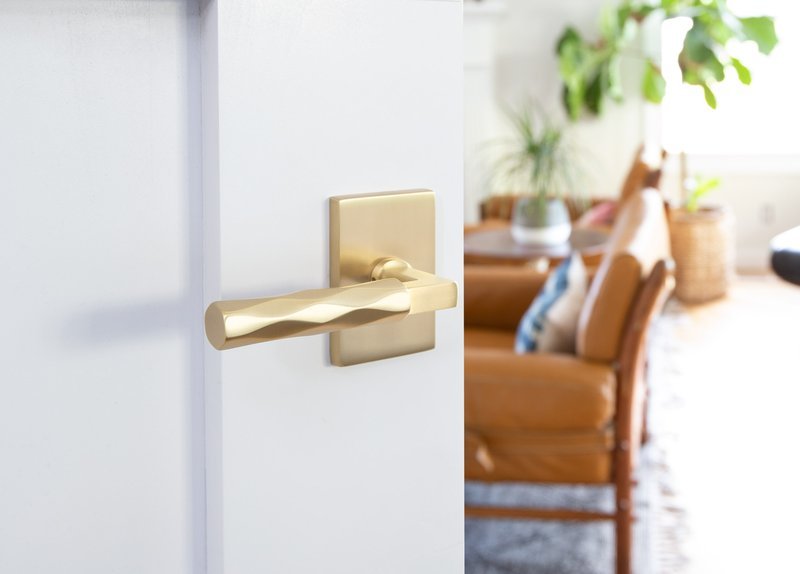
Door handles are among the most frequently used components in any building. While appearance is important, builders should prioritize function, durability, and consistency—particularly in projects with multiple units or repeated layouts.
Different spaces require different handle functions. Passage handles are suitable for hallways and closets, privacy handles are necessary for bathrooms and bedrooms, and keyed or cylinder functions may be required depending on project scope. Misalignment between handle function and room usage is a common cause of late-stage changes and rework.
Finish consistency is another critical consideration. Even small variations in chrome, nickel, or matte finishes become noticeable when installed across dozens or hundreds of doors. Builders should ensure that all handles for a project come from the same series and finish batch whenever possible. In addition, durable surface treatments are essential, as lower-quality finishes tend to wear quickly in high-traffic environments.
Understanding Door Locks: Mechanical vs. Magnetic, Privacy vs. Passage
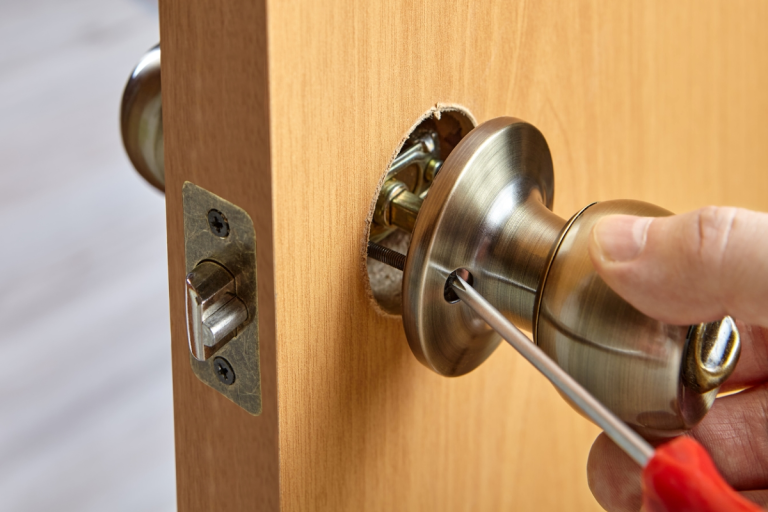
Door locks play a key role in both functionality and user experience. Builders generally choose between traditional mechanical locks and magnetic locks, each with advantages depending on the application.
Mechanical locks are widely used, cost-effective, and familiar to installers. They perform reliably in most residential applications and are easy to service. Magnetic locks, by contrast, offer quieter operation, smoother closing action, and a cleaner visual appearance. They are often preferred in modern apartments, hotels, and higher-end residential projects where noise reduction and aesthetics are priorities.
Equally important is selecting the correct lock function. Privacy locks are essential for bathrooms and bedrooms, while passage locks are appropriate for non-locking areas. Confirming these details early helps avoid incorrect drilling, mismatched hardware, and on-site adjustments that can delay installation. Clear lock specifications at the planning stage lead to smoother execution on site.
Conclusion
For builders, door hardware selection is not a finishing detail—it is a practical decision that directly affects installation efficiency, long-term performance, and post-handover maintenance. Hinges must be selected based on door height and weight, handles should match both functional and durability requirements, and locks need to align with how each space will actually be used.
The most successful projects treat door hardware as a coordinated system rather than a last-minute choice. By confirming hardware specifications early and matching them to real site conditions, builders can reduce on-site adjustments, avoid common failures, and deliver doors that perform consistently over time. In the end, careful hardware selection is not about adding cost—it is about protecting schedules, workmanship, and reputation.