In the construction and home improvement industry, door materials have changed a lot over the past decade. Builders, contractors, and homeowners are paying more attention not only to the appearance of doors but also to their durability, maintenance requirements, and cost. As a result, several materials have become more popular in modern building projects.
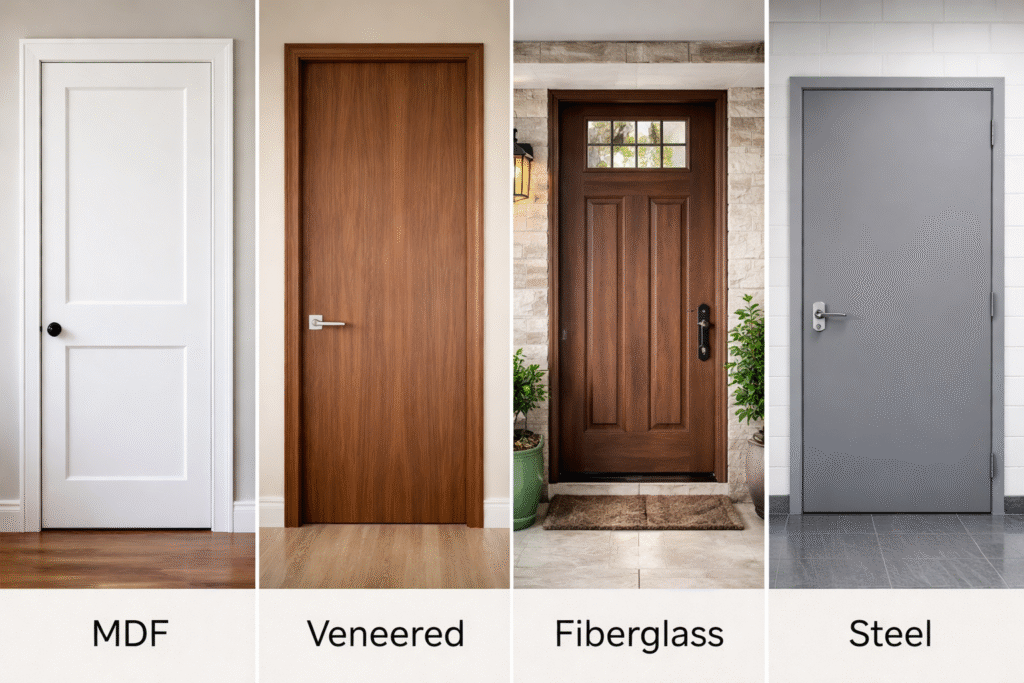
Today, MDF doors, veneered wood doors, fiberglass doors, and steel doors are among the most commonly used options in both residential and commercial buildings. Each of these materials has its own advantages, depending on where the door will be used and what kind of performance is required.
From our experience supplying doors for residential projects and renovation jobs, different materials are chosen for different reasons. For example, interior doors often focus on design and cost control, while exterior doors need better weather resistance and security.
In this article, we will look at these four trending door materials, explain their main features, and discuss where they work best.
Understanding the strengths of each material helps builders and developers select the most suitable option for their projects.
Quick Overview of Modern Door Materials
To better understand the differences between modern door materials, it is helpful to look at how they are typically used in construction projects.
- MDF doors are widely used for interior applications because they offer a smooth surface and cost efficiency.
- Veneered wood doors provide the appearance of natural wood while maintaining structural stability.
- Fiberglass doors are commonly selected for exterior entry doors due to their weather resistance and energy efficiency.
- Steel doors are preferred for security-focused environments such as commercial buildings and service entrances.
Why Door Materials Matter
Choosing the right door material can affect several aspects of a building, including durability, insulation, maintenance, and security. A door that looks good but does not perform well in certain conditions can create problems later.
According to information from the National Association of Home Builders (NAHB), durability and low maintenance are two of the main factors homeowners consider when selecting building materials. This is one reason why engineered materials like MDF and fiberglass have become more common in recent years.
In real projects, we often see that selecting the wrong door material can lead to issues such as warping, moisture damage, or higher maintenance costs. Understanding the characteristics of each material can help avoid these problems.
Industry Standards and Performance Expectations
In addition to durability and maintenance, door materials are also evaluated based on industry performance standards. Organizations such as the American Wood Council (AWC) and Door and Access Systems Manufacturers Association (DASMA) provide guidelines related to door construction, fire ratings, and structural performance.
For exterior doors, factors such as thermal insulation (R-value), weather resistance, and structural strength are often considered during material selection.
Including these considerations helps ensure that the selected door material meets both building codes and long-term performance expectations.
MDF Doors: Affordable and Widely Used
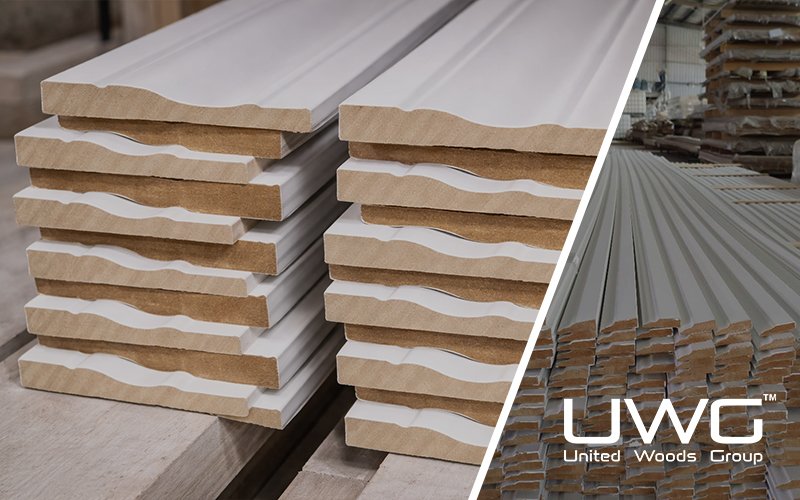
MDF (Medium Density Fiberboard) doors are very common in interior applications. The material is made by compressing wood fibers and resin under high pressure to form a dense board with a smooth surface.

Advantages of MDF Doors
One of the biggest advantages of MDF is its smooth and consistent surface, which makes it ideal for painted doors. Many modern interior doors, such as many molded doors, use MDF as the door skin material. The panels of shaker doors are also made of MDF. In addition, MDF can also be used as a filling material inside the door.
Another important benefit is cost. MDF doors are generally more affordable than solid wood doors, making them a practical choice for large housing projects.
From our own project experience, MDF doors are often used in apartment developments because they provide consistent quality and help keep costs under control.
Things to Consider
Although MDF works well indoors, it is not suitable for outdoor environments or places with high moisture unless properly sealed.

MDF vs Solid Wood Doors
Compared with solid wood doors, MDF doors offer several structural advantages in interior environments.
Solid wood doors may expand or contract with changes in humidity, which can sometimes lead to warping or cracking. MDF, on the hand, has a more stable fiber structure, which helps maintain consistent dimensions over time.
Because of this stability, MDF is widely used in paint-grade interior doors, especially in large residential developments where uniform appearance and cost control are important.
Common Applications
- Interior bedroom doors
- Apartment or condo projects
- Painted interior doors
- Hotel room doors
Veneered Doors: Natural Wood Look
Veneered doors are another popular choice, especially when designers want the appearance of real wood but without the high cost of solid wood doors.
These doors usually have an engineered core, such as MDF or a solid composite board, with a thin layer of natural wood veneer on the surface.
Benefits of Veneered Doors
The biggest advantage is appearance. Veneered doors are typically divided into three main categories: PVC veneer, melamine veneer, and natural wood veneer. Different door surface materials can also come in various styles, such as walnut, oak, maple, or ash, bringing a warm and natural feeling to interior spaces.
| Veneer Type | Appearance | Durability | Cost Level | Typical Use |
| PVC Veneer | Uniform patterns, modern styles | Good moisture resistance | Low | Apartments, large housing projects |
| Melamine Veneer | Decorative patterns, wood-like textures | Scratch resistant and stable | Medium | Residential and office interiors |
| Natural Wood Veneer | Authentic natural wood grain | Moderate durability, needs care | Higher | Hotels, premium residential projects |
They are also more stable than solid wood doors because the engineered core reduces the chance of warping or cracking.
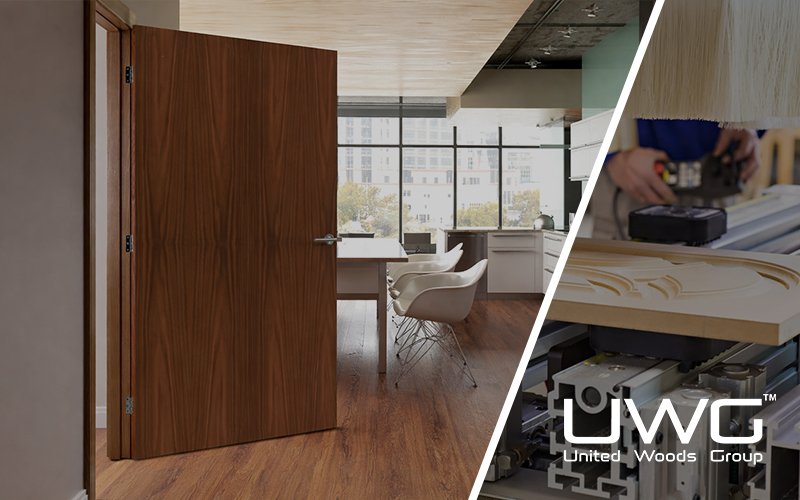
In one small hotel renovation project we worked on, walnut veneered doors were used in guest rooms. The designer wanted a natural wood style, but solid walnut doors were too expensive. Veneered doors helped achieve the same look while keeping the project within budget.

Typical Applications
- Hotels and hospitality projects
- Office interiors
- High-end residential interiors
Fiberglass Doors: Durable Exterior Option
Fiberglass doors have become increasingly popular for exterior entry doors in residential buildings.
These doors are made from reinforced composite materials, which makes them strong and resistant to moisture.
Advantages of Fiberglass Doors
One major benefit is weather resistance. Fiberglass doors perform well in environments with humidity, rain, or temperature changes.
Another advantage is energy efficiency. Many fiberglass doors include insulated cores that help improve thermal performance.
Modern manufacturing technology also allows fiberglass doors to mimic real wood textures, which means homeowners can enjoy the appearance of wood with less maintenance.

Performance in Energy Efficiency
According to information published by the U.S. Department of Energy, fiberglass doors often provide better insulation performance than traditional wood doors. Many fiberglass doors include polyurethane foam cores, which help reduce heat transfer and improve overall energy efficiency.
Because of these properties, fiberglass doors are often recommended for energy-efficient homes and buildings.
Where They Are Commonly Used
- Residential entry doors
- Homes in humid climates
- Energy-efficient houses
Steel Doors: Strong and Secure
Steel doors are known for their strength and security. They are commonly used in commercial buildings, warehouses, and industrial facilities.
Steel doors usually consist of two steel panels with an insulated core inside.
Advantages of Steel Doors
The most important advantage is security. Steel doors are very difficult to break or force open.
They are also highly durable and can handle heavy use. In addition, many steel doors meet fire safety standards, which is important for commercial buildings.
In several warehouse projects we have worked with, steel doors were installed at service entrances because they offered better durability and security than other materials.

Fire and Safety Performance
Many steel doors are manufactured to meet fire-rated door standards, which are commonly required in commercial buildings, warehouses, and public facilities.
Fire-rated steel doors can help slow the spread of fire and smoke, providing additional safety during emergencies. For this reason, they are frequently installed in stairwells, service entrances, and industrial buildings.
Comparison of Popular Door Materials
| Door Material | Main Advantages | Typical Uses | Limitations |
| MDF | Affordable, smooth surface, easy to paint | Interior doors, apartments | Not suitable for high moisture |
| Veneered | Natural wood appearance, stable | Hotels, offices, residential interiors | Higher cost than MDF |
| Fiberglass | Weather resistant, energy efficient | Exterior entry doors | Limited design flexibility |
| Steel | Strong, secure, fire resistant | Commercial buildings | Less decorative appearance |
This comparison shows that each material has its own strengths. The best choice depends on the location of the door and the needs of the project.
Choosing the Right Door Material
When selecting a door material, it is helpful to consider several factors:
Location of the door
Interior doors and exterior doors require different performance characteristics.
Climate conditions
In humid or coastal areas, materials like fiberglass may perform better than wood-based materials.
Budget
Large housing projects often choose MDF doors because they offer good value.
Design style
For projects that require a natural wood look, veneered doors can be a good option.
Frequently Asked Questions About Door Materials
What is the most common material for interior doors?
MDF is one of the most common materials used for interior doors. It provides a smooth surface that is ideal for painted finishes and is generally more affordable than solid wood doors.
Are fiberglass doors better than wood doors?
Fiberglass doors are often more resistant to moisture, temperature changes, and weather exposure. For exterior entry doors, fiberglass can offer better durability and lower maintenance compared to traditional wood doors.
Why are steel doors used in commercial buildings?
Steel doors provide high levels of security, durability, and fire resistance. These characteristics make them suitable for commercial buildings, warehouses, and other high-traffic environments.
What is the difference between veneered doors and solid wood doors?
Veneered doors use a thin layer of natural wood applied over an engineered core. This design provides the appearance of real wood while improving stability and reducing cost compared with solid wood doors.
Frequently Asked Questions About Door Materials
Q: What are the best applications for MDF interior doors?
A: MDF (Medium Density Fiberboard) doors are highly cost-effective and provide a perfectly smooth surface. This makes them the ideal choice for painted interior doors in large residential developments, apartments, and budget-conscious remodeling projects.
Q: Why choose veneered wood doors over solid wood?
A: Veneered wood doors offer the premium, authentic appearance of natural wood grains but with significantly better structural stability and lower costs than solid wood. They are less prone to warping and shrinking, making them an excellent choice for high-end interior applications.
Q: What makes fiberglass doors ideal for exterior use?
A: Fiberglass doors are exceptionally durable, weather-resistant, and energy-efficient. Unlike wood, they resist warping, rotting, and denting, making them one of the best performing materials for exterior entry doors in harsh or highly variable climates.
Q: When should builders specify steel doors?
A: Steel doors provide maximum security, high durability, and excellent fire resistance. Because of their industrial-grade strength, they are typically specified for commercial buildings, industrial facilities, and secure service entrances where safety is the top priority.
Conclusion
Door materials play an important role in both the appearance and performance of a building. Today, MDF, veneered wood, fiberglass, and steel doors are some of the most commonly used options in construction.
MDF doors are affordable and ideal for interior applications. Veneered doors provide a natural wood appearance with improved stability. Fiberglass doors offer strong weather resistance for exterior use. Steel doors provide high security and durability, especially in commercial environments.
By understanding the strengths and limitations of these materials, builders and buyers can choose the right door for their projects while balancing cost, durability, and design.