Ever wondered how to keep your doors from slammi ng or damaging your walls? Whether you’re renting or owning, this small device can make a big difference in home comfort. But what exactly is a door stop, and why should every home have one?
A door stop is a mechanical or structural device designed to restrict the movement of a door leaf. It functions to absorb or redirect impact forces, thereby preventing damage to adjacent surfaces and components. Depending on design, door stops may hold a door open, prevent overextension, or ensure precise closure alignment. Common variants include floor-mounted, wall-mounted, hinge-integrated, and magnetic models, constructed from materials such as rubber, metal, or polymer to suit varying architectural and functional requirements.
Now that you know what a door stop is, let’s dive deeper into how they work, the types available, and how to choose the right one for your home.
What exactly is a door stop and why does it matter?
A door stop, also referred to as a door stopper, is a mechanical or structural device designed to restrict the range of motion of a door. It serves one or more of the following functions: to prevent the door from opening beyond a certain point, to protect adjacent surfaces from impact, or to keep the door in a fixed position—either open or closed.
From a building design perspective, door stops play an essential role in preserving interior finishes and extending the lifespan of both the door and the door frame. In traditional settings, improvised objects like stones or bricks were used. Modern architectural practices, however, employ engineered door stop solutions integrated into the door hardware system or structural components such as the door frame stop molding. Proper implementation of a door stop enhances user safety, maintains spatial integrity, and supports accessibility.
How do door stops protect your home?
Door stops function as impact mitigation devices, absorbing or redirecting the kinetic energy of a moving door to prevent structural and cosmetic damage. When a door swings open uncontrolled—due to wind, momentum, or user force—it can strike walls, furniture, cabinetry, or adjacent doors. This repeated contact often results in drywall punctures, cracked tiles, chipped baseboards, or bent hinges.
By intercepting the door’s movement at a calculated angle or location, the door stop distributes and absorbs the impact energy, reducing stress on the door hardware and surrounding structures. Some designs, such as spring-loaded stops or rubber bumpers, further cushion the contact, providing additional shock absorption. This not only protects finishes but also reduces ambient noise and minimizes wear on hinges and latches—contributing to long-term maintenance efficiency.
A technical overview of the main types of door stops
Door stops can be broadly categorized based on their installation method, mechanical function, and ideal application scenarios. The most common types include:
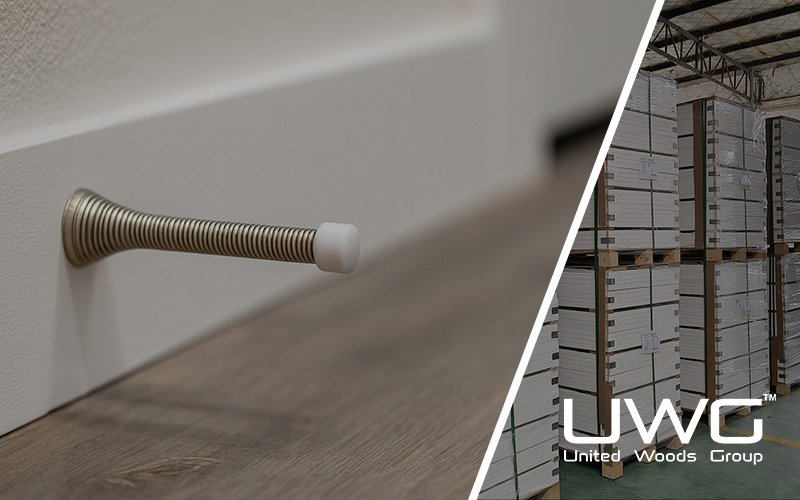
- Wall-mounted door stops Typically installed behind the door, these stops absorb the kinetic energy of a swinging door to prevent direct impact with the wall. They are often made of rubber-tipped metal and are suitable for high-traffic areas where frequent use increases collision risk.
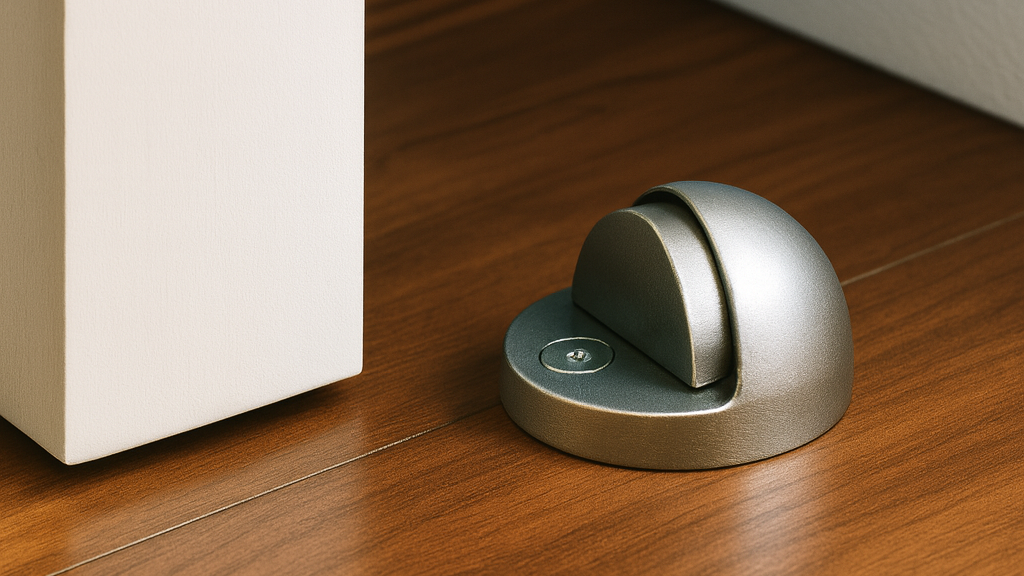
- Floor-mounted door stops Anchored directly to the floor, these stops are ideal for heavy or oversized doors. They provide high structural stability and are often used in commercial or institutional settings. Variants include dome-shaped bumpers and rigid posts with rubber buffers.
- Hinge pin door stops Installed at the hinge joint, these are compact, adjustable stops that control how far a door can open. They are ideal for spaces where wall-mounted or floor-mounted solutions are not feasible, and they preserve wall finishes by halting the door mid-swing.
- Magnetic door stops These consist of two components: one affixed to the door and the other to the wall or floor. When the door opens fully, the magnetic attraction holds it in place. Magnetic stops are favored for their dual function—stopping and securing the door open.
- Wedge-style door stops Portable and typically made from rubber or polymer, these are manually inserted under the door leaf to prevent movement. Though less durable than fixed solutions, they are convenient for temporary use, especially in residential or office settings.
Each type may be manufactured from stainless steel, brass, aluminum alloy, thermoplastics, or natural rubber, selected based on impact resistance, floor compatibility, and design aesthetics.
What is a door stop on a door frame?
In architectural terminology, a door stop on a frame refers to a linear molding element—usually integrated into the door jamb—that limits the inward or outward travel of a swinging door. This structural component is either machined into solid wood frames or applied separately in modular metal frames.
Its primary function is to provide a positive stopping surface for the door leaf, ensuring proper alignment and full closure. This also facilitates effective weather sealing, sound insulation, and thermal efficiency in both interior and exterior doors. Unlike add-on hardware door stops, the door frame stop is an inherent part of the door system’s performance and is essential for code-compliant installations in both residential and commercial buildings.
Which type of door stop is recommended for interior doors?
Selecting the right door stop for interior use depends on several technical factors, including:
- Door weight and size
- Clearance and swing radius
- Wall and floor materials
- Need for portability or permanence
- Aesthetic integration with interior design
Here are common recommendations by scenario:
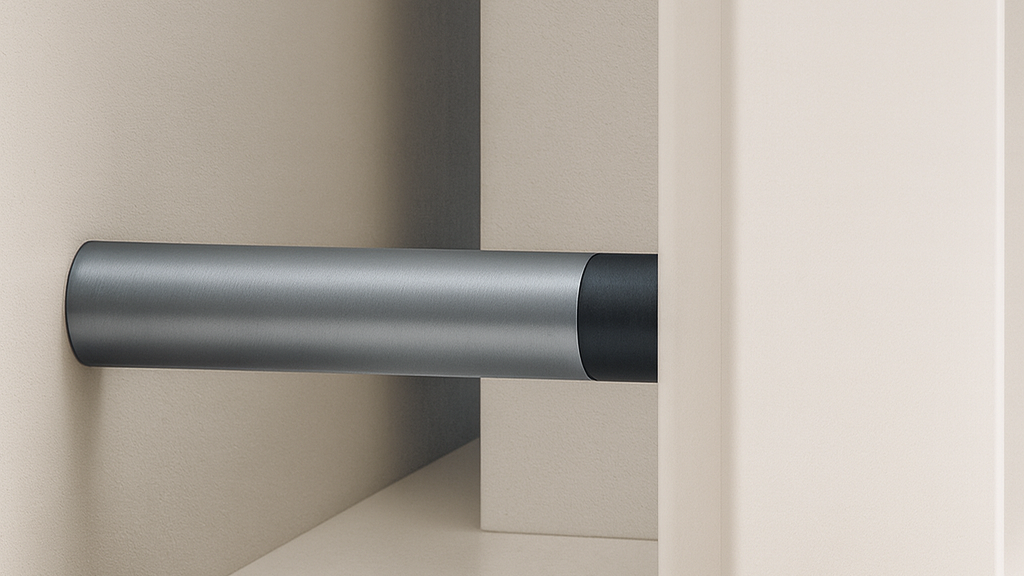
- Bedrooms and bathrooms: Hinge pin door stops are preferred due to their concealed profile and adjustable range control. They preserve wall integrity and reduce installation complexity.
- Kitchens and corridors: Magnetic door stops are useful in high-traffic zones where doors must remain open temporarily, such as during ventilation or housekeeping.
- Rental units or temporary use: Rubber wedge stops offer non-permanent solutions with no mounting requirement, ideal for flexible living spaces or event-based usage.
In all cases, the most suitable door stop is the one that aligns with door construction, expected force loads, traffic frequency, and finish requirements.
How to install a door stop the right way
While door stops are relatively simple components, their correct installation is essential for ensuring functionality and minimizing structural wear. The installation method varies depending on the type of door stop, mounting surface, and door material.
Here is a step-by-step process for fixed door stops (e.g., wall- or floor-mounted):
- Assess the swing path and contact point Fully open the door and determine where it would make contact with surrounding surfaces without a stop. This identifies the ideal placement location.
- Select the appropriate mounting surface Choose between floor, baseboard, wall, or hinge mount, based on space constraints, desired aesthetics, and mechanical leverage.
- Mark and prepare the installation area Use a pencil to mark drilling points. For masonry or tile floors, pre-drill with a masonry bit and use wall plugs or anchors as needed.
- Secure the door stop using the correct fasteners Most permanent models require screws, while some lightweight or temporary variants (like adhesive-backed rubber stops) use peel-and-stick backing. Ensure firm attachment to prevent displacement under repeated stress.
- Verify operational clearance Test the door’s full range of motion to confirm that the stop engages correctly without interfering with door function or creating excessive pressure on hinges.
Do door stops need maintenance?
Door stops are inherently low-maintenance devices, but periodic inspection ensures they continue to perform as intended and prevent damage accumulation over time. Maintenance needs depend on usage frequency, material composition, and environmental exposure.
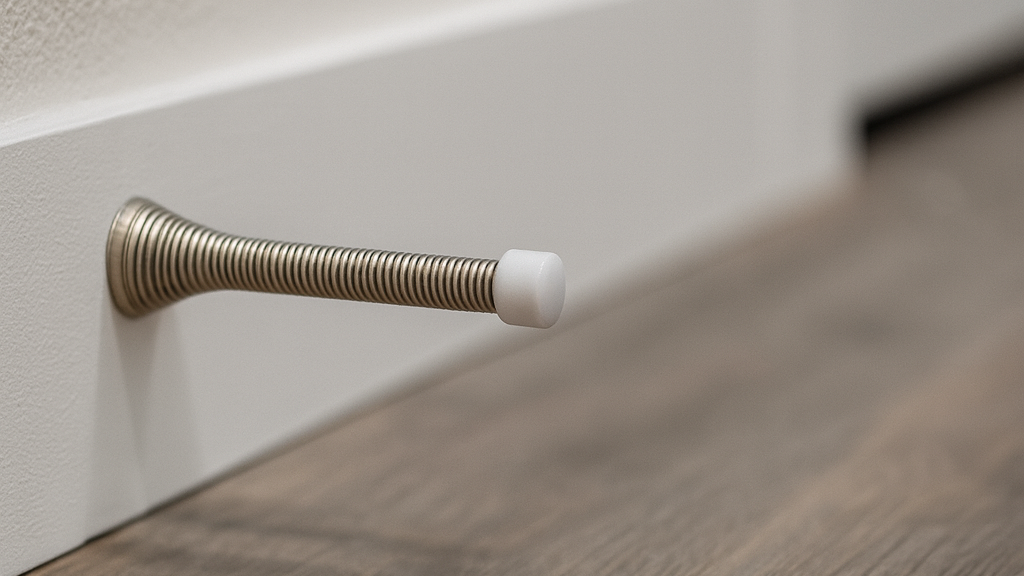
Key maintenance considerations:
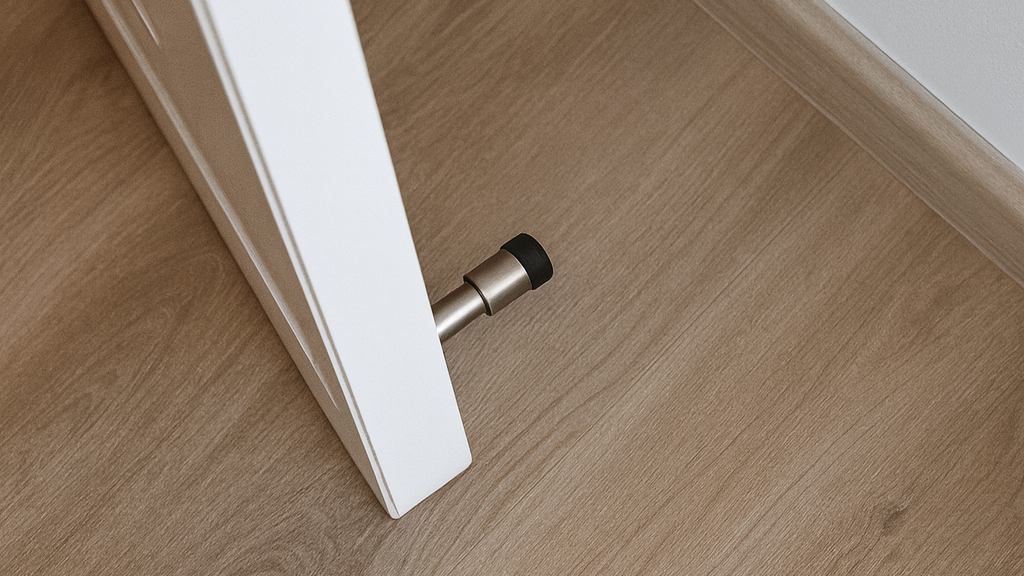
- Rubber-tipped models Inspect for cracking, hardening, or flattening of the rubber buffer. Degraded rubber can cause slipping or allow partial impact to transfer to the wall.
- Screwed-in fixtures Check that screws or anchors remain firmly seated. Vibration and repeated impact may loosen hardware over time, leading to ineffective protection or damage to mounting surfaces.
- Magnetic door stops Ensure that magnets maintain alignment and adequate holding strength. Clean contact surfaces to prevent buildup of dust or rust, which can reduce effectiveness.
When a door stop shows signs of wear or failure, replacement is straightforward and inexpensive. Proactively addressing small failures avoids larger issues such as drywall repair, chipped tiles, or compromised door alignment.
Summary
A properly selected and installed door stop is a small but critical detail in residential and commercial door systems. Beyond preventing door damage, it contributes to structural longevity, acoustic control, and overall functionality. Whether you’re designing a space or upgrading your home, door stops deserve more attention than they often receive.