Modern interior design prioritizes clean lines, flush finishes, and hardware that disappears into the background. Hidden hinges deliver on this promise—but for builders and wholesalers, choosing the right hinge involves more than just aesthetics. Installation precision, long-term alignment, fire rating compatibility, and sourcing logistics all play a role. So, what exactly is a hidden hinge, and when should you specify one in multi-unit residential construction?
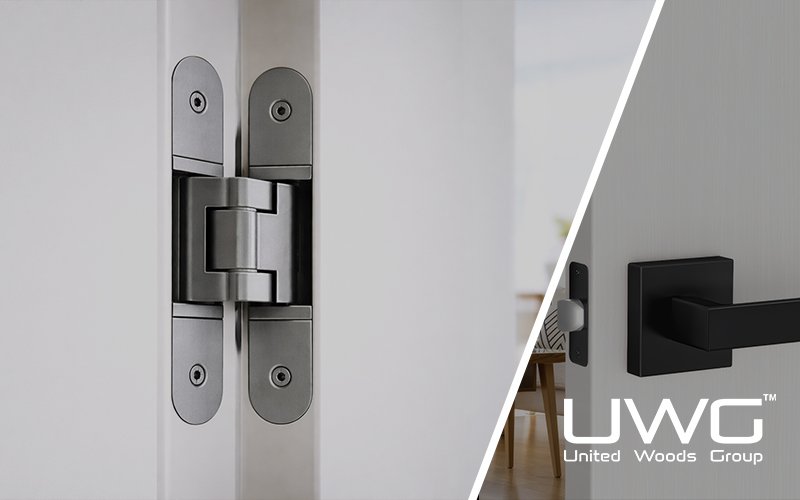
A hidden hinge, or concealed hinge, is installed within the door and frame to remain invisible when closed. It creates a flush, minimalist finish suited for high-end interiors. Hidden hinges are often 3-way adjustable and support various door sizes, but they require precise routing and alignment to function properly.
In this guide, we’ll break down how hidden hinges work, their major types, where they excel, when to avoid them, and how to install them properly for long-term performance.
1. What Is a Hidden Hinge and How Does It Work?
A hidden hinge—also known in the hardware industry as a concealed or invisible hinge—is a fully mortised hinge system that integrates into both the door leaf and the jamb, allowing full articulation without any visible components when the door is closed. Unlike surface-mounted hinges, hidden hinges operate on a multi-axis pivot system that enables precise movement within the plane of the door.
Mechanically, these hinges consist of dual or triple pivot knuckles connected via internal arms, allowing the door to rotate inwards while remaining flush with adjacent surfaces. Most modern hidden hinges offer 3D adjustability (vertical, lateral, and depth) through concealed adjustment screws, which compensates for frame settling or installation deviations over time.
From an architectural standpoint, concealed hinges are essential for flush-to-wall assemblies, minimalist designs, or wall-clad hidden door systems where uninterrupted surface continuity is desired.

2. Types of Hidden Hinges for Interior Doors
Hidden hinges come in multiple configurations, each optimized for specific door loads, materials, and usage environments. Selection should be based on structural demands, aesthetic requirements, and building code compliance.
🔧 Primary Categories:
- Concealed Butt Hinges Compact and easy to install, often used in light hollow-core doors. Limited adjustability. Not suitable for rated assemblies.
- SOSS® Hinges Precision-milled hinges inserted into routed pockets. Ideal for flush doors with medium loads. No external components visible; available in aluminum or stainless steel.
- Tectus® 3D Adjustable Hinges European-engineered hinges offering full three-axis tuning. Designed for premium solid wood or fire-rated doors. High load-bearing (up to 300 lbs). Excellent for institutional, hotel, or condo applications.
- Concealed Pivot Hinges For oversized or tall doors. Offers a sleek look while redistributing weight toward the floor pivot. Best used when jamb mounting space is limited.
- Heavy-Duty Hidden Hinges Designed for secret doors, commercial flush systems, or high-cycle environments. Often integrated with steel reinforcement in the frame or leaf.

3. Benefits of Hidden Hinges in Modern Construction
Hidden hinges are increasingly specified in multifamily developments, luxury interiors, and institutional projects where design integrity, performance, and long-term durability converge.
Key Advantages for Professional Applications:
- Uninterrupted Design Lines Hidden hinges allow for completely flush doors with no protruding hardware, enabling seamless integration with wall panels, acoustic cladding, or custom millwork.
- Enhanced Tamper Resistance No visible hinge barrels or screws—ideal for public areas, tenant units, or high-traffic corridors where anti-vandal design is important.
- Improved Acoustic and Thermal Sealing The absence of cut-outs or surface plates reduces air gaps around the hinge zone, improving soundproofing and energy efficiency in the door assembly.
- ADA and Ligature-Resistant Compliance Certain concealed hinges are designed with low-profile or non-ligature geometry, supporting applications in healthcare, behavioral, or accessible housing.
- 3D Adjustability for Post-Installation Tuning Builders can fine-tune door alignment after installation, accommodating frame movement or structural deflection—critical in high-rise or large-scale installs.

4. Limitations and When Not to Use Hidden Hinges
While hidden hinges offer undeniable benefits, they are not universally appropriate. Their use must be evaluated against project constraints, installation complexity, and lifecycle demands.
Situations Where Hidden Hinges May Be Impractical:
- Cost Sensitivity in Entry-Level Builds Hidden hinges typically cost 3–5x more than standard butt hinges and may not align with budgetary targets in entry-level or rental-grade construction.
- Pre-Hung Doors with Existing Mortises Retrofitting into frames already machined for standard hinges often requires filler plates or full frame replacement—not cost-effective for bulk changeouts.
- Tight Tolerances Required These hinges demand ±1mm installation accuracy across both vertical and lateral planes. Inconsistent framing or poor CNC quality can lead to binding, sagging, or hinge failure.
- Limited Field Serviceability Most concealed hinges are inaccessible once the door is closed or installed. Replacements often require removing the door leaf or partial disassembly.
- Rapid Turnover Environments In high-wear, high-turnover units (e.g., student housing, workforce apartments), traditional hinges offer easier maintenance, lower cost, and faster part replacement..

5. Installation Guidelines for Builders and Installers
Installing hidden hinges demands millimeter-level precision. Unlike standard butt hinges that tolerate slight variances, concealed hinges must be mounted in pre-routed mortises with precise axis alignment.
Professional Installation Checklist:
- Use precision routing jigs or CNC templates Manufacturer-supplied templates ensure proper depth, width, and hinge placement—critical for 3D adjustable models.
- Align the pivot axis exactly Hidden hinges function on compound articulation; even a 1–2 mm misalignment can cause binding or sagging.
- Confirm substrate compatibility Hollow-core, MDF, or lightweight cores may require reinforcement blocks at hinge points.
- Allow for post-install adjustment Select models with built-in 3D tuning (vertical, lateral, and depth) to correct for structural shifts post-installation.
- Plan for swing clearance Outswing doors using concealed hinges require unobstructed adjacent wall space—check door swing arc early in layout design.
✅ Conclusion
Hidden hinges are not just a design detail—they’re a strategic hardware choice. For builders and wholesalers, they offer a premium look, added security, and long-term durability—but only when specified and installed correctly. Understanding the technical, installation, and sourcing aspects ensures every hidden hinge performs as well as it looks.
Articles that you may be interested in:
How Many Hinges Does a Door Need? Size and Quantity Explained
Soft-Close Hinges and Pull-Out Systems: Enhancing Cabinet Functionality