In residential construction, builders are always balancing cost, durability, and design. Interior doors play a key role in this equation. But when clients ask for “Shaker style,” should you go for molded or traditional? Let’s clear up the confusion.
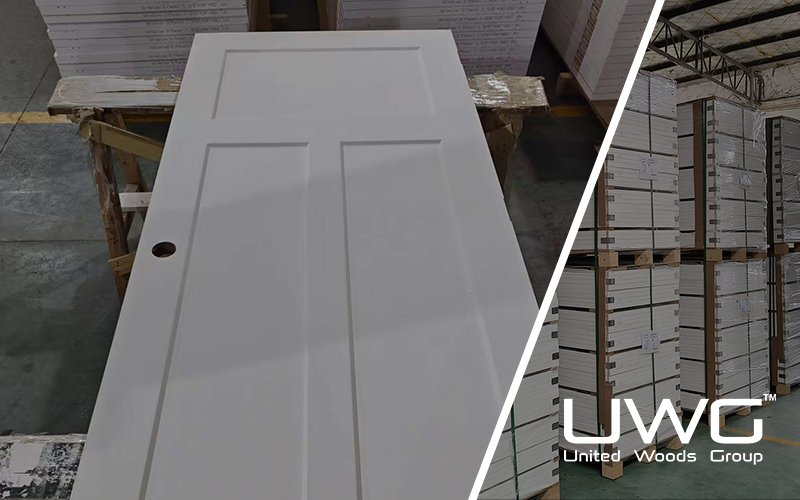
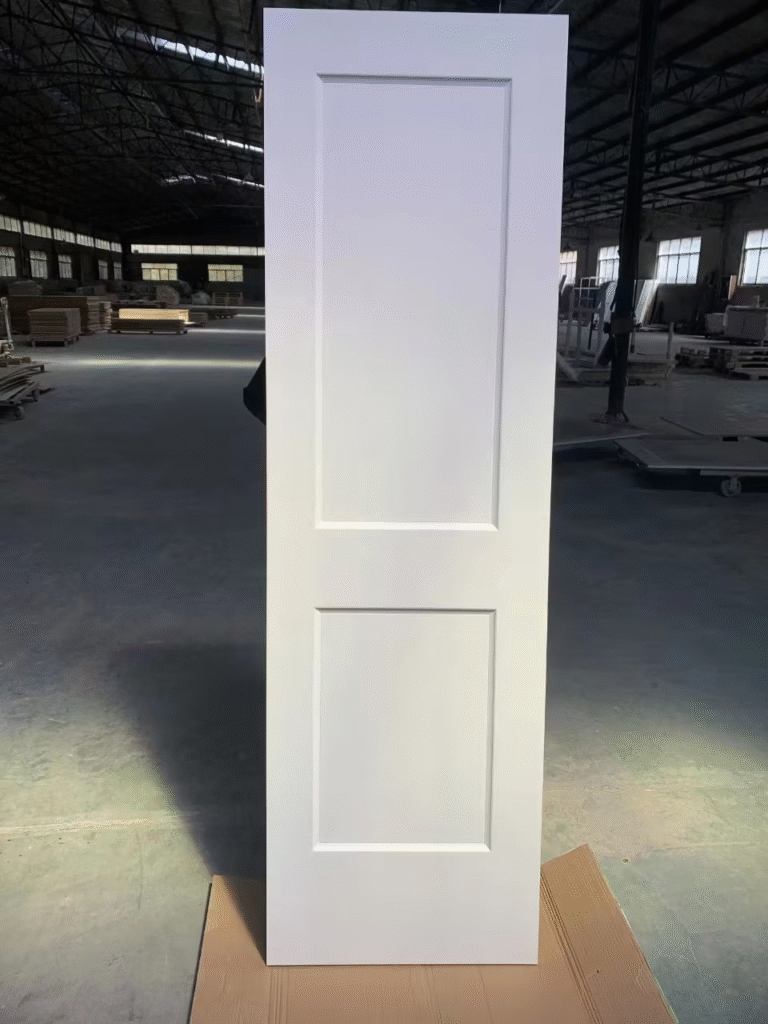
A Shaker style molded door is a factory-pressed interior door made from medium density fiberboard (MDF), molded to imitate the clean lines of a traditional Shaker door. Unlike the original five-piece wood construction, molded Shaker doors are one-piece skins formed under pressure. They offer a similar aesthetic at a lower price, but lack the depth, durability, and craftsmanship of true Shaker doors.
Shaker-style molded doors deliver the look without the premium cost — but not all builders know when and where to use them.
What is the difference between a shaker door and a molded door?
Shaker doors use five separate wood pieces — rails, stiles, and a recessed center panel — often made from hardwood or MDF. They offer visual depth and real joinery. Molded Shaker doors, on the other hand, are pressed from fiberboard sheets and simulate the Shaker look. They’re lighter, less expensive, and faster to install but don’t offer the same durability.
Molded versions are ideal for multi-family units, spec homes, and budget-conscious projects.
Are moulded doors any good?
Yes — molded doors are solid performers in the right context. They’re lighter than solid wood, easier to transport and hang, and resistant to warping when properly sealed. For interior use, especially in climate-controlled environments, they hold up well. They’re also fire-rated in many configurations and available with sound-dampening cores.
However, they’re not designed for heavy wear or frequent refinishing.
What does shaker style door mean?
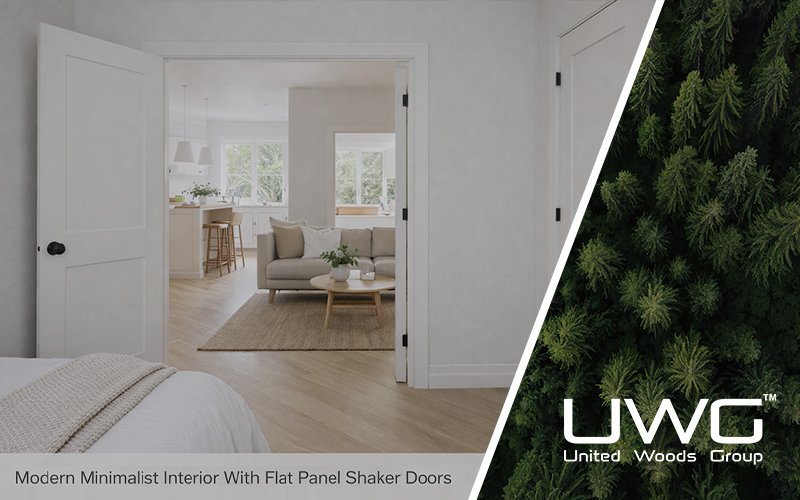
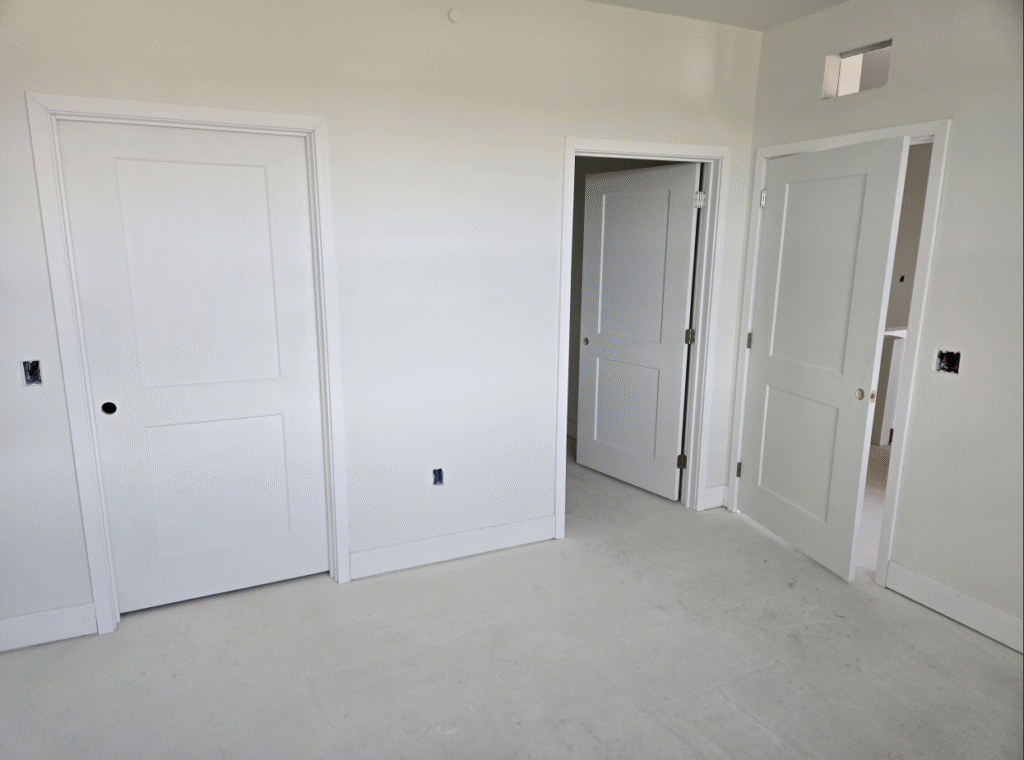
A Shaker style door features a flat center panel surrounded by simple square-edged framing — a timeless design rooted in 18th-century American Shaker craftsmanship. The focus is on simplicity, utility, and clean lines, making it perfect for both traditional and modern interiors.
This style works especially well for minimalist, transitional, and Scandinavian-inspired homes.
What are shaker doors made of?
Traditional Shaker doors are often made of solid wood (like maple, birch, or pine) or MDF with wood veneer. They’re assembled from separate parts, creating real depth and shadow lines. Molded versions, by contrast, are made from MDF skins molded to resemble that structure, typically placed over a hollow or solid core.
What is a shaker door with glass?
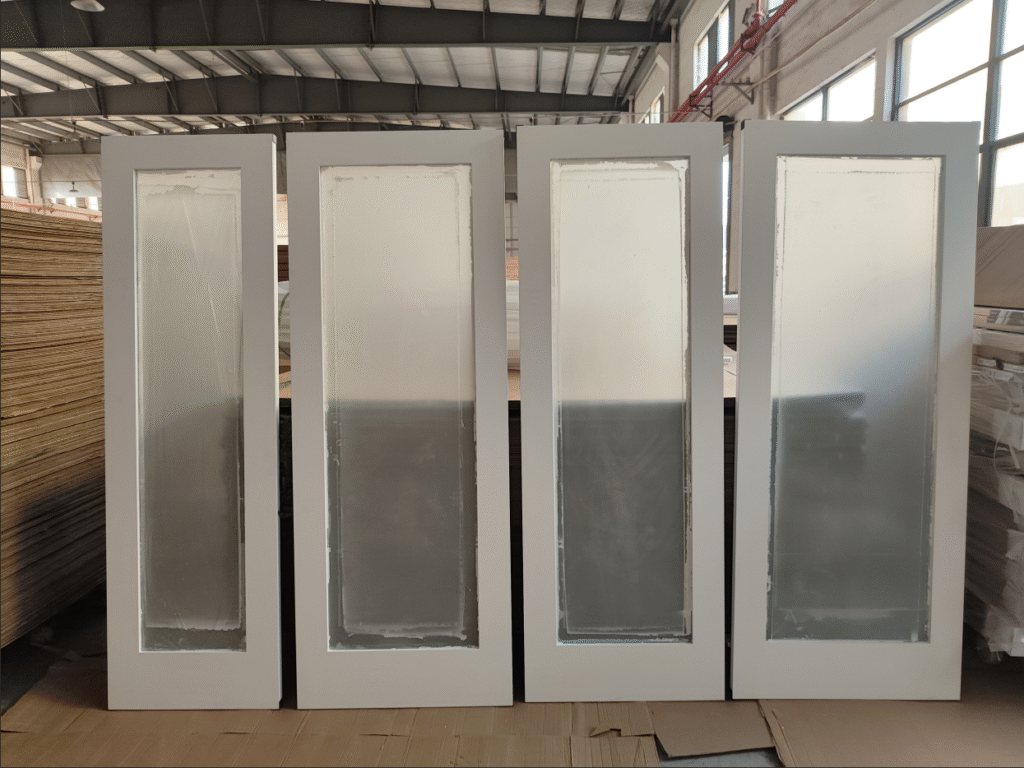
This is a hybrid design where the center panel is replaced with glass, usually frosted or clear tempered glass. It’s a popular choice for pantries, offices, or laundry rooms. You get the streamlined Shaker aesthetic with added light flow — without the cost of full custom joinery.
What is a shaker style molded door exterior vs. interior?
Most shaker-style molded doors are for interior use only, due to the nature of HDF skins and their sensitivity to moisture. For exterior use, you’d want a fiberglass or solid wood door designed to mimic Shaker styling — often with added weatherproofing, insulation, and a more durable finish.
What is a shaker style molded door cost?
Costs vary by region and supplier, but molded Shaker doors generally range from $50–$100 per door, depending on core type (hollow, solid, fire-rated). This makes them significantly more affordable than solid wood Shaker doors, which can cost $200–$500+.
For volume builders, this price difference adds up quickly.
Shaker door vs slab door: What’s the difference?
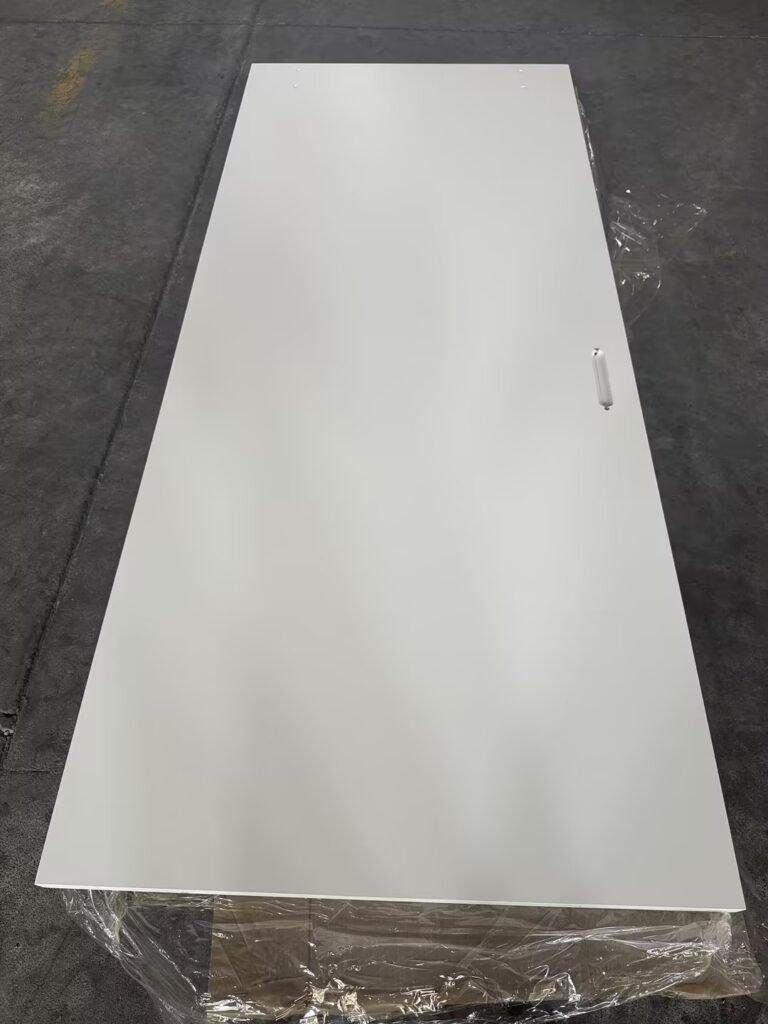
A slab door is flat — no paneling, no molding. It’s ultra-minimalist and modern. A Shaker door, by contrast, has a framed recessed center panel. Molded Shaker doors give you the best of both worlds: a clean, modern look with just enough design to stand out — but at slab-door pricing.
Summary
Shaker-style molded doors are a smart, scalable solution for builders who need style on a budget. When aesthetics matter but budgets are tight, molded Shaker doors strike the right balance between design, efficiency, and cost. Want a modern look with minimal install headaches? This might be your go-to door.
Articles that you may be interested in:
Shaker Style Home: Complete Guide to Matching Cabinets, Doors, and Trim
Cabinet Door Styles Shaker, Molded, Flat Panel, Glass Inserts