Interior doors may look similar at first glance, but their performance over time can vary significantly. Homeowners, builders, and buyers often encounter issues such as warping, surface damage, or hardware failure after only a few years of use—problems that usually stem from overlooked durability factors rather than design alone. To avoid these issues, it’s important to understand what truly makes an interior door durable, not just visually appealing on installation day.
A durable interior door is one that maintains its shape, structural strength, and smooth functionality through years of daily use. This durability depends on several interconnected elements, including core material selection, manufacturing quality, construction methods, hardware compatibility, and the door’s ability to withstand environmental and usage conditions such as humidity, temperature changes, and traffic levels.
Interior door durability is not defined by a single feature, but by how these factors work together. In the sections below, we’ll break down the key elements that determine whether an interior door performs reliably over the long term.
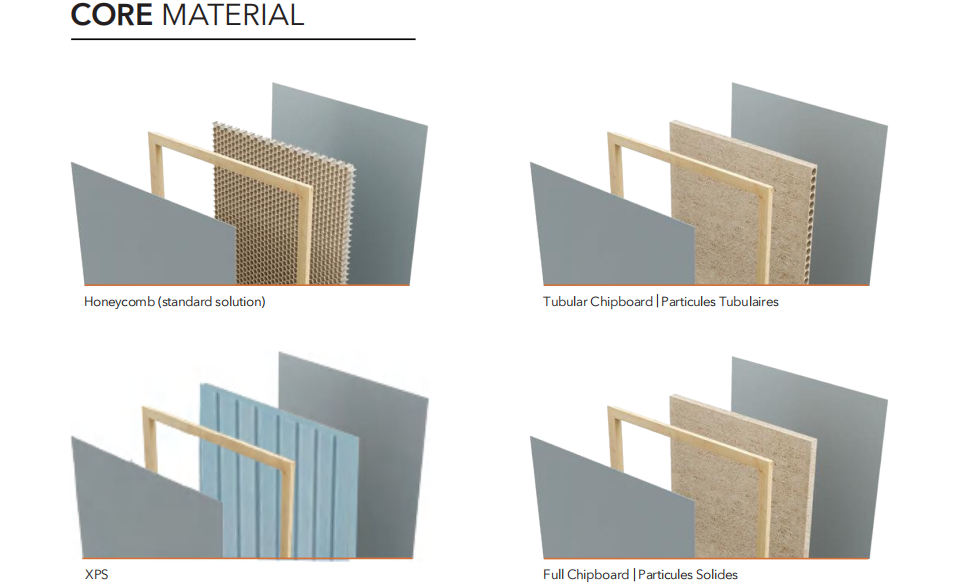
Core Material Quality
The door core is the foundation of interior door durability. While lightweight doors may appear similar at installation, the performance difference becomes clear over time—especially under daily use and environmental stress.
Solid core interior doors are widely specified for their durability, as they use dense materials such as engineered wood, composite wood, or reinforced MDF. These core types offer greater impact resistance, improved sound insulation, and stronger support for hinges and locksets. In contrast, hollow core doors rely on lightweight honeycomb structures, which are more susceptible to dents, moisture damage, and long-term structural failure.
Core material also plays a critical role in dimensional stability. High-quality composite and engineered cores are designed to resist warping, cracking, and movement caused by humidity or temperature changes. This makes solid core doors a more reliable choice for residential and multi-unit projects where long-term performance and reduced maintenance are priorities.
Door Core & Construction
Beyond core material, the structural design of a door plays a major role in long-term durability. A well-engineered interior door is built to distribute stress evenly and maintain structural integrity under repeated daily use.
High-quality doors rely on a stable internal frame (stiles and rails) paired with a properly supported core. This structural framework helps prevent sagging, twisting, and joint separation over time—especially in high-stress areas such as hinges and locksets. Poor structural design often leads to weak points where doors shift, hardware loosens, or alignment issues develop.
Well-designed door construction also enhances impact resistance and load distribution, allowing the door to maintain consistent performance without flexing or distortion. In short, durability at the structural level depends on how the door is engineered—not just what materials are used.
Manufacturing Process & Craftsmanship
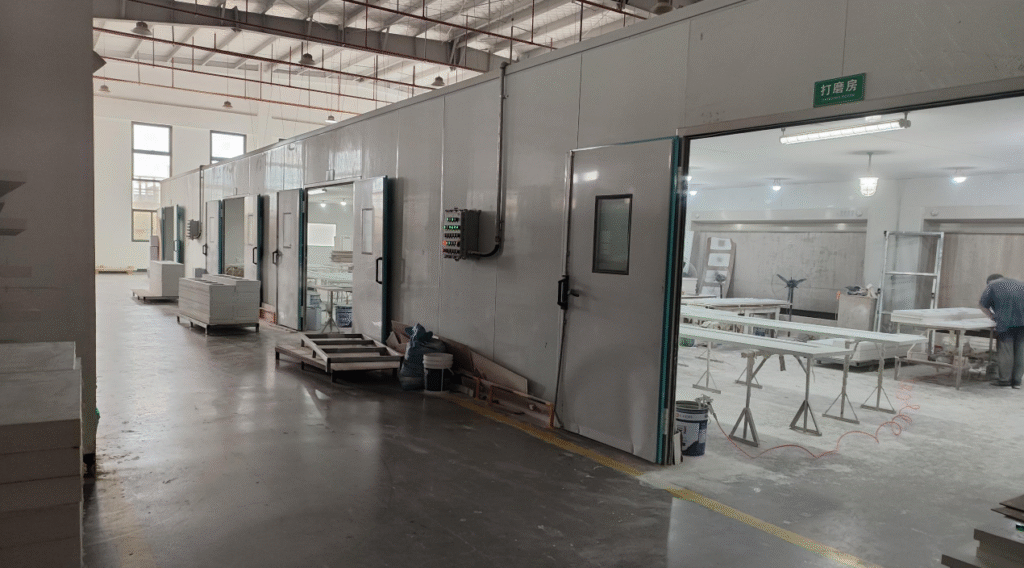
Even a well-designed door structure requires precise manufacturing to perform as intended. Manufacturing quality determines whether structural design and materials translate into consistent, long-term durability.
Quality production begins with controlled material preparation, including moisture regulation and precise cutting. Tight tolerances ensure uniformity across doors, which is critical for smooth installation and long-term stability. During assembly, consistent pressure and proven production methods ensure that components are securely integrated without internal stress or imbalance.
Craftsmanship is most evident in the finishing stages. Clean edges, accurate machining, reinforced lock areas, and precise hinge placement reduce stress concentrations that can cause premature wear. Poor workmanship—such as rushed assembly or misalignment—often results in doors that feel unstable or degrade quickly in real-world use.
Ultimately, durable interior doors are produced through repeatable manufacturing processes and disciplined craftsmanship, ensuring every door performs reliably—not just the first one off the line.
Hardware Compatibility
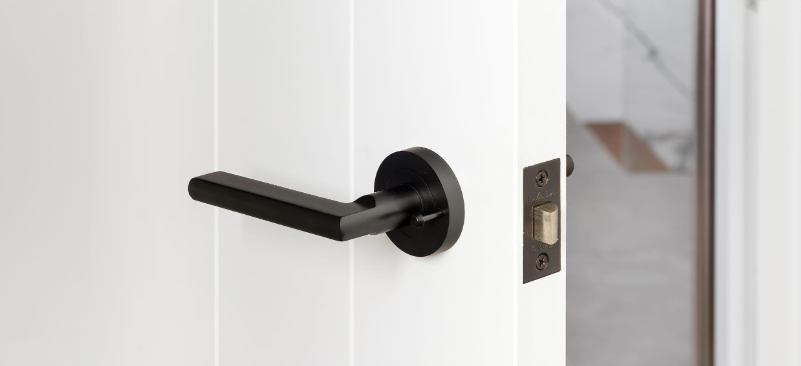
Hardware compatibility plays a key role in interior door durability. Hinges, locksets, and latches must be properly matched to the door’s weight, core density, and construction to ensure long-term performance.
Durable doors include reinforced hardware areas that securely hold hinges and locks, reducing the risk of sagging, loosening, or misalignment over time. Proper hardware selection and accurate installation help maintain smooth operation and prevent premature wear.
Environmental & Usage Factors
Interior door durability is also influenced by the environment and how the door is used. Changes in humidity and temperature can cause materials to expand or contract, especially in bathrooms, kitchens, or poorly ventilated spaces. Doors made with stable core materials and proper sealing perform better under these conditions.
Usage frequency matters as well. Doors in high-traffic areas—such as bedrooms, hallways, or multifamily units—require stronger cores and reinforced hardware zones to withstand repeated opening and closing. Selecting the right door construction for the specific environment and usage level helps ensure long-term performance and reduces maintenance over time.
How to Choose a Durable Interior Door (Buyer Checklist)
When selecting an interior door, I recommend focusing on these practical points:
- Choose solid core interior doors for strength and longevity
- Avoid hollow core door options in high-traffic applications
- Confirm the door core material and internal structure
- Ensure compatibility with locks, hinges, and hardware systems
- Match the door’s construction to its environment and usage level
This checklist helps homeowners, builders, and buyers reduce maintenance issues and extend the door’s service life.
Summary
Interior door durability is determined by what’s beneath the surface. High-quality core materials, sound construction, precise manufacturing, and proper hardware integration all contribute to long-term performance. Environmental conditions and usage levels further influence how well a door holds up over time.
Understanding these factors helps buyers, builders, and designers select interior doors that maintain their structure and function through years of daily use—reducing maintenance issues and unexpected replacement.
Articles that you may be interested in:
UV Resistance in Interior Door Finishes: Does It Matter Indoors?
Painted vs Stained Interior Doors: How to Choose the Right Finish