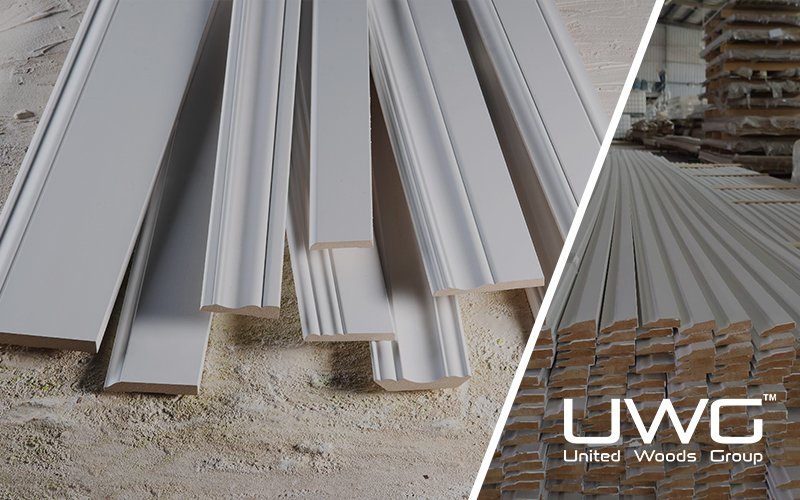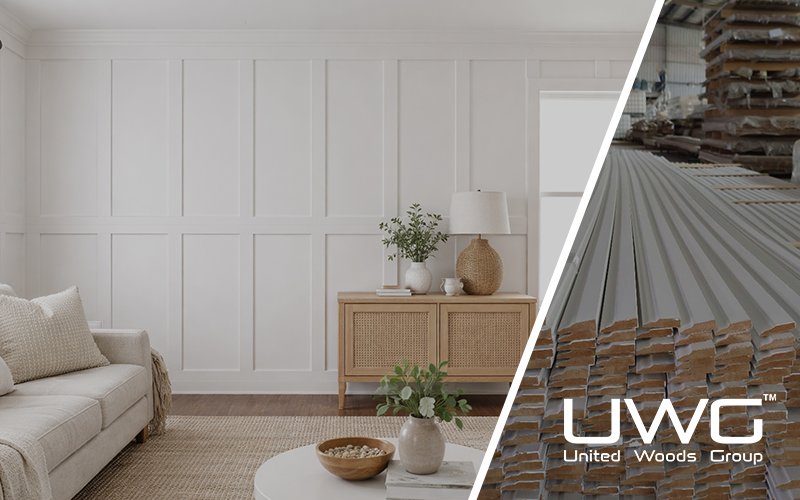
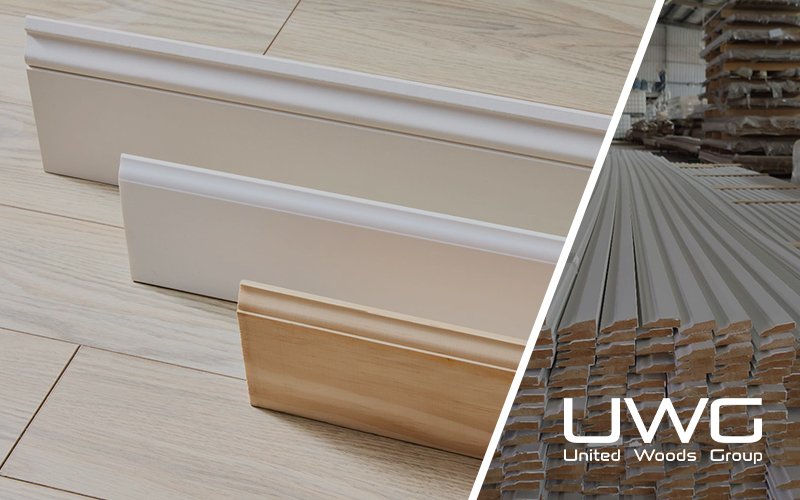
Crown molding is a timeless architectural feature that adds definition and value to any interior—but choosing the right size requires more than guesswork. The wrong proportion can disrupt visual balance: too narrow and it disappears; too wide and it overwhelms the space. So how do you choose the right crown molding for your ceiling height and design style?
For ceilings under 8 feet, use crown molding that projects partially onto the ceiling to conserve wall height. For standard 8-foot ceilings, 3″ to 5¾″ profiles offer balanced proportions. Ceilings from 9 to 10 feet suit larger moldings in the 4¼″ to 7″ range. For ceilings above 10 feet, consider profiles over 7″ to add architectural impact.
Now let’s explore sizing principles, visual coordination, material options, and installation tips to help you choose the perfect crown molding—functionally and aesthetically.
How big should my crown molding be?
There’s no single fixed size for crown molding—but there are industry guidelines based on ceiling height, room scale, and design intent.
1. Based on ceiling height:
A widely accepted rule among designers and millworkers is that crown molding should be approximately 6% to 7% of the wall height. This ensures proportionality between vertical wall space and horizontal trim detail.
- For example, with an 8-foot ceiling (96″), the crown should ideally be between 5½” and 6¾”.
- For a 9-foot ceiling (108″), consider 6½” to 7¾”.
However, this rule is flexible, especially if you’re working with minimalist profiles or complex multi-piece crown assemblies.
2. Based on baseboard size:
Another benchmark: your crown molding should be equal to or slightly taller than the baseboard in formal or traditional rooms. If your baseboards are 5¼”, your crown should be 5¼” or larger. This maintains visual balance between top and bottom trim.
3. Based on room size and purpose:
- Large rooms or open floor plans (living rooms, foyers) can handle more prominent moldings—6″ and up is common.
- Small rooms (hallways, powder rooms, closets) should use more restrained profiles like 3¼” or 4″ to avoid visual crowding.
Always consider ceiling finish and whether you’re painting crown and ceiling the same color. Light-colored, same-tone finishes can help large moldings appear less heavy.

What size molding should I use for each ceiling height?
Choosing crown molding by ceiling height is the most straightforward approach, especially for builders or developers standardizing trim packages across a project.
Here’s a general guideline used in both residential and commercial construction:
| Ceiling Height | Recommended Molding Size |
|---|---|
| Under 8 feet | 2½″ – 4″ (projected onto ceiling if possible) |
| 8 feet | 3″ – 5¾″ |
| 9–10 feet | 4¼″ – 7″ |
| Over 10 feet | 7″ and above (often 2-piece or stepped crowns) |
- For ceilings below 8′, projecting part of the molding onto the ceiling surface helps preserve wall height.
- For 10’+ ceilings, designers often use stacked moldings (e.g., crown + frieze board + picture rail) for added scale.
- In transitional or modern interiors, clean-line profiles (like square-edge or small cove) may be chosen even in tall rooms, keeping the width modest but the aesthetic sharp.
- When working in multi-unit developments, keeping sizes consistent helps with production, logistics, and installation training.
🛠️ Tip: Always test your profile choice onsite with cardboard templates or sample boards before final installation.
The goal is not just to match proportion, but also to enhance perceived room height without visually compressing the space. Oversized crown in a low-ceilinged room can make the ceiling feel lower, not grander.

How to balance crown molding with baseboards and casings
Crown molding never exists alone—it should work in harmony with your baseboards, door casings, and window trim. A mismatched trim package can throw off the entire visual balance of a room.
General rules of proportion:
- In formal or traditional spaces, crown molding is usually equal to or slightly larger than the baseboard height.
- In modern or minimalist designs, both crown and baseboard are often kept low-profile and similar in size for a clean, unified look.
For example, if you’re using 5¼” baseboards, crown sizes between 5¼” and 6¾” will typically look proportionate. Avoid combining an oversized crown (7″+) with small 3¼” baseboards unless you’re using other vertical elements to balance the room.
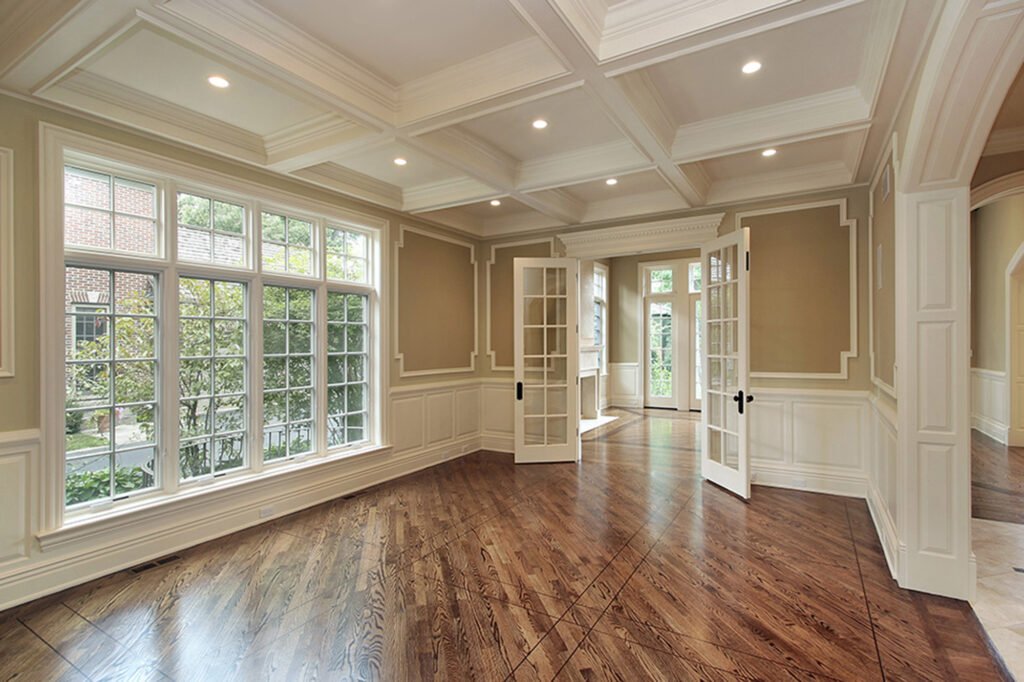
Crown molding profiles: Choosing between simple, stepped, and detailed designs
Crown molding size is important—but profile shape matters just as much. A well-chosen profile can reinforce your interior design style and elevate the perceived value of a space.
Common profile types:
- Single-piece crown (simple cove or curve): Clean and affordable, ideal for modern or rental units.
- Stepped or stacked profiles: Built from multiple pieces, offering depth and grandeur. Common in homes with ceilings over 10 feet.
- Dentil or egg-and-dart: Classical styles suited for luxury homes or restoration projects.
- Shaker-style flat profiles: Pair well with minimal or Scandinavian interiors. Often used in rooms with no crown at all, or replaced by square-edge blocks.
When in doubt, match the profile complexity with the formality of the room. Overly ornate profiles in casual spaces can feel out of place.

Materials and finishes: MDF, solid wood, or polyurethane?
Material choice impacts cost, durability, installation method, and even the visual outcome of your crown molding.
| Material | Pros | Cons |
|---|---|---|
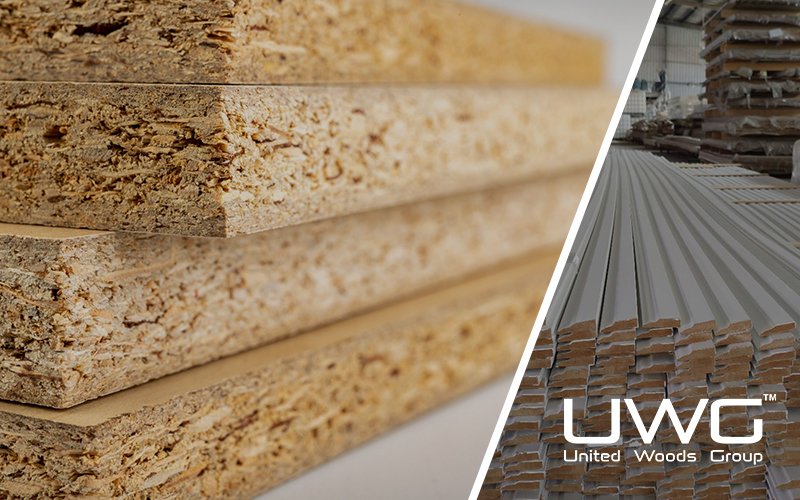
| MDF | Affordable, smooth finish, easy to paint | Not moisture-resistant, can swell if damaged |
| Solid wood | High-end look, stainable, very durable | More expensive, prone to warping |
| Polyurethane | Lightweight, great for curved walls or ceilings | Less rigid, not ideal for long straight runs |
For large-scale projects or container shipments, primed MDF is often the most cost-effective choice. But in high-end custom homes, finger-jointed pine or poplar may be preferred.
Installation tips: Avoiding gaps, warping, and shadow lines
Even the best crown molding will disappoint if poorly installed. Proper installation is key to delivering a high-end look.
Common mistakes to avoid:
- Gapping at corners: Use coping instead of mitering, especially in older homes with out-of-square walls.
- Shadow lines at ceiling: Always install crown with a consistent angle using a jig or corner blocks. Caulking helps, but don’t rely on it.
- Warped lengths: Acclimate molding on-site for 24–48 hours to minimize expansion or contraction.
- Over-nailing MDF: Use brad nails and construction adhesive to avoid surface cracks.
Summary
Selecting the right crown molding isn’t just about picking a number—it’s about aligning design intent, proportions, materials, and room function. Whether you’re outfitting a high-volume project or renovating a single room, getting the size and style right ensures a finished look that adds lasting value.
Start by using ceiling height as a baseline, then refine your choice based on trim coordination, material performance, and installation conditions. And remember: a good crown detail can elevate a simple space into something exceptional.
If you’re planning a bulk order, need custom profiles, or want to compare material options, reach out for technical specs or sample kits.