If you’re planning to install a pocket door, the hardware you choose can make or break the entire project. Whether it’s a residential bathroom or a high-traffic commercial space, poor hardware selection often leads to long-term issues—like misaligned tracks, jammed doors, or noisy sliding. I’ll walk you through exactly what to look for when choosing pocket door hardware so you get it right the first time.
When selecting pocket door hardware, it’s crucial to check the specified projection to ensure it clears any surrounding trim or casing. Pocket doors must slide fully into the wall cavity, so hardware that protrudes too much can catch on moldings or prevent smooth retraction. This is especially important for double-sided installations, where pulls or locks are installed on both faces of the door. Additionally, always confirm your door’s thickness—many mortise locks or privacy sets require at least 1 3/4″ to function correctly. Overlooking these details often leads to costly retrofits or doors that don’t operate properly.
Let’s go deeper—there’s more you need to know before making a final decision.
Common Questions About Pocket Door Hardware
What are common problems with pocket doors?
Pocket doors are sleek and functional—but they also come with unique challenges that can frustrate builders and homeowners alike. The most common problems include:
- Track misalignment – If the track isn’t installed perfectly level or square, the door will drift open or closed by itself.
- Dirty or damaged tracks – Over time, debris buildup or poor maintenance can cause the door to stick or grind.
- No guide channel installed – This small detail keeps the door stable when sliding. Without it, the door wobbles and feels flimsy.
- Poor-quality rollers – Cheap hardware often means noisy or jerky operation.
- Inadequate framing – Builders sometimes underestimate how much wall depth is needed. This results in pocket doors that don’t retract fully or can’t accommodate locking hardware.
If you want a pocket door to perform flawlessly for years, your hardware must match the door weight, usage type (residential or commercial), and environmental conditions.
What hardware do I need for a pocket door?
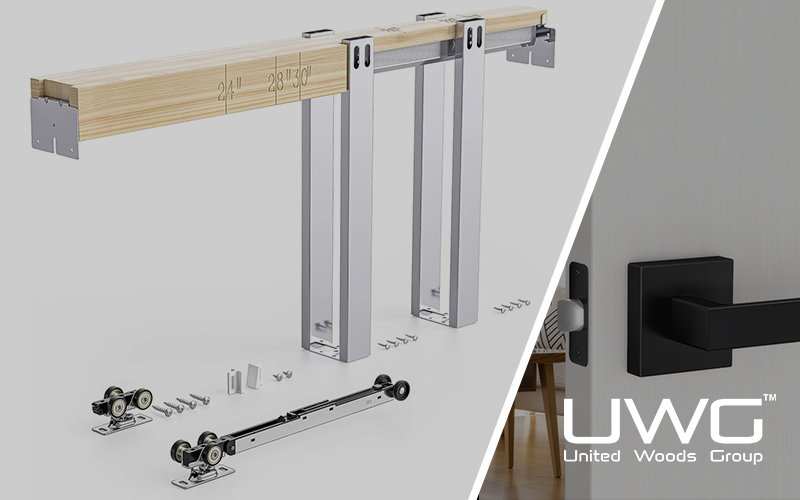
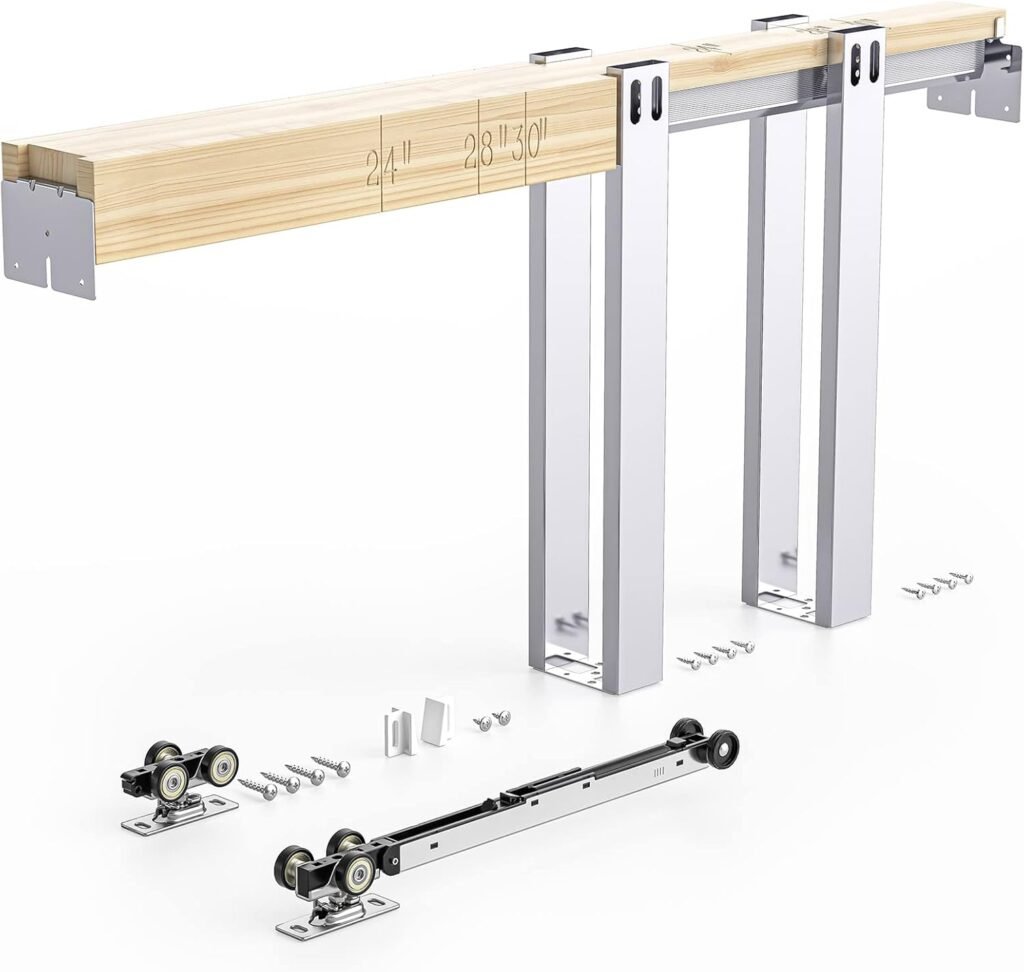
A complete pocket door system includes more than just a track and a handle. Here’s a full breakdown:
- Track system – Choose a heavy-duty track made of steel or aluminum. Some high-end systems use ball bearings for ultra-smooth sliding.
- Hangers and rollers – Look for nylon wheels for quiet operation. Make sure the rollers are rated above your door’s weight.
- Guide channel – A bottom track or floor guide helps stabilize the door as it moves in and out of the cavity.
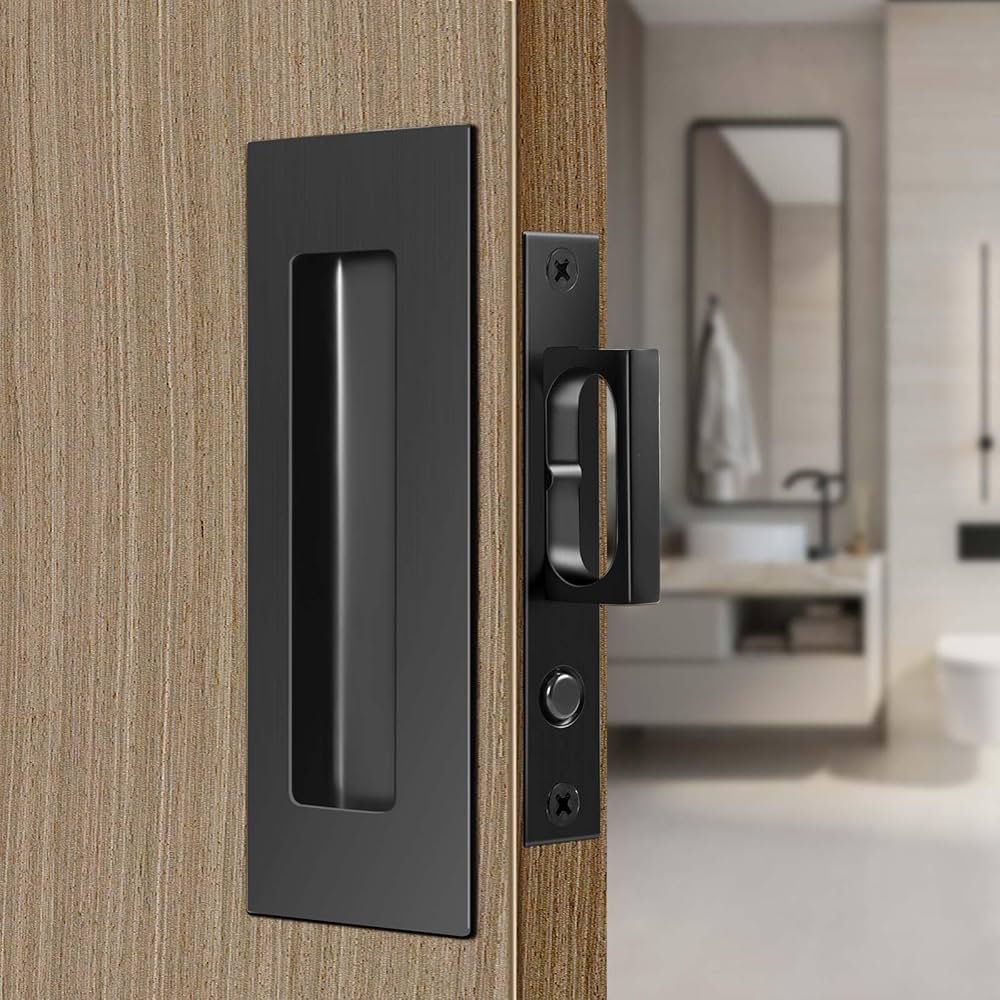
- Handles and pulls – Common options include flush pulls, edge pulls, or even mortised handles for added privacy.
- Latch or lock – If the door needs to lock (e.g., a bathroom or office), pick a privacy or keyed lock that fits your door’s thickness.
- Soft-close feature (optional) – Great for high-end homes or commercial offices to avoid slamming.
When retrofitting an old opening, make sure the existing framing can support these components without rework.
Do knobs or levers look better?
Technically, knobs and levers are rarely used on pocket doors due to how they interfere with the sliding mechanism. Instead, flush pulls and edge pulls are standard because they sit within the door and allow it to recess fully into the wall.
That said, if you’re working in a commercial or ADA-regulated space, lever-style flush pulls are ideal. They provide better grip and easier operation for people with limited mobility. For modern homes, square or circular flush pulls match contemporary aesthetics. In traditional interiors, you might lean toward decorative antique brass or oil-rubbed bronze pulls for a classic look.

Why Hardware Projection and Door Thickness Matter in Pocket Door Installations
One of the most overlooked—but critical—factors in pocket door hardware selection is projection clearance. This refers to how far the hardware (flush pull, lockset, latch, or handle) sticks out from the surface of the door.
In a traditional hinged door, slight protrusions aren’t a problem. But with pocket doors, that hardware must slide fully into a wall cavity—and if the projection is too large, it will bump into the trim molding or fail to recess completely.
Here’s why this matters:
- Trim or casing inside the opening may interfere with hardware that sticks out even slightly beyond the face of the door.
- For flush pulls and privacy locks, you want a hardware profile that’s as low-profile as possible—preferably mortised into the door.
- In double-sided installations, like ensuite bathrooms or meeting rooms, flush pulls or locks must be mounted on both sides of the door. This increases the total hardware thickness, making projection clearance even more important.
What to do:
- Measure the door thickness—standard pocket doors are often 1 3/8″ thick, but many privacy locks require 1 3/4″ or more to fit comfortably.
- Check the manufacturer’s specs for the projection measurement—if it’s more than a few millimeters, it’s probably not suitable for fully recessed installations.
- Test-fit hardware (if possible) before committing, especially if working with custom trim or narrow jambs.
- Avoid surface-mount locks unless you’re sure they can clear all trim and fully retract into the pocket.
Builder Tip:
If your client wants decorative pulls or high-end privacy locks on both sides of the door, consider using a thicker door slab (1 3/4″) and leave additional space in the rough framing to accommodate any projection without collision.
Core Modules: Key Criteria When Choosing Pocket Door Hardware
Pocket door hardware mortise vs surface-mount options
There are two major types of handle/latch setups:
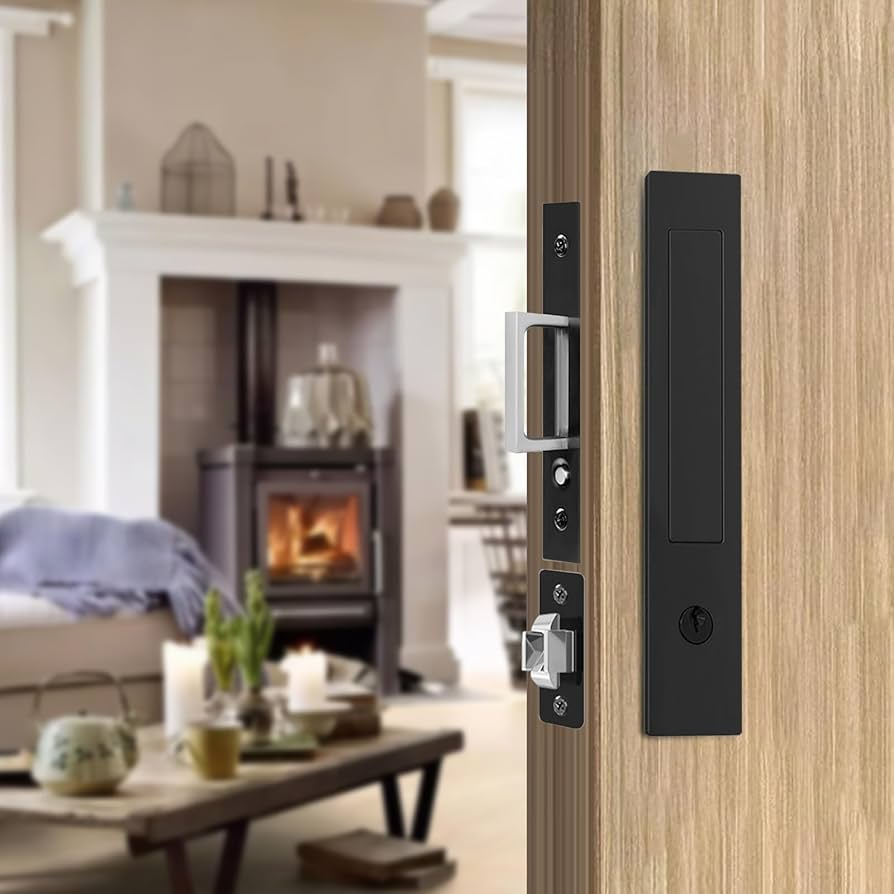
- Mortise hardware is embedded directly into the door. This looks cleaner and is common in modern builds. It often includes an integrated lock.
- Surface-mounted hardware is easier to install and often cheaper. However, it may protrude slightly, preventing the door from closing flush into the cavity.
We prefer mortise locks in new constructions because the door is usually custom or standard-thickness. For remodels, surface-mounted sets are practical—especially when you’re working with older doors or limited door thickness.
Privacy pocket door hardware explained
In private spaces—like bathrooms, bedrooms, and office meeting rooms—you’ll need to install lockable pocket door hardware. Here’s what to look for:
- Privacy mortise locks – These include a thumbturn and emergency release.
- Privacy flush pulls – Many come with a simple turn bolt or privacy latch built in.
- Edge pulls with lock – Offers locking ability without altering the door face.
Make sure to measure:
- Door thickness
- Backset requirements
- Clearance in the pocket cavity (some locks protrude slightly)
Also, consider pocket door hardware mortise locks for a more integrated finish.
ADA pocket door hardware: what’s required?
To be ADA compliant, pocket doors must have:
- A pull handle or latch that can be operated with one hand
- Hardware that doesn’t require tight grasping, pinching, or twisting
- Mounting height between 34” and 48” above the finished floor
- Clear floor space in front of the handle
For commercial buildings, choose ADA-rated flush pulls or lever-style recessed handles. Also, make sure the sliding mechanism is smooth enough for someone with limited mobility to operate without force.
Pocket door latch options: what’s best for your project?
Choosing the right latch depends on the space’s purpose. Common types include:
- Touch latches – Minimalist, clean look. Push to open/close. Great for closets or storage.
- Magnetic latches – Silent, ideal for bedrooms or nurseries.
- Hook latches – Often found in privacy locks; require mortising.
- Passage latches – No lock, just a basic pull.
Tip: Always check if the latch allows for double-sided pulls if you’re working on double pocket doors or where users may enter from either side.
Pocket door handle options
You have three main types to choose from:
- Flush pulls – Fit flat into the door surface. Minimalist and perfect for modern interiors.
- Edge pulls – Pop out from the door edge when needed. Helpful for sliding the door out of the cavity.
- Decorative recessed grips – Available in finishes like satin nickel, matte black, or brass. These work well in luxury homes or hospitality environments.
When selecting a handle, consider both aesthetic and function—especially if your client needs ADA compliance or commercial-grade durability.
Professional Advice for Builders
From the field, here are five essential tips when choosing and installing pocket door hardware:
- Use a full kit – Don’t mix-and-match components from different brands. They may not be compatible.
- Get the wall depth right – Most pocket door kits require 3-1/2” minimum framing depth (or more for thicker doors).
- Don’t skip the bottom guide – It’s not optional if you want the door to slide straight.
- Test everything before drywall – Once it’s covered, fixing track issues is expensive.
- Recommend soft-close – Clients love this feature, and it reduces wear over time.
The extra care you take during selection and prep will save you time and money on callbacks.
Summary
Choosing pocket door hardware isn’t just about style—it’s about long-term performance, function, and compatibility. From ADA requirements to privacy locks and flush pulls, every component matters. As a builder, your role is to guide your client toward the right balance of quality, aesthetics, and budget.
Articles that you may be interested in:
Pocket Doors Explained: What Is a Pocket Door?
What Is a Pocket Door? Key Features and Installation Tips for Contractors
The Complete Guide to Door Hardware Selection: Hinges, Handles, and Locks