In new construction projects, doors that rub or stick after installation quickly turn into warranty calls. What starts as a minor alignment issue can escalate into homeowner complaints, schedule delays, and liability disputes. As a North American door manufacturer, we see this repeatedly — and the causes are rarely random.
Doors rub or stick after installation primarily due to seasonal humidity changes, foundation settlement, improper door framing, subfloor movement, and installation tolerances that leave the door frame not plumb or the slab door out of square. In new construction, these issues are often linked to moisture imbalance, structural movement, or sequencing errors rather than manufacturing defects.
Understanding why door binding after installation occurs requires looking beyond the hinge and examining framing, moisture control, and structural conditions.
Why do newly installed doors stick?
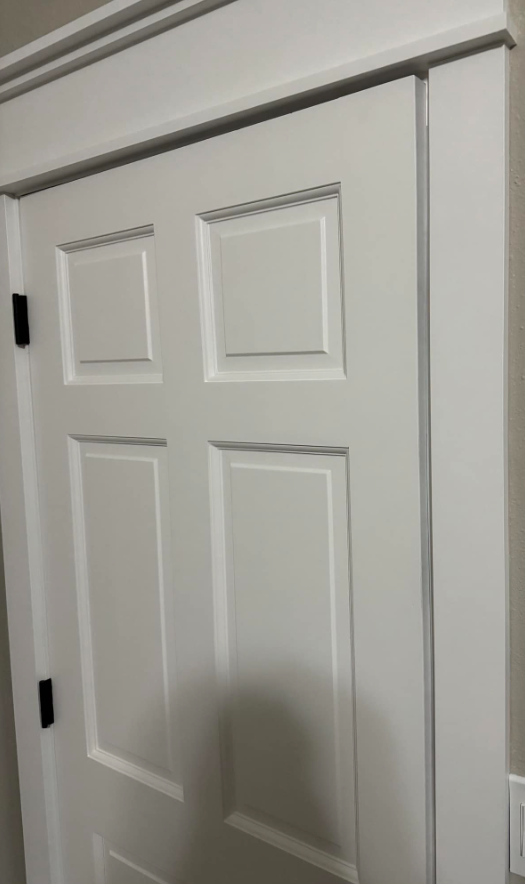
New construction door problems often appear within the first 30–90 days after handover. The door operated smoothly at installation but begins rubbing against the frame shortly after occupancy.
In most cases, the issue is environmental stabilization. Interior climate conditions change dramatically once HVAC systems are fully operational and occupants move in. Wood components respond to relative humidity shifts, particularly in regions with seasonal extremes.
When builders install doors before the building envelope is fully stabilized, even minor moisture fluctuations can trigger door rubbing against frame conditions.
Can foundation settlement cause doors to rub?
Yes — and this is more common than many expect.
Foundation settlement doors are a classic symptom of structural movement. Even minor differential settlement can slightly distort framed openings. When that happens, the door frame not plumb condition develops, and the slab becomes misaligned.
In tract developments or large-scale projects, soil compaction variability can amplify this risk. According to structural engineering data on foundation performance in North America –– minor settlement within tolerance can still impact interior door alignment.
A sticking door is not always a structural failure. But it is often an early movement indicator.
How does humidity affect interior doors?
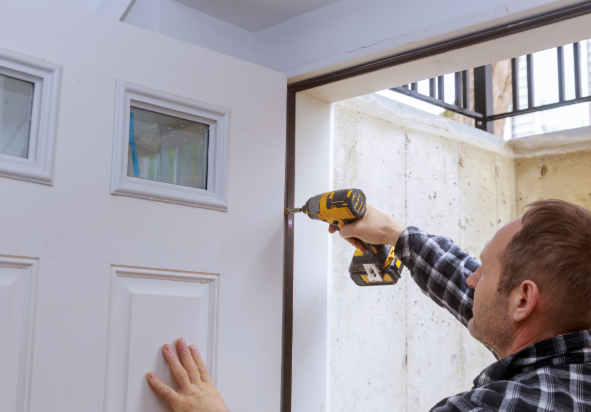
Humidity door expansion is one of the leading causes of door binding after installation.
Wood is hygroscopic. It absorbs and releases moisture depending on ambient conditions. In humid southern climates or coastal regions, interior doors can expand across the width. In colder northern climates, winter dryness can cause contraction followed by spring expansion.
If doors are installed before drywall compound fully cures or before interior humidity stabilizes, dimensional change is predictable.
Industry moisture content standards recommend controlled ranges prior to installation – [placeholder link].
From a manufacturing standpoint, we kiln-dry and condition our slabs. However, site storage conditions remain critical.
What causes a door to go out of square?
A door out of square rarely originates from the slab itself.
Most cases trace back to improper door framing, unlevel subfloors, or framing lumber movement. If bottom plates shrink or twist, the opening geometry shifts.
Common contributors:
- Wall framing not plumb
- Uneven subfloor settlement
- Fastening sequence errors
- Inconsistent shimming
Even a 1/8-inch deviation across the jamb can cause an interior door sticking top corner issue.
Construction tolerance standards – [placeholder link] – clearly define acceptable plumb and square variance. Exceeding them increases warranty risk.
Why does a door rub at the top corner?
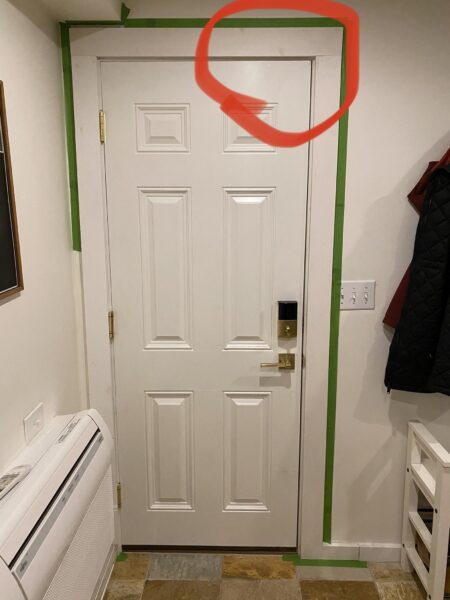
When a door rubs at the top latch-side corner, the system is typically racked.
This can result from:
- Hinge-side jamb movement
- Header deflection
- Subfloor compression
- Improper hinge screw anchoring
Builders often assume hinge failure. In reality, the geometry has shifted.
Addressing only hardware rarely solves recurring door rubbing against frame problems.
How do you prevent door binding after installation?
Prevention begins with sequencing and environmental control.
Best practices we recommend to builders:
- Install doors after HVAC startup and moisture stabilization.
- Verify door frame not plumb conditions before casing.
- Confirm subfloor flatness tolerances.
- Store doors in conditioned space.
- Avoid installing during extreme humidity swings.
Most new construction door problems stem from timing, not product quality.
Proactive framing inspections dramatically reduce builder warranty door issues.
Are sticking doors a structural warning sign?
Sometimes — but not always.
Foundation settlement doors can indicate structural shift. However, isolated interior sticking without cracking or drywall stress often points to environmental causes.
Builders should evaluate:
- Multiple doors affected?
- Diagonal drywall cracking present?
- Measurable floor deflection?
A systematic inspection protocol prevents unnecessary blame shifting between trades.
Who is responsible under builder warranty?
This is where many disputes arise.
If the slab remains dimensionally stable within manufacturing tolerance, but the opening has shifted due to framing movement, responsibility typically falls outside the door supplier’s scope.
Clear documentation of:
- Moisture content at delivery
- Installation sequencing
- Framing tolerance verification
helps protect both builders and manufacturers.
As a door manufacturer serving North America, we encourage collaborative pre-installation checklists to reduce liability exposure on both sides.
Summary
Doors that rub or stick after installation are rarely random defects. They are usually the result of moisture imbalance, structural movement, or installation timing. Builders who control humidity, framing tolerances, and sequencing dramatically reduce warranty exposure and protect long-term performance.
Articles that you may be interested in:
How Do Wall Thickness Variations Affect Door Installation for Builders?