Interior door issues are a common source of callbacks for residential builders. Doors that once closed smoothly may begin sticking, shrinking, or warping after only one season. These problems are often blamed on installation errors, yet climate-driven moisture movement is usually the real cause. Understanding how molded and Shaker interior doors react to different humidity levels is essential for preventing costly warranty issues—but why do these doors behave so differently in dry versus humid climates?
Understanding the interaction between climate, material composition, and indoor humidity control helps builders minimize installation problems and improve long-term door stability.
1. How Climate Affects Interior Door Materials
Most interior doors used in residential construction are made from engineered wood products. These materials—including pine frames, MDF skins, and honeycomb cores—are hygroscopic. This means they naturally absorb and release moisture depending on the surrounding environment.
When indoor humidity rises, wood fibers absorb moisture and expand. When humidity drops, those fibers release moisture and shrink. According to research summarized by Building Science Corporation, dimensional movement in wood products is directly tied to changes in relative humidity (RH) and temperature.
Even small humidity changes can produce noticeable movement:
- Increased humidity → material expansion
- Decreased humidity → material shrinkage
- Uneven moisture absorption → warping or bowing
Because molded and Shaker doors combine multiple materials—each reacting differently to humidity—the overall structure of the door can become stressed when environmental conditions change.
For builders, the result is often visible as interior door warping, sticking, or joint separation months after installation.
2. Typical Interior Door Construction in Modern Residential Projects
To understand these climate-related issues, it helps to examine how most interior doors are constructed today.
Molded Interior Doors
Molded doors are widely used in production housing because they are affordable, lightweight, and easy to paint.
Typical construction includes:
- Pine perimeter frame
- MDF molded skins
- Honeycomb paper core or solid engineered core
The MDF skins provide a smooth paintable surface while the honeycomb core reduces weight and cost.
However, MDF surfaces can react strongly to moisture changes if edges or surfaces are not properly sealed.
Shaker Interior Doors
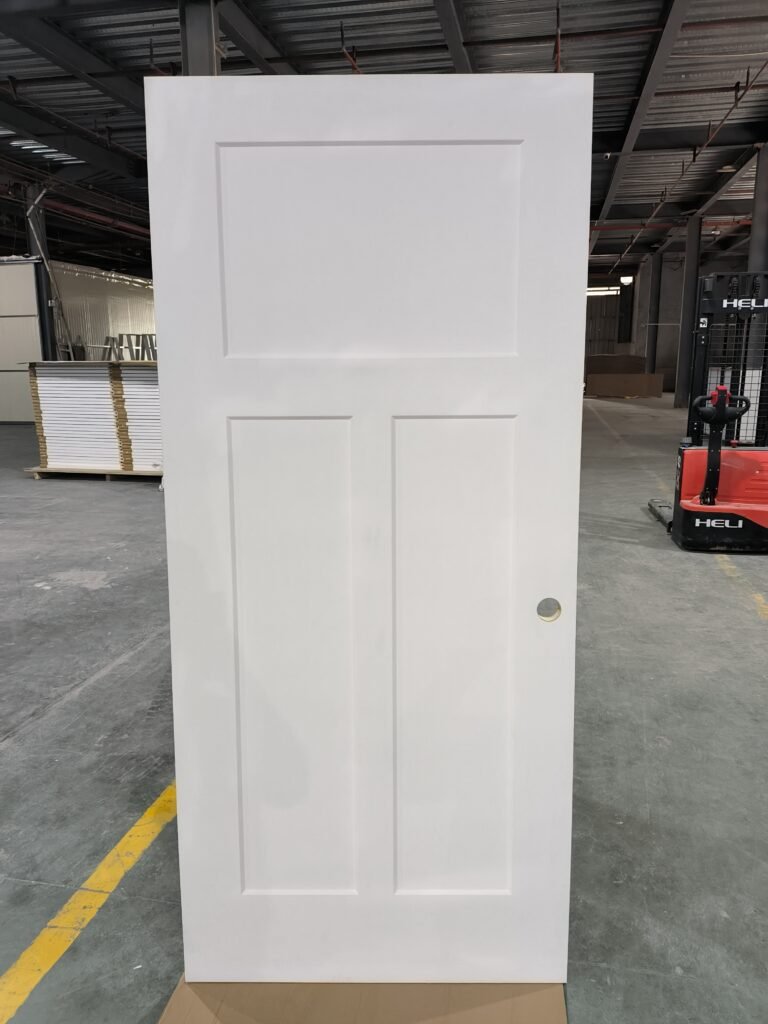
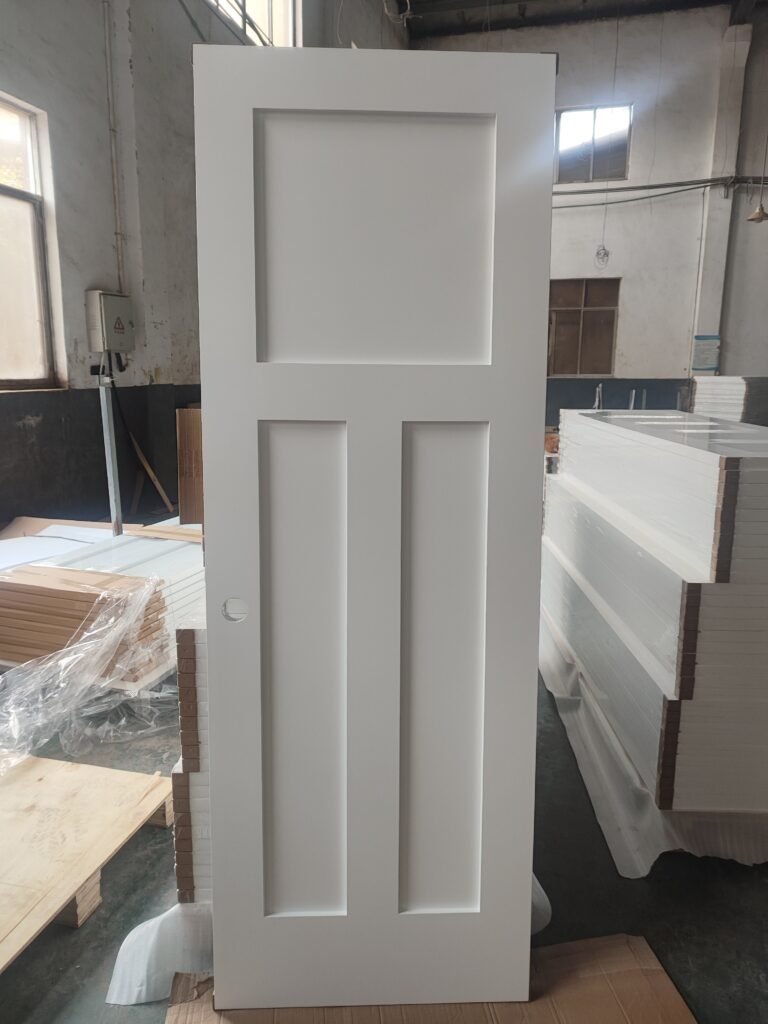
Shaker-style interior doors use a slightly different construction but rely on similar materials.
Typical components include:
- Pine stiles and rails
- MDF center panels
- Engineered core or hollow honeycomb core
Because Shaker doors include separate panel components, they may experience panel shrinkage or expansion when environmental conditions fluctuate.
For builders working across multiple climate zones in the United States, understanding how these door systems react to humidity is critical.
3. Common Interior Door Problems in Dry Climates
Dry climates are common in parts of the United States such as:
- Arizona
- Nevada
- Colorado
- New Mexico
These regions often experience indoor humidity levels below 30% RH, especially during winter heating seasons.
According to the National Association of Home Builders (NAHB), low humidity can cause wood components to lose moisture rapidly, leading to dimensional shrinkage.
Builders frequently encounter the following issues:
3.1 Panel Shrinkage
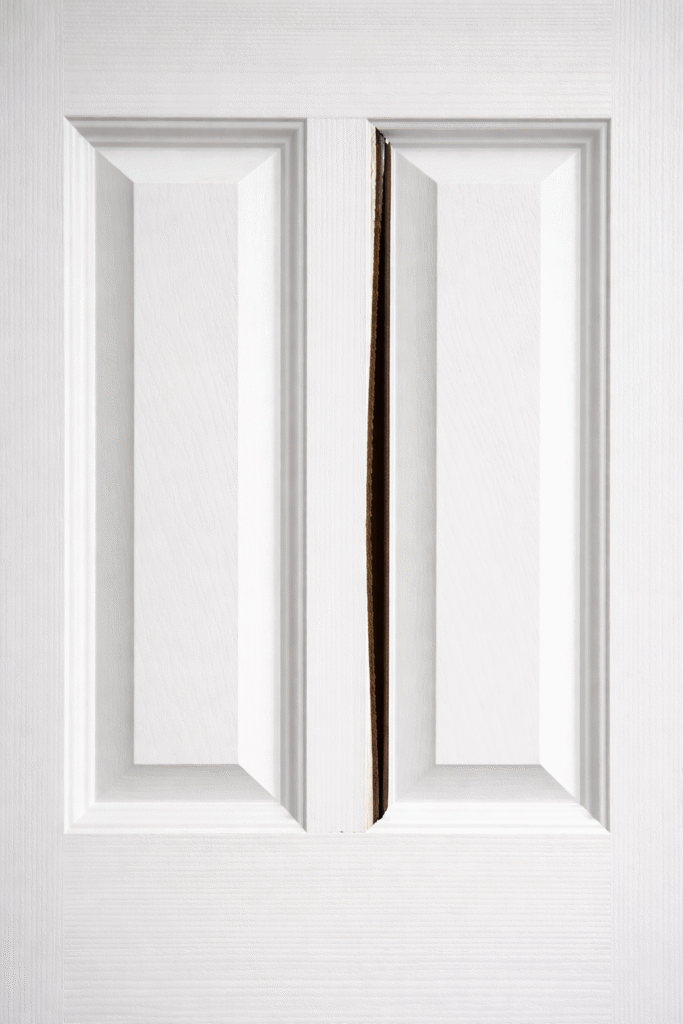
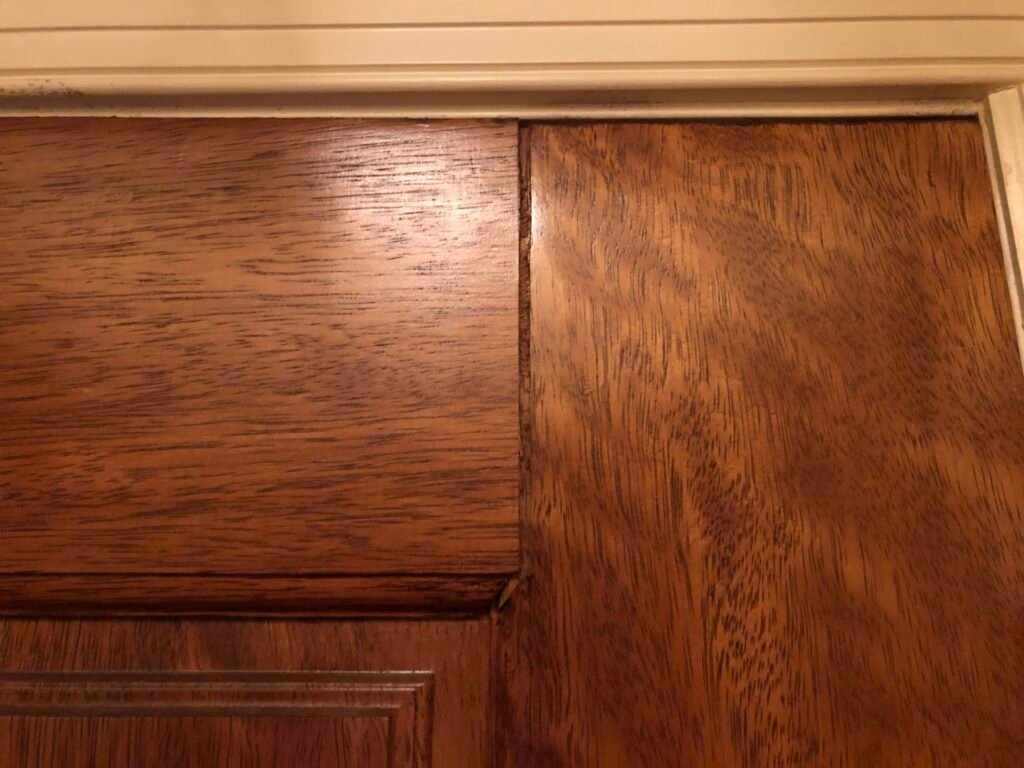
Low humidity causes MDF panels or wood components to contract. This can create visible gaps at panel edges or joints.
3.2. Joint Separation
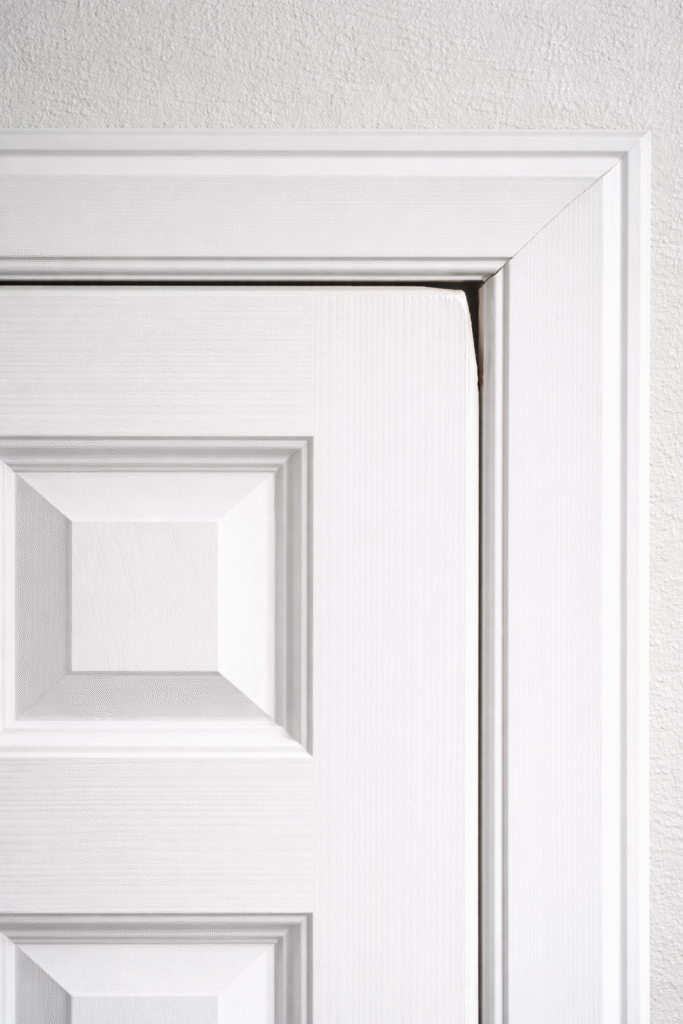
As pine frames shrink, connections between stiles and rails may open slightly. Even small gaps can become visible after painting.
3.3 Loose Door Panels
In Shaker doors, the center panel may shrink enough to create rattling inside the frame.
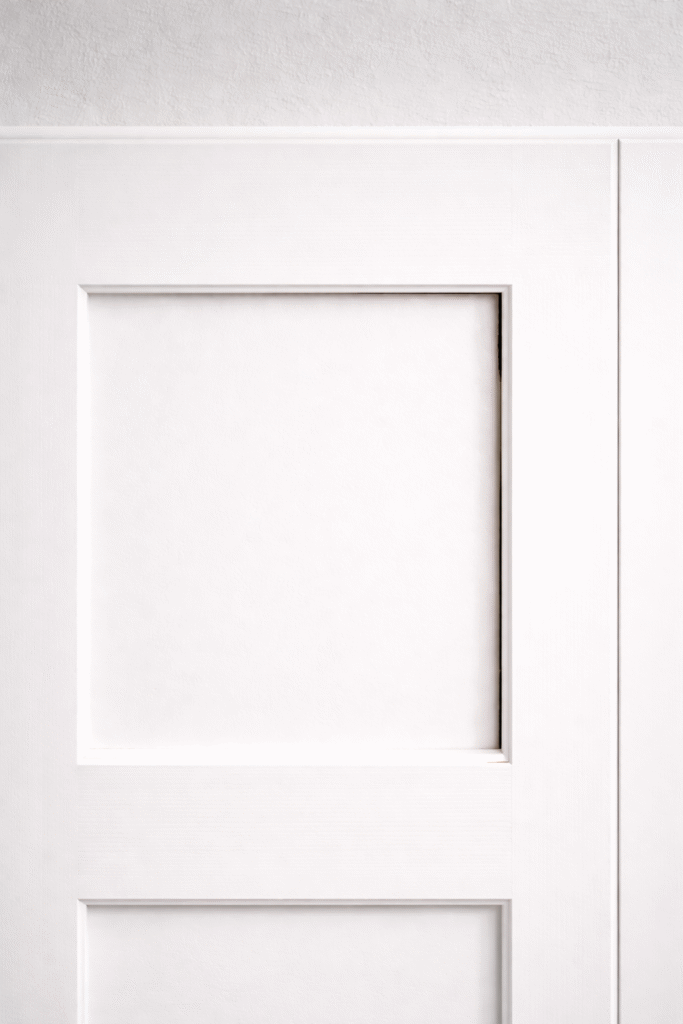
3.4. Finish Cracking
Paint finishes applied before full acclimation may crack when the door shrinks.
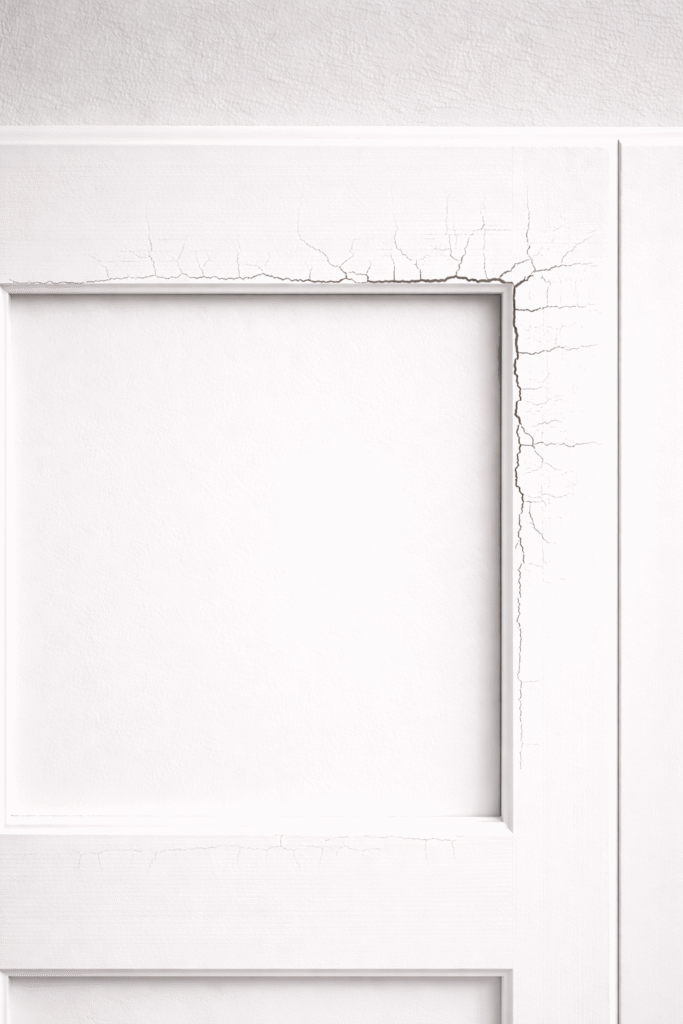
These issues often appear several months after installation, especially in newly constructed homes where HVAC systems rapidly dry the indoor environment.
4. Common Interior Door Problems in Humid Climates
Humid climates create a different set of challenges. Regions with high humidity include:
- Florida
- Louisiana
- Georgia
- Gulf Coast areas
Indoor humidity in these areas can reach 60–80% RH if not controlled by HVAC systems.
Higher moisture levels cause wood-based materials to absorb water vapor and expand.
Typical Problems in Humid Regions
4.1. Door Swelling
Moisture absorption causes door edges to expand slightly, which can lead to tight clearances within the frame.
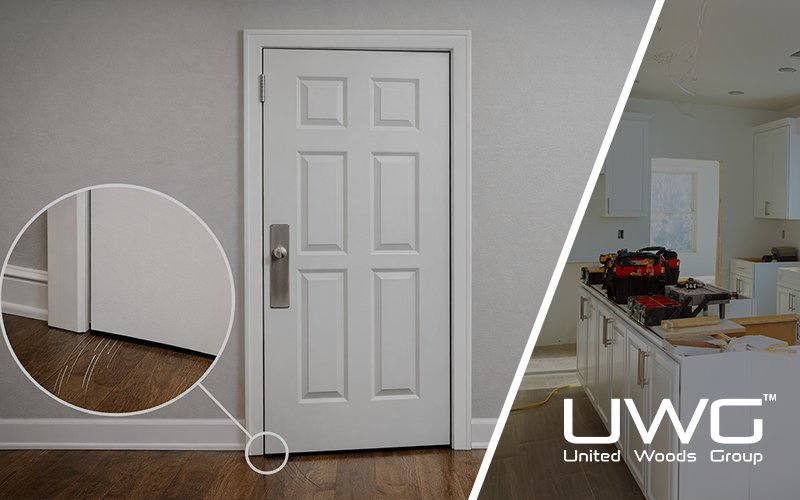
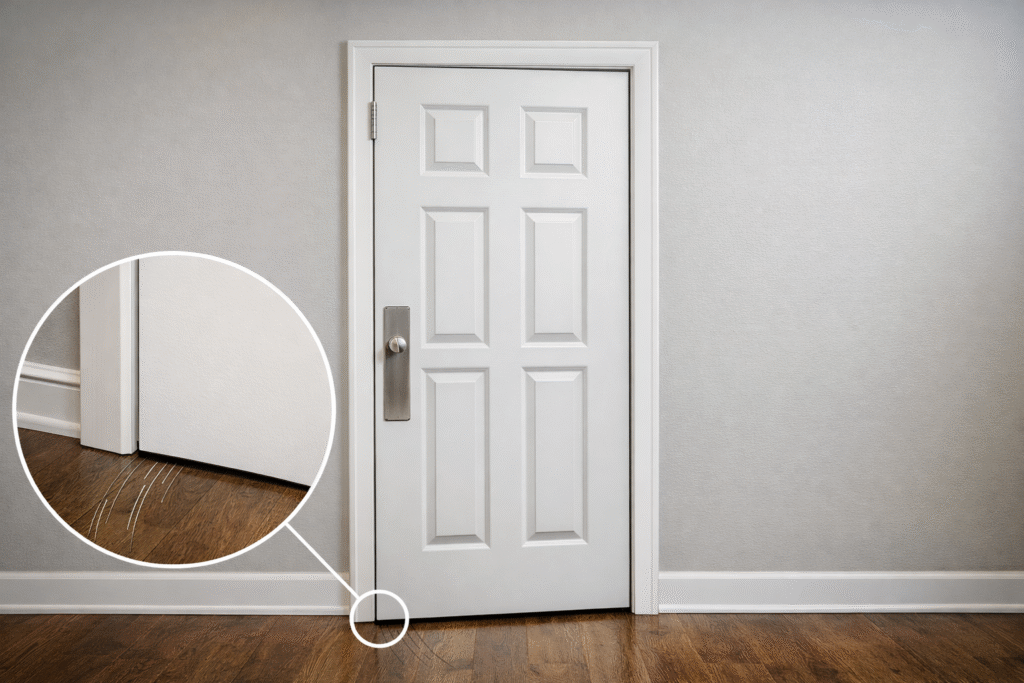
4.2. Doors Sticking in the Frame
Swollen edges often cause doors to rub against the jamb or flooring.
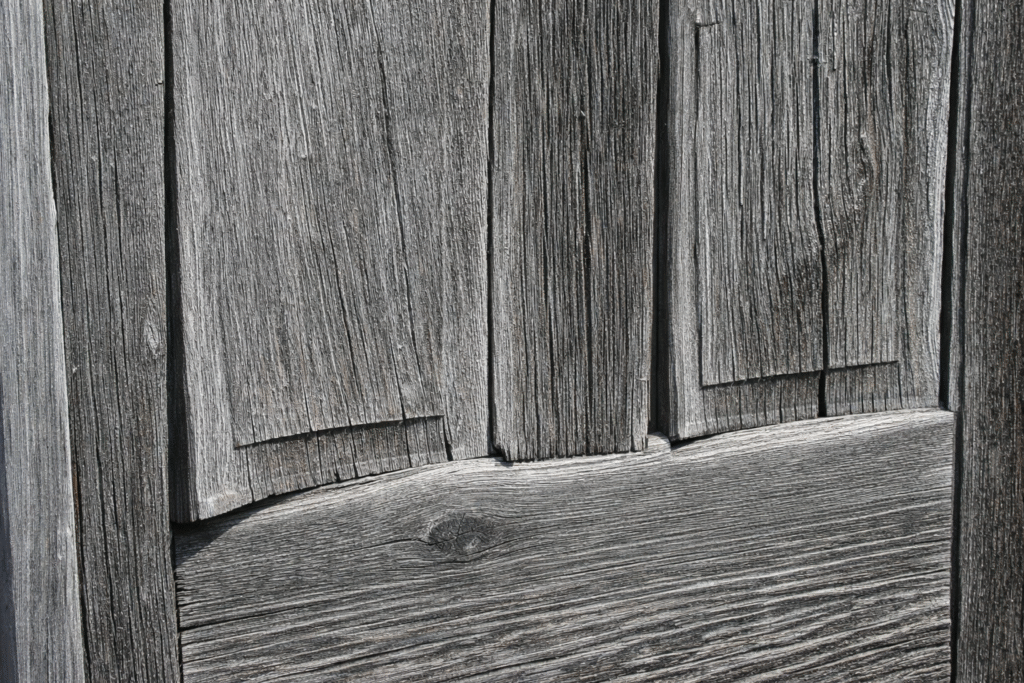
4.3. Warping or Bowing
Uneven moisture exposure across the door surface can cause one side to expand more than the other, producing a slight bow.
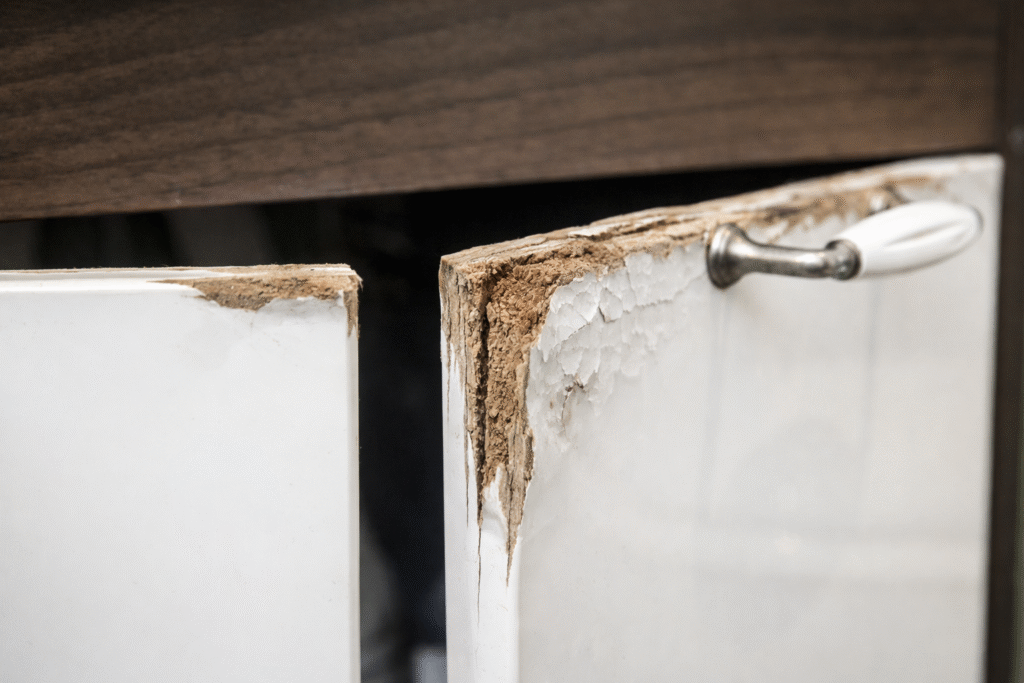
4.4 Surface Finish Damage
Excess moisture can weaken paint adhesion or cause small surface irregularities in MDF skins.
According to ASHRAE indoor environmental recommendations, maintaining interior humidity between 30% and 50% RH helps minimize these problems and stabilize building materials.
5. Seasonal Door Movement vs Structural Failure: How Builders Can Tell the Difference
Not every interior door problem indicates a defective product. Many issues are the result of normal seasonal movement caused by humidity changes.
5.1 Seasonal Movement: A Normal Material Response
Seasonal movement occurs because wood-based materials naturally expand and contract with changes in humidity.
Typical characteristics include:
- Minor seasonal sticking
- Small panel gaps in dry seasons
- Slight expansion during humid months
- Movement that reverses when humidity stabilizes
In most cases, these changes are considered normal performance rather than a manufacturing defect.
5.2 Structural Door Failure
Structural failure occurs when the internal components of the door lose their integrity. Unlike seasonal movement, these issues do not improve when environmental conditions change.
Examples include:
- permanent door warp
- delamination of MDF skins
- broken frame joints
- internal core collapse
Door manufacturers such as JELD-WEN and Masonite typically define acceptable tolerances for door warp and twist.
5.3Builder Diagnostic Guide
| Condition | Seasonal Movement | Structural Failure |
| Appears only during certain seasons | Yes | No |
| Improves when humidity stabilizes | Yes | No |
| Warp less than ~1/4 inch | Usually acceptable | May still be acceptable |
| Warp increases over time | No | Yes |
| Internal structure separating | No | Yes |
| Requires door replacement | Rarely | Often |
6. Comparison of Door Performance Across Climate Conditions
The table below summarizes how interior doors behave under different climate conditions.
| Climate Condition | Typical Indoor RH | Common Door Problems | Materials Most Affected | Builder Risk |
| Dry Climate (Arizona, Nevada) | 20–30% | Panel shrinkage, joint gaps, loose panels | Pine frames, MDF skins | Cosmetic defects and homeowner complaints |
| Humid Climate (Florida, Georgia) | 60–80% | Door swelling, sticking, minor warping | MDF skins, door edges | Operational issues and adjustment service calls |
| Controlled Indoor Environment | 30–50% | Minimal dimensional change | All materials stable | Lowest warranty risk |
This comparison highlights an important point: many interior door problems are not manufacturing defects but environmental reactions.
7. Why MDF and Honeycomb Core Doors React Differently
Both molded and Shaker doors rely on engineered materials that respond differently to humidity changes.
7.1MDF Door Skins
MDF (Medium Density Fiberboard) is widely used because it provides:
- Smooth paintable surfaces
- Consistent density
- Reduced grain telegraphing
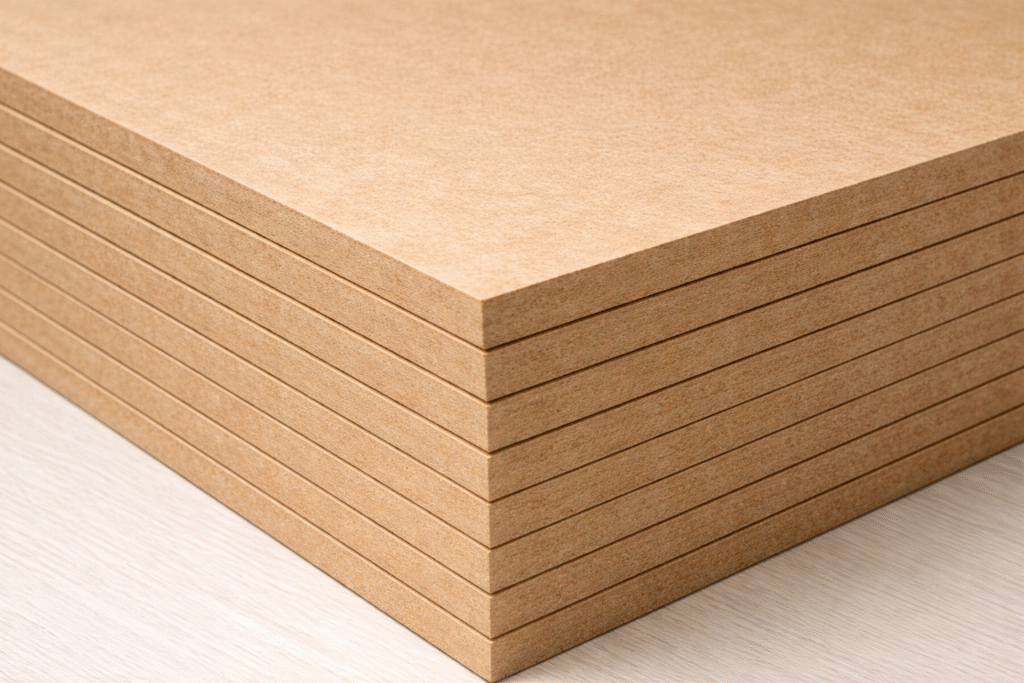
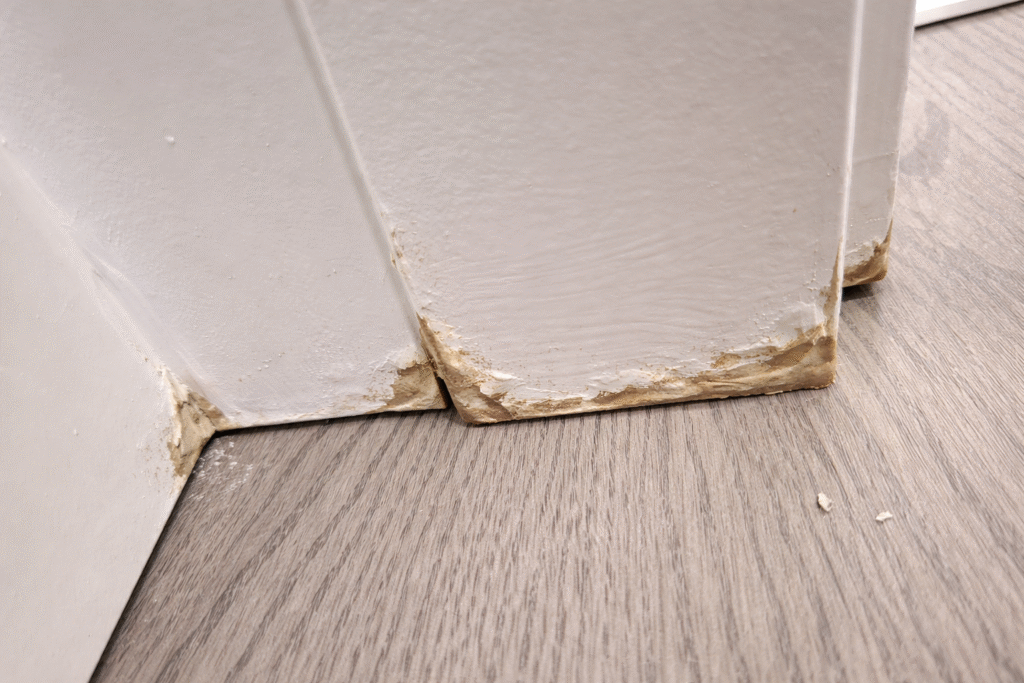
However, MDF fibers can absorb moisture at exposed edges. When humidity increases, the material may expand slightly, especially if surfaces are not fully sealed.
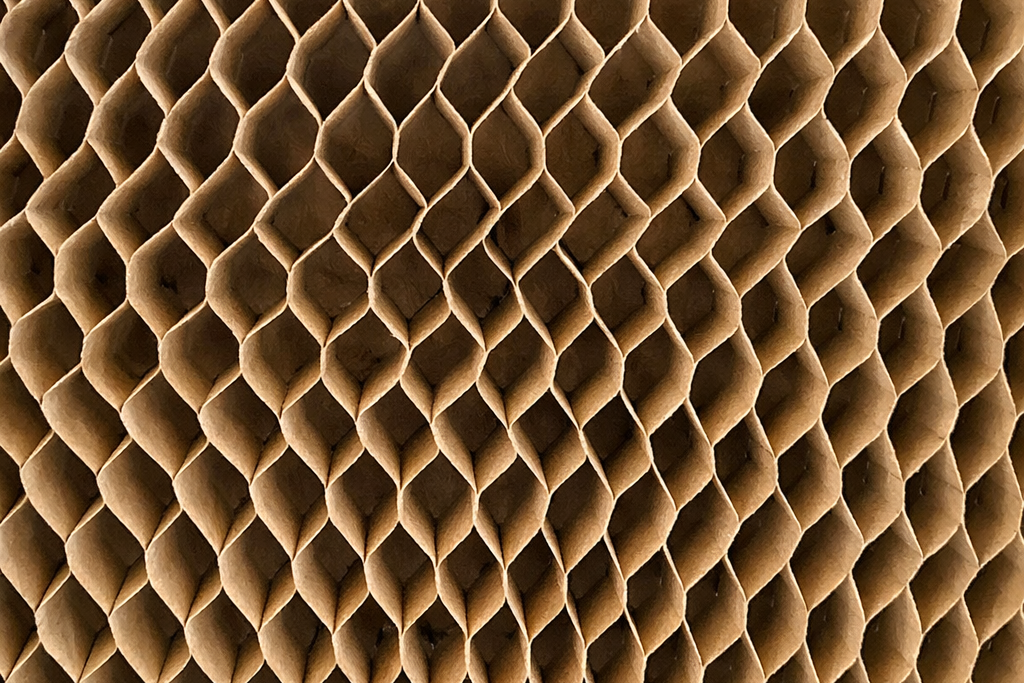
7.2Honeycomb Core Structures
Honeycomb paper cores are designed to reduce weight and manufacturing cost. They provide basic structural support but contain mostly air space.
Advantages include:
- Lightweight construction
- Material efficiency
- Lower cost
Limitations include:
- Lower rigidity than solid cores
- Greater susceptibility to movement if the outer skins expand or contract
For builders, this means the outer skin and frame materials play the largest role in climate-related door movement.
8. Builder Best Practices to Prevent Interior Door Problems
While climate cannot be controlled, builders can significantly reduce door performance issues through proper handling and installation practices.
8.1 Proper Storage Before Installation
Interior doors should always be stored in conditioned spaces, not in garages or open job sites.
Exposure to uncontrolled humidity can cause doors to acclimate improperly before installation.
8.2 Allow Doors to Acclimate
Doors should acclimate to indoor conditions for several days before installation, especially in extreme climates.
8.3 Seal All Door Surfaces
Professional door manufacturers recommend sealing:
- front surface
- back surface
- top edge
- bottom edge
Proper finishing helps slow moisture exchange.
8.4 Maintain Indoor Humidity
Builders should ensure HVAC systems maintain indoor humidity levels close to 30–50% RH, the range recommended by ASHRAE for occupant comfort and building material stability.
8.5 Select Doors Appropriate for the Environment
For humid climates, builders may prefer:
- engineered core doors
- moisture-resistant MDF skins
- factory-sealed edges
In dry climates, dimensional stability and proper acclimation become the primary focus.
9. Why Indoor Humidity Control Is Critical for Door Performance
Many homeowners assume interior door problems are manufacturing defects. In reality, most issues result from indoor environmental conditions.
HVAC systems, ventilation, and insulation all influence indoor humidity levels. Poor humidity control can affect not only doors but also:
- flooring
- cabinetry
- trim
- furniture
Building science experts consistently emphasize that maintaining stable indoor humidity improves the performance of all wood-based building components.
For builders, educating homeowners about humidity control can help prevent unnecessary warranty claims and service calls.
Frequently Asked Questions About Interior Door Climate Failures
Q: How does climate affect interior door materials?
A: Most interior doors use engineered wood products like MDF and pine, which are hygroscopic. They absorb moisture and expand in high humidity, and release moisture and shrink in dry climates, leading to potential warping, swelling, or joint separation.
Q: Why do interior doors fail in dry climates?
A: In dry climates with low indoor humidity (typically below 30% RH), wood components rapidly lose moisture. This causes dimensional shrinkage, leading to common issues like center panel shrinkage, visible joint separation, loose rattling panels, and cracked paint finishes.
Q: What are the common issues for interior doors in highly humid climates?
A: In humid environments, doors absorb excess moisture from the air. This can cause the door slab to swell and stick to the frame, warp or bow out of plumb, and experience edge peeling if the MDF core is exposed to moisture.
Q: How can builders prevent climate-related interior door failures?
A: Builders can minimize climate-related failures by strictly sealing all six edges of the door (including top and bottom) to block moisture transfer, allowing doors to fully acclimate to the home’s indoor environment before installation, and maintaining stable indoor humidity levels using proper HVAC control.
Conclusion
Interior door problems rarely occur randomly. Most are predictable results of moisture movement within engineered wood materials. Molded and Shaker doors constructed with pine frames and MDF components respond differently depending on whether they are installed in dry or humid climates. Builders who understand these environmental effects—and who manage storage, finishing, and humidity control properly—can significantly reduce callbacks and ensure long-term interior door performance.